


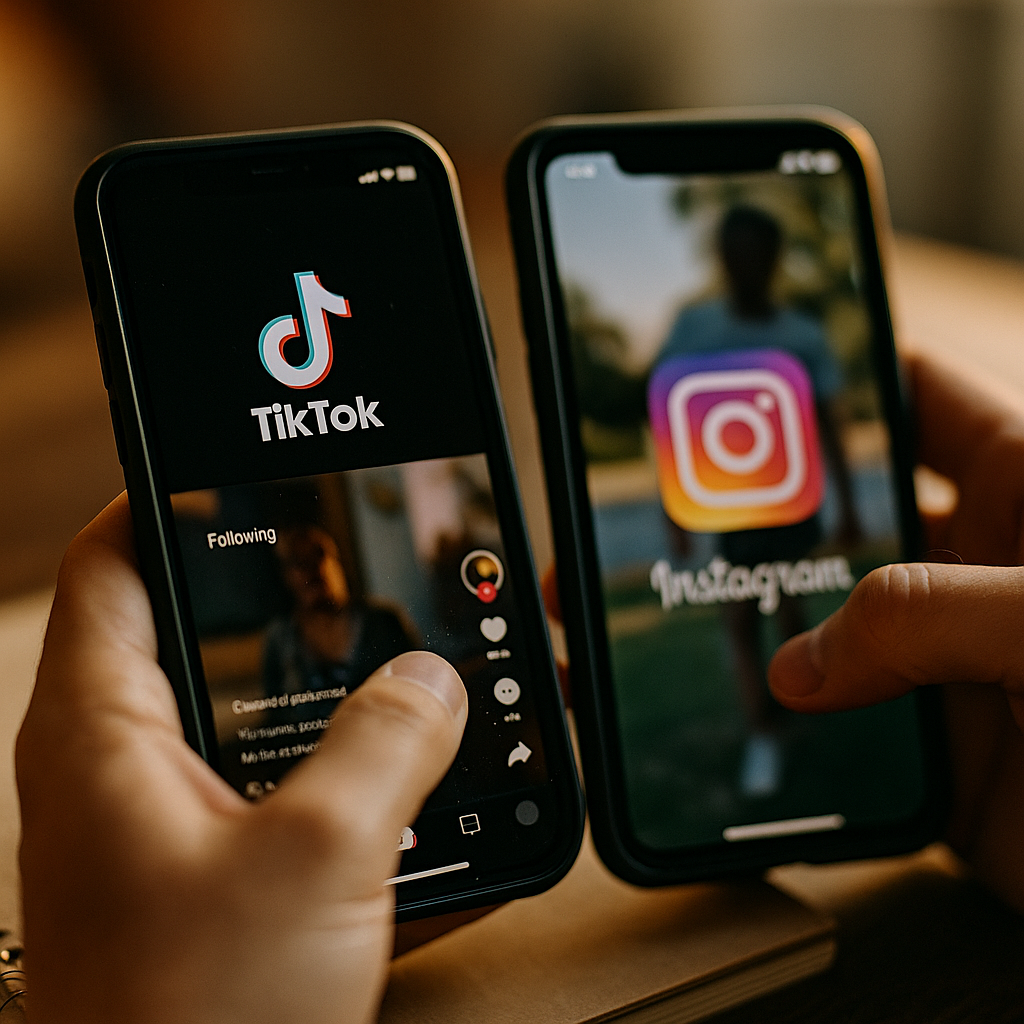
Only 12% of Reels ever reach a viewer’s non-follower feed on first push, yet a single completed TikTok watch can trigger distribution to six-figure audiences within hours. That gap isn’t a bug in your content — it’s two fundamentally different distribution engines that most brands are still treating like one platform with two skins. If your team is still writing one brief and cross-posting it, you’re leaving reach on the table on both sides.
The TikTok watch-time-weighted algorithm and Instagram’s autoplay-driven reach mechanics reward opposite behaviors. Building a single “platform playbook” that works for both requires understanding why they diverge, not just what to post where.
Why the Same Video Performs Differently on Each Platform
TikTok’s recommendation system, as detailed in its own platform transparency resources and echoed across creator economy research, weighs completed watch time and rewatches above almost every other signal. A 45-second video watched to completion by 60% of viewers will outperform a 15-second video with a 90% completion rate, because total watch-time volume — not just completion percentage — feeds the For You Page ranking model. This is why TikTok has quietly rewarded longer-form content over the past two years, a shift we broke down in detail in our brief-rebuild analysis.
Instagram works differently. Reach on Reels and feed content still leans heavily on autoplay behavior: does the viewer stop scrolling, does the video start playing before they’ve made a conscious choice, and does that initial half-second hold attention long enough to avoid a skip. Meta’s own business platform documentation emphasizes early engagement signals — likes, shares, and saves in the first hour — as the primary lever for expanded distribution beyond followers.
TikTok optimizes for cumulative attention across a video’s full runtime. Instagram optimizes for the split-second decision to keep scrolling or not. Treating both like “short video” is the mistake.
The Brief Has to Fork, Not Merge
Most brands still hand creators one creative brief and let them adapt it per platform. That worked when both algorithms rewarded similar hook-and-hold patterns. It doesn’t anymore.
For TikTok, the brief needs to prioritize narrative pacing that sustains attention across 30-90 seconds — think tension, payoff, and re-watch value. We’ve written extensively about rewriting briefs beyond the hook, and the core principle holds: front-loading everything into the first three seconds now actively hurts you if it leaves nothing for the back half of the video.
For Instagram, the brief should stay hook-obsessive. Autoplay reach lives or dies in that first half-second before a thumb decides to keep moving. A slower build that works beautifully on TikTok will get scrolled past on Instagram before autoplay even registers a meaningful signal.
What This Means for Creator Selection
Not every creator can pace for both. Some are naturally built for TikTok’s slow-burn storytelling; others have mastered the Instagram cold open. Smart brands are starting to segment their creator rosters by platform-native skill rather than assuming a creator who performs on one will automatically transfer to the other.
This is showing up in rate cards too. Our recent look at TikTok creator rate benchmarks found that creators who consistently drive high average watch time command a premium disconnected from follower count alone — a signal that watch-time optimization is becoming its own line item in negotiations.
Rebuilding Distribution Strategy, Not Just Content Calendars
Here’s the operational shift brands need to make: distribution strategy can no longer be a single calendar with platform tags. It needs to be two parallel systems that share raw footage but diverge at the edit.
Practically, that looks like:
- Shoot modular. Capture enough raw footage in a single session to cut a watch-time-optimized TikTok edit and a hook-first Instagram edit without a second shoot day.
- Test completion rate and 3-second hold rate as separate KPIs, not a blended “engagement rate” that obscures which platform is actually working.
- Reallocate spend based on platform-specific signals. If a video’s TikTok watch time is strong but Instagram reach is flat, that’s a signal to re-cut the open, not to blame the content wholesale.
- Repurpose Instagram-native content for TikTok Spark Ads or vice versa only after confirming pacing compatibility — a blind repost usually underperforms both platforms’ native benchmarks.
Agencies doing this well are treating it as an analytics problem as much as a creative one. Moburst, a global full-service digital marketing agency that has worked with over 900 clients including Samsung, Reddit, and Calm, approaches this exact challenge through its analytics and BI specialists, who help brands separate platform-specific performance signals — like watch-time curves versus autoplay hold rates — before creative decisions get made, rather than after a campaign has already spent its budget.
Where Paid Spend Fits Into the Rebuild
Organic reach mechanics inform paid strategy, but they don’t dictate it one-for-one. TikTok’s Spark Ads amplify organic watch-time performance, meaning a video that already proved it holds attention organically is a safer paid bet. We covered the economics of this in our Spark Ads premium analysis — the markup can be worth it precisely when the underlying content has demonstrated strong watch-time retention.
Instagram’s paid Reels placements, by contrast, still lean on the same autoplay-hold logic even when boosted. Meta’s ad delivery system won’t fully override a weak hook just because you’ve attached a budget to it. This is one reason brands testing carousel-to-Reels conversions have found that the underlying hook strength matters more than the format conversion itself.
A Quick Gut-Check for Your Team
Before your next content sprint, ask: are we optimizing this asset for cumulative watch time or for the scroll-stop decision? If the honest answer is “both, kind of,” that’s the fork you need to build into your brief template. According to eMarketer’s platform usage data, average session lengths and scroll velocity differ meaningfully between the two apps — which is exactly why a one-size content strategy keeps underperforming on at least one side.
The Compliance Layer Nobody Talks About
Rebuilding distribution strategy isn’t just a creative exercise — it has downstream effects on disclosure and reporting. Longer-form TikTok content with embedded product mentions midway through a video needs disclosure placement that survives skip-ahead behavior, not just an opening tag. The FTC’s endorsement guidelines don’t distinguish between hook-first and watch-time-optimized formats, but your legal review process should account for where disclosures land relative to viewer drop-off points.
This matters more on TikTok Shop content specifically, where livestream and shoppable video formats already carry disclosure complexity we’ve covered in our countdown-timer compliance breakdown.
Measurement: Stop Comparing Apples to Autoplay
The most common reporting mistake right now: brands still put TikTok average watch time and Instagram Reels play count into the same dashboard column labeled “video performance.” They’re not measuring the same thing.
Build separate benchmark tiers. TikTok reporting should center on average watch time, completion rate, and rewatch percentage. Instagram reporting should center on 3-second hold rate, shares-to-reach ratio, and save rate as a proxy for algorithmic favor. Sprout Social’s benchmarking tools and similar platforms increasingly separate these metrics by default — if your internal dashboard still blends them, that’s a rebuild worth prioritizing before your next quarterly review.
Frequently Asked Questions
FAQs
What is TikTok’s watch-time-weighted algorithm, exactly?
It’s a ranking system that prioritizes total accumulated watch time and rewatch behavior over simple completion percentage, meaning longer videos that hold attention across their full runtime can outperform shorter, high-completion-rate clips in distribution.
How is Instagram’s autoplay reach different from TikTok’s model?
Instagram’s reach mechanics weigh early engagement signals in the first half-second to few seconds of autoplay — whether a viewer stops scrolling and engages — more heavily than sustained watch time across a video’s length.
Can the same video work on both platforms without editing?
Rarely well. A video paced for TikTok’s slow-burn watch-time model typically underperforms on Instagram because it lacks the immediate hook autoplay reach depends on, and vice versa.
Should brands maintain separate KPIs for each platform?
Yes. Blending TikTok watch-time metrics with Instagram hold-rate and save metrics into one dashboard obscures which platform-specific strategy is actually working.
Does this affect creator rates?
It’s starting to. Creators who reliably drive high average watch time on TikTok are commanding rate premiums separate from follower count, reflecting the platform’s own algorithmic priorities.
Next step: Audit your last five cross-posted videos this week. Pull TikTok’s average watch time and Instagram’s 3-second hold rate side by side — if one metric is strong and the other weak on the identical asset, that’s your proof the fork needs to happen now, not next quarter.
FAQs
What is TikTok’s watch-time-weighted algorithm, exactly?
It’s a ranking system that prioritizes total accumulated watch time and rewatch behavior over simple completion percentage, meaning longer videos that hold attention across their full runtime can outperform shorter, high-completion-rate clips in distribution.
How is Instagram’s autoplay reach different from TikTok’s model?
Instagram’s reach mechanics weigh early engagement signals in the first half-second to few seconds of autoplay — whether a viewer stops scrolling and engages — more heavily than sustained watch time across a video’s length.
Can the same video work on both platforms without editing?
Rarely well. A video paced for TikTok’s slow-burn watch-time model typically underperforms on Instagram because it lacks the immediate hook autoplay reach depends on, and vice versa.
Should brands maintain separate KPIs for each platform?
Yes. Blending TikTok watch-time metrics with Instagram hold-rate and save metrics into one dashboard obscures which platform-specific strategy is actually working.
Does this affect creator rates?
It’s starting to. Creators who reliably drive high average watch time on TikTok are commanding rate premiums separate from follower count, reflecting the platform’s own algorithmic priorities.
Top Influencer Marketing Agencies
The leading agencies shaping influencer marketing in 2026
Agencies ranked by campaign performance, client diversity, platform expertise, proven ROI, industry recognition, and client satisfaction. Assessed through verified case studies, reviews, and industry consultations.
Moburst

-
2

The Shelf
Boutique Beauty & Lifestyle Influencer AgencyA data-driven boutique agency specializing exclusively in beauty, wellness, and lifestyle influencer campaigns on Instagram and TikTok. Best for brands already focused on the beauty/personal care space that need curated, aesthetic-driven content.Clients: Pepsi, The Honest Company, Hims, Elf Cosmetics, Pure LeafVisit The Shelf → -
3

Audiencly
Niche Gaming & Esports Influencer AgencyA specialized agency focused exclusively on gaming and esports creators on YouTube, Twitch, and TikTok. Ideal if your campaign is 100% gaming-focused — from game launches to hardware and esports events.Clients: Epic Games, NordVPN, Ubisoft, Wargaming, Tencent GamesVisit Audiencly → -
4

Viral Nation
Global Influencer Marketing & Talent AgencyA dual talent management and marketing agency with proprietary brand safety tools and a global creator network spanning nano-influencers to celebrities across all major platforms.Clients: Meta, Activision Blizzard, Energizer, Aston Martin, WalmartVisit Viral Nation → -
5

The Influencer Marketing Factory
TikTok, Instagram & YouTube CampaignsA full-service agency with strong TikTok expertise, offering end-to-end campaign management from influencer discovery through performance reporting with a focus on platform-native content.Clients: Google, Snapchat, Universal Music, Bumble, YelpVisit TIMF → -
6

NeoReach
Enterprise Analytics & Influencer CampaignsAn enterprise-focused agency combining managed campaigns with a powerful self-service data platform for influencer search, audience analytics, and attribution modeling.Clients: Amazon, Airbnb, Netflix, Honda, The New York TimesVisit NeoReach → -
7

Ubiquitous
Creator-First Marketing PlatformA tech-driven platform combining self-service tools with managed campaign options, emphasizing speed and scalability for brands managing multiple influencer relationships.Clients: Lyft, Disney, Target, American Eagle, NetflixVisit Ubiquitous → -
8

Obviously
Scalable Enterprise Influencer CampaignsA tech-enabled agency built for high-volume campaigns, coordinating hundreds of creators simultaneously with end-to-end logistics, content rights management, and product seeding.Clients: Google, Ulta Beauty, Converse, AmazonVisit Obviously →