


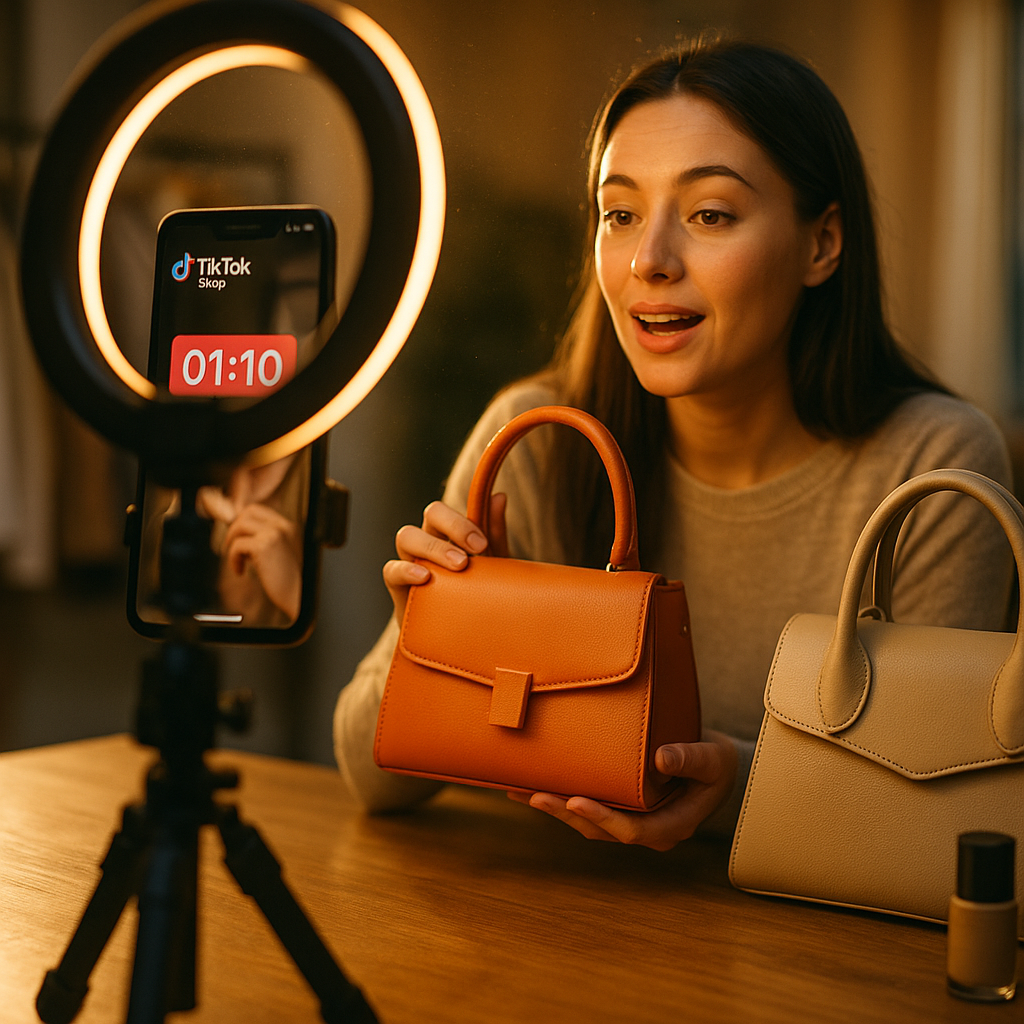
Livestream shopping converts at rates flat product videos can’t touch, and countdown urgency is the biggest lever behind that lift. But run a fake “last chance” timer on TikTok Shop and you’re not just annoying viewers — you’re building a case file for the FTC. This TikTok Shop livestream selling playbook shows how to structure real urgency without inviting regulatory risk.
Why Urgency Sells (and Why Regulators Are Watching It)
Countdown timers work because scarcity triggers decision-making shortcuts. Viewers see a clock hitting zero and their brain treats delay as loss. TikTok Shop hosts have known this for years — it’s why “only 12 left” and “price goes up in 10 minutes” phrases show up in nearly every high-converting stream.
The problem is that most of those claims are fabricated. The inventory count doesn’t move. The price never actually rises. And that’s exactly the pattern the FTC has flagged repeatedly in its guidance on deceptive scarcity and urgency claims. Manufactured countdowns that reset, restock instantly, or reference a “sale price” that’s actually the everyday price fall squarely into deceptive advertising territory.
If your countdown timer would embarrass you on a deposition transcript, it’s not a marketing tactic — it’s a liability.
For brands running livestream programs at scale, this isn’t a hypothetical. TikTok Shop’s rapid growth in categories like beauty — where the platform reportedly saw sales climb well beyond typical e-commerce benchmarks — means more eyes on the category, including regulatory ones. We covered how fast that category has scaled in our breakdown of TikTok Shop beauty growth, and the same visibility that drives sales also drives scrutiny.
What Actually Counts as Deceptive Urgency
Let’s get specific, because “don’t lie” is not an actionable brief. The FTC’s enforcement history and its guidance on dark patterns point to a few recurring violations:
- Fake countdown clocks that reset after hitting zero, or that display different times to different viewers regardless of real deadlines.
- False scarcity claims — “only 3 left” when inventory is actually in the hundreds.
- Phantom discounts where the “original price” was never actually charged, making the “sale” meaningless.
- Artificial pressure language implying a one-time opportunity when the same drop repeats weekly.
- Bundled disclosures — burying terms about return policy, price changes, or promotional windows in text too small or fast to read on a livestream.
None of these require intent to deceive in the legal sense. Regulators look at the effect on a reasonable consumer, not whether your team meant harm. That’s a low bar to trip over if your livestream script was written by someone optimizing purely for conversion lift.
Structuring Real Urgency: A Countdown That Holds Up
Here’s the good news: legitimate urgency converts just as well as fake urgency, and it’s not hard to build. The difference is operational discipline, not creative compromise.
Tie the countdown to something true. If you’re running a 45-minute livestream drop with 500 units, the countdown should reflect actual stock decrementing in real time, pulled from your inventory management system, not a graphics overlay running on a fixed timer. TikTok Shop’s own seller tools support live inventory syncing — use it instead of a canned animation.
Set the deadline before the stream starts, and don’t move it. If the drop ends at 8:45pm ET, it ends at 8:45pm ET. Extending “just five more minutes” because sales are slow undermines the entire premise of urgency and creates a paper trail of inconsistency if anyone screenshots the stream.
Disclose the baseline price clearly, on screen, for the duration of the offer. Not a flash for two seconds. A persistent lower-third graphic showing “Regular price: $48 / Drop price: $34” holds up far better under scrutiny than a verbal mention buried in host chatter.
The single biggest compliance upgrade most brands can make: replace “limited time” language with an actual visible clock tied to real inventory. It’s not just safer — it usually converts better because viewers trust it.
This mirrors a pattern we’ve seen across TikTok’s broader algorithm shifts too. Just as the platform’s watch-time algorithm changes forced brands to rebuild briefs around authentic engagement rather than tricks, urgency marketing is following the same arc: manufactured signals get penalized, real signals get rewarded.
Building the Drop Calendar Around Compliant Urgency
A 2026 product drop calendar needs three layers of planning that most brands skip because they’re focused entirely on the creator booking and script.
Layer one: inventory reconciliation. Before the stream, confirm exact sellable units with your ops team, not a rough estimate. If you’re running a multi-creator drop — something we detailed in our multi-creator testing framework — each host needs a separately tracked allocation so no one oversells a shared pool.
Layer two: legal review of on-screen claims. Every graphic overlay, every “was/now” price comparison, every stock counter should be reviewed by whoever handles your FTC compliance before the stream goes live, not after a viewer complaint. This is a 20-minute checklist, not a legal ordeal, but it needs to happen every single time, not just for the first drop.
Layer three: creator briefing on verbal claims. Hosts improvise. That’s part of what makes livestream selling effective — it feels human, not scripted. But improvisation around urgency claims is where most violations originate. Brief creators explicitly: they can say “we’ve got about 40 units left as of right now,” but they cannot say “this is the lowest it will ever be” unless that’s contractually and factually guaranteed.
For brands running rapid-fire creator tests across a roster, our livestream playbook for rapid creator testing covers how to structure briefs that scale across multiple hosts without losing this kind of control.
The Disclosure Layer Nobody Budgets For
Urgency compliance doesn’t stop at pricing claims. FTC endorsement guidance also requires clear disclosure that a livestream is a paid promotion, and that requirement gets harder to satisfy in a fast-moving countdown format. A host who’s rushing through a 10-minute countdown and forgets to restate “this is a paid partnership” every few minutes is creating a second compliance gap layered on top of the pricing one.
Build disclosure into the rundown as a recurring beat, not a one-time mention at the top of the stream. Most successful livestream sellers repeat the disclosure every time they introduce a new product or price point — it becomes part of the rhythm rather than a legal afterthought.
This is also where platform-level differences matter. TikTok Shop’s real-time commerce format creates disclosure challenges that traditional feed posts don’t have, which is one reason we’ve argued vertical commerce formats outperform static shopping posts on engagement but require tighter operational guardrails to stay compliant.
Measuring Whether Compliant Urgency Still Converts
Brands worry that dropping fake scarcity tactics will tank conversion. In practice, the data doesn’t support that fear. Real, verifiable urgency (accurate stock counters, honest deadlines, visible price comparisons) tends to build enough trust that repeat-viewer conversion actually improves over multiple drops. Fake urgency might spike a single stream’s numbers, but it erodes trust for the next one — viewers who catch a reset countdown timer once rarely believe the next one.
Track these three metrics across your compliant-urgency drops to validate the approach:
- Conversion rate in the final 10 minutes versus the rest of the stream — real urgency should still show a lift, just not an inflated one.
- Repeat viewer rate across subsequent drops from the same host or brand account.
- Chat sentiment around price and stock claims — skepticism in the comments is an early warning sign worth acting on immediately.
If you’re building out measurement frameworks more broadly, it’s worth comparing notes with how other platforms are forcing similar rebuilds. YouTube’s shift toward rebuilding CPV around real engagement reflects the same industry direction: platforms and regulators alike are rewarding verifiable signals over inflated ones.
Take the Next Step
Audit your next livestream rundown before you book a single creator: confirm every countdown ties to real inventory, every discount reflects a real baseline price, and every disclosure repeats on a set cadence. That’s the difference between a drop that converts and one that lands you in a regulatory inquiry.
FAQs
Does a countdown timer on TikTok Shop have to reflect real-time inventory?
Yes, if the timer or accompanying stock count is presented as accurate. If you display “only 8 left” or a countdown tied to stock depletion, it must reflect genuine, live inventory data. Static graphics that aren’t connected to actual sales are considered deceptive under FTC guidance on false scarcity claims.
Can creators say a deal is “one-time only” if the brand runs similar drops regularly?
No. If the same discount or product bundle reappears in future streams, calling it “one-time only” is a misrepresentation. Creators and brands should use accurate language, such as noting the deal is available “for this stream” without implying it will never recur.
How often does a paid livestream need to disclose the partnership?
There’s no single fixed number mandated by the FTC, but best practice is to repeat the disclosure whenever a new segment, product, or pricing offer is introduced, not just once at the stream’s opening. This keeps the disclosure meaningfully visible to viewers who join mid-stream.
What’s the risk if a brand’s countdown timer resets after hitting zero?
This is one of the clearest examples of a “dark pattern” the FTC has targeted in enforcement actions. A resetting timer misrepresents genuine scarcity and can expose both the brand and, potentially, the platform facilitating the sale to regulatory complaints or fines.
Do compliant urgency tactics actually hurt conversion rates compared to fake urgency?
Generally, no. Verified urgency tends to sustain conversion across repeat drops because viewers trust the claims. Fake urgency may produce a short-term spike but tends to erode trust and depress performance on future streams once viewers notice inconsistencies.
FAQs
Top Influencer Marketing Agencies
The leading agencies shaping influencer marketing in 2026
Agencies ranked by campaign performance, client diversity, platform expertise, proven ROI, industry recognition, and client satisfaction. Assessed through verified case studies, reviews, and industry consultations.
Moburst

-
2

The Shelf
Boutique Beauty & Lifestyle Influencer AgencyA data-driven boutique agency specializing exclusively in beauty, wellness, and lifestyle influencer campaigns on Instagram and TikTok. Best for brands already focused on the beauty/personal care space that need curated, aesthetic-driven content.Clients: Pepsi, The Honest Company, Hims, Elf Cosmetics, Pure LeafVisit The Shelf → -
3

Audiencly
Niche Gaming & Esports Influencer AgencyA specialized agency focused exclusively on gaming and esports creators on YouTube, Twitch, and TikTok. Ideal if your campaign is 100% gaming-focused — from game launches to hardware and esports events.Clients: Epic Games, NordVPN, Ubisoft, Wargaming, Tencent GamesVisit Audiencly → -
4

Viral Nation
Global Influencer Marketing & Talent AgencyA dual talent management and marketing agency with proprietary brand safety tools and a global creator network spanning nano-influencers to celebrities across all major platforms.Clients: Meta, Activision Blizzard, Energizer, Aston Martin, WalmartVisit Viral Nation → -
5

The Influencer Marketing Factory
TikTok, Instagram & YouTube CampaignsA full-service agency with strong TikTok expertise, offering end-to-end campaign management from influencer discovery through performance reporting with a focus on platform-native content.Clients: Google, Snapchat, Universal Music, Bumble, YelpVisit TIMF → -
6

NeoReach
Enterprise Analytics & Influencer CampaignsAn enterprise-focused agency combining managed campaigns with a powerful self-service data platform for influencer search, audience analytics, and attribution modeling.Clients: Amazon, Airbnb, Netflix, Honda, The New York TimesVisit NeoReach → -
7

Ubiquitous
Creator-First Marketing PlatformA tech-driven platform combining self-service tools with managed campaign options, emphasizing speed and scalability for brands managing multiple influencer relationships.Clients: Lyft, Disney, Target, American Eagle, NetflixVisit Ubiquitous → -
8

Obviously
Scalable Enterprise Influencer CampaignsA tech-enabled agency built for high-volume campaigns, coordinating hundreds of creators simultaneously with end-to-end logistics, content rights management, and product seeding.Clients: Google, Ulta Beauty, Converse, AmazonVisit Obviously →