


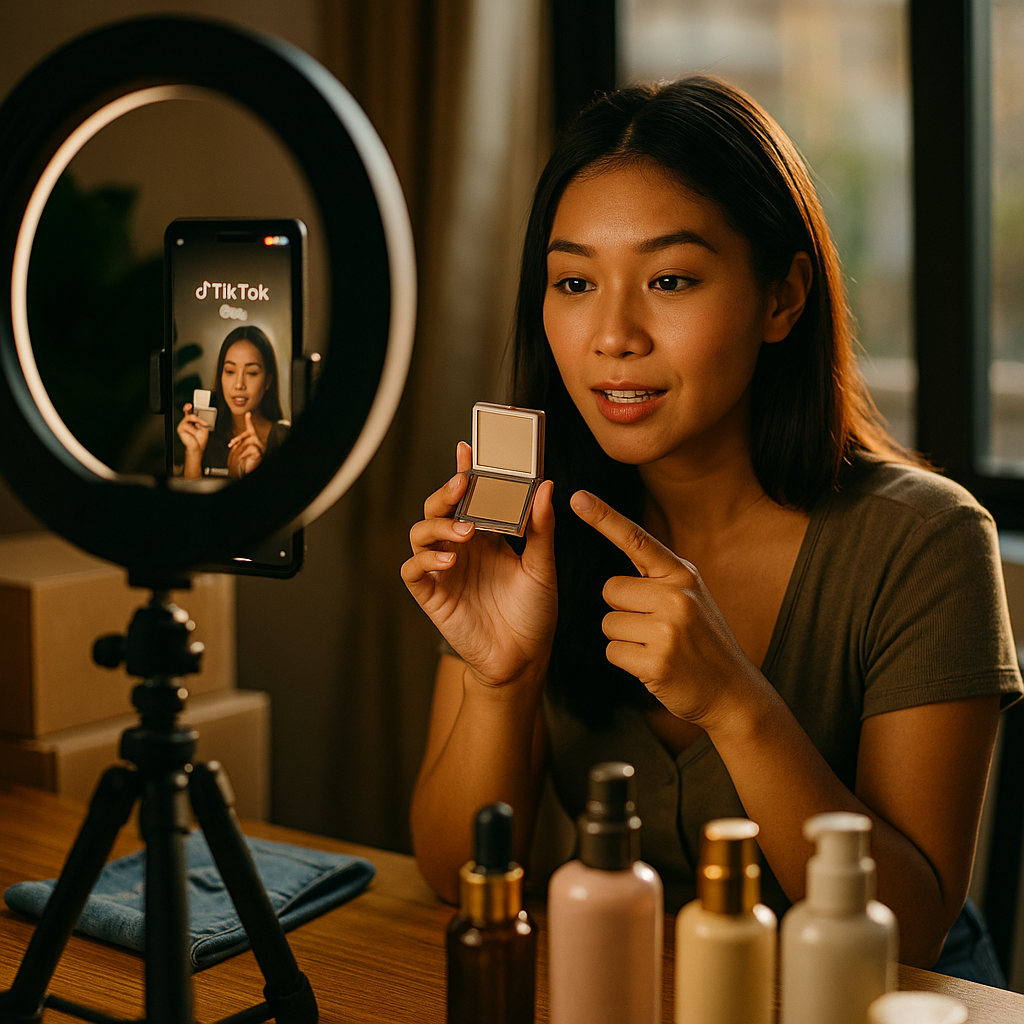
Brands running one livestream host for a product launch are already behind. TikTok Shop’s top sellers test five to ten creators simultaneously before committing budget to a single one. If your TikTok Shop livestream selling playbook still treats livestream as a single-event campaign instead of a testing system, you’re leaving conversion data — and revenue — on the table.
Why Livestream Selling Broke the Old Launch Calendar
Traditional product launches follow a linear path: brief, produce, review, ship, measure. That cadence made sense when content lived for weeks. It doesn’t survive contact with TikTok Shop, where a livestream’s commercial window can open and close in under 48 hours and the algorithm rewards whichever session generates the fastest early conversion signal.
The brands winning launch windows right now treat every livestream as a hypothesis, not a hero asset. They run parallel sessions with different hosts, different hooks, different price framing, and different product bundles, then kill the losers within hours. That’s not improvisation. It’s a structured testing cycle, and it requires an operational rebuild most marketing teams haven’t done yet.
Livestream selling rewards velocity of iteration more than production polish. A rough stream that finds its hook in the first ten minutes will consistently outsell a scripted, high-production session that doesn’t adapt.
The Core Structure: Three-Tier Creator Testing
Stop thinking of creator testing as “trying out a few hosts.” Structure it in tiers, each with its own budget ceiling, success threshold, and time box.
- Tier 1 — Discovery cohort (5-8 creators): Micro and mid-tier hosts, low-cost or affiliate-commission-only deals, 20-30 minute streams. Goal is signal, not sales. Watch for viewer retention curves, comment sentiment, and add-to-cart rate in the first 15 minutes.
- Tier 2 — Validation cohort (2-3 creators): The top performers from Tier 1, given modest guarantees plus commission, longer stream slots, and a refined script based on what worked. This is where you test price anchoring, bundle offers, and urgency mechanics like restock countdowns.
- Tier 3 — Scale cohort (1-2 creators): The proven winner, plus a backup, running recurring scheduled streams with paid amplification (TikTok’s Live Shopping ads) layered on top of organic reach.
Each tier should run inside a fixed window. Discovery: 3-5 days. Validation: 5-7 days. Scale: ongoing until performance decays. Compress that timeline and you risk false negatives. Stretch it and competitors launch first.
What Rapid Testing Actually Requires Operationally
Here’s the part most brands underestimate: rapid testing cycles demand infrastructure, not enthusiasm. You need a creator bench you can activate in 48 hours, not two weeks of outreach. You need pre-approved product samples staged and ready to ship same-day. And you need a real-time dashboard — TikTok Shop’s Seller Center analytics plus a layer like Sprout Social or a comparable social commerce tool — that surfaces GMV per stream, click-through on product cards, and viewer-to-buyer conversion without waiting for a weekly report.
This is also where budget structure matters more than most briefs acknowledge. If you’re allocating a flat dollar amount per creator regardless of funnel stage, you’re already misallocating. Discovery-stage creators should be compensated for volume of tests, not projected sales; validation and scale-stage creators should shift toward performance-based structures. Our earlier breakdown on funnel-stage subsidy tiers lays out exactly how to split that spend without overpaying unproven hosts.
Build the Iteration Budget Before You Build the Calendar
A rapid testing cycle without a dedicated iteration budget just becomes an expensive series of one-off bets. You need money set aside specifically for kills, pivots, and re-tests — separate from your “hero launch” spend. Teams that skip this step tend to burn their entire budget on Tier 1 discovery and have nothing left to scale the winner. We covered this exact failure mode in why the rapid-testing model needs an iteration budget first — it’s worth reading before you lock next quarter’s launch spend.
Sequencing Launch Cadence Around the Algorithm, Not the Calendar
TikTok Shop’s discovery algorithm doesn’t care about your fiscal quarter. It cares about completion rate, comment velocity, and repeat purchase signal within a session’s first hour. That means your launch cadence should be built around performance triggers, not fixed dates.
Practically, that looks like this: instead of “launch on the 1st,” you set a trigger — “launch scale-tier streaming once a Tier 2 creator hits a 4%+ conversion rate across two consecutive sessions.” This removes the guesswork and ties spend directly to proven demand.
It’s also worth noting the platform’s ranking mechanics have shifted meaningfully. TikTok Shop’s algorithm now leans harder on structural signals — consistency of posting cadence, completion of shop tabs, product catalog depth — rather than raw follower count. We detailed this shift in how the Shop algorithm rewards structure over followers, and it directly affects which creators you should prioritize in Tier 1 testing. A mid-tier creator with a fully built-out shop tab and consistent live schedule can outperform a bigger name with sporadic activity.
Compliance Can’t Be an Afterthought in Fast Cycles
Speed is the whole point of rapid testing, but speed creates compliance risk if you’re not careful. Every livestream host making product claims, especially around restocks, limited-time pricing, or health and wellness benefits, needs disclosure language baked into the pre-stream brief, not added after the fact.
The FTC’s endorsement guidelines apply just as much to a 20-minute affiliate test stream as they do to a polished sponsored campaign. If you’re running restock urgency mechanics, which are common in livestream selling, review our guide on staying compliant with restock alert claims before you brief Tier 2 and Tier 3 creators. One non-compliant stream going viral for the wrong reasons can undo weeks of testing work.
A single flagged livestream can trigger a shop-wide review on TikTok’s compliance systems. The cost of a five-minute disclosure review is nothing compared to a suspended Shop account mid-launch.
Reading the Right Signals Between Tiers
Not all metrics deserve equal weight at every tier. Confusing vanity metrics with predictive ones is the single most common reason testing cycles stall out.
- Discovery tier: Watch comment-to-viewer ratio and average watch duration. These predict whether the hook and product framing resonate before you’ve spent real money.
- Validation tier: Watch cart abandonment rate and repeat-viewer percentage. This tells you whether the offer structure, not just the host, is working.
- Scale tier: Watch GMV per hour live and customer acquisition cost relative to your target margin. This is the only tier where pure revenue should drive go/no-go decisions.
Also worth flagging: TikTok’s algorithm updates have made raw view counts less reliable as a standalone success metric across the platform generally, a pattern we’ve tracked in the broader shift toward rebuilding KPIs around inflated view counts. The same caution applies to livestream viewer counts, which can be inflated by bot traffic or algorithmic boosting that doesn’t convert to sales.
Regional and Localization Considerations
If you’re running launches across multiple TikTok Shop markets, don’t assume a winning creator formula in one region transfers cleanly to another. Data localization requirements have already reshaped ranking behavior in specific markets — see our coverage of how data localization under Oracle resets Shop rankings — and cultural buying behavior around livestream shopping varies significantly by market. Tier-2 and tier-3 cities in India, for instance, respond to entirely different pacing and price-anchoring than urban U.S. audiences, a dynamic we mapped out in the regional livestream playbook for India’s tier-2/3 markets.
Building the Testing Calendar: A Practical Template
Here’s a simplified version of what a four-week pre-launch testing cycle looks like in practice:
- Week 1: Recruit and brief 6-8 discovery creators. Ship samples same-day. Run staggered 20-30 minute streams across the week, not all on one day, so you can adjust briefs mid-cycle based on early results.
- Week 2: Analyze discovery data. Select top 2-3 performers. Refine script, pricing, and bundle offers based on what drove conversion. Brief validation-tier creators with the updated playbook.
- Week 3: Run validation streams with longer time slots and modest paid amplification. Confirm which creator-offer combination hits your conversion threshold.
- Week 4: Scale the winner with recurring streams, paid Live Shopping ads, and a backup host on standby in case the primary creator’s performance decays (it will, eventually — plan the rotation now).
Notice what’s absent from this template: a single “launch day.” That’s intentional. Rapid testing replaces the big-bang launch with a compounding validation process, and it’s far more forgiving when something underperforms, because you’ve never bet the whole budget on one stream.
What This Means for Brief Writing and Creator Relationships
Rapid cycles put pressure on your briefing process too. A brief written for a single, polished campaign doesn’t work when you’re rotating six creators through discovery in a week. Briefs need to be modular: a fixed core (product facts, disclosure requirements, pricing) and a flexible layer (hook style, tone, personal framing) that each creator can adapt to their own audience.
This mirrors a broader shift happening across platforms right now, where algorithm updates are forcing brands to rebuild briefs around adaptability rather than rigid scripts, similar to what we’ve seen with TikTok’s Andromeda update forcing brief rebuilds. The creators who perform best in rapid testing cycles are the ones given room to translate your core message into their own delivery style, not the ones reciting a script word for word.
Retention matters here too. Constantly rotating through new creators is expensive and slow. Once you’ve found winners, structure the relationship to reward long-term performance rather than one-off payouts, an approach detailed in our piece on the retention-first subsidy model. A creator bench that repeats good performance across multiple launches is more valuable than constantly refilling the discovery tier from scratch.
Next Step: Build the Bench Before the Next Launch, Not During It
Don’t wait until your next product drop to start recruiting Tier 1 creators. Build a standing bench of 15-20 pre-vetted hosts across price points now, so your first testing cycle can launch within 48 hours of a product being launch-ready, not two weeks after.
Frequently Asked Questions
How many creators should a brand test before committing budget to a TikTok Shop livestream launch?
Most successful launches start with 5-8 creators in a low-cost discovery tier before narrowing to 2-3 for validation and eventually 1-2 for scaled, recurring streams. The exact number depends on category and budget, but testing fewer than five creators rarely produces reliable conversion signal.
What’s the ideal length for a testing-tier livestream versus a scale-tier livestream?
Discovery-tier streams work well at 20-30 minutes, just enough to gauge hook performance and early conversion without overcommitting host time or budget. Validation and scale-tier streams typically run 45-90 minutes to build the momentum and urgency mechanics that drive higher GMV.
How quickly should a brand kill an underperforming creator or offer in a testing cycle?
Within the same stream if possible, but no later than 24-48 hours after it ends. Waiting a full week to review results defeats the purpose of rapid testing and lets competitors capture the launch window first.
Does TikTok Shop’s algorithm favor certain creators for livestream selling?
Yes. The algorithm increasingly weighs structural consistency, like posting cadence, completed shop tabs, and catalog depth, over raw follower count. A smaller creator with an active, well-organized shop presence can outperform a larger creator with inconsistent activity.
What compliance risks are unique to rapid-cycle livestream testing?
The main risk is disclosure gaps introduced by speed. Fast-moving test cycles sometimes skip proper endorsement disclosures or make unverified claims about restocks and limited-time pricing. FTC endorsement guidelines apply to every stream, regardless of how informal or low-budget it is.
FAQs
How many creators should a brand test before committing budget to a TikTok Shop livestream launch?
Most successful launches start with 5-8 creators in a low-cost discovery tier before narrowing to 2-3 for validation and eventually 1-2 for scaled, recurring streams. The exact number depends on category and budget, but testing fewer than five creators rarely produces reliable conversion signal.
Top Influencer Marketing Agencies
The leading agencies shaping influencer marketing in 2026
Agencies ranked by campaign performance, client diversity, platform expertise, proven ROI, industry recognition, and client satisfaction. Assessed through verified case studies, reviews, and industry consultations.
Moburst

-
2

The Shelf
Boutique Beauty & Lifestyle Influencer AgencyA data-driven boutique agency specializing exclusively in beauty, wellness, and lifestyle influencer campaigns on Instagram and TikTok. Best for brands already focused on the beauty/personal care space that need curated, aesthetic-driven content.Clients: Pepsi, The Honest Company, Hims, Elf Cosmetics, Pure LeafVisit The Shelf → -
3

Audiencly
Niche Gaming & Esports Influencer AgencyA specialized agency focused exclusively on gaming and esports creators on YouTube, Twitch, and TikTok. Ideal if your campaign is 100% gaming-focused — from game launches to hardware and esports events.Clients: Epic Games, NordVPN, Ubisoft, Wargaming, Tencent GamesVisit Audiencly → -
4

Viral Nation
Global Influencer Marketing & Talent AgencyA dual talent management and marketing agency with proprietary brand safety tools and a global creator network spanning nano-influencers to celebrities across all major platforms.Clients: Meta, Activision Blizzard, Energizer, Aston Martin, WalmartVisit Viral Nation → -
5

The Influencer Marketing Factory
TikTok, Instagram & YouTube CampaignsA full-service agency with strong TikTok expertise, offering end-to-end campaign management from influencer discovery through performance reporting with a focus on platform-native content.Clients: Google, Snapchat, Universal Music, Bumble, YelpVisit TIMF → -
6

NeoReach
Enterprise Analytics & Influencer CampaignsAn enterprise-focused agency combining managed campaigns with a powerful self-service data platform for influencer search, audience analytics, and attribution modeling.Clients: Amazon, Airbnb, Netflix, Honda, The New York TimesVisit NeoReach → -
7

Ubiquitous
Creator-First Marketing PlatformA tech-driven platform combining self-service tools with managed campaign options, emphasizing speed and scalability for brands managing multiple influencer relationships.Clients: Lyft, Disney, Target, American Eagle, NetflixVisit Ubiquitous → -
8

Obviously
Scalable Enterprise Influencer CampaignsA tech-enabled agency built for high-volume campaigns, coordinating hundreds of creators simultaneously with end-to-end logistics, content rights management, and product seeding.Clients: Google, Ulta Beauty, Converse, AmazonVisit Obviously →