


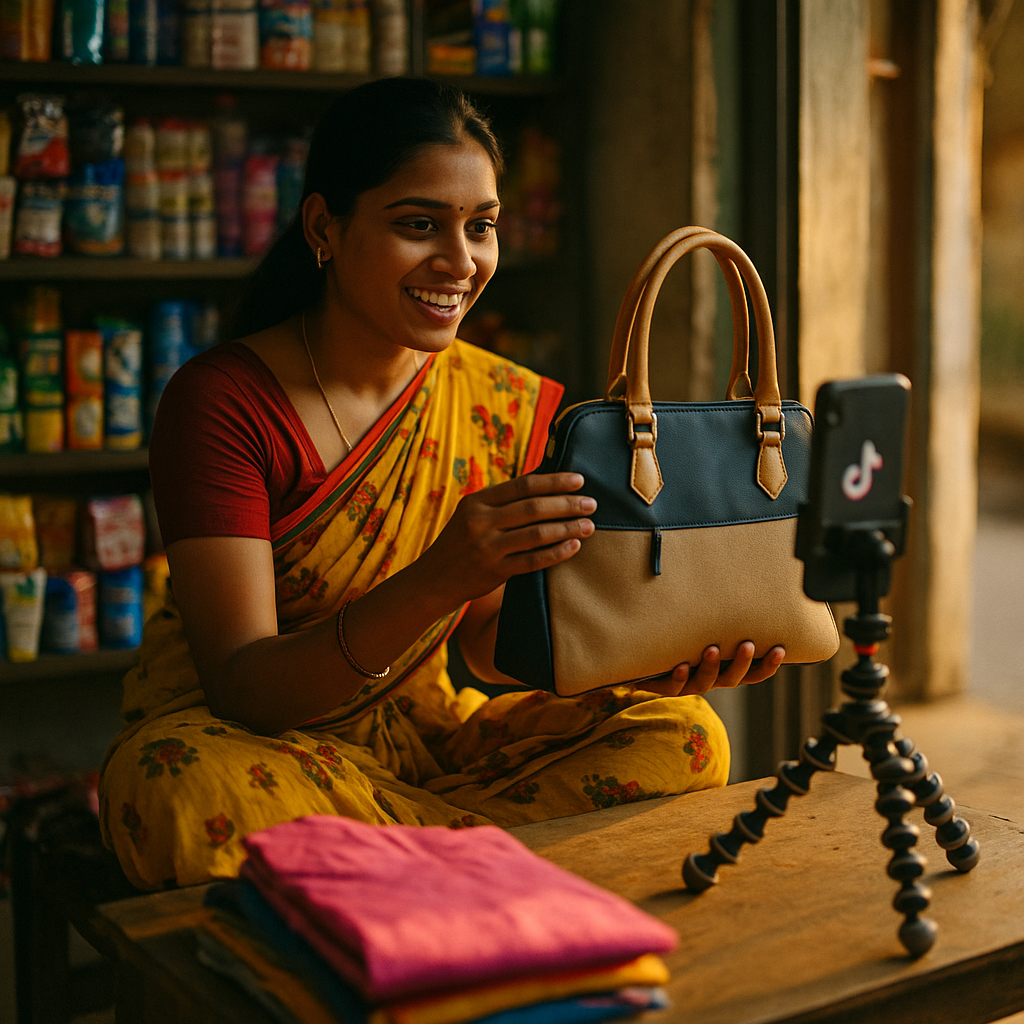
India’s Tier-2 and Tier-3 shoppers aren’t watching Hindi-dubbed livestreams and buying anyway — they’re scrolling past them. TikTok Shop India’s real opportunity isn’t the metro creator with polished English captions; it’s the Bhojpuri-speaking host in Patna moving kitchenware at 11pm. If your livestream strategy still treats “regional” as a subtitle problem, you’re leaving conversion on the table.
Brands entering TikTok Shop India right now are making the same mistake that plagued early Meesho and ShareChat sellers: assuming a single Hindi-English hybrid stream can serve 700 million non-metro internet users. It can’t. Language, dialect, price anchoring, and even the hour a stream goes live all shift dramatically once you leave Delhi, Mumbai, and Bengaluru. This playbook breaks down how to structure livestream selling for the shoppers who’ll actually drive TikTok Shop India’s growth curve.
Why Tier-2 and Tier-3 Shoppers Behave Differently on Livestream
Metro shoppers browse. Tier-2 and Tier-3 shoppers watch to be convinced. That’s not a cultural stereotype — it’s a pattern seen across Meesho’s video commerce push, ShareChat’s regional ad products, and now early TikTok Shop India cohorts. Trust deficit is higher outside metros, return logistics are shakier, and cash-on-delivery expectations still linger even on platforms built for prepaid checkout.
That trust gap gets closed with language, not discounts. A host speaking Marathi in a Nagpur accent, demonstrating a product the way a neighbor would, converts better than a national ad with a celebrity face. eMarketer’s research on emerging market commerce consistently shows that localized trust signals outperform price cuts in price-sensitive, low-digital-literacy segments.
Tier-2 and Tier-3 buyers don’t need a lower price nearly as often as they need someone who sounds like them, telling them the product works.
The dialect problem nobody’s solving well
“Regional language” in most brand briefs still means one of eight major Indian languages, dubbed centrally. That’s not localization — it’s translation theater. Real regional-language livestream selling means:
- Separate hosts fluent in the region’s dominant dialect, not just the state language (Bhojpuri and Maithili differ meaningfully from standard Hindi, for instance)
- Local pricing references — comparing a product’s cost to something regionally familiar, not a generic INR figure
- Region-specific product framing (a water purifier pitch in Bihar emphasizes different concerns than one in Kerala)
- Time-of-day scheduling built around regional work patterns, not IST-blanket scheduling
Brands that skip this and run one “Hindi” stream nationwide are essentially serving UP and Bihar audiences a Delhi accent and calling it done. It works, marginally. It doesn’t scale.
Structuring the Regional Livestream Calendar
Think of TikTok Shop India less as one market and more as six or seven overlapping language markets running in parallel. A workable structure looks like this:
- Cluster by language-commerce overlap, not state lines. Group Hindi-belt states (UP, Bihar, MP, Jharkhand) together but flag dialect variance within the cluster for scripting purposes.
- Assign dedicated regional hosts per cluster. A single national host cannot credibly cover Tamil, Telugu, Kannada, and Malayalam markets even with translation support. Viewers detect a non-native accent within seconds.
- Stagger stream timing by regional digital behavior. Tier-3 shoppers in agricultural belts often peak online post-dinner, later than metro evening-commute peaks. Test, don’t assume.
- Localize the offer structure, not just the language. Bundle deals resonate differently in South Indian markets versus North Indian ones; test SKU bundling by region before assuming a national offer works everywhere.
This mirrors what’s already working in mature TikTok Shop markets. The assortment and subsidy strategy TikTok used to expand into the UK relied on regional testing before national rollout — India’s linguistic diversity just multiplies that same logic by ten.
Casting the right regional hosts
Metro-based multi-language creators are tempting because they’re easier to manage. Resist that shortcut. The ROI difference between a genuine regional creator and a metro creator “doing” a regional accent is significant — regional audiences catch inauthenticity fast, and trust, once broken, doesn’t rebuild in a single stream.
Look for creators already active on ShareChat, Josh, or regional YouTube who haven’t yet crossed over to TikTok Shop. They bring an existing audience relationship and dialect authenticity brands can’t manufacture with a script.
Pricing and Offer Design for Value-Sensitive Markets
Tier-2 and Tier-3 shoppers aren’t necessarily poorer buyers — they’re more deliberate ones. Average order values on regional-language livestreams tend to run lower per transaction but higher in frequency once trust is established. That changes how you should structure subsidies.
Rather than a flat discount applied nationally, brands should mirror the funnel-stage subsidy tiering approach: heavier first-purchase incentives in new regional markets, tapering as repeat purchase behavior builds. A retention-first structure, similar to what’s outlined in TikTok Shop’s own retention-first subsidy model, works better in Tier-2/3 markets than upfront blanket discounting because it rewards the second and third purchase, where regional trust actually compounds.
Restock urgency also plays differently outside metros. Shoppers in smaller cities are more likely to wait for a restock than switch to a competitor if they’ve already built trust with a host. That makes disciplined restock alert messaging more valuable in regional streams than aggressive countdown timers, which can read as pushy to a more relationship-driven buyer.
Compliance and Data Localization Aren’t Optional Extras
Any brand running livestream commerce in India needs to treat data handling and consumer protection compliance as core infrastructure, not an afterthought. TikTok’s broader data localization shifts, detailed in coverage of TikTok’s Oracle-based data localization changes, signal how seriously the platform is treating regional data residency — India will likely see similar scrutiny given its own data protection framework.
Brands should also study how TikTok Shop handled livestream compliance in mature markets. The US livestream compliance rules around returns and shipping fraud offer a preview of what India’s regulatory environment will likely demand as volumes scale, particularly around return windows for cash-on-delivery-adjacent hybrid payment flows common outside metros.
Regional-language livestream selling without a compliance backbone is a rankings risk waiting to happen — not just a legal one.
Practical compliance checklist for regional streams:
- Verified seller ID and GST documentation visible in stream metadata, not just at checkout
- Clear return policy stated verbally by the host in-language, not buried in app text
- Consistent inventory claims — overpromising stock in regional markets damages trust faster than in metros, where switching cost is lower
- Data handling disclosures aligned with India’s Digital Personal Data Protection framework
What about influencer vetting?
Regional creator vetting is harder than metro vetting simply because less third-party data exists on smaller-market creators. Brands should apply the same operational rigor used in scalable overseas KOL operations frameworks — standardized contracts, performance benchmarks, and content review cycles — even when working with creators who have far smaller followings than a typical metro KOL partnership would require.
Measuring What Actually Matters
Vanity metrics mislead in regional markets more than anywhere else. A stream with 2,000 concurrent viewers in a Tier-3 cluster and a 4% conversion rate is outperforming a metro stream with 20,000 viewers and 0.5% conversion. Track:
- Conversion rate by language cluster, not aggregate national conversion
- Repeat purchase rate within 30 days per regional cohort
- Average watch time before add-to-cart, segmented by dialect group
- Return/refund rate by region (a proxy for trust and product-market fit)
Use these numbers the way TikTok’s own watch-time-driven feed changes forced brands to rebuild briefs, hooks, and pacing — regional data should reshape your host briefs quarterly, not sit in a dashboard nobody reads. HubSpot’s guidance on marketing attribution and Sprout Social’s benchmarking resources are useful starting points for building the reporting cadence, though India-specific benchmarks are still thin and worth building internally.
One more thing worth stating plainly: don’t expect Tier-2/3 livestream ROI to match metro ROI in month one. The trust-building curve is longer. Brands that pull budget after a slow first quarter are usually the ones that never see the compounding effect regional creators generate once an audience relationship matures.
Next step: pick two language clusters, not eight, staff them with genuinely native hosts, and run a 90-day test with tiered subsidies before scaling nationally. Trying to localize everywhere at once is how most India livestream budgets get wasted in the first quarter.
Frequently Asked Questions
What makes TikTok Shop India different from TikTok Shop in other markets?
India’s linguistic diversity means a single national livestream strategy can’t reach the audience that dubbed streams miss. Tier-2 and Tier-3 shoppers respond to dialect-specific hosts and regionally relevant pricing far more than to broad national campaigns, unlike more linguistically uniform markets like the UK or US.
How many regional-language clusters should a brand start with?
Two to three clusters is a realistic starting point. Trying to launch Hindi-belt, Tamil, Telugu, Bengali, and Marathi streams simultaneously stretches host quality and budget too thin to properly measure what’s working.
Do regional hosts need to be established influencers?
No. Authenticity and dialect fluency matter more than follower count. Many effective regional hosts are creators crossing over from ShareChat, Josh, or regional YouTube with modest but highly engaged local audiences.
How should subsidies differ between metro and Tier-2/3 livestreams?
Tier-2 and Tier-3 markets benefit more from front-loaded, first-purchase incentives paired with retention-focused offers on repeat buys, rather than flat national discounting that ignores where trust still needs to be built.
What compliance risks are specific to regional livestream selling in India?
Return policy clarity, GST documentation, and data localization disclosures carry more weight in lower-trust markets. Overpromising stock or vague return terms damages regional creator credibility faster than it does in metro markets.
FAQ Schema
Top Influencer Marketing Agencies
The leading agencies shaping influencer marketing in 2026
Agencies ranked by campaign performance, client diversity, platform expertise, proven ROI, industry recognition, and client satisfaction. Assessed through verified case studies, reviews, and industry consultations.
Moburst

-
2

The Shelf
Boutique Beauty & Lifestyle Influencer AgencyA data-driven boutique agency specializing exclusively in beauty, wellness, and lifestyle influencer campaigns on Instagram and TikTok. Best for brands already focused on the beauty/personal care space that need curated, aesthetic-driven content.Clients: Pepsi, The Honest Company, Hims, Elf Cosmetics, Pure LeafVisit The Shelf → -
3

Audiencly
Niche Gaming & Esports Influencer AgencyA specialized agency focused exclusively on gaming and esports creators on YouTube, Twitch, and TikTok. Ideal if your campaign is 100% gaming-focused — from game launches to hardware and esports events.Clients: Epic Games, NordVPN, Ubisoft, Wargaming, Tencent GamesVisit Audiencly → -
4

Viral Nation
Global Influencer Marketing & Talent AgencyA dual talent management and marketing agency with proprietary brand safety tools and a global creator network spanning nano-influencers to celebrities across all major platforms.Clients: Meta, Activision Blizzard, Energizer, Aston Martin, WalmartVisit Viral Nation → -
5

The Influencer Marketing Factory
TikTok, Instagram & YouTube CampaignsA full-service agency with strong TikTok expertise, offering end-to-end campaign management from influencer discovery through performance reporting with a focus on platform-native content.Clients: Google, Snapchat, Universal Music, Bumble, YelpVisit TIMF → -
6

NeoReach
Enterprise Analytics & Influencer CampaignsAn enterprise-focused agency combining managed campaigns with a powerful self-service data platform for influencer search, audience analytics, and attribution modeling.Clients: Amazon, Airbnb, Netflix, Honda, The New York TimesVisit NeoReach → -
7

Ubiquitous
Creator-First Marketing PlatformA tech-driven platform combining self-service tools with managed campaign options, emphasizing speed and scalability for brands managing multiple influencer relationships.Clients: Lyft, Disney, Target, American Eagle, NetflixVisit Ubiquitous → -
8

Obviously
Scalable Enterprise Influencer CampaignsA tech-enabled agency built for high-volume campaigns, coordinating hundreds of creators simultaneously with end-to-end logistics, content rights management, and product seeding.Clients: Google, Ulta Beauty, Converse, AmazonVisit Obviously →