


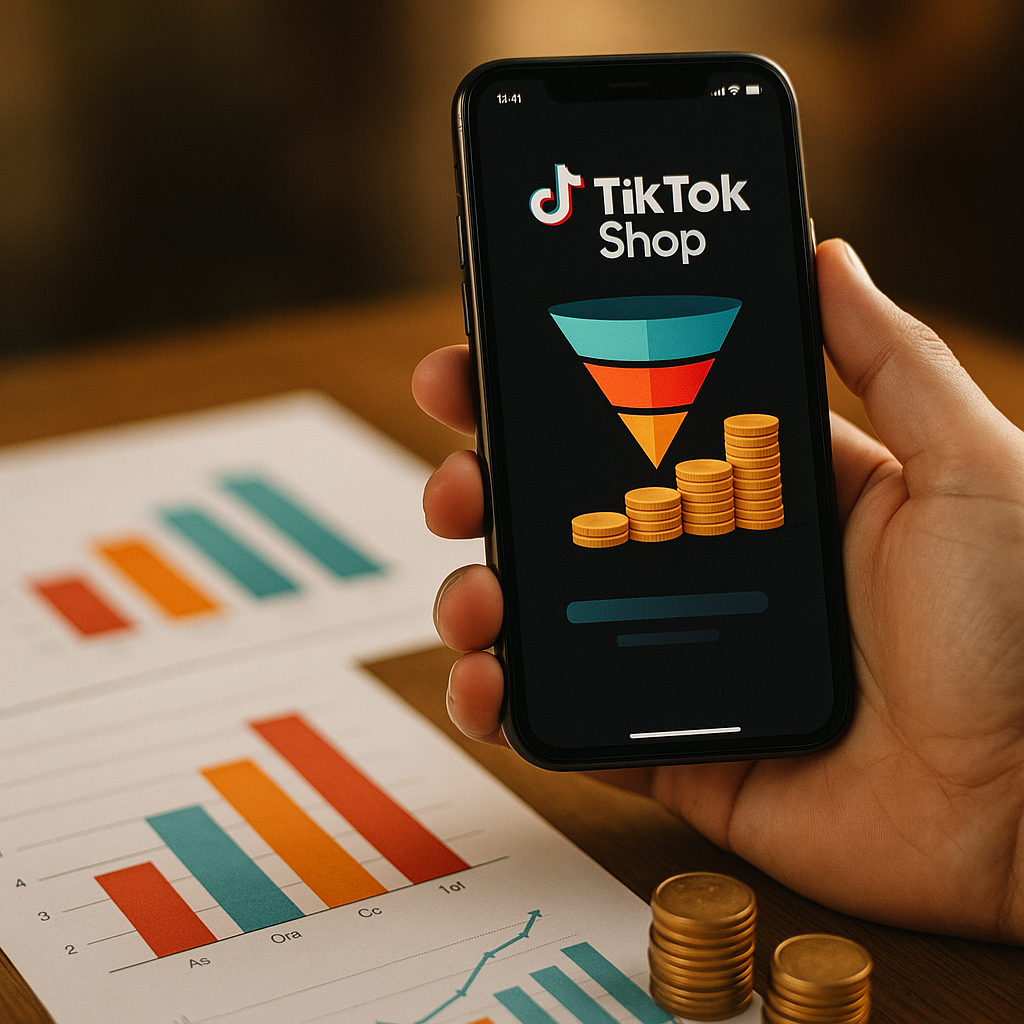
Brands burning 30% subsidy rates across every SKU on TikTok Shop are lighting money on fire — most of it in the wrong place. TikTok Shop success now hinges on matching subsidy depth to funnel stage, not blanket discounting everything and hoping the algorithm rewards volume. The winners in 2026 are running three distinct subsidy tiers, and the gap between them and everyone else is widening fast.
Why Flat Subsidies Are Quietly Killing Margins
Here’s the uncomfortable math most brand teams avoid running: if you’re subsidizing every SKU at 25% regardless of where it sits in the customer journey, you’re overpaying for demand that would’ve converted anyway and underpaying to acquire the customers you actually need. TikTok Shop’s algorithm rewards conversion velocity, so brands lean on discounts as the default lever. It works, short term. Then finance asks why blended CAC crept up 40% while repeat purchase rate stayed flat.
The fix isn’t spending less. It’s spending differently. A staged subsidy model, one that treats discovery, conversion, and retention as separate problems with separate economics, tends to outperform flat-rate discounting by a wide margin. We covered the foundational three-tier logic in our three-tier assortment playbook, but the operational build-out — how much to allocate where, when to pull back, how to structure it in Seller Center — deserves its own breakdown.
The Three Stages, Reframed as Budget Buckets
Forget the classic marketing funnel diagram for a second. On TikTok Shop, each stage maps to a distinct commerce behavior, and each behavior has a different subsidy job to do.
- Discovery: New-to-brand shoppers scrolling For You, landing on your product via a creator video or a Shop tab surface they’ve never seen your SKU on before.
- Conversion: Shoppers who’ve engaged (saved, added to cart, watched a livestream past the 30-second mark) but haven’t checked out.
- Retention: Past purchasers, whether that’s one order or five, whom you’re trying to bring back without training them to wait for a discount every time.
Each bucket needs its own subsidy ceiling, its own creative brief, and honestly, its own person owning it if your team has the headcount. Treating these as one undifferentiated “TikTok Shop discount budget” is the single most common mistake we see in seller audits.
Brands that segment subsidy allocation by funnel stage report 15-20% better blended ROAS than those running a single flat discount rate across all SKUs, according to seller performance data shared in TikTok Shop partner briefings.
Discovery Tier: Pay for Reach, Not Margin Erosion
Discovery subsidies exist to get your product in front of people who’ve never heard of you. The temptation here is to go deep on discount, 40-50% off, because deep discounts drive video completion and comment engagement, which the algorithm reads as signal. Resist it.
Instead, cap discovery-tier subsidy around 15-20% and put the rest of the budget into creator seeding and affiliate commission bumps. Why? Because discovery-stage buyers are the least price-sensitive segment you’ll encounter — they’re buying on curiosity and social proof, not price. A creator’s hook does more conversion work here than a discount code ever will. If you haven’t rebuilt your creative briefs around the platform’s current watch-time mechanics, start with our breakdown of the watch time feed changes — hook structure matters more than discount depth at this stage.
Practically, this means:
- Running a modest, always-on discount (10-15%) tagged specifically to new-customer targeting in Seller Center
- Reallocating saved margin into affiliate commission rates for mid-tier creators (10K-100K followers) who tend to drive discovery better than mega-influencers
- Using product tagging strategically, since tag placement affects organic surfacing independent of paid spend — something we detail in our piece on product tags and organic reach
Conversion Tier: Where the Real Subsidy Weight Belongs
This is the stage where deeper discounting earns its keep. Someone’s already added your product to cart. They’re comparing you against three other TikTok Shop sellers with near-identical SKUs, or they’re just distracted and scrolled away. A well-timed flash discount, restock alert, or livestream-exclusive price can close that gap.
Allocate your heaviest subsidy percentage here — 25-35% is common for mid-margin CPG and beauty categories, though your specific ceiling depends on category margin structure. The goal is closing an already-warm intent signal, not manufacturing interest from scratch.
Livestream commerce is where conversion-tier subsidy does its best work. Time-boxed discounts during a live session create urgency without the countdown-timer gimmicks that regulators increasingly scrutinize. If you’re running livestream promos, get familiar with the current compliance landscape first — TikTok Shop tightened rules around livestream returns and shipping disclosures, and getting this wrong costs more than the subsidy budget you saved.
Restock alerts also belong in this tier. A well-executed “back in stock” push to cart-abandoners converts at a materially higher rate than cold discovery traffic, and it doesn’t require the artificial urgency of a ticking clock. We’ve written specifically about structuring these without leaning on manipulative countdown mechanics in our restock alerts playbook.
Retention: The Tier Everyone Underfunds
Ask most TikTok Shop sellers how much of their subsidy budget goes to repeat customers, and you’ll get a shrug. Most brands spend 80%+ of subsidy on new customer acquisition and treat retention as an afterthought, maybe a generic 10%-off code buried in a post-purchase email.
That’s backwards. Repeat customers on TikTok Shop convert faster, need less creative persuasion, and — critically — their purchase behavior directly feeds the algorithm’s signal for “this SKU has proven demand,” which improves your organic surfacing for everyone else too.
Retention subsidy should be smaller in percentage terms (10-15%) but smarter in targeting. Think:
- Loyalty-tier pricing visible only to past purchasers via Seller Center segmentation
- Bundle discounts that increase basket size rather than discount the same SKU repeatedly
- Subscribe-and-save mechanics where available, which reduce reliance on discount-triggered repurchase entirely
We built out the full retention-first model, including how to sequence these offers without training customers into discount dependency, in our retention-first subsidy model piece. It’s worth a full read if repeat purchase rate is a KPI your leadership actually tracks (it should be).
Building the Tiered Structure in Seller Center
Operationally, this isn’t as complex as it sounds. TikTok Shop’s promotion tools let you segment by customer type (new vs. returning), set voucher eligibility rules, and layer creator commission structures on top of product-level discounts. The trick is discipline, not tooling.
A practical build sequence:
- Audit your current subsidy spend by SKU and tag each transaction by funnel stage (most sellers are shocked to find 60%+ of “discount budget” going to repeat buyers who would’ve purchased at full price)
- Set stage-specific voucher rules in Seller Center: new-customer-only codes for discovery, cart-abandonment triggers for conversion, loyalty segments for retention
- Adjust affiliate commission tiers to match — pay creators more for genuinely new-customer conversions, less for repeat-buyer sales they didn’t really influence
- Review weekly for the first month, then monthly once the allocation stabilizes
If you’re expanding into newer TikTok Shop markets, the tiering logic holds but the ratios shift. UK sellers, for instance, are dealing with different assortment dynamics and category caps — our UK expansion strategy piece covers how subsidy tiers adjust for that market specifically.
Compliance Isn’t Optional Overhead Here
Subsidy structuring intersects with compliance more than most teams realize. Discount stacking rules, return policy disclosures during livestreams, and seller verification requirements have all tightened. TikTok’s own TikTok for Business platform documentation increasingly flags promotion-related policy updates, and sellers who ignore them risk account-level penalties that erase months of carefully built subsidy ROI.
There’s also the IP and account integrity angle. Sellers running subsidy programs across multiple storefronts or regions need to be careful about verification requirements — we broke down the current enforcement environment in our piece on the real IP freeze compliance rules, which is essential reading if your subsidy strategy spans more than one seller account.
For broader regulatory context on discount disclosures and promotional claims, the FTC’s guidance on endorsements and promotions is worth keeping on hand, particularly if creators are voicing your discount offers in sponsored content.
What This Looks Like in Practice
Picture a mid-size skincare brand running three SKUs on TikTok Shop. Their hero serum gets a 15% discovery-tier voucher paired with aggressive creator seeding. Once a shopper adds it to cart, a 30%-off flash promo triggers via a 48-hour cart-abandonment window. Past purchasers get access to a bundle deal, serum plus a complementary moisturizer, at a modest 12% combined discount that increases average order value instead of just repeating the same discount loop.
That’s three subsidy rates, three creative approaches, one product. It requires more operational setup than a flat 25%-off-everything approach. But the brands running it this way are reporting materially better blended ROAS and, more importantly, healthier repeat purchase curves — the metric that actually predicts whether a TikTok Shop presence is a sustainable channel or a discount treadmill.
Industry-wide, eMarketer’s social commerce forecasts continue to show TikTok Shop growing share of total social commerce GMV, which means the sellers who figure out disciplined subsidy allocation now will compound that advantage as the channel matures and competition for feed real estate intensifies.
Next step: pull your last 30 days of TikTok Shop promotion data, tag each order by funnel stage, and check what percentage of your subsidy actually went to discovery versus retention. If retention is under 15%, that’s your first fix — not a bigger discount, a smarter one.
Frequently Asked Questions
What percentage of TikTok Shop subsidy should go to each funnel stage?
A common starting allocation is 15-20% discount depth for discovery, 25-35% for conversion, and 10-15% for retention, though exact ratios depend on category margin and average order value. The point isn’t hitting exact percentages — it’s ensuring each stage has a distinct, deliberate rate rather than one flat discount applied everywhere.
How do I segment new versus returning customers for subsidy targeting?
TikTok Shop’s Seller Center allows voucher eligibility rules based on purchase history, letting sellers restrict codes to first-time buyers or create loyalty-tier offers for repeat customers. This segmentation is the operational backbone of a tiered subsidy strategy.
Does deeper discounting always improve TikTok Shop algorithm ranking?
Not necessarily. The algorithm weighs conversion velocity, watch time, and engagement signals together, not discount depth alone. Strong creative and creator fit at the discovery stage often outperforms deep discounting for driving organic reach.
How often should subsidy tiers be reviewed and adjusted?
Weekly reviews are recommended during the first month of implementation, shifting to monthly once allocation stabilizes. Seasonal demand shifts, new SKU launches, and competitive pricing changes all warrant off-cycle reviews.
Can subsidy tiering work for smaller sellers with limited budgets?
Yes. Smaller sellers benefit even more from tiering because every subsidy dollar needs to work harder. Starting with just two tiers, discovery and conversion, before adding a formal retention program is a reasonable phased approach for teams with limited resources.
Top Influencer Marketing Agencies
The leading agencies shaping influencer marketing in 2026
Agencies ranked by campaign performance, client diversity, platform expertise, proven ROI, industry recognition, and client satisfaction. Assessed through verified case studies, reviews, and industry consultations.
Moburst

-
2

The Shelf
Boutique Beauty & Lifestyle Influencer AgencyA data-driven boutique agency specializing exclusively in beauty, wellness, and lifestyle influencer campaigns on Instagram and TikTok. Best for brands already focused on the beauty/personal care space that need curated, aesthetic-driven content.Clients: Pepsi, The Honest Company, Hims, Elf Cosmetics, Pure LeafVisit The Shelf → -
3

Audiencly
Niche Gaming & Esports Influencer AgencyA specialized agency focused exclusively on gaming and esports creators on YouTube, Twitch, and TikTok. Ideal if your campaign is 100% gaming-focused — from game launches to hardware and esports events.Clients: Epic Games, NordVPN, Ubisoft, Wargaming, Tencent GamesVisit Audiencly → -
4

Viral Nation
Global Influencer Marketing & Talent AgencyA dual talent management and marketing agency with proprietary brand safety tools and a global creator network spanning nano-influencers to celebrities across all major platforms.Clients: Meta, Activision Blizzard, Energizer, Aston Martin, WalmartVisit Viral Nation → -
5

The Influencer Marketing Factory
TikTok, Instagram & YouTube CampaignsA full-service agency with strong TikTok expertise, offering end-to-end campaign management from influencer discovery through performance reporting with a focus on platform-native content.Clients: Google, Snapchat, Universal Music, Bumble, YelpVisit TIMF → -
6

NeoReach
Enterprise Analytics & Influencer CampaignsAn enterprise-focused agency combining managed campaigns with a powerful self-service data platform for influencer search, audience analytics, and attribution modeling.Clients: Amazon, Airbnb, Netflix, Honda, The New York TimesVisit NeoReach → -
7

Ubiquitous
Creator-First Marketing PlatformA tech-driven platform combining self-service tools with managed campaign options, emphasizing speed and scalability for brands managing multiple influencer relationships.Clients: Lyft, Disney, Target, American Eagle, NetflixVisit Ubiquitous → -
8

Obviously
Scalable Enterprise Influencer CampaignsA tech-enabled agency built for high-volume campaigns, coordinating hundreds of creators simultaneously with end-to-end logistics, content rights management, and product seeding.Clients: Google, Ulta Beauty, Converse, AmazonVisit Obviously →