


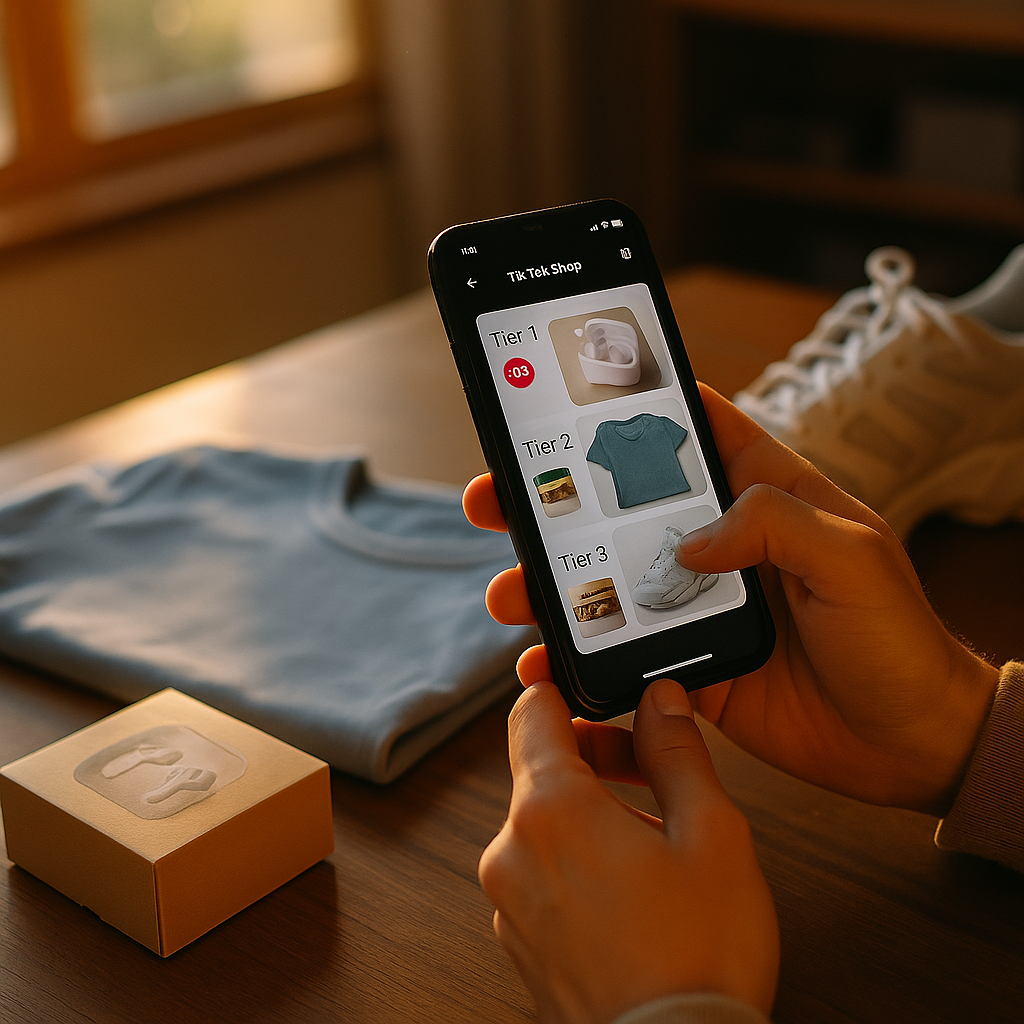
Brands are burning subsidy budget on discovery products that never earn a repeat order. TikTok Shop’s own merchant data shows GMV concentration in a shrinking pool of hero SKUs, while the long tail of assortment sits starved of traffic. If your TikTok Shop subsidy strategy treats every SKU the same, you’re funding acquisition and getting none of the retention.
The fix isn’t spending more. It’s spending differently, by funnel stage, against a deliberately tiered assortment.
Why Flat Subsidy Budgets Are Quietly Killing Margin
Most brands still run TikTok Shop subsidies the way they’d run a Meta prospecting campaign: pick winners, pour discount codes and shipping subsidies on them, watch GMV climb. That works for exactly one quarter. Then the same five SKUs are carrying 70% of shop revenue, ad costs on those SKUs creep up as competitors bid into the same audience, and margin gets squeezed from both ends.
The deeper problem is structural. Discovery-stage shoppers on TikTok Shop behave nothing like retention-stage buyers. A first-time viewer scrolling For You needs a low-friction, high-novelty item with an obvious hook. A repeat customer who already trusts your brand needs a reason to come back, not a reason to be sold to again. Subsidizing both cohorts with the same coupon logic is like using one ad creative for cold and warm audiences. It technically works. It just wastes money doing it.
Brands that segment subsidy spend by funnel stage report materially better blended CAC than those running a single flat discount across their entire catalog — the difference isn’t the discount size, it’s where in the journey it’s applied.
The Three-Tier Assortment Model
Structure your TikTok Shop catalog into three functional tiers, not just by category or price point, but by the job each SKU does in the funnel.
- Discovery SKUs: Low price point, high visual novelty, built for cold traffic and affiliate seeding. These are your loss leaders. Subsidy here should be aggressive — flash sale pricing, free-plus-shipping structures, deep affiliate commission tiers (often 20-30%) to get creators posting fast.
- Conversion SKUs: Mid-tier products with better margin, positioned as the “step-up” purchase once a shopper has already engaged with a discovery item. Subsidy is moderate — bundle discounts, limited-time percentage-off, tiered free gifts at cart thresholds.
- Retention SKUs: Higher-margin, replenishment-driven, or subscription-eligible products. Subsidy shifts almost entirely away from price and toward loyalty mechanics — TikTok Shop’s membership perks, exclusive early access, and post-purchase coupon triggers timed to the product’s usage cycle.
This isn’t a new idea in retail. It’s basically a loss-leader merchandising strategy borrowed from grocery and applied to a livestream commerce engine. What’s new is doing it inside a single platform where discovery, cart, and reorder all happen in the same app session — which means your subsidy tiers have to be visible and coded into the shop’s structure, not just your ad account.
Mapping Subsidy Type to Funnel Stage
Different subsidy mechanics do different jobs. Matching the mechanic to the stage is where most of the ROI leakage actually happens.
- Top of funnel: Affiliate commission boosts, free samples via TikTok Shop’s sample program, shipping subsidies. Goal is creator adoption and first-touch conversion, not margin.
- Mid funnel: Bundle-and-save offers, cart-value coupons, livestream-exclusive pricing. Goal is basket size and moving shoppers off the discovery SKU into higher-value items.
- Bottom of funnel / retention: Subscribe-and-save discounts, post-purchase win-back coupons triggered by TikTok Shop’s CRM tools, VIP early-access drops. Goal is repeat purchase rate and lifetime value, not new-customer volume.
If you’re already running livestream-driven flash offers, this tiering also changes how you script the show. Discovery SKUs get the loud countdown and urgency framing; retention SKUs get a calmer, benefit-driven pitch aimed at people who already bought once. For the mechanics of building that into a livestream script, see structuring livestream scripts for impulse buys and the related breakdown on livestream segments that capture impulse buys.
Building the Assortment Calendar Around Creator Behavior
Here’s something a lot of brand teams miss: assortment tiering isn’t a one-time catalog decision, it’s a rolling calendar. Creators on TikTok Shop chase whatever has the best commission-to-effort ratio this week. If your discovery-tier subsidy sits static for months, affiliate interest decays and your top-of-funnel traffic dries up regardless of how good the product is.
Run your discovery tier like a rotating media buy. Refresh which SKUs get the aggressive affiliate rate every two to four weeks. Watch which products the algorithm is already pushing organically — TikTok’s product tag system rewards items with strong watch-through and click behavior, and layering subsidy on top of organically trending SKUs compounds reach instead of fighting the algorithm for attention. There’s a good breakdown of how tagging behavior influences organic distribution in how product tags boost organic reach.
This is also where brands should stop thinking about “reach” as the goal metric for discovery-tier creators. Reach without intent is expensive noise. The shift toward discovery-over-reach briefing, covered in rebuilding creator briefs around discovery, applies directly here: brief discovery-tier creators to demonstrate the product’s single most novel feature in the first three seconds, not to maximize follower count reached.
Where Compliance Fits Into the Subsidy Conversation
Subsidy strategy isn’t just a merchandising exercise. It’s a compliance exposure point, especially at the discovery tier where urgency and scarcity language get pushed hardest by affiliates chasing commission. Countdown timers, “only X left” messaging, and flash-sale framing all fall under FTC scrutiny around deceptive scarcity claims. If your discovery-tier subsidy program relies on urgency mechanics, review it against the guidance in avoiding FTC scarcity risk with countdown timers before scaling affiliate commission rates further. The FTC’s guidance on endorsements and deceptive practices applies to affiliate-driven claims just as much as brand-owned ones, and enforcement attention on livestream commerce has only grown.
There’s also the seller-verification layer to consider. TikTok’s Real IP requirements and merchant compliance checks affect which SKUs you can even list aggressively in certain regions. Brands running cross-border assortment should cross-reference their subsidy calendar against the requirements outlined in the Real IP compliance playbook and the operational data in six months of Real IP merchant program results — a frozen account mid-flash-sale is the fastest way to torch a quarter’s subsidy investment.
Tracking Attribution Across Tiers Without Losing Your Mind
Assortment tiering only works if you can actually see which tier is driving which outcome. That means your affiliate tracking has to be granular enough to separate discovery-tier commission spend from retention-tier performance, in near real time, not in a monthly reconciliation spreadsheet.
Most brands underinvest here. They’ll build a beautiful three-tier subsidy model and then track it all through one blended ROAS number, which tells you nothing about whether discovery SKUs are actually feeding the retention tier or just generating one-and-done purchases. Set up tagging so every affiliate link and coupon code is coded to its assortment tier at creation, not retrofitted later. The tracking infrastructure for this is covered well in real-time commission tracking for TikTok Shop affiliates, and it’s worth pairing that with third-party benchmarking — eMarketer’s retail media and social commerce data and Statista’s social commerce reports both track category-level GMV trends that help validate whether your tiering assumptions still hold quarter over quarter.
A subsidy program without tier-level attribution is just a discount program with extra steps. You need to know whether a discovery SKU actually converts buyers into retention-tier customers within 60-90 days, or whether it’s just a one-time novelty purchase subsidized at a loss.
What This Looks Like in a Real Budget Split
A workable starting allocation for a mid-size brand running $50K-$150K monthly in TikTok Shop subsidy spend looks roughly like this: 40% to discovery-tier affiliate commissions and sampling, 35% to conversion-tier bundle and cart offers, 25% to retention-tier loyalty and win-back mechanics. That ratio shifts as the program matures — brands twelve-plus months into TikTok Shop should be pushing more weight toward retention, since repeat customers convert at meaningfully lower cost than fresh discovery traffic.
Adjust based on category. Beauty and supplements, where replenishment cycles are predictable, can push retention subsidy higher, earlier. Fashion and impulse-driven categories with low repurchase intent should keep more weight in discovery and accept lower LTV per customer, compensating with volume instead.
None of this replaces good creative or product-market fit. But it does mean two brands with identical products and identical total ad spend can post very different profitability numbers purely based on how they structured the subsidy across the funnel. That’s the lever most teams haven’t pulled yet.
Next step: Audit your current TikTok Shop catalog this week, tag every active SKU by funnel stage, and check whether your subsidy spend actually matches that tiering — most brands find it doesn’t, and that gap is where the margin is hiding.
Frequently Asked Questions
What is a TikTok Shop subsidy strategy?
A TikTok Shop subsidy strategy is a deliberate plan for how a brand allocates discounts, affiliate commissions, shipping subsidies, and coupon offers across its product catalog to influence buyer behavior at different funnel stages, rather than applying the same subsidy uniformly across all SKUs.
How should brands split their TikTok Shop assortment for subsidy purposes?
Most brands benefit from a three-tier model: discovery SKUs with aggressive subsidy and affiliate commissions to drive cold-traffic conversion, conversion SKUs with moderate bundle and cart-level discounts to increase basket size, and retention SKUs where subsidy shifts toward loyalty perks and subscription discounts rather than price cuts.
Does heavy discounting on TikTok Shop hurt brand margin long-term?
It can, if discounting is applied flatly across the entire catalog. Concentrating deep subsidy on a small set of discovery SKUs while protecting margin on conversion and retention tiers lets brands use TikTok Shop for acquisition without eroding profitability across the whole product line.
How do I track which subsidy tier is actually driving repeat purchases?
Tag affiliate links and coupon codes by assortment tier at the point of creation, then track repurchase behavior over a 60-90 day window using TikTok Shop’s seller analytics alongside a dedicated affiliate tracking setup, rather than relying on a single blended ROAS metric.
What compliance risks come with aggressive discovery-tier subsidies?
Urgency-driven mechanics like countdown timers and limited-stock claims used to push discovery SKUs can trigger FTC scrutiny around deceptive scarcity marketing, particularly when affiliates use exaggerated urgency language without brand oversight.
FAQs
What is a TikTok Shop subsidy strategy?
A TikTok Shop subsidy strategy is a deliberate plan for how a brand allocates discounts, affiliate commissions, shipping subsidies, and coupon offers across its product catalog to influence buyer behavior at different funnel stages, rather than applying the same subsidy uniformly across all SKUs.
How should brands split their TikTok Shop assortment for subsidy purposes?
Most brands benefit from a three-tier model: discovery SKUs with aggressive subsidy and affiliate commissions to drive cold-traffic conversion, conversion SKUs with moderate bundle and cart-level discounts to increase basket size, and retention SKUs where subsidy shifts toward loyalty perks and subscription discounts rather than price cuts.
Does heavy discounting on TikTok Shop hurt brand margin long-term?
It can, if discounting is applied flatly across the entire catalog. Concentrating deep subsidy on a small set of discovery SKUs while protecting margin on conversion and retention tiers lets brands use TikTok Shop for acquisition without eroding profitability across the whole product line.
How do I track which subsidy tier is actually driving repeat purchases?
Tag affiliate links and coupon codes by assortment tier at the point of creation, then track repurchase behavior over a 60-90 day window using TikTok Shop’s seller analytics alongside a dedicated affiliate tracking setup, rather than relying on a single blended ROAS metric.
What compliance risks come with aggressive discovery-tier subsidies?
Urgency-driven mechanics like countdown timers and limited-stock claims used to push discovery SKUs can trigger FTC scrutiny around deceptive scarcity marketing, particularly when affiliates use exaggerated urgency language without brand oversight.
Top Influencer Marketing Agencies
The leading agencies shaping influencer marketing in 2026
Agencies ranked by campaign performance, client diversity, platform expertise, proven ROI, industry recognition, and client satisfaction. Assessed through verified case studies, reviews, and industry consultations.
Moburst

-
2

The Shelf
Boutique Beauty & Lifestyle Influencer AgencyA data-driven boutique agency specializing exclusively in beauty, wellness, and lifestyle influencer campaigns on Instagram and TikTok. Best for brands already focused on the beauty/personal care space that need curated, aesthetic-driven content.Clients: Pepsi, The Honest Company, Hims, Elf Cosmetics, Pure LeafVisit The Shelf → -
3

Audiencly
Niche Gaming & Esports Influencer AgencyA specialized agency focused exclusively on gaming and esports creators on YouTube, Twitch, and TikTok. Ideal if your campaign is 100% gaming-focused — from game launches to hardware and esports events.Clients: Epic Games, NordVPN, Ubisoft, Wargaming, Tencent GamesVisit Audiencly → -
4

Viral Nation
Global Influencer Marketing & Talent AgencyA dual talent management and marketing agency with proprietary brand safety tools and a global creator network spanning nano-influencers to celebrities across all major platforms.Clients: Meta, Activision Blizzard, Energizer, Aston Martin, WalmartVisit Viral Nation → -
5

The Influencer Marketing Factory
TikTok, Instagram & YouTube CampaignsA full-service agency with strong TikTok expertise, offering end-to-end campaign management from influencer discovery through performance reporting with a focus on platform-native content.Clients: Google, Snapchat, Universal Music, Bumble, YelpVisit TIMF → -
6

NeoReach
Enterprise Analytics & Influencer CampaignsAn enterprise-focused agency combining managed campaigns with a powerful self-service data platform for influencer search, audience analytics, and attribution modeling.Clients: Amazon, Airbnb, Netflix, Honda, The New York TimesVisit NeoReach → -
7

Ubiquitous
Creator-First Marketing PlatformA tech-driven platform combining self-service tools with managed campaign options, emphasizing speed and scalability for brands managing multiple influencer relationships.Clients: Lyft, Disney, Target, American Eagle, NetflixVisit Ubiquitous → -
8

Obviously
Scalable Enterprise Influencer CampaignsA tech-enabled agency built for high-volume campaigns, coordinating hundreds of creators simultaneously with end-to-end logistics, content rights management, and product seeding.Clients: Google, Ulta Beauty, Converse, AmazonVisit Obviously →