


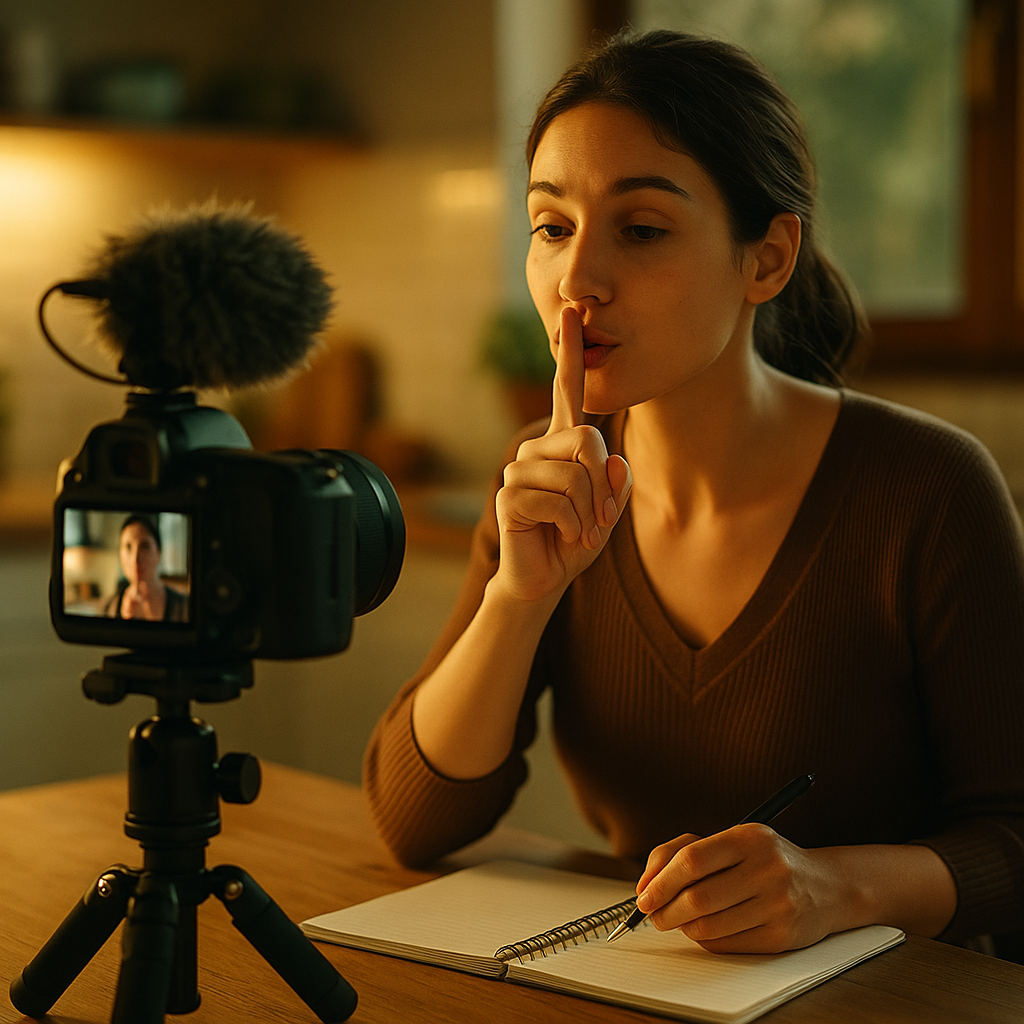
No voiceover. No music. No call to action in the first three seconds. And yet silent vlog ASMR product content is pulling engagement rates that make traditional branded video look expensive by comparison. Some creators are reporting watch times double what their talking-head reviews generate. For an industry obsessed with hooks and hashtags, that’s an uncomfortable data point worth sitting with.
What Silent Vlog ASMR Content Actually Is
Strip away the jargon and the format is simple. A creator films themselves unboxing, applying, cooking with, or using a product, with zero spoken narration. The only audio is the product itself: the crinkle of packaging, the click of a cap, the sizzle of oil, the snap of a case closing. It borrows ASMR’s sensory triggers (tapping, crinkling, whispering) and marries them to the slower pacing of a vlog, rather than the hyper-cut, 3-second-hook style we associate with typical short-form ads.
Think of it as the opposite of the loud, fast-cut performance marketing has trained us to expect. No trending audio. No text overlay screaming “you need this.” Just a product, a pair of hands, and ambient sound design that feels almost meditative.
Why Brands Are Suddenly Paying Attention
A few forces converged to make this format commercially interesting rather than a niche aesthetic experiment.
- Ad fatigue is real. Consumers scroll past anything that smells like a pitch. Silence reads as authenticity, even when it’s fully produced and paid.
- Sound-on viewing has grown. Platforms like TikTok and Instagram have pushed users toward sound-on consumption for years, which means ambient product audio now actually gets heard, instead of being muted by default.
- ASMR has mainstream credibility. What used to be a fringe YouTube niche is now a recognized content category with its own creator economy, cross-pollinating into beauty, food, tech unboxing, and home goods.
- It’s cheap to test. No script, no talent fee for on-camera delivery, no translation or dubbing needed for global rollout. That last point matters a lot for brands running multi-market campaigns, similar to the localization challenges covered in wordless creator collaborations.
Silent ASMR content removes the one thing most paid media can’t fake: a script that sounds like an ad. The absence of a sales pitch is, paradoxically, becoming the pitch.
The Categories Where It’s Working Best
Not every product benefits equally. Beauty and skincare lead the pack, unsurprisingly, since texture, application sound, and packaging are inherently tactile. Food and beverage follows closely, where crunch, pour, and sizzle do the selling without a single word. Tech unboxing has carved out its own ASMR subgenre too, with the click of a new phone case or the hiss of a sealed box becoming a mini ritual viewers return for.
Fashion and home goods are testing the waters more cautiously. A silent vlog of someone folding a sweater doesn’t carry the same sensory payoff as a skincare jar popping open. Brands in these categories are adapting the format by leaning into fabric sounds, zipper pulls, and material texture instead, with mixed but improving results.
Does Silence Actually Convert, or Is It Just Pretty to Watch?
This is the question every performance marketer should be asking before greenlighting a budget line for this format. The honest answer: it depends on where it sits in the funnel.
Silent ASMR content is not a strong direct-response tool. There’s no CTA, no urgency, no price anchor. What it does exceptionally well is build dwell time and brand recall, which are upper-funnel metrics that matter more than they get credit for. Sprout Social has long emphasized that watch time and completion rate correlate strongly with algorithmic distribution, meaning a well-performing silent clip can earn organic reach that a hard-sell ad never would.
Brands running this format successfully tend to pair it with a secondary conversion layer: a pinned comment, a shoppable tag, or a follow-up piece of content that does carry a CTA. It’s less a standalone ad unit and more a trust-building asset that feeds a larger funnel, the same logic behind formats explored in shoppable pinned comments.
The Metrics Brands Should Actually Track
- Average watch time and completion rate, since these drive organic push on most platforms.
- Save and share rate, which signals the content has crossed from passive viewing into something people want to revisit or send to a friend.
- Comment sentiment, not comment volume. ASMR content tends to draw fewer comments overall but more emotionally specific ones.
- Assisted conversions, tracked through UTM tagging on bio links or pinned comments rather than expecting the video itself to close the sale.
If a brand is only measuring click-through rate, silent ASMR content will look like a failure. Measured against brand lift and content longevity, it often tells a different story. eMarketer data on short-form video consumption has repeatedly shown that completion rate, not clicks, is becoming the stronger predictor of ad recall across platforms.
Brand Safety and Compliance: The Quiet Risk Nobody’s Discussing
Here’s where it gets interesting for anyone running compliance review. Silent content is harder to caption accurately, harder to moderate for implied claims, and creates ambiguity around disclosure. If a creator is silently applying a skincare product with a satisfied expression and soft piano-adjacent crinkle sounds, is that an implied efficacy claim? The FTC has been clear that endorsements don’t need words to trigger disclosure requirements. Visual implication counts.
This means brands still need the #ad or “Paid Partnership” label clearly visible, even when there’s no spoken disclosure to anchor it. Accessibility is another blind spot: screen readers and closed captions can’t convey ambient sound cues, so a format built entirely around sound design risks excluding viewers who rely on captions. Brands serious about accessibility should be building text-based context into the caption or on-screen card, not skipping it because “there’s nothing being said.”
Agencies running this format at scale are borrowing review frameworks from similar low-dialogue formats, like the approval structures outlined in trend audio jacking approvals, where speed and compliance have to coexist without a script to redline.
A silent video still makes claims. It just makes them with a facial expression instead of a sentence, and regulators are watching both.
Scripting Without Dialogue: What “Script” Even Means Here
Calling this format “unscripted” is misleading. What brands actually need is a sound and shot script, not a dialogue script. That means:
- A defined sequence of sensory beats (unwrap, open, apply, reveal) that mirrors a narrative arc even without words.
- Explicit notes on which product sounds need to be mic’d clearly versus left ambient.
- A brand safety checklist covering gesture and facial expression, since those now carry the claim-making weight that dialogue used to carry.
- A caption or on-screen text plan that fills the accessibility and context gap left by the absence of narration.
This is closer in spirit to the shot-list discipline covered in B-roll shot list planning than to a traditional ad script. Teams that treat it as “just hand the creator the product and let them vibe” tend to get inconsistent output and messy compliance trails. Teams that treat it as a structured, sound-first brief tend to get content that’s both repeatable and defensible.
How It Fits Alongside Louder Formats
Smart brands aren’t replacing their louder, hook-driven content with silence. They’re running both, segmented by funnel stage and platform mood. A silent ASMR unboxing might live natively on TikTok or Instagram Reels as a brand-building asset, while a punchier, fast-cut version with a hook and CTA runs as a paid ad targeting warmer audiences. The formats aren’t competitors, they’re complementary tools doing different jobs, not unlike the dual-track approach brands use with POV hook templates for direct response alongside quieter trust-building content.
One caution: silent content performs best when it feels native to the creator’s existing style. Forcing a high-energy creator into a whisper-quiet ASMR format usually produces something that feels off-brand for their audience, and audiences notice the mismatch faster than brands expect.
What to Test First If You’re Considering This Format
Start small. Pick one product with strong inherent sound design potential (packaging that crinkles, a texture that’s satisfying to apply, a mechanism that clicks or snaps) and brief a creator who already has some ASMR or slow-content instinct in their existing feed. Don’t force it onto a creator whose entire brand is high-energy commentary.
Run it as an organic test first before putting media dollars behind it. Watch completion rate and saves for two weeks. If those numbers beat your account average, you’ve got a format worth scaling with a compliance-reviewed brief and a slightly larger creator roster.
Frequently Asked Questions
What is silent vlog ASMR product content?
It’s a video format where a creator demonstrates or uses a product with no spoken narration, relying entirely on ambient product sounds like crinkling, tapping, or pouring to hold viewer attention.
Does silent ASMR content need an FTC disclosure?
Yes. The FTC’s endorsement guidance applies regardless of spoken dialogue, so paid partnerships still require a visible disclosure like “#ad” or “Paid Partnership,” even without narration.
Which product categories work best for this format?
Beauty, skincare, food and beverage, and tech unboxing perform strongest, since these categories have inherently satisfying textures and sounds. Fashion and home goods require more creative adaptation to work.
How do you measure ROI on a format with no call to action?
Track watch time, completion rate, saves, and shares as primary signals, then layer in assisted conversions through pinned comments or bio links rather than expecting the video itself to drive direct clicks.
Is silent ASMR content accessible to all viewers?
Not by default. Since the format relies on ambient sound, brands should add text-based context or descriptive captions to avoid excluding viewers who rely on screen readers or closed captions.
The takeaway for brands testing silent vlog ASMR product content: treat it as a trust-building, upper-funnel asset with a sound-first brief and a tight compliance checklist, not a direct-response ad. Start with one product, one creator, and a two-week organic test before committing real media spend.
Frequently Asked Questions
What is silent vlog ASMR product content?
It’s a video format where a creator demonstrates or uses a product with no spoken narration, relying entirely on ambient product sounds like crinkling, tapping, or pouring to hold viewer attention.
Does silent ASMR content need an FTC disclosure?
Yes. The FTC’s endorsement guidance applies regardless of spoken dialogue, so paid partnerships still require a visible disclosure like “#ad” or “Paid Partnership,” even without narration.
Which product categories work best for this format?
Beauty, skincare, food and beverage, and tech unboxing perform strongest, since these categories have inherently satisfying textures and sounds. Fashion and home goods require more creative adaptation to work.
How do you measure ROI on a format with no call to action?
Track watch time, completion rate, saves, and shares as primary signals, then layer in assisted conversions through pinned comments or bio links rather than expecting the video itself to drive direct clicks.
Is silent ASMR content accessible to all viewers?
Not by default. Since the format relies on ambient sound, brands should add text-based context or descriptive captions to avoid excluding viewers who rely on screen readers or closed captions.
Top Influencer Marketing Agencies
The leading agencies shaping influencer marketing in 2026
Agencies ranked by campaign performance, client diversity, platform expertise, proven ROI, industry recognition, and client satisfaction. Assessed through verified case studies, reviews, and industry consultations.
Moburst

-
2

The Shelf
Boutique Beauty & Lifestyle Influencer AgencyA data-driven boutique agency specializing exclusively in beauty, wellness, and lifestyle influencer campaigns on Instagram and TikTok. Best for brands already focused on the beauty/personal care space that need curated, aesthetic-driven content.Clients: Pepsi, The Honest Company, Hims, Elf Cosmetics, Pure LeafVisit The Shelf → -
3

Audiencly
Niche Gaming & Esports Influencer AgencyA specialized agency focused exclusively on gaming and esports creators on YouTube, Twitch, and TikTok. Ideal if your campaign is 100% gaming-focused — from game launches to hardware and esports events.Clients: Epic Games, NordVPN, Ubisoft, Wargaming, Tencent GamesVisit Audiencly → -
4

Viral Nation
Global Influencer Marketing & Talent AgencyA dual talent management and marketing agency with proprietary brand safety tools and a global creator network spanning nano-influencers to celebrities across all major platforms.Clients: Meta, Activision Blizzard, Energizer, Aston Martin, WalmartVisit Viral Nation → -
5

The Influencer Marketing Factory
TikTok, Instagram & YouTube CampaignsA full-service agency with strong TikTok expertise, offering end-to-end campaign management from influencer discovery through performance reporting with a focus on platform-native content.Clients: Google, Snapchat, Universal Music, Bumble, YelpVisit TIMF → -
6

NeoReach
Enterprise Analytics & Influencer CampaignsAn enterprise-focused agency combining managed campaigns with a powerful self-service data platform for influencer search, audience analytics, and attribution modeling.Clients: Amazon, Airbnb, Netflix, Honda, The New York TimesVisit NeoReach → -
7

Ubiquitous
Creator-First Marketing PlatformA tech-driven platform combining self-service tools with managed campaign options, emphasizing speed and scalability for brands managing multiple influencer relationships.Clients: Lyft, Disney, Target, American Eagle, NetflixVisit Ubiquitous → -
8

Obviously
Scalable Enterprise Influencer CampaignsA tech-enabled agency built for high-volume campaigns, coordinating hundreds of creators simultaneously with end-to-end logistics, content rights management, and product seeding.Clients: Google, Ulta Beauty, Converse, AmazonVisit Obviously →