


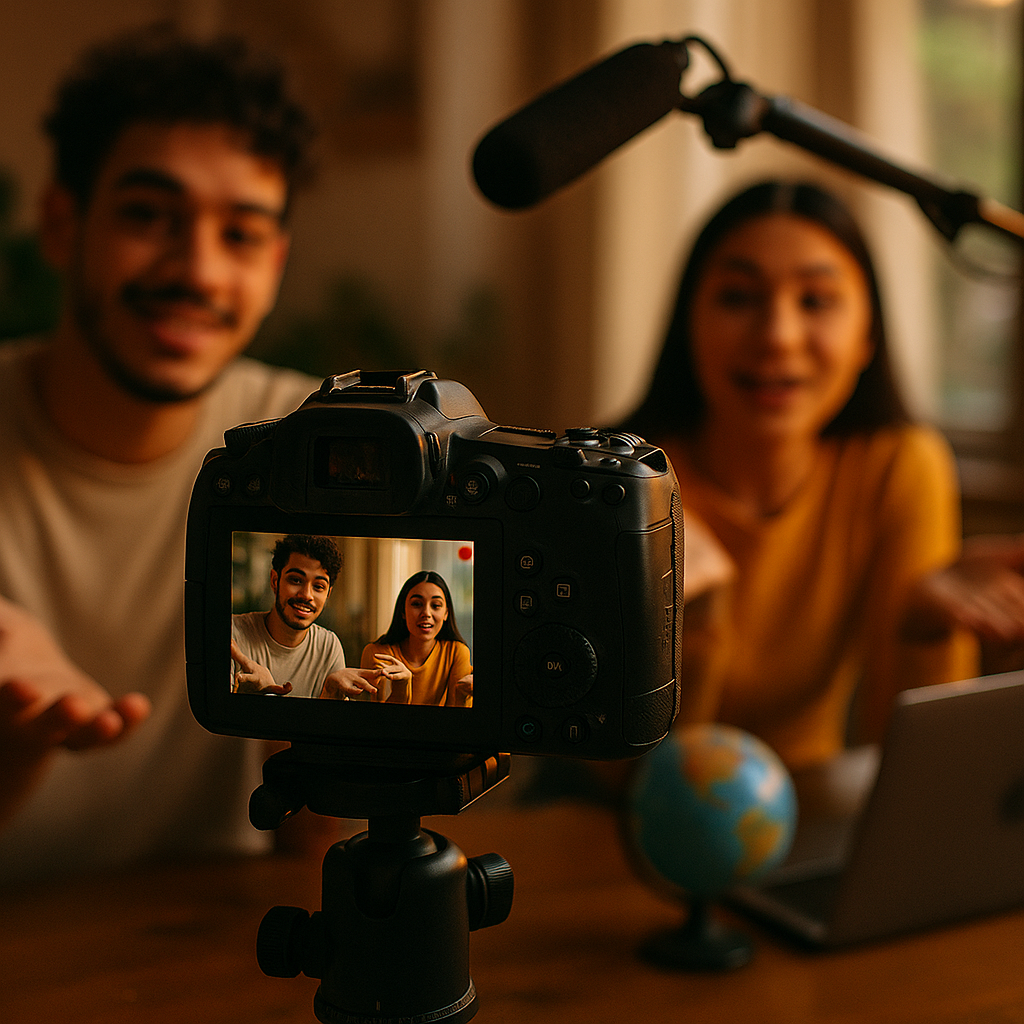
Dubbing a single 60-second creator video into eight languages can cost more than the original production. Skip the dialogue entirely and that cost drops to near zero. As global influencer budgets tighten and brands chase audiences across a dozen markets at once, wordless creator collabs have quietly become one of the smartest scaling tactics in the playbook, no subtitles, no voiceover, no re-shoots required.
This isn’t a gimmick. It’s a production and distribution strategy that solves a real operational headache: how do you brief, approve, and deploy creator content across regions without blowing the budget on localization? The answer, increasingly, is to script campaigns that never need a single spoken word.
Why Dialogue Is the Hidden Tax on Global Campaigns
Every line of spoken dialogue in a creator video triggers a chain of downstream costs: translation, voiceover talent, subtitle timing, cultural review, legal sign-off on claims in each market. Multiply that across ten territories and a 90-second video becomes a six-figure localization project before it even reaches a media buyer.
Brand teams running multi-market programs know this pain intimately. A script that works perfectly in English can land flat, or worse, offensively, when translated literally into Portuguese or Korean. Idioms don’t travel. Humor doesn’t travel. Even pacing doesn’t travel, since average speech rate varies significantly by language, which throws off edit timing on every localized cut.
Wordless formats aren’t a creative compromise, they’re a risk mitigation strategy that happens to also cut production timelines by weeks.
Strip the dialogue out and you remove the single biggest variable cost and compliance risk in cross-border creator marketing. What’s left is visual storytelling, something that, done well, actually outperforms voiced content on completion rate because it forces tighter, punchier editing.
What Wordless Actually Means in Practice
Wordless doesn’t mean silent. Music, sound effects, on-screen text (kept minimal and icon-driven), and expressive performance carry the narrative instead of spoken lines. Think of the formats that already dominate global feeds: transformation reveals, ASMR product demos, visual before-and-afters, reaction-based proof points. None of them need a translator.
This connects directly to formats brands are already testing. Expectation versus reality edits rely almost entirely on visual contrast, a reveal does the persuasive work that a testimonial would otherwise handle in words. Similarly, swipe-to-reveal carousels use interaction and pacing instead of narration to drive the shoppable moment.
The creative brief shifts accordingly. Instead of writing dialogue, scripting teams write beat sheets: what happens at second 2, what happens at second 8, where the product appears, where the payoff lands. It’s closer to storyboarding a silent film than writing ad copy. That discipline, it turns out, produces tighter videos regardless of market.
The Beat Sheet Replaces the Script
A traditional creator brief hands over talking points. A wordless brief hands over a visual sequence: hook shot, tension beat, product reveal, proof moment, CTA gesture. Creators in Manila, Madrid, and Manchester can all execute the same beat sheet with their own local flavor, no translation layer needed because there’s nothing to translate.
This is where the format borrows heavily from mini vlog structures that already prioritize visual trust-building over spoken persuasion. The lesson transfers cleanly: audiences trust what they see happening more than what they’re told.
Sound Design Does the Heavy Lifting
Remove dialogue and sound design becomes the narrative engine. Trending audio, diegetic product sounds (the satisfying click of a cap, the pour of a liquid), and rhythm-matched cuts all substitute for a voiceover track. This isn’t new territory for creator marketing, brands have been leaning on this for years in adjacent formats.
Mukbang-style reviews proved that sound alone, the crunch, the sizzle, can sell a product more effectively than a scripted endorsement. Wordless global campaigns apply the same principle at scale: strip the words, keep the sensory cues, let the product speak through its own acoustics.
Trend-audio strategy matters even more here because the soundtrack is now carrying narrative weight that dialogue would normally handle. Teams building wordless campaigns should study trend audio hijacking tactics closely, since timing a sound before it saturates becomes part of the creative strategy, not just a distribution afterthought.
How Do You Brief Creators Without a Script?
This is the question every brand manager asks the first time this strategy lands on their desk. The honest answer: you brief shot composition, pacing, and emotional beats instead of lines. A strong wordless brief includes:
- A reference reel of 3 to 5 videos showing the desired pacing and tone
- A shot list with timing markers (hook within 2 seconds, product visible by second 5)
- An emotional arc description (curiosity, tension, relief, satisfaction)
- Approved on-screen text treatments, kept to single words or numbers where possible
- A sound direction note (upbeat, ASMR, dramatic pause, trending audio slot)
Creators still have creative freedom, arguably more than usual, because they’re not locked into reciting brand copy. What they’re locked into is structure, which is actually easier to QA across 40 creators in 12 countries than 40 individually translated scripts.
This approach pairs naturally with POV format scripting, where the camera itself becomes the storyteller and the viewer experiences the product through perspective rather than explanation.
Approval and Compliance Get Simpler Too
Legal and compliance teams love this format more than almost anyone else on the brand side. Spoken claims are where most regulatory risk lives. The FTC’s disclosure guidance and the UK’s ICO advertising standards both scrutinize verbal and written claims far more heavily than visual demonstration, provided the visuals aren’t misleading.
Remove the dialogue and you remove the single largest source of compliance back-and-forth between legal, the creator, and the agency. A product shown working is generally safer ground than a product described as working, especially across jurisdictions with different advertising standards. That said, visual claims still need substantiation, a before-and-after transformation still has to be real and reproducible.
Brands running brand safety reviews on tight timelines should look at how trend jacking frameworks compress six-hour review cycles. The same speed advantage applies here: fewer translated claims mean fewer legal touchpoints per market, which means faster go-live dates.
Where This Format Struggles
Wordless isn’t universally superior. Complex product education, think financial services or pharmaceuticals, genuinely needs explanation that visuals alone can’t carry responsibly. Trying to force a wordless format onto a product that requires nuanced disclosure is how you end up with a video that’s visually appealing and legally indefensible.
There’s also a brand voice cost. Dialogue carries personality, humor, and tone in ways that pure visual storytelling sometimes flattens. A brand built on witty copywriting may find wordless formats strip out exactly what made its content distinctive in the first place. The fix isn’t abandoning the approach, it’s being selective about which campaigns qualify.
Data on this is still emerging, but industry benchmarking from eMarketer on short-form video consumption consistently shows that completion rates correlate with pacing and visual clarity rather than spoken narration length, which supports the case for wordless formats in top-of-funnel awareness plays specifically, rather than every stage of the funnel.
Measuring What a Wordless Campaign Actually Delivers
ROI reporting needs a slight recalibration here. Since there’s no dialogue to A/B test for messaging resonance, the KPIs that matter shift toward completion rate, replay rate, and sound-on percentage (a proxy for whether the audio design is actually landing). Platforms like TikTok Ads Manager and Meta Business Suite both surface these metrics natively, which makes cross-market comparison more straightforward than trying to normalize sentiment data across translated comment sections.
Agencies managing portfolios across regions should also track production cost per market as a hard metric. If a wordless format is doing its job, the marginal cost of adding a thirteenth market should be close to zero beyond media spend. If it’s not, the format isn’t actually solving the localization problem it was chosen to solve.
For brands building longer-form trust narratives rather than single-asset drops, the wordless principle still applies at scale. Brand docuseries formats increasingly use visual callbacks and recurring sound motifs across episodes instead of narrated continuity, proving the approach scales beyond 30-second clips into longer content arcs.
Building the Internal Case
Pitching this internally requires reframing it correctly. This isn’t “we’re cutting corners on creative.” It’s “we’re removing the single largest cost and compliance bottleneck in international creator marketing.” Finance teams respond to the first framing with skepticism and the second with interest.
Start small: pick one campaign slated for 3 or more markets, brief it wordless, and run it alongside a traditional localized version in one control market. Compare cost per market, time to launch, and completion rate. The data will make the case faster than any strategy deck.
Frequently Asked Questions
What exactly is a wordless creator collab?
A wordless creator collab is a branded content format where the narrative is carried entirely through visuals, sound design, music, and minimal on-screen text rather than spoken dialogue or voiceover. It allows the same creative concept to run across multiple markets and languages without translation or dubbing.
Does removing dialogue hurt engagement or conversion?
Not necessarily. For top-of-funnel awareness content, visual-first formats often match or exceed voiced content on completion rate because the pacing has to be tighter without filler dialogue. Dialogue-heavy formats still outperform for complex product education or detailed claims that require spoken context.
How do you brief a creator without providing a script?
Brands provide a beat sheet instead of a script: shot composition, timing markers, emotional arc, sound direction, and reference reels. Creators retain performance freedom while brands maintain structural consistency across markets.
Is wordless content actually cheaper to produce globally?
Yes, primarily because it eliminates translation, voiceover talent, subtitle timing, and per-market legal review of spoken claims. The marginal cost of adding additional markets drops substantially once dialogue is removed from the production pipeline.
What compliance risks remain even without spoken claims?
Visual claims still require substantiation. A product demonstration or before-and-after reveal must be accurate and reproducible, since regulators like the FTC scrutinize misleading visual implications just as closely as verbal ones.
Which creator formats translate best to wordless execution?
Transformation reveals, ASMR-style product demos, POV experiences, and swipe-to-reveal carousels all adapt naturally since they rely on visual sequencing and sound rather than narration to build persuasion.
Next step: Audit one upcoming multi-market campaign, strip the dialogue from the brief, and test a wordless beat-sheet version against your standard localized script in a single control market before committing budget across the full rollout.
Frequently Asked Questions
What exactly is a wordless creator collab?
A wordless creator collab is a branded content format where the narrative is carried entirely through visuals, sound design, music, and minimal on-screen text rather than spoken dialogue or voiceover. It allows the same creative concept to run across multiple markets and languages without translation or dubbing.
Does removing dialogue hurt engagement or conversion?
Not necessarily. For top-of-funnel awareness content, visual-first formats often match or exceed voiced content on completion rate because the pacing has to be tighter without filler dialogue. Dialogue-heavy formats still outperform for complex product education or detailed claims that require spoken context.
How do you brief a creator without providing a script?
Brands provide a beat sheet instead of a script: shot composition, timing markers, emotional arc, sound direction, and reference reels. Creators retain performance freedom while brands maintain structural consistency across markets.
Is wordless content actually cheaper to produce globally?
Yes, primarily because it eliminates translation, voiceover talent, subtitle timing, and per-market legal review of spoken claims. The marginal cost of adding additional markets drops substantially once dialogue is removed from the production pipeline.
What compliance risks remain even without spoken claims?
Visual claims still require substantiation. A product demonstration or before-and-after reveal must be accurate and reproducible, since regulators like the FTC scrutinize misleading visual implications just as closely as verbal ones.
Which creator formats translate best to wordless execution?
Transformation reveals, ASMR-style product demos, POV experiences, and swipe-to-reveal carousels all adapt naturally since they rely on visual sequencing and sound rather than narration to build persuasion.
Top Influencer Marketing Agencies
The leading agencies shaping influencer marketing in 2026
Agencies ranked by campaign performance, client diversity, platform expertise, proven ROI, industry recognition, and client satisfaction. Assessed through verified case studies, reviews, and industry consultations.
Moburst

-
2

The Shelf
Boutique Beauty & Lifestyle Influencer AgencyA data-driven boutique agency specializing exclusively in beauty, wellness, and lifestyle influencer campaigns on Instagram and TikTok. Best for brands already focused on the beauty/personal care space that need curated, aesthetic-driven content.Clients: Pepsi, The Honest Company, Hims, Elf Cosmetics, Pure LeafVisit The Shelf → -
3

Audiencly
Niche Gaming & Esports Influencer AgencyA specialized agency focused exclusively on gaming and esports creators on YouTube, Twitch, and TikTok. Ideal if your campaign is 100% gaming-focused — from game launches to hardware and esports events.Clients: Epic Games, NordVPN, Ubisoft, Wargaming, Tencent GamesVisit Audiencly → -
4

Viral Nation
Global Influencer Marketing & Talent AgencyA dual talent management and marketing agency with proprietary brand safety tools and a global creator network spanning nano-influencers to celebrities across all major platforms.Clients: Meta, Activision Blizzard, Energizer, Aston Martin, WalmartVisit Viral Nation → -
5

The Influencer Marketing Factory
TikTok, Instagram & YouTube CampaignsA full-service agency with strong TikTok expertise, offering end-to-end campaign management from influencer discovery through performance reporting with a focus on platform-native content.Clients: Google, Snapchat, Universal Music, Bumble, YelpVisit TIMF → -
6

NeoReach
Enterprise Analytics & Influencer CampaignsAn enterprise-focused agency combining managed campaigns with a powerful self-service data platform for influencer search, audience analytics, and attribution modeling.Clients: Amazon, Airbnb, Netflix, Honda, The New York TimesVisit NeoReach → -
7

Ubiquitous
Creator-First Marketing PlatformA tech-driven platform combining self-service tools with managed campaign options, emphasizing speed and scalability for brands managing multiple influencer relationships.Clients: Lyft, Disney, Target, American Eagle, NetflixVisit Ubiquitous → -
8

Obviously
Scalable Enterprise Influencer CampaignsA tech-enabled agency built for high-volume campaigns, coordinating hundreds of creators simultaneously with end-to-end logistics, content rights management, and product seeding.Clients: Google, Ulta Beauty, Converse, AmazonVisit Obviously →