


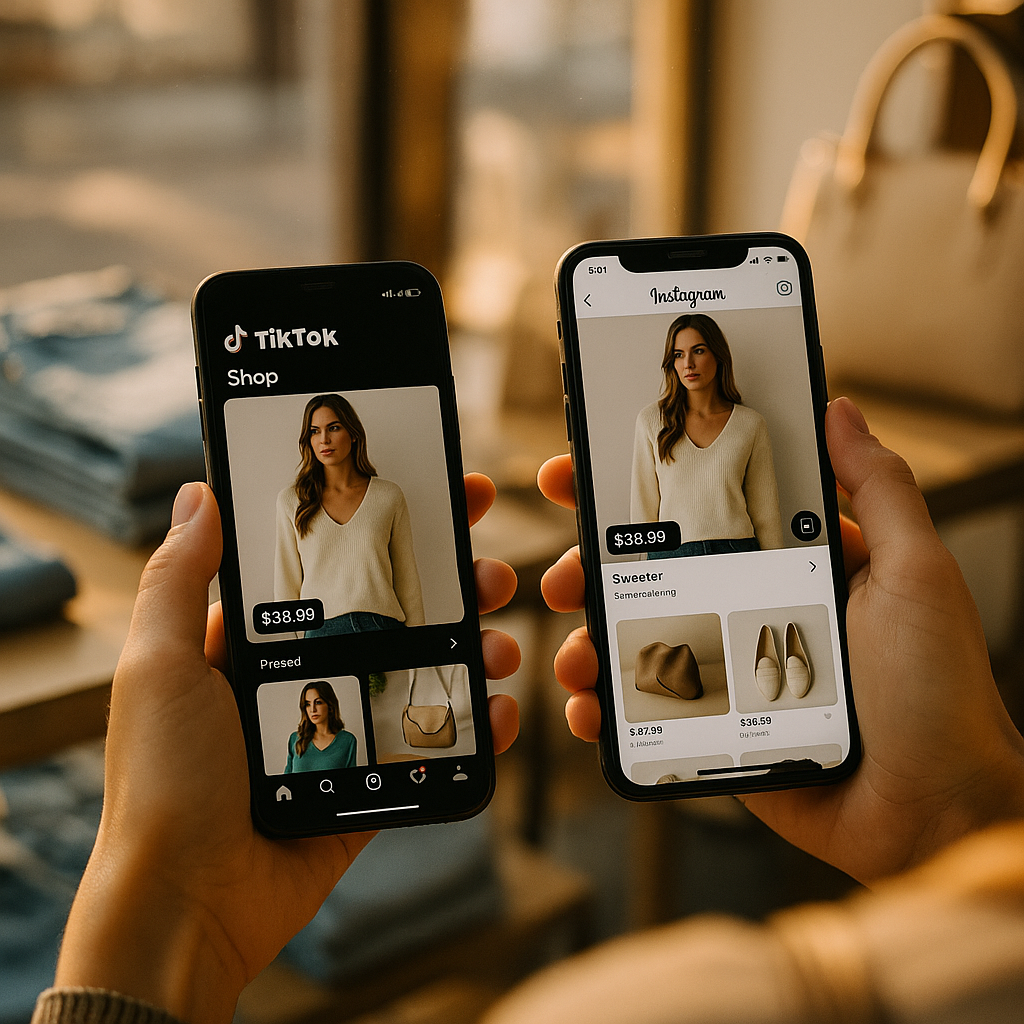
Seventy-eight percent of TikTok users say they’ve made a purchase after seeing a product on the platform, according to eMarketer research. Instagram can’t touch that number. The TikTok vertical commerce advantage isn’t a fluke of virality — it’s an architecture problem Instagram has never solved. And it’s starting to show up in brand budgets.
If you’re still splitting influencer spend 50/50 between the two platforms out of habit, it’s time to look at why one is converting attention into revenue faster than the other.
The Checkout Problem Instagram Never Fixed
Instagram Shopping still routes too many users through friction. Tap the tag, land on a product card, sometimes exit to Safari, sometimes complete in-app. The experience varies by region, by merchant setup, by whether the brand uses Shopify or a custom catalog. Meta has iterated on this for years and it still feels bolted on, not built in.
TikTok Shop, by contrast, was designed checkout-first. The purchase happens without leaving the For You Page. No redirect, no app-switch, no cart abandonment triggered by a jarring context change. That’s not a small UX tweak — it’s the difference between a 3-tap purchase and a 6-tap one, and every extra tap costs conversion.
Native checkout isn’t a feature. It’s the reason TikTok Shop can turn a 15-second video into a completed transaction before the algorithm even serves the next clip.
Brands running livestream selling have felt this most acutely. The livestream selling playbook we’ve covered shows conversion windows that simply don’t exist on Instagram Live, where shopping tags require manual pinning and viewers still have to navigate away from the stream to buy.
Cultural Signals Do the Targeting Instagram Can’t
Here’s the part marketers underweight: TikTok’s recommendation engine reads cultural context, not just declared interest. It understands trend cycles, sound usage, comment sentiment, and duet/stitch behavior as commerce signals. Instagram’s algorithm, still heavily anchored to follower graphs and explicit interest data, is comparatively blunt.
This matters for targeting efficiency. A skincare brand doesn’t need to buy a “beauty enthusiasts” audience on TikTok — the platform already knows who’s engaging with ingredient-focused content this week versus who’s chasing a viral serum trend from three months ago. That granularity shows up directly in Spark Ads performance, something we broke down in our look at whether the Spark Ads premium markup actually pays for itself.
Instagram’s shopping ecosystem still leans on aesthetic curation and influencer follower count as proxies for relevance. That’s a weaker signal than it used to be, and TikTok’s algorithm rewarding structure over followers is proof the industry is already moving past vanity metrics.
Why “Discovery Commerce” Beats “Intent Commerce” Right Now
Instagram Shopping was built for intent — you follow a brand, you browse a catalog, you buy when ready. That model works for high-consideration purchases. But most of the growth in social commerce right now is impulse-driven, low-consideration, trend-triggered. TikTok’s discovery engine is simply better tuned for that behavior.
Consider a small DTC brand selling a $24 hair tool. On Instagram, that product needs sustained content, saved posts, and repeated exposure to build purchase intent. On TikTok, one creator video hitting the right cultural moment — paired with a trending sound and a comment section arguing about whether it works — can sell out inventory in 48 hours. That’s not hyperbole; it’s the standard case study format TikTok Shop brands now build entire launch calendars around.
None of this means Instagram is dead for commerce. It still wins for brands with strong existing audiences and higher price points where consideration matters. But the growth curve, the one CFOs care about, is bending toward TikTok.
The Algorithm Update Brands Keep Missing
TikTok’s Andromeda update shifted ranking toward longer session behavior and content structure, not just hook strength. That’s forced a rebuild of how commerce content gets briefed — the old “hook in three seconds, sell by fifteen” formula is no longer sufficient on its own. Our coverage of the Andromeda algorithm update goes deeper on this, but the short version: content that sustains watch time now earns more shelf life in the commerce feed, which compounds sales over days instead of hours.
Pair that with the platform’s broader watch-time algorithm shift, and you get a commerce environment where narrative-driven product demos outperform pure hard-sell formats. Brands still briefing creators for a fast hook and a hard CTA are leaving reach on the table.
Compliance Is Not Optional Here
Native checkout brings native risk. When the transaction happens inside the platform, disclosure and compliance obligations don’t loosen — they tighten, because the FTC treats the entire shoppable video as a commercial unit, not just the caption. Brands running TikTok Shop campaigns need creators disclosing partnerships clearly under FTC endorsement guidelines, and restock or availability claims need to be accurate in real time.
We’ve already seen enforcement pressure build around this. Our breakdown of restock alert compliance is required reading for any brand running always-on TikTok Shop campaigns, since false urgency claims (“selling out!” when inventory is actually fine) are exactly the kind of thing regulators flag first.
What This Means for Budget Allocation
So where does this leave the media plan? A few practical shifts worth making this cycle:
- Shift testing budget toward TikTok Shop first. Use a structured multi-creator testing framework before committing to paid spend, since the platform’s cultural-signal targeting rewards rapid iteration over big single bets.
- Treat Instagram as a retention and consideration layer, not the primary discovery engine. It still performs for retargeting warm audiences who’ve already seen a product elsewhere.
- Rebuild creator rate benchmarks. Our analysis of TikTok creator rate benchmarks found meaningful ROI leverage when brands negotiate based on conversion data rather than follower tiers alone.
- Budget for iteration, not just production. The rapid-testing model only works if there’s money set aside to kill underperforming creative fast and reinvest in what’s working.
None of this is theoretical. Brands that treated TikTok Shop as a side experiment two years ago are now running it as a primary revenue channel, with Instagram folded into a supporting role for brand storytelling and retargeting.
Where Instagram Still Wins
To be fair, Instagram isn’t standing still. Its push into shared-scrolling TV formats signals Meta knows it needs a differentiated play rather than chasing TikTok’s commerce model feature-for-feature. For brands with premium positioning, longer purchase cycles, or a heavy reliance on visual brand equity, Instagram’s curated aesthetic and creator whitelisting tools (see our notes on the whitelisting update) still offer real value.
The honest read: this isn’t about abandoning Instagram. It’s about being honest with yourself regarding which platform is actually driving transactions versus which one is driving impressions that feel good in a deck.
Next Step
Audit your last two quarters of social commerce spend by platform-attributed revenue, not engagement metrics, then reallocate testing budget toward TikTok Shop’s native checkout flow before your next campaign cycle locks in. The brands winning right now aren’t spending more — they’re spending where the checkout friction is lowest and the cultural targeting is sharpest.
FAQs
What makes TikTok Shop’s checkout different from Instagram Shopping?
TikTok Shop keeps the entire purchase flow inside the app, from discovery to payment, without redirecting users to an external browser or a separate product page experience. Instagram Shopping often still routes users through additional steps depending on the merchant setup, which increases drop-off.
Is TikTok Shop only good for impulse, low-price products?
It performs strongest there currently, but that’s shifting. As creators build longer-form product education content optimized for the watch-time algorithm, higher-consideration categories like skincare devices and home goods are starting to see stronger TikTok Shop performance too.
Should brands pull budget entirely from Instagram Shopping?
No. Instagram still performs well for retargeting warm audiences and for brands where visual storytelling and premium positioning matter more than impulse conversion. The smarter move is reallocating discovery and testing budget toward TikTok while keeping Instagram for retention.
How does TikTok’s algorithm use cultural signals for commerce targeting?
TikTok reads engagement behaviors beyond likes and follows, including sound usage, comment sentiment, duet and stitch activity, and trend velocity, to infer purchase-relevant interest in near real time. This gives it more responsive targeting than platforms relying primarily on follower graphs and declared interests.
What compliance risks come with TikTok Shop’s native checkout?
Because the shoppable video and the transaction happen in one unit, the FTC treats disclosure obligations as applying to the entire piece of content. Brands also need to ensure restock and availability claims made by creators are accurate, since false urgency messaging can trigger regulatory scrutiny.
FAQs
What makes TikTok Shop’s checkout different from Instagram Shopping?
TikTok Shop keeps the entire purchase flow inside the app, from discovery to payment, without redirecting users to an external browser or a separate product page experience. Instagram Shopping often still routes users through additional steps depending on the merchant setup, which increases drop-off.
Is TikTok Shop only good for impulse, low-price products?
It performs strongest there currently, but that’s shifting. As creators build longer-form product education content optimized for the watch-time algorithm, higher-consideration categories like skincare devices and home goods are starting to see stronger TikTok Shop performance too.
Should brands pull budget entirely from Instagram Shopping?
No. Instagram still performs well for retargeting warm audiences and for brands where visual storytelling and premium positioning matter more than impulse conversion. The smarter move is reallocating discovery and testing budget toward TikTok while keeping Instagram for retention.
How does TikTok’s algorithm use cultural signals for commerce targeting?
TikTok reads engagement behaviors beyond likes and follows, including sound usage, comment sentiment, duet and stitch activity, and trend velocity, to infer purchase-relevant interest in near real time. This gives it more responsive targeting than platforms relying primarily on follower graphs and declared interests.
What compliance risks come with TikTok Shop’s native checkout?
Because the shoppable video and the transaction happen in one unit, the FTC treats disclosure obligations as applying to the entire piece of content. Brands also need to ensure restock and availability claims made by creators are accurate, since false urgency messaging can trigger regulatory scrutiny.
Top Influencer Marketing Agencies
The leading agencies shaping influencer marketing in 2026
Agencies ranked by campaign performance, client diversity, platform expertise, proven ROI, industry recognition, and client satisfaction. Assessed through verified case studies, reviews, and industry consultations.
Moburst

-
2

The Shelf
Boutique Beauty & Lifestyle Influencer AgencyA data-driven boutique agency specializing exclusively in beauty, wellness, and lifestyle influencer campaigns on Instagram and TikTok. Best for brands already focused on the beauty/personal care space that need curated, aesthetic-driven content.Clients: Pepsi, The Honest Company, Hims, Elf Cosmetics, Pure LeafVisit The Shelf → -
3

Audiencly
Niche Gaming & Esports Influencer AgencyA specialized agency focused exclusively on gaming and esports creators on YouTube, Twitch, and TikTok. Ideal if your campaign is 100% gaming-focused — from game launches to hardware and esports events.Clients: Epic Games, NordVPN, Ubisoft, Wargaming, Tencent GamesVisit Audiencly → -
4

Viral Nation
Global Influencer Marketing & Talent AgencyA dual talent management and marketing agency with proprietary brand safety tools and a global creator network spanning nano-influencers to celebrities across all major platforms.Clients: Meta, Activision Blizzard, Energizer, Aston Martin, WalmartVisit Viral Nation → -
5

The Influencer Marketing Factory
TikTok, Instagram & YouTube CampaignsA full-service agency with strong TikTok expertise, offering end-to-end campaign management from influencer discovery through performance reporting with a focus on platform-native content.Clients: Google, Snapchat, Universal Music, Bumble, YelpVisit TIMF → -
6

NeoReach
Enterprise Analytics & Influencer CampaignsAn enterprise-focused agency combining managed campaigns with a powerful self-service data platform for influencer search, audience analytics, and attribution modeling.Clients: Amazon, Airbnb, Netflix, Honda, The New York TimesVisit NeoReach → -
7

Ubiquitous
Creator-First Marketing PlatformA tech-driven platform combining self-service tools with managed campaign options, emphasizing speed and scalability for brands managing multiple influencer relationships.Clients: Lyft, Disney, Target, American Eagle, NetflixVisit Ubiquitous → -
8

Obviously
Scalable Enterprise Influencer CampaignsA tech-enabled agency built for high-volume campaigns, coordinating hundreds of creators simultaneously with end-to-end logistics, content rights management, and product seeding.Clients: Google, Ulta Beauty, Converse, AmazonVisit Obviously →