


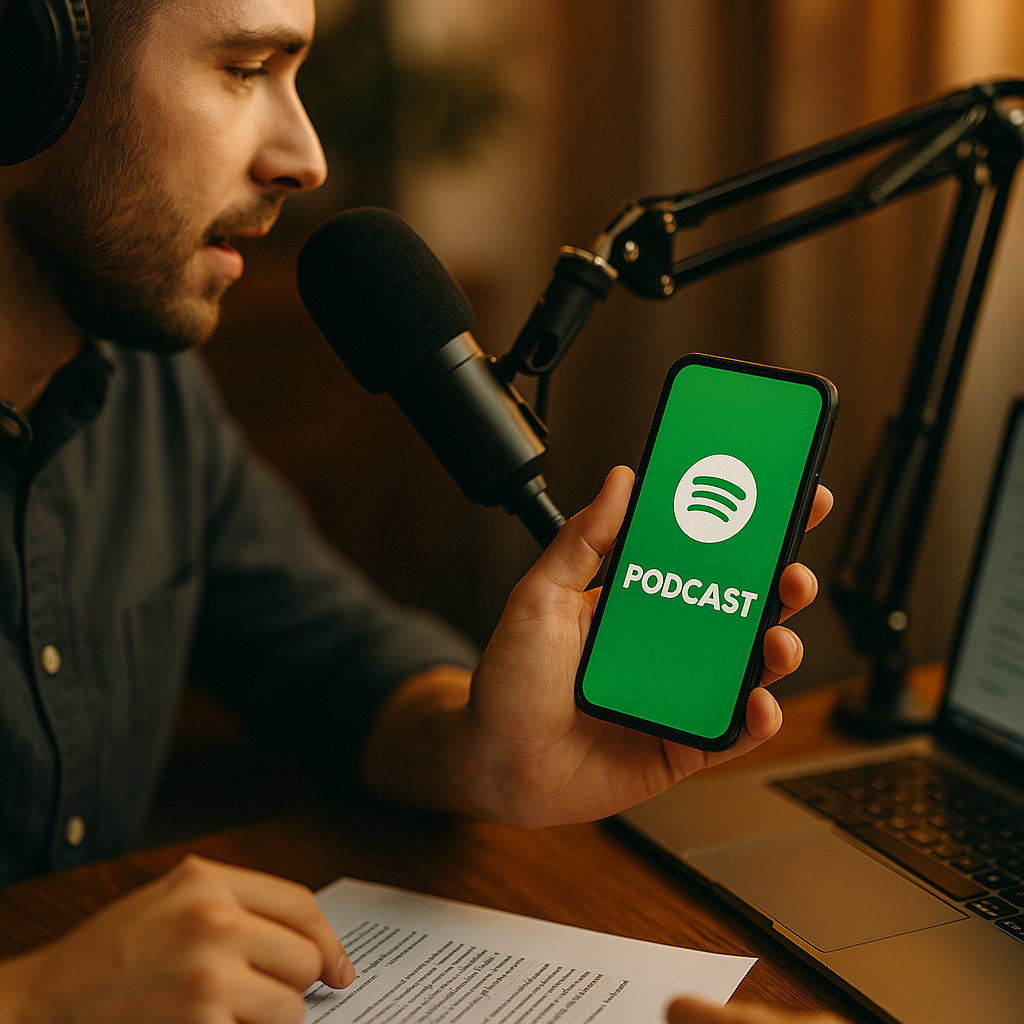
Spotify says listeners trust podcast hosts more than almost any other media figure, and brands are finally acting on it: host read ad adoption on the platform has climbed steadily as marketers chase the one format that still gets skipped less than pre-roll video. Spotify podcast ad reads are no longer a nice-to-have add-on to a media plan. They’re becoming the anchor placement for brands that want attention they can’t buy with a banner.
But creator voiced sponsorships are messier than a programmatic buy. You’re trusting someone else’s voice, timing, and ad libs to carry your brand message. Get the brief wrong and you end up with a flat, legally risky read that listeners tune out in six seconds. Get it right and you own a slice of a host’s credibility for the length of a 60 second spot.
Why Host Read Ads Still Beat Produced Spots
Produced audio ads sound like ads. Host reads sound like a friend telling you about a product they actually use, even when everyone involved knows money changed hands. That’s the entire value proposition, and it’s why CPMs for host read inventory on Spotify consistently outprice standard audio placements.
The mechanism is simple: parasocial trust transfers. A listener who’s spent 40 minutes a week with a host for two years extends some of that trust to whatever the host endorses. Marketing research on trust and persuasion has shown this halo effect for decades in traditional media, and podcasting just happens to be the most intimate delivery mechanism marketers have found yet.
A host read ad isn’t a media placement you buy, it’s a relationship you borrow. Treat the borrowing with the same care you’d give a celebrity endorsement contract.
This is also why host reads are hard to scale cleanly. You can’t template a parasocial bond. Every show has its own cadence, humor, and audience expectations, which means your brief has to flex per creator rather than copy-paste across a roster.
Building the Creative Brief: What to Lock Down and What to Leave Loose
The single biggest mistake brands make with podcast ad reads is writing a script and demanding verbatim delivery. That kills the authenticity that makes the format work in the first place. The fix is a tiered brief structure.
- Non-negotiables: product name, pricing or promo code, legal disclaimers, and any FTC-required disclosure language.
- Guided talking points: three to five key benefits the host should hit, in their own words.
- Host discretion zone: personal anecdotes, tone, jokes, and the natural segue in and out of the ad break.
Think of it like a brief for a creator handle campaign: you set guardrails, not a cage. If you’ve worked on creator handle ad formats before, the logic transfers directly. The brand voice lives in the non-negotiables; the creator’s voice lives everywhere else.
One operational note: always request a draft script or a rough cut before the episode goes live. Most mid-tier and above shows will accommodate this if you ask during contracting, not after the fact. Waiting until publish day to catch a compliance issue is how brands end up issuing corrections and eating the reputational hit.
Dynamic Ad Insertion vs. Baked In Reads: Pick Your Risk Profile
Spotify offers two delivery models for host read sponsorships, and they carry very different risk and measurement profiles.
Baked in reads are recorded directly into the episode audio. They’re permanent, they travel with the episode forever (including on other platforms if the show syndicates), and they can’t be swapped or paused once published. The upside: maximum authenticity, since the host recorded it in context with the actual episode content.
Dynamic ad insertion (DAI) lets Spotify’s ad server drop in creative based on listener location, device, or campaign flight dates, even on older back catalog episodes. This gives you pause, swap, and frequency control that baked in reads simply don’t allow.
For most brand campaigns, DAI is the safer operational choice. You can kill a creative that underperforms or pull a promo code that’s about to expire. The tradeoff is a slightly less seamless listener experience, since DAI reads sometimes sound more detached from the surrounding content than a true baked in mention.
If your legal or compliance team needs the ability to pull an ad fast, DAI isn’t optional. Baked in reads are a one way door.
Vetting Shows: Audience Fit Matters More Than Download Numbers
A show with 2 million monthly downloads and a disengaged audience will underperform a niche 80,000 download show with a host who genuinely uses category products. Spotify’s advertiser tools surface demographic and category affinity data, but you still need to do manual diligence.
Questions worth asking before you sign a podcast sponsorship deal:
- Has the host read competitor ads in the past 90 days? Frequency and recency both matter for recall confusion.
- What’s the average ad break retention rate, not just total downloads?
- Does the host’s off platform content (social, newsletter) match your brand safety standards?
- Has the show faced any public controversy that could resurface mid flight?
This vetting discipline mirrors what smart brands already do when assessing creator platform risk elsewhere. Audio isn’t exempt from brand safety scrutiny just because it’s harder to screenshot.
Disclosure Rules Don’t Disappear Because It’s Audio
The FTC’s endorsement guidelines apply to podcast host reads the same way they apply to an Instagram post. “Thanks to our sponsor” buried at the tail end of a rambling anecdote isn’t sufficient disclosure if the connection to the paid relationship isn’t clear. Brands need to build disclosure language into the non-negotiable section of every brief, and verify it actually made the final cut before the episode publishes.
UK advertisers have an added layer to watch: the ICO’s guidance on advertising and data use intersects with disclosure requirements when targeted ad insertion uses listener data. It’s worth a compliance review if you’re running DAI campaigns across UK and US markets simultaneously, since the rules aren’t identical.
Measuring What Actually Moved
Attribution for audio has always lagged behind video and social, but it’s catching up. Spotify Ad Analytics now provides completion rates, frequency data, and in some markets, brand lift studies tied to specific host read placements. The real signal, though, still comes from the brand side: unique promo codes, vanity URLs, and post-campaign surveys.
A few measurement tactics that consistently produce usable data:
- Unique promo codes per show, not per campaign, so you can rank individual hosts by conversion rather than just impressions.
- Brand recall surveys run within two weeks of the flight, since audio recall decays faster than visual recall.
- Incrementality tests using geo holdouts, pausing the campaign in select markets to isolate lift.
If you’re used to tracking CTR and CPA on paid creator content, resist the urge to force podcast ad reads into the same dashboard. Audio’s value shows up more in aided recall and search lift than in last click conversion, and judging it by direct response benchmarks alone will make it look like it’s underperforming when it’s actually doing its job further up the funnel.
For brands running integrated campaigns across audio and social, cross referencing performance against social listening benchmarks can help validate whether podcast mentions are driving branded search or social mention spikes that wouldn’t show up in a promo code report.
Budgeting: What Host Read Inventory Actually Costs
Pricing varies enormously by show size and ad placement (pre-roll, mid-roll, post-roll), but mid-roll host reads command the highest CPMs because listener drop-off is lowest once someone’s already 10 minutes into an episode. Expect top tier shows to command premium flat rates per episode rather than pure CPM, especially for exclusive category deals that lock out your competitors for a flight window.
Smaller and mid-tier shows are often more negotiable on both rate and creative flexibility, and they’re where brands typically find the best cost per incremental listener. If you’re building a portfolio approach, consider allocating budget the way you would across a multi platform creator budget: a handful of flagship shows for reach, a longer tail of niche shows for efficiency and category credibility.
eMarketer’s audio advertising data continues to show podcast ad spend growing faster than most other digital channels, which means the inventory you can negotiate cheaply this year gets pricier fast once a category fills up with competitors chasing the same shows.
Next step: before your next upfront negotiation, pull the last three months of episode retention data for any show on your shortlist, not just download counts, and build your brief’s non-negotiable section around FTC disclosure language before a single word of host copy gets written.
Frequently Asked Questions
What makes Spotify podcast ad reads different from standard audio ads?
Host read ads are delivered in the podcaster’s own voice and style rather than a separately produced spot, which transfers some of the audience’s trust in the host to the advertised product.
Should brands require a verbatim script for host read ads?
No. A tiered brief with non-negotiable disclosure and pricing details, guided talking points, and a host discretion zone for tone and anecdotes produces better recall than a rigid script.
What’s the difference between dynamic ad insertion and baked in reads?
Dynamic ad insertion lets advertisers swap, pause, or target creative after publish, while baked in reads are recorded permanently into the episode and can’t be changed once it’s live.
Do FTC disclosure rules apply to podcast sponsorships?
Yes. The FTC’s endorsement guidelines require clear and conspicuous disclosure of paid relationships in podcast ads, the same as social media posts.
How should brands measure podcast ad read performance?
Use unique promo codes per show, post-campaign brand recall surveys, and geo based incrementality tests rather than relying solely on last click conversion metrics.
Frequently Asked Questions
Top Influencer Marketing Agencies
The leading agencies shaping influencer marketing in 2026
Agencies ranked by campaign performance, client diversity, platform expertise, proven ROI, industry recognition, and client satisfaction. Assessed through verified case studies, reviews, and industry consultations.
Moburst

-
2

The Shelf
Boutique Beauty & Lifestyle Influencer AgencyA data-driven boutique agency specializing exclusively in beauty, wellness, and lifestyle influencer campaigns on Instagram and TikTok. Best for brands already focused on the beauty/personal care space that need curated, aesthetic-driven content.Clients: Pepsi, The Honest Company, Hims, Elf Cosmetics, Pure LeafVisit The Shelf → -
3

Audiencly
Niche Gaming & Esports Influencer AgencyA specialized agency focused exclusively on gaming and esports creators on YouTube, Twitch, and TikTok. Ideal if your campaign is 100% gaming-focused — from game launches to hardware and esports events.Clients: Epic Games, NordVPN, Ubisoft, Wargaming, Tencent GamesVisit Audiencly → -
4

Viral Nation
Global Influencer Marketing & Talent AgencyA dual talent management and marketing agency with proprietary brand safety tools and a global creator network spanning nano-influencers to celebrities across all major platforms.Clients: Meta, Activision Blizzard, Energizer, Aston Martin, WalmartVisit Viral Nation → -
5

The Influencer Marketing Factory
TikTok, Instagram & YouTube CampaignsA full-service agency with strong TikTok expertise, offering end-to-end campaign management from influencer discovery through performance reporting with a focus on platform-native content.Clients: Google, Snapchat, Universal Music, Bumble, YelpVisit TIMF → -
6

NeoReach
Enterprise Analytics & Influencer CampaignsAn enterprise-focused agency combining managed campaigns with a powerful self-service data platform for influencer search, audience analytics, and attribution modeling.Clients: Amazon, Airbnb, Netflix, Honda, The New York TimesVisit NeoReach → -
7

Ubiquitous
Creator-First Marketing PlatformA tech-driven platform combining self-service tools with managed campaign options, emphasizing speed and scalability for brands managing multiple influencer relationships.Clients: Lyft, Disney, Target, American Eagle, NetflixVisit Ubiquitous → -
8

Obviously
Scalable Enterprise Influencer CampaignsA tech-enabled agency built for high-volume campaigns, coordinating hundreds of creators simultaneously with end-to-end logistics, content rights management, and product seeding.Clients: Google, Ulta Beauty, Converse, AmazonVisit Obviously →