


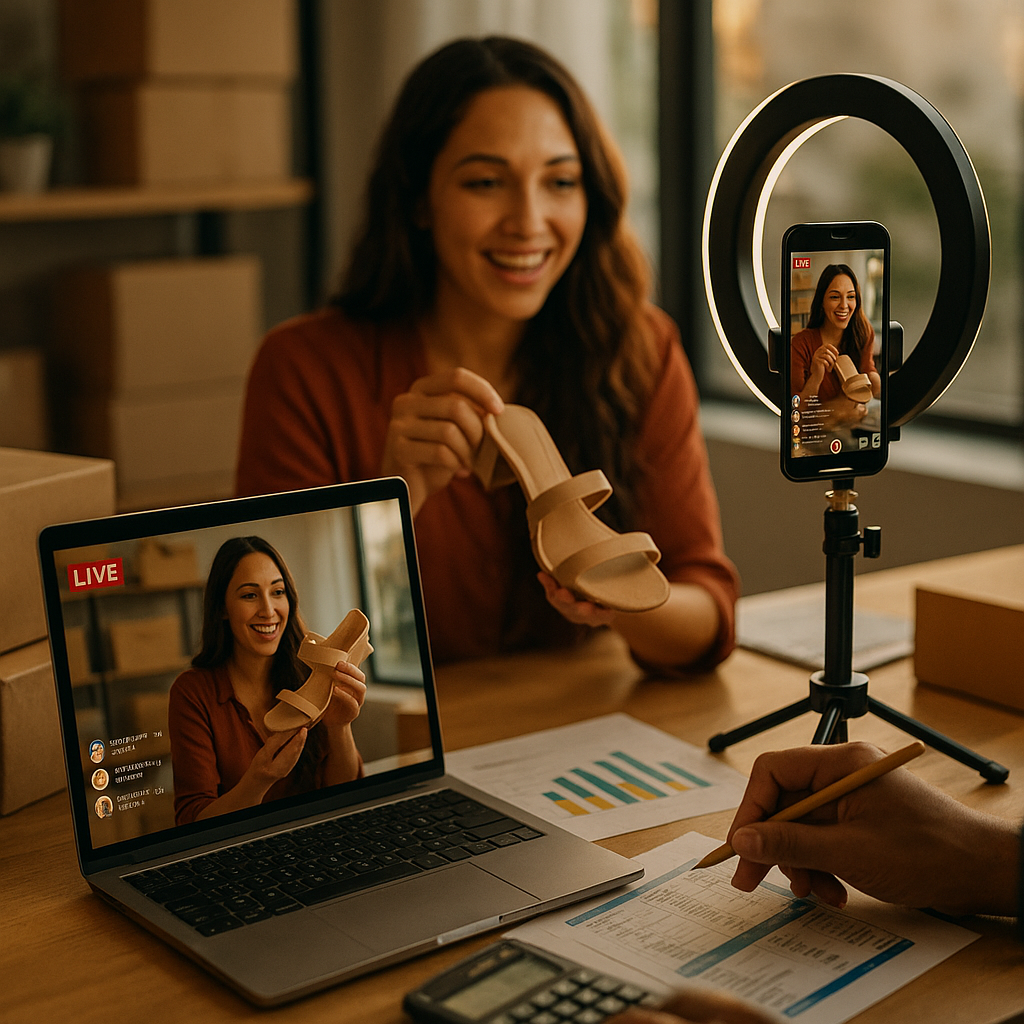
TikTok Shop generated an estimated $33 billion in US sales last year, yet brands that treat it as their entire live commerce strategy are leaving money on the table. Cross platform live commerce is no longer a hedge against platform risk. It’s where the next margin actually lives. If your entire GMV depends on one algorithm, one policy update, or one app store ruling, you don’t have a strategy. You have exposure.
TikTok Shop Still Wins, But It’s Not the Whole Game
Nobody’s arguing TikTok Shop isn’t the category leader. Its affiliate marketplace, creator network gifting, and prime time scheduling mechanics have built the most mature live commerce infrastructure in the West. But “mature” also means crowded. CPMs on branded livestreams have climbed, top affiliate creators are getting poached by competitors mid-campaign, and the platform’s own GMV velocity ranking rewards creators who are already winning, which squeezes out newer brand partnerships.
That dynamic alone should push mid-to-senior marketers toward diversification. Not because TikTok Shop is failing, but because the cost of acquiring attention there keeps rising while the ceiling on reach per dollar is flattening for anyone outside the top tier of sellers.
Brands running live commerce on three or more platforms report lower blended customer acquisition cost than single-platform operators, according to eMarketer retail media benchmarks. Diversification isn’t a nice-to-have anymore. It’s a CAC strategy.
Where Is Live Commerce Actually Growing?
Three platforms deserve serious budget conversations in the next planning cycle: YouTube, Instagram/Facebook, and the smaller experimental cohort of X and Pinterest. Each plays a different role in the funnel, and that’s the point. Live commerce isn’t one channel strategy anymore, it’s a portfolio.
Think of it like paid media allocation. You wouldn’t put your entire search budget into one keyword match type. Live commerce deserves the same rigor.
YouTube Shopping: The Underrated Conversion Engine
YouTube Shopping doesn’t get the hype TikTok Shop does, but its affiliate program has quietly built one of the strongest conversion mechanics in live commerce. Why? Context. A viewer watching a 20-minute product review or unboxing has already self-selected into high purchase intent before the live or shoppable moment even starts. That’s a fundamentally different behavioral signal than a scroll-stopping TikTok clip.
Brands evaluating creator fit here should study how the platform’s affiliate ranking system weights watch-through and post-purchase retention, not just click volume. That’s a different optimization target than TikTok’s velocity model, and it rewards brands willing to invest in longer-form creator relationships rather than one-off gifting drops.
The tradeoff? Production cadence is slower. You won’t get the same volume of content TikTok Shop generates in a week. But the lifetime value per converted customer tends to run higher, which matters if your margins can’t absorb high return rates.
Instagram and Facebook Live: Niche But Sticky
Meta’s live shopping tools have never matched TikTok’s cultural momentum, but they’ve found a real home in two categories: beauty/skincare and home goods, where existing community trust does the heavy lifting. Instagram’s partnership ads pipeline lets brands amplify creator-led live content through paid distribution, which is a lever TikTok Shop doesn’t offer in the same way.
Facebook, meanwhile, still overindexes on an older, higher-income demographic that TikTok struggles to reach organically. If your product has a $150+ average order value, Facebook Live shopping audiences convert at a rate worth testing, even if the raw reach numbers look unimpressive next to TikTok. Review Meta’s business tools documentation before committing budget, since live shopping feature availability varies by region and account tier.
X Live Shopping and Pinterest: Small Bets, Real Upside
These two don’t belong in the same sentence usually, but for live commerce testing, they share a trait: low competition for creator inventory. X’s shopping pilots are still early, and brands willing to run small, controlled tests are finding CPMs far below what TikTok or Instagram command. Our testing and staffing guide breaks down how to structure a pilot without overcommitting resourcing, which matters because X’s live tools still require more manual operational overhead than TikTok’s native stack.
Pinterest is the quieter opportunity. It’s not “live” commerce in the traditional streaming sense, but its shoppable creator content closes the discovery-to-purchase loop in a single platform, and its shopping ads and creator content model performs disproportionately well for home, wedding, and seasonal gifting categories. If your catalog fits that mold, it’s worth a modest test budget.
Building a Cross Platform Budget Allocation Model
So how do you actually split spend without guessing? Start with a simple framework tied to funnel stage, not platform popularity.
- Discovery and volume: TikTok Shop remains the highest-velocity channel for new customer acquisition at scale. Keep the majority of top-of-funnel budget here, but cap it so you’re not over 70% on one platform.
- High-intent conversion: YouTube Shopping and Facebook Live for categories with higher AOV or consideration cycles.
- Community and retention: Instagram Live paired with community tab style engagement tactics to keep existing customers warm between live events.
- Experimental allocation: 5 to 10% of total live commerce budget toward X and Pinterest pilots, reviewed quarterly.
Staffing is the part most brands underestimate. Running live commerce across three platforms doesn’t mean tripling headcount, but it does mean building modular production workflows. The staffing lessons from TikTok Shop’s own livestream scaling blueprint translate surprisingly well to multi-platform operations: host rotation, backend fulfillment coordination, and real-time moderation all need dedicated owners regardless of which app you’re streaming on.
The brands winning at cross platform live commerce aren’t the ones spreading budget thinnest. They’re the ones matching each platform’s native strength to a specific funnel stage, then measuring each independently before declaring a winner.
Compliance and Risk Checklist Across Platforms
Different platforms, different disclosure rules, different return policies. That’s an operational headache if you’re not tracking it centrally. The FTC’s endorsement guidelines apply regardless of platform, but enforcement patterns and disclosure UI differ enough that a compliance checklist built for TikTok won’t automatically transfer to YouTube or Instagram.
A few things to lock down before scaling any new platform:
- Creator contracts should specify platform-exclusive disclosure language, not generic “sponsored content” boilerplate.
- Return and refund logic varies significantly. TikTok Shop’s box free returns system doesn’t have a direct equivalent on YouTube or Meta, so your fulfillment ops need platform-specific playbooks.
- Data handling and audience targeting rules differ by region. If you’re testing in the UK or EU, check guidance from the ICO before running any live shopping campaign that collects viewer data.
None of this is glamorous work, but it’s the difference between a scalable program and a legal headache six months into expansion.
What This Means for Next Quarter’s Planning
If your 2025 live commerce plan was “TikTok Shop plus whatever else we have bandwidth for,” it’s time to formalize the rest. Pull your last two quarters of TikTok Shop performance data, segment by category and AOV, then map which categories would plausibly perform better on YouTube or Instagram based on purchase intent signals. That analysis alone usually reveals which platform deserves the next test budget, and it beats guessing based on where your competitors happen to be posting.
FAQs
Why shouldn’t brands rely solely on TikTok Shop for live commerce?
Relying on one platform concentrates risk around algorithm changes, rising CPMs, and creator poaching. Diversifying across YouTube, Instagram, and experimental channels like X or Pinterest lowers blended acquisition cost and protects revenue from single-platform policy shifts.
Which platform converts best after TikTok Shop?
YouTube Shopping tends to convert well because viewers arrive with higher purchase intent from longer-form content like reviews and unboxings. Facebook Live performs strongly for higher AOV categories with older, higher-income audiences.
How much budget should go toward experimental platforms like X or Pinterest?
Most brands should start with 5 to 10% of total live commerce budget on experimental channels, reviewed quarterly based on performance data before scaling further.
Do compliance rules change across live commerce platforms?
Yes. FTC endorsement guidelines apply universally, but disclosure placement, return policies, and regional data rules differ by platform. Brands need platform-specific compliance checklists rather than one generic policy.
What’s the biggest operational challenge in running cross platform live commerce?
Staffing and production workflow, not budget. Brands need modular teams that can handle host rotation, moderation, and fulfillment across multiple platforms without duplicating headcount for each one.
Start small: pick one platform beyond TikTok Shop, run a 90-day pilot with clear conversion benchmarks, and let the data, not the hype, decide where your next dollar goes.
Top Influencer Marketing Agencies
The leading agencies shaping influencer marketing in 2026
Agencies ranked by campaign performance, client diversity, platform expertise, proven ROI, industry recognition, and client satisfaction. Assessed through verified case studies, reviews, and industry consultations.
Moburst

-
2

The Shelf
Boutique Beauty & Lifestyle Influencer AgencyA data-driven boutique agency specializing exclusively in beauty, wellness, and lifestyle influencer campaigns on Instagram and TikTok. Best for brands already focused on the beauty/personal care space that need curated, aesthetic-driven content.Clients: Pepsi, The Honest Company, Hims, Elf Cosmetics, Pure LeafVisit The Shelf → -
3

Audiencly
Niche Gaming & Esports Influencer AgencyA specialized agency focused exclusively on gaming and esports creators on YouTube, Twitch, and TikTok. Ideal if your campaign is 100% gaming-focused — from game launches to hardware and esports events.Clients: Epic Games, NordVPN, Ubisoft, Wargaming, Tencent GamesVisit Audiencly → -
4

Viral Nation
Global Influencer Marketing & Talent AgencyA dual talent management and marketing agency with proprietary brand safety tools and a global creator network spanning nano-influencers to celebrities across all major platforms.Clients: Meta, Activision Blizzard, Energizer, Aston Martin, WalmartVisit Viral Nation → -
5

The Influencer Marketing Factory
TikTok, Instagram & YouTube CampaignsA full-service agency with strong TikTok expertise, offering end-to-end campaign management from influencer discovery through performance reporting with a focus on platform-native content.Clients: Google, Snapchat, Universal Music, Bumble, YelpVisit TIMF → -
6

NeoReach
Enterprise Analytics & Influencer CampaignsAn enterprise-focused agency combining managed campaigns with a powerful self-service data platform for influencer search, audience analytics, and attribution modeling.Clients: Amazon, Airbnb, Netflix, Honda, The New York TimesVisit NeoReach → -
7

Ubiquitous
Creator-First Marketing PlatformA tech-driven platform combining self-service tools with managed campaign options, emphasizing speed and scalability for brands managing multiple influencer relationships.Clients: Lyft, Disney, Target, American Eagle, NetflixVisit Ubiquitous → -
8

Obviously
Scalable Enterprise Influencer CampaignsA tech-enabled agency built for high-volume campaigns, coordinating hundreds of creators simultaneously with end-to-end logistics, content rights management, and product seeding.Clients: Google, Ulta Beauty, Converse, AmazonVisit Obviously →