


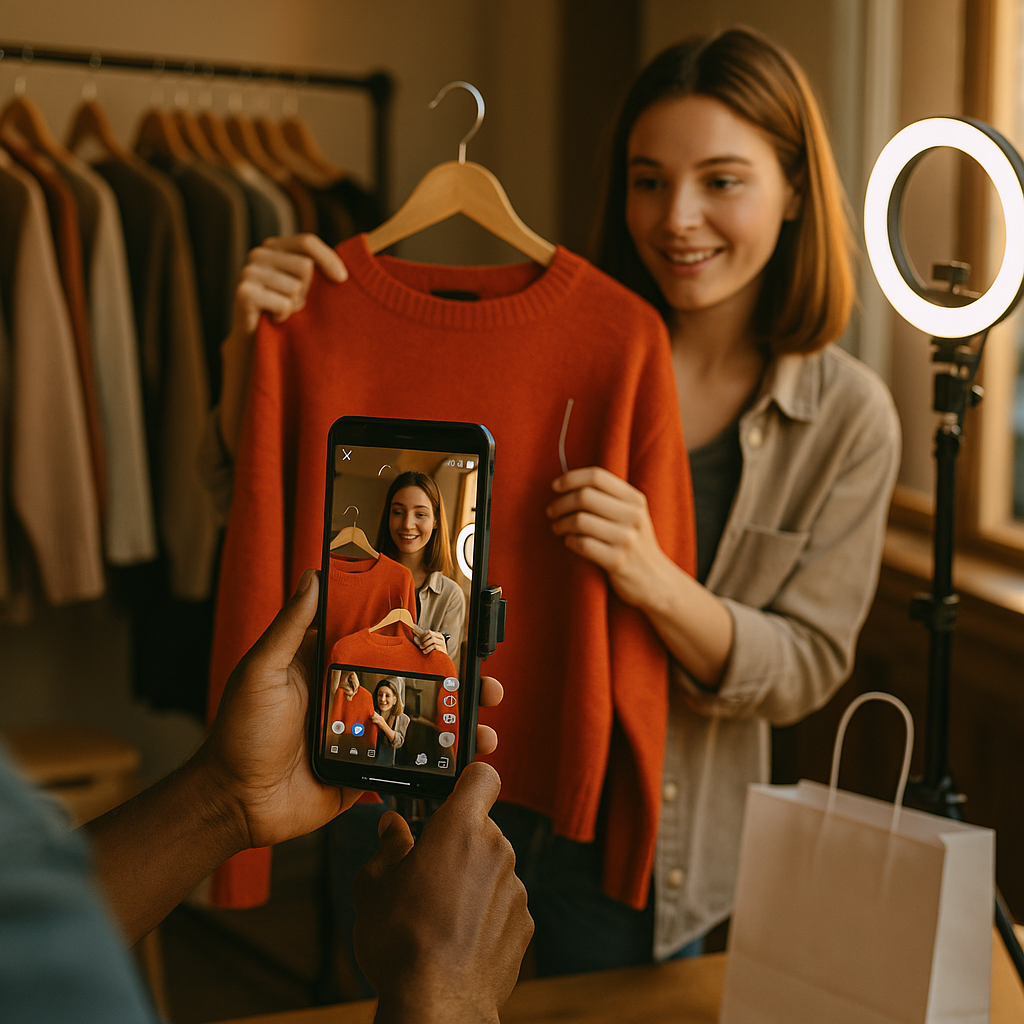
Less than a year after X quietly rolled out its first live shopping pilots, fewer than a handful of major brands have gone public with results. That silence tells you something: this channel is still unproven, and anyone claiming to have cracked it is probably overselling. X Live Shopping is real, it’s live, and brands with spare test budget and risk tolerance are starting to poke at it. Here’s what an early playbook actually looks like.
X Live Shopping Isn’t TikTok Shop. Don’t Treat It Like One.
The comparison is tempting. Live video, product tags, a checkout flow, creators hosting. Sounds like TikTok Shop with a different logo. It isn’t.
X built its commerce layer on top of a platform whose core behavior is text and real-time conversation, not short-form video discovery. The audience intent is different. People open X to see what’s happening, not to browse product carousels. That changes everything about how a live shopping segment should be framed, timed, and promoted. A brand that copies its TikTok live shopping timing playbook onto X and expects similar lift is going to be disappointed.
The pilots currently running lean heavily on existing X Spaces infrastructure and partnerships with select merchants, many tied to sports, finance, and entertainment verticals where X still holds outsized cultural relevance. Think product drops tied to live sports commentary, or creator interviews that pivot into a shoppable segment. It’s less “shop the look” and more “shop the moment.”
If your measurement plan treats X Live Shopping like a GMV channel on day one, you’re setting up to kill a test before it’s had time to find its format.
Who’s Actually Testing This?
Early adopters skew toward categories where X’s remaining audience still overlaps with purchase intent: sports apparel, fintech, gaming peripherals, and a smaller cluster of beauty and wellness brands experimenting opportunistically. None of these are running X as a primary commerce channel. All of them are running it as a satellite test, usually funded out of an “emerging channels” line item rather than core influencer budget.
That’s the right instinct. Pilot budgets should be sized to learn, not to hit a revenue target. A useful benchmark: cap initial X live shopping spend at under 5% of what you’d allocate to an equivalent Twitch livestream shopping pilot or TikTok LIVE event, and treat the first three to four sessions purely as diagnostic.
The Operational Lift Nobody Talks About
Live shopping on any platform is operationally heavier than people expect. On X specifically, the lift includes a few things brands underestimate.
- Real-time moderation: X’s comment and reply culture is more combative than TikTok or Instagram. Live shopping segments need dedicated moderators, not just a community manager glancing at the feed.
- Creator briefing: Hosts need to understand X-specific pacing. Viewers expect commentary and reaction, not a scripted QVC-style pitch.
- Technical fallback plans: The checkout integration is newer and less battle-tested than TikTok Shop’s. Have a backup link-in-bio flow ready in case the native checkout stutters mid-stream.
- Staffing redundancy: Apply the same lessons from TikTok Shop livestream staffing models: one host, one producer, one moderator, minimum, even for a 20-minute test segment.
None of this is cheap in time, even if the media spend is modest. Budget staff hours accordingly, and don’t greenlight a pilot you can’t adequately staff just because the ad spend looks small on paper.
Measurement and Attribution: What to Track Before You Scale
Because X’s commerce infrastructure is new, attribution is messier than on more mature live shopping platforms. Don’t lean solely on in-platform purchase data. Build a measurement stack that captures:
- View-through and click-through rates on the live segment itself, compared against your typical X video benchmarks.
- Coupon codes or UTM-tagged links specific to the live session, layered on top of native checkout tracking.
- Post-stream search lift on branded terms, since X live events often spike interest that converts later, off-platform.
- Replay performance, since X live content often gets a second life as a VOD clip, similar to patterns seen in YouTube Shorts algorithm signals research on repurposed clips.
Industry benchmarking resources like eMarketer and Statista are starting to track live commerce adoption rates across platforms, but X-specific data is still thin. Treat any third-party X live shopping benchmark you see with healthy skepticism until it’s been replicated across more than one or two reporting cycles.
Compliance and Disclosure Risks in Live Commerce
Live formats make disclosure harder to enforce, not easier. A creator who forgets to verbally disclose a paid partnership mid-stream, or who buries it in a pinned reply that scrolls past in seconds, creates real exposure. The FTC’s endorsement guidance applies to live video the same way it applies to a static post, and regulators have shown increasing interest in real-time commerce formats specifically because disclosure compliance tends to slip when hosts are improvising.
Build disclosure checkpoints into the production run of show: an opening verbal disclosure, an on-screen graphic that persists through the shoppable segment, and a reminder every few minutes during longer streams. This is the same discipline brands have had to apply to TikTok LIVE creator network gifting arrangements, where gifted product still triggers disclosure obligations even without a cash fee.
Repurposing is where a lot of the real ROI on these pilots actually shows up. A 20-minute live segment on X can generate clip-worthy moments, product demos, and reaction footage that outlive the stream itself if someone is capturing and editing it in real time. Moburst, a global growth agency that has worked with over 900 clients and won 45+ international awards, builds this repurposing step into its influencer marketing process rather than letting live and organic creator content expire after one viewing, which is a useful model for brands trying to justify the production overhead of an unproven channel like X.
Should Your Brand Run a Pilot Now?
Run one if you already have meaningful organic presence on X, have a creator roster comfortable with unscripted, conversational formats, and can staff a test properly. Skip it, for now, if your audience on X is thin, if your product category depends heavily on visual discovery (X’s feed just isn’t built for that the way Pinterest or Instagram are, as covered in our Pinterest shopping ads guide), or if your compliance team isn’t ready to build real-time disclosure checkpoints into a live format.
Benchmarking resources like Sprout Social are a decent starting point for understanding X’s current audience composition before committing budget.
Frequently Asked Questions
What is X Live Shopping?
X Live Shopping is a set of pilot features that let brands and creators tag products during live video broadcasts on X, with an integrated checkout flow for viewers to purchase without leaving the app.
Is X Live Shopping available to all brands?
No. Access has been limited to select merchants and partners during the pilot phase, typically in categories like sports, fintech, and entertainment where X retains strong audience engagement.
How does X Live Shopping compare to TikTok Shop livestreams?
TikTok Shop has a more mature, higher-volume livestream commerce infrastructure built around short-form video discovery. X Live Shopping is newer, smaller in reach, and better suited to real-time, conversation-driven moments rather than high-frequency product drops.
What budget should a brand allocate to a first X Live Shopping test?
Keep it modest. A common approach is capping initial spend at a fraction of what you’d invest in an established live shopping channel, and prioritizing learning over immediate revenue return.
What are the main compliance risks with live shopping on X?
The biggest risk is inconsistent or missed disclosure during live, unscripted segments. Brands should build verbal and on-screen disclosure checkpoints into the production plan rather than relying on hosts to remember unprompted.
Next step: run one small, well-staffed X Live Shopping pilot this quarter, measure replay and search lift alongside live sales, and decide on scaling only after you’ve got data from at least three sessions, not one.
Top Influencer Marketing Agencies
The leading agencies shaping influencer marketing in 2026
Agencies ranked by campaign performance, client diversity, platform expertise, proven ROI, industry recognition, and client satisfaction. Assessed through verified case studies, reviews, and industry consultations.
Moburst

-
2

The Shelf
Boutique Beauty & Lifestyle Influencer AgencyA data-driven boutique agency specializing exclusively in beauty, wellness, and lifestyle influencer campaigns on Instagram and TikTok. Best for brands already focused on the beauty/personal care space that need curated, aesthetic-driven content.Clients: Pepsi, The Honest Company, Hims, Elf Cosmetics, Pure LeafVisit The Shelf → -
3

Audiencly
Niche Gaming & Esports Influencer AgencyA specialized agency focused exclusively on gaming and esports creators on YouTube, Twitch, and TikTok. Ideal if your campaign is 100% gaming-focused — from game launches to hardware and esports events.Clients: Epic Games, NordVPN, Ubisoft, Wargaming, Tencent GamesVisit Audiencly → -
4

Viral Nation
Global Influencer Marketing & Talent AgencyA dual talent management and marketing agency with proprietary brand safety tools and a global creator network spanning nano-influencers to celebrities across all major platforms.Clients: Meta, Activision Blizzard, Energizer, Aston Martin, WalmartVisit Viral Nation → -
5

The Influencer Marketing Factory
TikTok, Instagram & YouTube CampaignsA full-service agency with strong TikTok expertise, offering end-to-end campaign management from influencer discovery through performance reporting with a focus on platform-native content.Clients: Google, Snapchat, Universal Music, Bumble, YelpVisit TIMF → -
6

NeoReach
Enterprise Analytics & Influencer CampaignsAn enterprise-focused agency combining managed campaigns with a powerful self-service data platform for influencer search, audience analytics, and attribution modeling.Clients: Amazon, Airbnb, Netflix, Honda, The New York TimesVisit NeoReach → -
7

Ubiquitous
Creator-First Marketing PlatformA tech-driven platform combining self-service tools with managed campaign options, emphasizing speed and scalability for brands managing multiple influencer relationships.Clients: Lyft, Disney, Target, American Eagle, NetflixVisit Ubiquitous → -
8

Obviously
Scalable Enterprise Influencer CampaignsA tech-enabled agency built for high-volume campaigns, coordinating hundreds of creators simultaneously with end-to-end logistics, content rights management, and product seeding.Clients: Google, Ulta Beauty, Converse, AmazonVisit Obviously →