


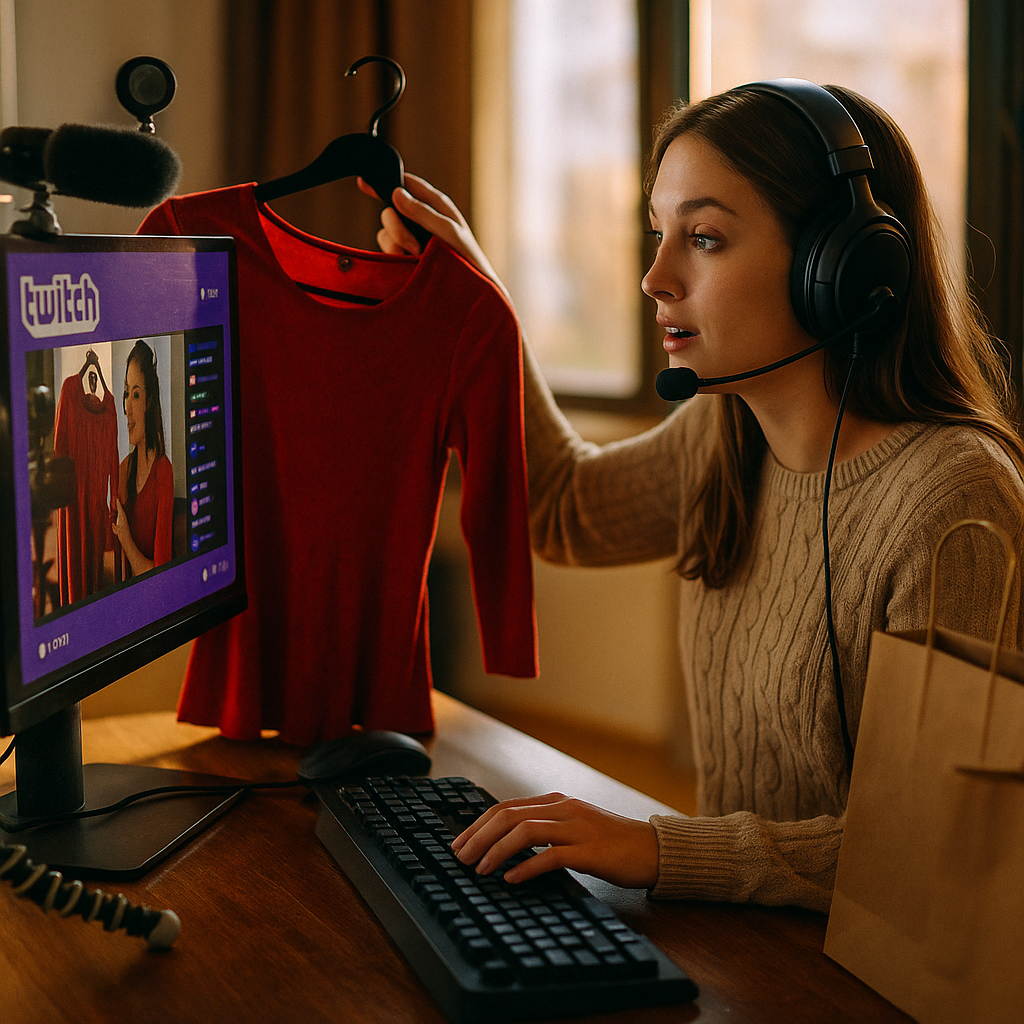
Twitch generates over 18 billion hours watched annually, yet almost none of that attention has been monetized through direct shopping carts, until now. As Amazon quietly expands checkout tools inside Twitch streams, non-endemic brands (think beauty, CPG, apparel) face a strange new question: should you run a Twitch livestream shopping pilot on a platform built for gaming, not grocery runs? The answer is more nuanced than “yes” or “no.”
Why Twitch Shopping Is Even On the Table
Twitch has spent a decade building something most platforms can’t fake: trust between streamers and chat. Viewers sit through two-hour sessions, not fifteen-second clips. That’s a different attention economy entirely. Amazon, which owns Twitch, has been testing integrated shopping widgets and affiliate links that let streamers tag products in real time without breaking the broadcast flow.
For gaming brands, this is obvious territory. Razer, Logitech, and energy drink companies have run Twitch commerce for years. The interesting shift is non-endemic brands, a skincare line, a meal-kit service, a sneaker brand, testing whether gamer-native audiences will actually buy from a stream that isn’t about gaming gear.
Early pilot data from agencies running Twitch alongside Kick live commerce tests suggests conversion behaves differently than TikTok Shop. Twitch audiences convert slower but at higher average order values, likely because purchase intent builds across a long session rather than a single impulsive scroll.
Twitch viewers who watch 90+ minutes of a sponsored stream show purchase consideration rates nearly triple those of viewers who watch under 10 minutes, according to early agency pilot data circulating among live commerce buyers.
What a Non-Endemic Brand Pilot Actually Looks Like
Forget the idea of dropping a product carousel under a stream and calling it commerce. The pilots that are working right now follow a specific structure.
- Streamer selection by chat behavior, not just follower count. Brands are prioritizing streamers whose chat moves fast and stays civil, a proxy for parasocial trust that correlates with purchase intent.
- Soft integration over hard sell. The best-performing pilots treat product placement like a stream sponsor segment, a 60 to 90 second break with a discount code, not a persistent shopping widget cluttering the screen.
- Multi-stream testing before scale. Brands run the same offer across three to five streamers simultaneously to isolate which audience segment actually converts, then double down on that cohort.
- Discount code tracking as the attribution backbone. Because Twitch’s native checkout attribution is still immature compared to TikTok Shop, most brands rely on unique promo codes per streamer rather than platform-reported GMV.
That last point matters more than it sounds. If you’ve read our GMV attribution guide, you already know how messy platform-reported revenue numbers can get. Twitch is earlier stage than TikTok Shop on this front, so brands need to build their own measurement layer rather than trusting dashboard exports at face value.
Is the Audience Actually Ready to Buy?
Here’s the uncomfortable truth: Twitch audiences skew younger, male, and historically resistant to overt advertising. Chat will roast a streamer who reads an ad script too stiffly. This isn’t Instagram, where a sponsored post blends into the feed. On Twitch, the audience notices everything, and they’ll call it out live, in real time, in front of thousands of viewers.
That’s actually an opportunity if you brief it right. Streamers who genuinely like a product (or at least perform genuine enthusiasm convincingly) can move chat sentiment fast. But a stiff, over-scripted integration gets mocked within minutes, and that mockery becomes part of the VOD forever. Unlike a deleted Instagram post, a bad Twitch integration lives on in clips that get recirculated on X and TikTok, often with worse context than the original.
Brands running pilots successfully are giving streamers more creative latitude than they’re used to with traditional influencer briefs. One beauty brand reportedly let a variety streamer riff on a skincare product for a full segment rather than reading approved copy, and the resulting clip generated more organic reach than the brand’s own paid campaign that quarter. Looseness, counterintuitively, performs better than control here.
Budget Reality Check
Twitch pilots are not cheap relative to TikTok Shop affiliate programs. A mid-tier streamer with 5,000 to 15,000 average concurrent viewers typically commands $3,000 to $8,000 for a single integrated segment, plus affiliate commission on top. That’s a steep floor compared to the near-zero upfront cost structure of TikTok Shop Spark Ads and UGC models.
What you’re paying for is attention density. A single 90-minute stream segment can deliver sustained brand exposure that a 15-second TikTok clip simply can’t replicate. Whether that’s worth the premium depends entirely on your category. A $40 skincare SKU probably doesn’t justify an $8,000 streamer fee unless volume is massive. A $200 subscription box or a higher-ticket apparel drop has more room to make the math work.
Compare this to Amazon Live’s creator program, which operates on a lower-commitment, affiliate-heavy model. Brands testing both channels in parallel often find Amazon Live better for steady-state affiliate revenue and Twitch better for spikes tied to launches or limited drops.
Compliance and Disclosure Still Apply
Non-endemic brands sometimes assume gaming platforms operate in a regulatory gray zone. They don’t. The FTC’s endorsement guidelines apply to Twitch exactly as they apply to Instagram or YouTube. Streamers need clear, conspicuous disclosure, not a buried hashtag in a panel description nobody reads.
Brands running pilots should build disclosure checks into their briefing process the same way they would for TikTok Shop payment security compliance. Twitch’s live format makes this trickier to audit after the fact, since disclosure happens verbally and in chat, not in a static caption. Record every sponsored segment and keep a compliance log. If a streamer forgets to disclose mid-stream, that’s a brand liability, not just a creator mistake.
There’s also a data layer to consider. If your pilot captures email addresses or purchase data through Twitch-linked checkout flows, make sure your data handling aligns with standard privacy frameworks referenced by regulators like the UK’s ICO, especially if you’re running pilots across international Twitch audiences.
Measuring a Pilot Without Overcomplicating It
Resist the urge to build a 40-metric dashboard for a six-week test. Early pilots should track four things:
- Unique code redemptions as your conversion proxy, since native attribution is still developing.
- Average concurrent viewership during the sponsored segment versus baseline stream viewership, to measure actual attention lift.
- Chat sentiment during and immediately after the integration, pulled manually or via a sentiment tool if your budget allows.
- Clip performance on secondary platforms, since Twitch moments often get re-cut and distributed on TikTok or X, extending reach well past the live audience.
If you’ve run pilots on Twitch Drops and branded quests, you already have a measurement framework you can partially reuse here. Shopping pilots just add a transaction layer on top of the engagement metrics you’re already tracking.
One more thing worth flagging for finance teams: don’t compare Twitch pilot ROI directly against TikTok Shop ROI in a single quarter. The channels serve different functions. TikTok Shop is built for high-frequency, impulse-driven conversion. Twitch is closer to a sponsored event, a format that builds consideration and brand lift that may convert later, on a different channel entirely, through retargeting or search. Judging it purely on same-session GMV undersells what it’s actually doing.
Treat the first Twitch shopping pilot as a measurement exercise, not a revenue bet. The brands getting real value are the ones patient enough to learn the attribution model before scaling spend.
Data from industry trackers like eMarketer continues to show live commerce adoption climbing across platforms, and Twitch’s entry, however early, signals that gaming-adjacent audiences are no longer off-limits for mainstream retail brands. The platforms that figure out attribution first will own the next wave of pilot budgets.
Frequently Asked Questions
Is Twitch livestream shopping worth testing for a non-endemic brand?
It’s worth a small, measured pilot if your product has a price point or audience overlap that justifies streamer fees. It’s not worth a large commitment until you’ve validated conversion behavior with your specific category.
How much does a Twitch shopping pilot typically cost?
Mid-tier streamers with meaningful concurrent viewership generally charge $3,000 to $8,000 per integrated segment, plus affiliate commission, though rates vary widely by streamer category and audience size.
Does Twitch have reliable native shopping attribution?
Not yet at the level of TikTok Shop. Most brands currently rely on unique discount codes and manual tracking rather than trusting platform-reported GMV figures alone.
What disclosure rules apply to Twitch sponsored streams?
The same FTC endorsement guidelines that apply to any sponsored content apply here. Disclosure needs to be clear and conspicuous during the live segment, and brands should keep recorded logs for compliance purposes.
How does Twitch shopping compare to Amazon Live for the same brand?
Amazon Live tends to suit steady affiliate-driven revenue with lower upfront commitment, while Twitch pilots work better for launch moments or limited drops where sustained attention and chat engagement can drive consideration over a longer session.
Next step: run one Twitch pilot with two or three streamers, track code redemptions and chat sentiment for six weeks, and decide on scale only after you’ve built your own attribution model rather than relying on platform dashboards.
Frequently Asked Questions
Is Twitch livestream shopping worth testing for a non-endemic brand?
It’s worth a small, measured pilot if your product has a price point or audience overlap that justifies streamer fees. It’s not worth a large commitment until you’ve validated conversion behavior with your specific category.
How much does a Twitch shopping pilot typically cost?
Mid-tier streamers with meaningful concurrent viewership generally charge $3,000 to $8,000 per integrated segment, plus affiliate commission, though rates vary widely by streamer category and audience size.
Does Twitch have reliable native shopping attribution?
Not yet at the level of TikTok Shop. Most brands currently rely on unique discount codes and manual tracking rather than trusting platform-reported GMV figures alone.
What disclosure rules apply to Twitch sponsored streams?
The same FTC endorsement guidelines that apply to any sponsored content apply here. Disclosure needs to be clear and conspicuous during the live segment, and brands should keep recorded logs for compliance purposes.
How does Twitch shopping compare to Amazon Live for the same brand?
Amazon Live tends to suit steady affiliate-driven revenue with lower upfront commitment, while Twitch pilots work better for launch moments or limited drops where sustained attention and chat engagement can drive consideration over a longer session.
Top Influencer Marketing Agencies
The leading agencies shaping influencer marketing in 2026
Agencies ranked by campaign performance, client diversity, platform expertise, proven ROI, industry recognition, and client satisfaction. Assessed through verified case studies, reviews, and industry consultations.
Moburst

-
2

The Shelf
Boutique Beauty & Lifestyle Influencer AgencyA data-driven boutique agency specializing exclusively in beauty, wellness, and lifestyle influencer campaigns on Instagram and TikTok. Best for brands already focused on the beauty/personal care space that need curated, aesthetic-driven content.Clients: Pepsi, The Honest Company, Hims, Elf Cosmetics, Pure LeafVisit The Shelf → -
3

Audiencly
Niche Gaming & Esports Influencer AgencyA specialized agency focused exclusively on gaming and esports creators on YouTube, Twitch, and TikTok. Ideal if your campaign is 100% gaming-focused — from game launches to hardware and esports events.Clients: Epic Games, NordVPN, Ubisoft, Wargaming, Tencent GamesVisit Audiencly → -
4

Viral Nation
Global Influencer Marketing & Talent AgencyA dual talent management and marketing agency with proprietary brand safety tools and a global creator network spanning nano-influencers to celebrities across all major platforms.Clients: Meta, Activision Blizzard, Energizer, Aston Martin, WalmartVisit Viral Nation → -
5

The Influencer Marketing Factory
TikTok, Instagram & YouTube CampaignsA full-service agency with strong TikTok expertise, offering end-to-end campaign management from influencer discovery through performance reporting with a focus on platform-native content.Clients: Google, Snapchat, Universal Music, Bumble, YelpVisit TIMF → -
6

NeoReach
Enterprise Analytics & Influencer CampaignsAn enterprise-focused agency combining managed campaigns with a powerful self-service data platform for influencer search, audience analytics, and attribution modeling.Clients: Amazon, Airbnb, Netflix, Honda, The New York TimesVisit NeoReach → -
7

Ubiquitous
Creator-First Marketing PlatformA tech-driven platform combining self-service tools with managed campaign options, emphasizing speed and scalability for brands managing multiple influencer relationships.Clients: Lyft, Disney, Target, American Eagle, NetflixVisit Ubiquitous → -
8

Obviously
Scalable Enterprise Influencer CampaignsA tech-enabled agency built for high-volume campaigns, coordinating hundreds of creators simultaneously with end-to-end logistics, content rights management, and product seeding.Clients: Google, Ulta Beauty, Converse, AmazonVisit Obviously →