


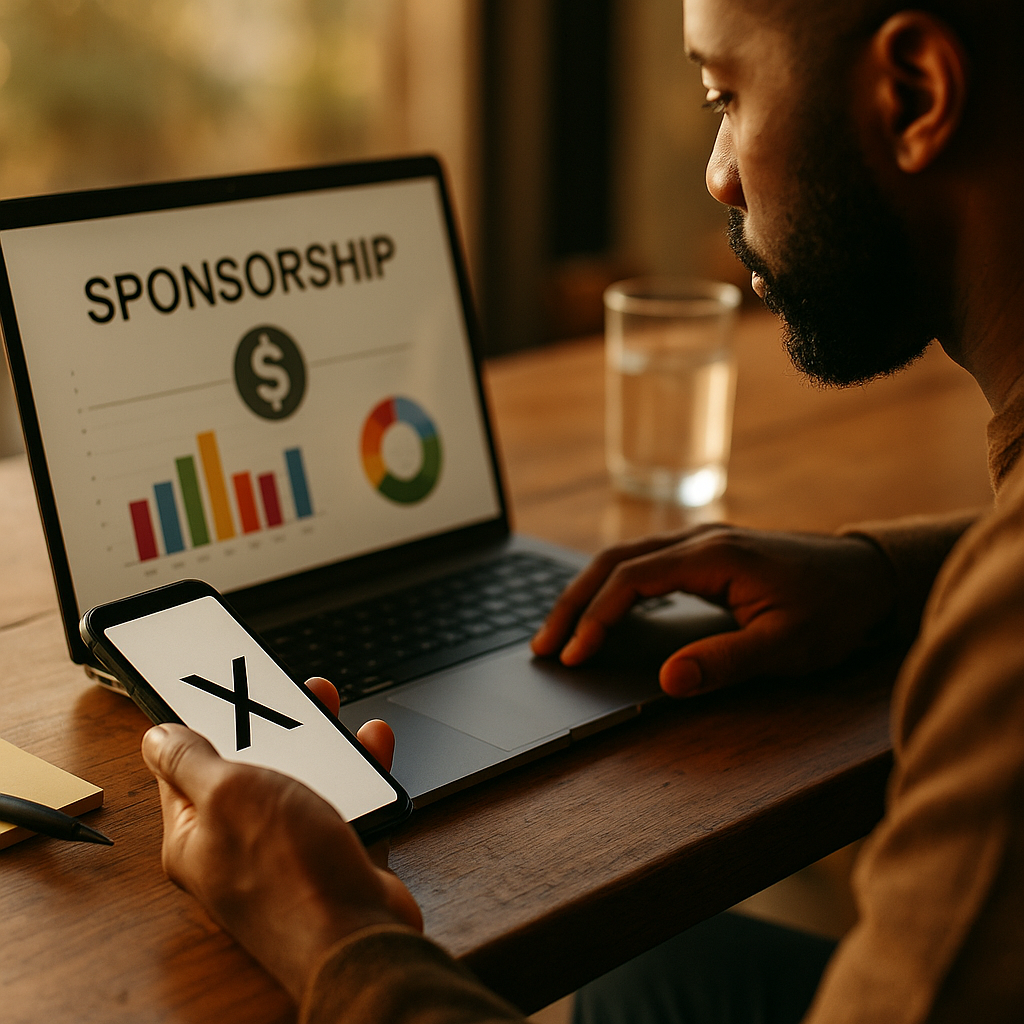
X now pays out creator ad revenue shares that can hit six figures monthly for top accounts, yet most brands still treat the platform as an afterthought in their influencer budgets. That gap is either a massive oversight or a sign that practitioners know something the hype cycle doesn’t. So does sponsoring creators inside X’s creator monetization program actually move revenue, or is it just engagement theater dressed up in payout screenshots?
What the Monetization Program Actually Pays For
X’s creator revenue sharing model rewards accounts based on engagement from verified subscribers, not raw impressions. That’s a meaningful distinction for brands. A creator with 50,000 followers but high Premium subscriber overlap can out-earn one with ten times the audience but mostly non-paying viewers. The payout formula has shifted multiple times since launch, and X has never published a fully transparent rate card, which already tells you something about vetting creators before you sign a deal.
For brands, the program itself isn’t what you’re paying into. You’re not sponsoring the ad revenue share. You’re paying a creator who happens to also collect a separate check from X based on reply engagement and subscriber reach. The two income streams are related but distinct, and conflating them is where a lot of media buyers get their math wrong.
A creator earning strong monetization payouts from X is proof of platform engagement, not proof that their audience will buy your product. Those are two separate questions brands keep merging into one.
Why the Audience Overlap Matters More Than the Payout Screenshot
Plenty of agencies use monetization earnings as a shorthand for creator quality. It’s a lazy proxy. A political commentary account can rack up huge reply-engagement payouts while being commercially useless for a skincare brand or a B2B SaaS product. Before any sponsorship conversation, pull the creator’s actual follower demographics through X’s analytics or a third-party tool like Sprout Social, and cross-reference against your target buyer profile. If you’ve already built vetting workflows for other platforms, the same discipline applies here; see our risk vetting guide for a framework that transfers almost directly.
The ROI Math for 2026 Campaigns
Here’s the uncomfortable part. X’s user base has stabilized but hasn’t grown meaningfully, and ad load has increased, which means organic reach for branded content is thinner than it was three years ago. eMarketer has repeatedly flagged X as a platform where ad spend has not recovered to pre-2022 levels, even as creator payouts have risen. That’s a strange combination: shrinking brand ad dollars, growing creator earnings. It suggests X is incentivizing creator retention over advertiser growth, at least for now.
What does that mean for your sponsorship budget? It means you should treat X creator deals as a supplementary channel, not a primary one, unless your audience genuinely skews toward X’s core demographic: media, finance, politics, tech, and niche hobbyist communities. If your brand sells to Gen Z consumers through short-form video, your dollars almost certainly perform better on TikTok Shop or YouTube Shorts. Our YouTube Shorts budget guide breaks down comparable RPM economics if you’re deciding where to reallocate.
- Strong fit: B2B, fintech, media, political and policy adjacent brands, niche software tools
- Weak fit: mass consumer packaged goods, fashion, beauty, anything reliant on visual discovery
- Measurement reality: link clicks and reply engagement, not GMV or direct attribution like TikTok Shop offers
Paid Deals vs. Subscription-Funded Creators: A Quick Gut Check
One question we get constantly from brand teams: should we pay a creator directly, or lean on their existing Premium subscriber base and just do a lighter-touch mention? The answer depends on control. Direct paid deals give you creative approval, usage rights, and contractual deliverables. Relying on a creator’s organic subscription-funded content means you get authenticity but zero guarantees on messaging. We’ve mapped this tradeoff in more depth in our subscriptions versus paid deals comparison, and the short version is: if compliance matters to your legal team, pay for the deal.
Compliance Still Trips Up Brands Here
X’s disclosure enforcement has been inconsistent at best. Unlike Instagram or TikTok, which have built-in branded content toggles that automatically label sponsored posts, X leaves disclosure largely to the creator’s discretion unless you push for it contractually. That’s a liability. The FTC has made clear that both the brand and the creator can be held responsible for inadequate disclosure, regardless of which platform hosts the post. Review the FTC’s endorsement guidelines before any contract goes out, and bake disclosure language directly into your creator brief rather than hoping the creator remembers to add #ad.
This isn’t a hypothetical risk. Brand safety reviews on X have flagged repeated instances of monetized creators posting sponsored content without clear labeling, particularly in crypto and finance verticals where payout incentives are highest. If your legal or compliance team hasn’t built an X-specific checklist yet, now’s the time, especially given how aggressively the platform’s algorithm rewards reply volume over reach quality, a dynamic we’ve covered in the context of reply rate pricing models on competing platforms.
Budget Allocation: How Much Should You Actually Commit?
For most mid-market brands testing X creator sponsorships for the first time, we’d recommend capping initial spend at 5 to 8 percent of total influencer budget, run as a three-month pilot with clear KPIs tied to link clicks, brand mention sentiment, and follower growth on your own handle. Don’t commit retainer-level spend until you’ve validated that the creator’s audience actually converts for your category.
Track cost per thousand reply impressions as a baseline metric, then compare against your existing channels. HubSpot’s benchmarking data on paid social performance is a reasonable sanity check if you need internal buy-in numbers to justify the test. Visit HubSpot’s marketing resources for current paid social benchmarks across platforms.
If you can’t tie an X creator sponsorship to a measurable business outcome within one quarter, you’re funding the creator’s monetization payout, not your own pipeline.
What Smart Brands Are Doing Instead
A handful of B2B and fintech brands we’ve tracked are using X creator deals almost like thought leadership placements rather than traditional influencer marketing. They’re not chasing conversions. They’re chasing credibility signals in front of a specific, high-value niche audience, think venture capitalists, policy analysts, or enterprise software buyers. That’s a legitimate use case, and honestly it’s closer to how LinkedIn sponsorships work. If that’s your goal, our LinkedIn creator brief guide has useful parallels on structuring deals around authority rather than reach.
Consumer brands, on the other hand, are mostly sitting this one out, and for good reason. The platform’s demographic skew and weaker native shopping infrastructure mean conversion-focused campaigns consistently underperform compared to platforms built for commerce. Statista’s platform usage data continues to show X trailing TikTok and Instagram significantly in younger demographic engagement, which is the audience most consumer brands are chasing. Check Statista’s social media usage statistics if you need updated figures for an internal deck.
So, Is It Worth It?
Worth it is the wrong framing. The real question is whether your specific audience lives on X and whether the creators monetizing there actually reach that audience with commercial intent. For niche B2B, finance, and policy-adjacent brands, yes, cautiously, with tight contracts and disclosure requirements. For mass consumer brands chasing conversion and GMV, your budget is almost certainly better spent elsewhere, and the data backs that up consistently.
Next step: run a 90-day pilot capped at single-digit percentage of your influencer budget, measure link clicks and sentiment against your existing channel baselines, and only scale spend if the numbers clear your own hurdle rate, not the industry hype.
FAQs
Does paying for an X creator sponsorship also pay into their monetization program?
No. Your sponsorship fee goes directly to the creator as a separate transaction. X’s ad revenue share is paid independently based on engagement from verified subscribers, unrelated to any brand deal.
How do I verify a creator’s payout claims before signing a deal?
Ask for screenshots from X’s analytics dashboard alongside third-party audience verification through a tool like Sprout Social. Payout numbers alone don’t confirm audience quality or demographic fit.
Is X’s creator program regulated the same way as Instagram or TikTok sponsorships?
FTC disclosure rules apply across all platforms equally. X simply has weaker built-in tools for enforcing disclosure, so brands need to write labeling requirements directly into contracts rather than relying on platform defaults.
What budget percentage should a first-time X sponsorship pilot get?
Most brands testing the channel for the first time should cap spend around 5 to 8 percent of total influencer budget for an initial three-month pilot period before committing to retainers.
Which brand categories see the best results from X creator sponsorships?
B2B, fintech, media, and policy-adjacent brands tend to perform best, largely because X’s core audience skews toward those interests. Mass consumer and visual-discovery brands typically see weaker results.
Top Influencer Marketing Agencies
The leading agencies shaping influencer marketing in 2026
Agencies ranked by campaign performance, client diversity, platform expertise, proven ROI, industry recognition, and client satisfaction. Assessed through verified case studies, reviews, and industry consultations.
Moburst

-
2

The Shelf
Boutique Beauty & Lifestyle Influencer AgencyA data-driven boutique agency specializing exclusively in beauty, wellness, and lifestyle influencer campaigns on Instagram and TikTok. Best for brands already focused on the beauty/personal care space that need curated, aesthetic-driven content.Clients: Pepsi, The Honest Company, Hims, Elf Cosmetics, Pure LeafVisit The Shelf → -
3

Audiencly
Niche Gaming & Esports Influencer AgencyA specialized agency focused exclusively on gaming and esports creators on YouTube, Twitch, and TikTok. Ideal if your campaign is 100% gaming-focused — from game launches to hardware and esports events.Clients: Epic Games, NordVPN, Ubisoft, Wargaming, Tencent GamesVisit Audiencly → -
4

Viral Nation
Global Influencer Marketing & Talent AgencyA dual talent management and marketing agency with proprietary brand safety tools and a global creator network spanning nano-influencers to celebrities across all major platforms.Clients: Meta, Activision Blizzard, Energizer, Aston Martin, WalmartVisit Viral Nation → -
5

The Influencer Marketing Factory
TikTok, Instagram & YouTube CampaignsA full-service agency with strong TikTok expertise, offering end-to-end campaign management from influencer discovery through performance reporting with a focus on platform-native content.Clients: Google, Snapchat, Universal Music, Bumble, YelpVisit TIMF → -
6

NeoReach
Enterprise Analytics & Influencer CampaignsAn enterprise-focused agency combining managed campaigns with a powerful self-service data platform for influencer search, audience analytics, and attribution modeling.Clients: Amazon, Airbnb, Netflix, Honda, The New York TimesVisit NeoReach → -
7

Ubiquitous
Creator-First Marketing PlatformA tech-driven platform combining self-service tools with managed campaign options, emphasizing speed and scalability for brands managing multiple influencer relationships.Clients: Lyft, Disney, Target, American Eagle, NetflixVisit Ubiquitous → -
8

Obviously
Scalable Enterprise Influencer CampaignsA tech-enabled agency built for high-volume campaigns, coordinating hundreds of creators simultaneously with end-to-end logistics, content rights management, and product seeding.Clients: Google, Ulta Beauty, Converse, AmazonVisit Obviously →