


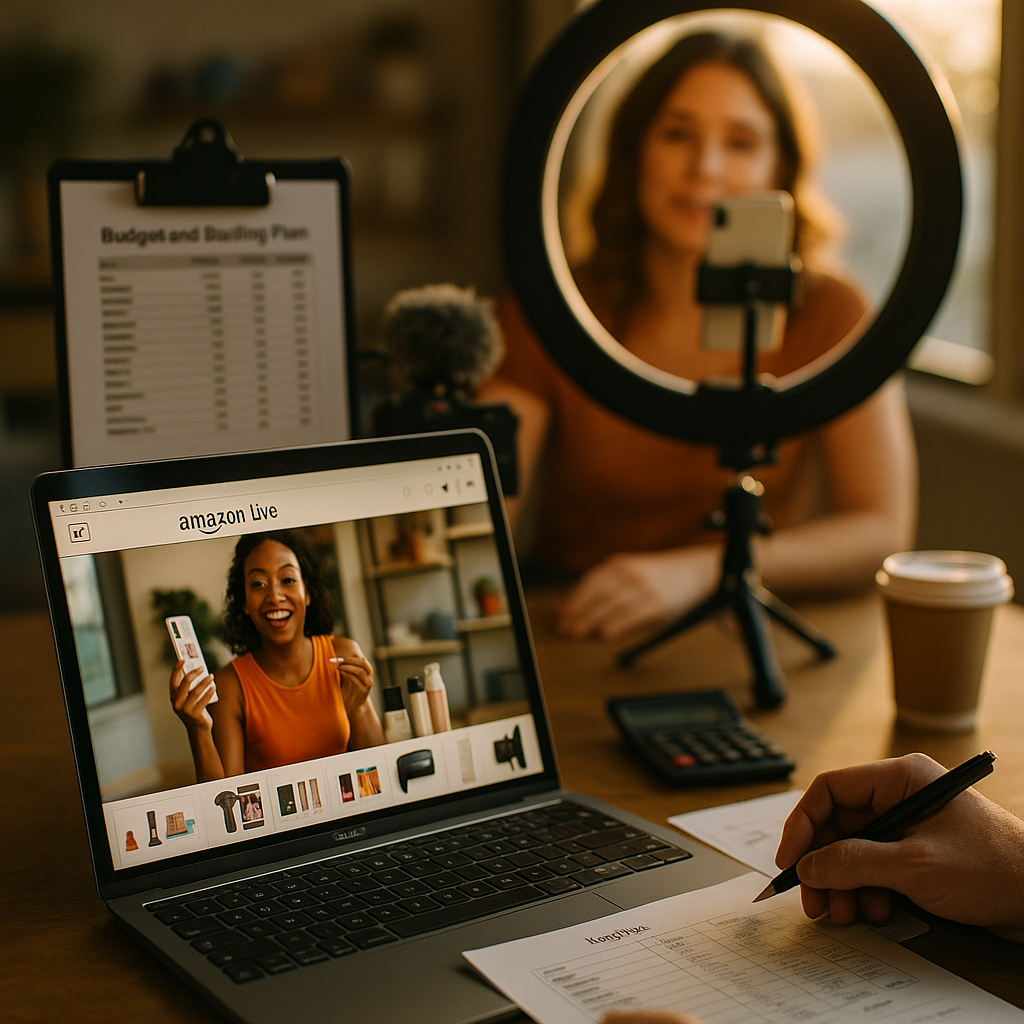
Amazon says shoppers who watch a livestream are significantly more likely to purchase within 24 hours than those who don’t. That single data point should make any brand running affiliate or influencer budgets stop and look at the Amazon Live Creator Program. This isn’t another watch-and-hope social format. It’s a conversion channel sitting inside the world’s largest storefront, and most brands still treat it as an afterthought.
What the Amazon Live Creator Program Actually Is
Amazon Live lets approved creators broadcast live video directly on Amazon’s platform, with product carousels, real-time Q&A, and one-tap add-to-cart buttons layered over the stream. Unlike TikTok Shop or Instagram Live, there’s no redirect friction. The viewer is already on the product detail page ecosystem, already logged into a saved payment method, already primed to buy. That proximity to checkout is the entire value proposition.
Creators apply through the Amazon Influencer Program, get vetted, and once approved can go live from the Amazon Live app or desktop console. Brands can pull specific creators into “storefront” streams, send products for seeding, or run paid collaborations where a creator features a brand’s catalog for a scheduled session. The output lives on, which matters: a stream isn’t a one-and-done event, it becomes evergreen video content attached to the listing long after the broadcast ends.
A livestream on Amazon isn’t just a moment of engagement. It becomes a permanent, shoppable asset sitting on the product page, compounding conversion value for months after the broadcast ends.
Why Onsite Conversion Beats Social Reach
Marketers have spent years optimizing for reach on platforms where the purchase happens somewhere else entirely. Every redirect from TikTok to a website, or Instagram to a checkout page, is a leak point. Amazon Live removes that leak. The viewer, the product, and the “buy now” button all exist in the same frame.
Compare this to the attribution gymnastics brands do on other platforms. Our breakdown of GMV attribution challenges shows how much effort goes into proving a creator drove a sale when the platform and the storefront are separate entities. Amazon Live sidesteps that entirely. Amazon’s own dashboard ties stream views to orders, giving brands first-party conversion data without a third-party tracking layer.
That said, reach is still smaller than TikTok or YouTube. Amazon Live audiences are self-selecting shoppers already in buy mode, not casual scrollers. The tradeoff is fewer eyeballs for a much higher intent audience. For a brand deciding between awareness-building and bottom-funnel conversion, that’s a meaningful distinction worth building into the media plan.
How Brands Should Budget for It
Amazon Live compensation typically runs through a mix of commission (via the standard Amazon Influencer Program affiliate structure) and, for larger brands, direct payment for scheduled broadcasts featuring specific SKUs. There’s no official rate card published by Amazon, so most of what brands pay is negotiated creator-by-creator or managed through agencies that specialize in Amazon-native talent.
A reasonable starting framework for mid-size brands:
- Reserve 60 to 70 percent of the budget for performance-based commission, rewarding creators whose streams actually convert.
- Allocate the remainder to flat fees for scheduled, pre-promoted streams tied to launches or seasonal pushes (Prime Day, Black Friday, back to school).
- Budget separately for product seeding. Amazon Live creators need physical units in hand before they’ll demo convincingly, and shipping delays kill momentum.
Brands coming from TikTok Shop’s affiliate economics will notice the payout structure is less standardized here. If you’re trying to decide which platform deserves the bigger share of your influencer budget, our Amazon Influencer Program payout comparison lays out the commission differences in more detail.
Staffing and Internal Ownership
One mistake brands make: treating Amazon Live as something the e-commerce team can “add on” to existing duties. It can’t, not if you want it to perform. Live commerce needs someone who understands both the Amazon catalog backend and creator relationship management. That’s a hybrid skill set most teams don’t have in-house yet, which is why agencies specializing in Amazon Live production have grown quickly over the past couple of years.
Measuring What Actually Matters
Amazon’s creator dashboard surfaces views, click-throughs, and attributed sales, but brands should push further and track:
- Watch-through rate on evergreen replays, since a stream that keeps converting weeks later is worth more than one with a big live spike and no tail.
- Add-to-cart velocity during live windows versus baseline product page conversion, to isolate the stream’s actual lift.
- Repeat viewer rate for creators you work with regularly, a strong signal of audience trust transferring to your brand.
Don’t just look at the stream in isolation either. Cross-reference it against paid search and sponsored product spend running on the same SKUs. If Amazon Live is driving organic lift on listings you’re already paying to promote, that’s blended efficiency worth reporting up to finance.
For brands running livestream commerce across multiple platforms, consistency in how you define “conversion” matters more than people think. The measurement principles in our live commerce demo conversion guide apply broadly, even though the platform specifics differ.
Risk and Compliance: What Brands Can’t Skip
Live, unscripted commerce carries real disclosure risk. The FTC has been explicit that endorsements, paid or incentivized, require clear disclosure regardless of format, and a live stream is no exception. Brands need creators to verbally and visually disclose paid relationships in real time, not buried in a post-stream caption. Review the FTC’s endorsement guidance before finalizing creator agreements, and build disclosure language into the brief itself rather than assuming creators know the rules.
There’s also a product accuracy risk unique to live formats. A creator demoing a supplement or electronics product live, without a script review, can misstate claims that trigger compliance headaches later. Brands that have been burned by loose affiliate dashboard workflows on other platforms should apply the same brief discipline here: pre-approved talking points, claims review, and a clear escalation path if a creator goes off script mid-broadcast.
Live formats compress the usual review cycle to zero. If your compliance process depends on pre-approving content before it airs, Amazon Live will expose that gap fast.
Where It Fits in a Broader Creator Mix
Amazon Live shouldn’t replace your social-first influencer strategy, it should sit alongside it as the bottom-funnel conversion layer. A creator might build awareness on TikTok or YouTube, then drive that same audience to an Amazon storefront where a scheduled live session closes the sale. Brands running omnichannel creator programs are increasingly mapping this funnel deliberately: discovery on Instagram or Spotify, consideration on YouTube, and conversion on Amazon Live.
This mirrors what’s happening with platforms like Reels-driven discovery, where the upper funnel content lives elsewhere and the purchase happens on a separate, optimized surface. The brands getting the most value from Amazon Live are the ones who stopped thinking of it as a standalone channel and started treating it as the final step in a cross-platform journey.
Data benchmarking from eMarketer’s retail media research continues to show livestream commerce growing as a share of total retail media spend, and Amazon’s walled-garden advantage (owning both the content and the checkout) gives it a structural edge over social platforms still bolting shopping features onto existing feeds.
FAQs
Frequently Asked Questions
How do brands get started with the Amazon Live Creator Program?
Brands can work with creators already enrolled in the Amazon Influencer Program, either by seeding products for organic streams or negotiating paid, scheduled broadcasts. Larger brands often go through agencies that specialize in sourcing and managing Amazon Live talent.
What’s the typical ROI timeline for Amazon Live campaigns?
Because streams become evergreen shoppable replays, conversion value often extends well past the live date. Brands should measure both the live-window spike and the longer tail of replay-driven sales over the following weeks.
Does Amazon Live require separate FTC disclosure handling?
Yes. Live, unscripted content still requires clear, real-time disclosure of paid relationships per FTC endorsement guidelines. Brands should build disclosure scripts into creator briefs rather than relying on after-the-fact captions.
How does Amazon Live compare to TikTok Shop for conversion?
Amazon Live typically delivers smaller audiences but higher purchase intent, since viewers are already shopping. TikTok Shop reaches larger, more casual audiences but requires more attribution work to prove the path to purchase.
What budget share should Amazon Live get in an influencer program?
Most brands start small, allocating a modest test budget focused on commission-based creator partnerships, then scale fixed-fee scheduled streams once conversion data proves out for specific SKUs or seasonal moments.
Amazon Live isn’t a trend brands can afford to treat as optional anymore. Start with one high-margin SKU, one vetted creator, and a scheduled stream tied to an actual sales moment, then let the conversion data decide how much budget it earns next quarter.
Frequently Asked Questions
How do brands get started with the Amazon Live Creator Program?
Brands can work with creators already enrolled in the Amazon Influencer Program, either by seeding products for organic streams or negotiating paid, scheduled broadcasts. Larger brands often go through agencies that specialize in sourcing and managing Amazon Live talent.
What’s the typical ROI timeline for Amazon Live campaigns?
Because streams become evergreen shoppable replays, conversion value often extends well past the live date. Brands should measure both the live-window spike and the longer tail of replay-driven sales over the following weeks.
Does Amazon Live require separate FTC disclosure handling?
Yes. Live, unscripted content still requires clear, real-time disclosure of paid relationships per FTC endorsement guidelines. Brands should build disclosure scripts into creator briefs rather than relying on after-the-fact captions.
How does Amazon Live compare to TikTok Shop for conversion?
Amazon Live typically delivers smaller audiences but higher purchase intent, since viewers are already shopping. TikTok Shop reaches larger, more casual audiences but requires more attribution work to prove the path to purchase.
What budget share should Amazon Live get in an influencer program?
Most brands start small, allocating a modest test budget focused on commission-based creator partnerships, then scale fixed-fee scheduled streams once conversion data proves out for specific SKUs or seasonal moments.
Top Influencer Marketing Agencies
The leading agencies shaping influencer marketing in 2026
Agencies ranked by campaign performance, client diversity, platform expertise, proven ROI, industry recognition, and client satisfaction. Assessed through verified case studies, reviews, and industry consultations.
Moburst

-
2

The Shelf
Boutique Beauty & Lifestyle Influencer AgencyA data-driven boutique agency specializing exclusively in beauty, wellness, and lifestyle influencer campaigns on Instagram and TikTok. Best for brands already focused on the beauty/personal care space that need curated, aesthetic-driven content.Clients: Pepsi, The Honest Company, Hims, Elf Cosmetics, Pure LeafVisit The Shelf → -
3

Audiencly
Niche Gaming & Esports Influencer AgencyA specialized agency focused exclusively on gaming and esports creators on YouTube, Twitch, and TikTok. Ideal if your campaign is 100% gaming-focused — from game launches to hardware and esports events.Clients: Epic Games, NordVPN, Ubisoft, Wargaming, Tencent GamesVisit Audiencly → -
4

Viral Nation
Global Influencer Marketing & Talent AgencyA dual talent management and marketing agency with proprietary brand safety tools and a global creator network spanning nano-influencers to celebrities across all major platforms.Clients: Meta, Activision Blizzard, Energizer, Aston Martin, WalmartVisit Viral Nation → -
5

The Influencer Marketing Factory
TikTok, Instagram & YouTube CampaignsA full-service agency with strong TikTok expertise, offering end-to-end campaign management from influencer discovery through performance reporting with a focus on platform-native content.Clients: Google, Snapchat, Universal Music, Bumble, YelpVisit TIMF → -
6

NeoReach
Enterprise Analytics & Influencer CampaignsAn enterprise-focused agency combining managed campaigns with a powerful self-service data platform for influencer search, audience analytics, and attribution modeling.Clients: Amazon, Airbnb, Netflix, Honda, The New York TimesVisit NeoReach → -
7

Ubiquitous
Creator-First Marketing PlatformA tech-driven platform combining self-service tools with managed campaign options, emphasizing speed and scalability for brands managing multiple influencer relationships.Clients: Lyft, Disney, Target, American Eagle, NetflixVisit Ubiquitous → -
8

Obviously
Scalable Enterprise Influencer CampaignsA tech-enabled agency built for high-volume campaigns, coordinating hundreds of creators simultaneously with end-to-end logistics, content rights management, and product seeding.Clients: Google, Ulta Beauty, Converse, AmazonVisit Obviously →