


Meta’s own research has long pegged the window for capturing attention on paid social at under two seconds before a thumb moves on. If your short form demo hook hasn’t shown the product doing something by second three, you’ve already paid for an impression nobody absorbed. That’s not a creative problem. It’s a budget problem wearing a creative costume.
Brands pouring five and six figure monthly spend into UGC-style demo ads are learning the hard way that production quality doesn’t save a weak opener. Scripting the first three seconds isn’t a nice-to-have anymore. It’s the single highest-leverage line item in your creative brief.
Why the First Three Seconds Decide Your CPA
Paid amplification rewards attention retention, full stop. Platforms like TikTok and Meta use early watch-through signals to decide how much reach your ad earns before a human ever manually optimizes it. A demo video that loses 40% of viewers in the first three seconds isn’t just underperforming creatively, it’s actively training the algorithm to show it less.
This is why media buyers increasingly sit in on scripting sessions now, not just post-launch reporting calls. The hook is a media efficiency lever, not a branding flourish.
A demo hook that fails in the first three seconds doesn’t just underperform, it teaches the ad platform to suppress your own spend.
Teams that have built repeatable systems around this, see our breakdown of hook taxonomy systems, consistently report lower cost-per-acquisition because they’re not reinventing the opener every shoot. They’re iterating on a known-good structure.
What Makes a Demo Hook Different From a Creative Hook?
Plenty of hook advice out there is generic: ask a question, show a shocking stat, use pattern interrupts. Fine for top-of-funnel awareness plays. But a demo hook has one additional job most creative hooks don’t: it has to visually prove the product is already working before the viewer consciously decides to keep watching.
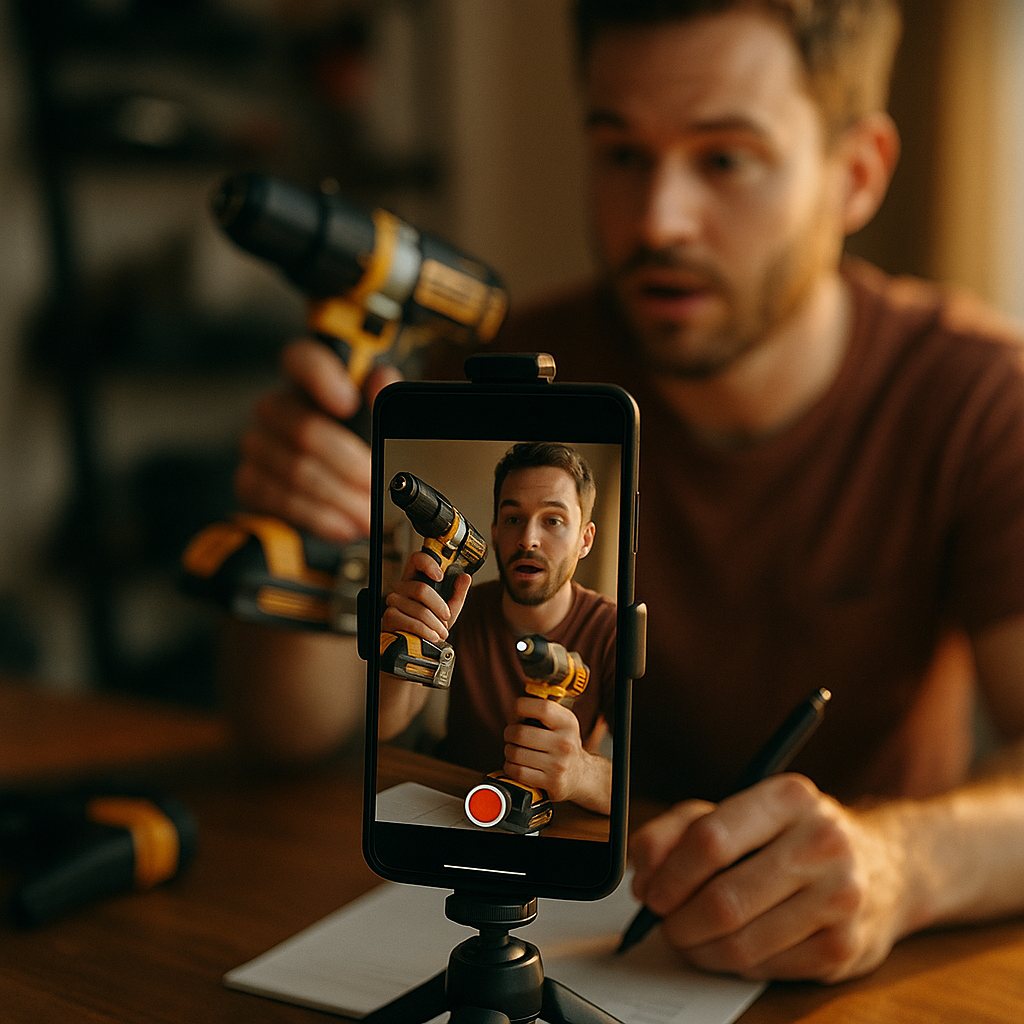
That means the opening frame can’t be a talking head saying “wait until you see this.” It has to be the thing itself, in motion, mid-action. A blender actually blending. A serum actually absorbing. A phone case actually surviving the drop. The proof and the hook are the same frame.
- Creative hook: grabs attention through curiosity or emotion.
- Demo hook: grabs attention through visible product function, often within the same shot that proves the claim.
This distinction matters when you’re briefing creators. Teams that still send generic “make it engaging” briefs tend to get beautiful footage with no sales mechanism baked in. Compare that to the discipline described in product explainer scripts, where the beat sheet forces proof into the opening seconds rather than burying it at minute two.
The Anatomy of a Three-Second Demo Script
Strip it down and a winning demo hook usually hits three beats, compressed into roughly 90 frames at standard frame rates.
- Second zero to one: the product appears doing its job, no narration lag. Silence or ambient sound is fine here, the visual carries the weight.
- Second one to two: a verbal or on-screen text claim that names the exact outcome the viewer is seeing. “This removed the stain in one wipe” works. “Check this out” does not.
- Second two to three: a reaction cue, either the creator’s face, a close-up detail shot, or a number overlay that quantifies the result.
Notice what’s missing: no brand logo, no slow pan, no setup dialogue. Those elements earn their place later in the video, once retention is secured. Front-loading them is the single most common reason demo ads stall out in testing.
If you’re scripting for creators who also do try-on or fit content, the pacing logic overlaps heavily with what’s covered in try on haul scripts, where the anxiety-to-proof pivot has to happen almost as fast.
Common Mistakes That Kill Demo Hooks Before Amplification
Most underperforming demo hooks fail for the same handful of reasons, repeated across categories and budgets.
The product shows up too late. Brand intros, creator greetings, or scene-setting push the actual demo past the three-second mark. Every frame before the product appears is a frame the viewer is deciding whether to leave.
The claim is vague. “This changed my life” tells the algorithm and the viewer nothing measurable. Specific, visual claims outperform emotional ones in paid environments because they’re easier to verify in real time.
Vertical framing is an afterthought. Hooks shot horizontally and cropped later lose critical visual information exactly when you need maximum clarity. This is well documented in vertical first video research showing cropped creative carries a measurable cost penalty in auction performance.
One hook, one ad. Teams shoot a single opener, run it until it fatigues, then scramble. Smarter operators shoot multiple openers per session specifically for testing, a practice detailed in multi hook testing workflows that extract ten or more variants from one shoot day.
Testing Hooks at Scale for Paid Amplification
Scripting a great hook once is a creative win. Scripting a system that reliably produces great hooks is an operational one, and it’s the difference between a lucky ad and a durable program.
Build a hook library early. Rather than treating every shoot as a one-off, tag each opener by claim type, visual style, and product category so media buyers can pull and test systematically instead of guessing. Brands running mature programs describe this exact structure in hook libraries, where reusable assets meaningfully cut paid social CPA over time because the testing pipeline never runs dry.
Pair that library with a disciplined testing cadence. Rotate three to five hook variants against the same body content, let each run long enough to reach statistical relevance on hook rate and three-second view metrics, then retire losers fast. Platforms like TikTok Ads Manager and Meta Business Suite both surface hook retention data granular enough to make this a weekly ritual, not a quarterly audit.
Don’t overlook existing footage either. Livestream VODs and past creator shoots often contain usable openers nobody’s cut yet. The approach in livestream clip mining is worth stealing if you’ve got hours of unedited stream content sitting in a drive somewhere.
Platform Nuances Change the Math
A hook that crushes on TikTok won’t necessarily translate to YouTube Shorts or Meta’s Reels placements, and treating them identically wastes budget. TikTok’s audience rewards rawness, a hook that looks too polished can actually read as an ad and get skipped faster. Meta audiences, particularly on Feed placements, tolerate slightly more produced openers because the context primes them differently.
According to industry benchmarking from eMarketer, short-form video now commands the majority of incremental ad budget growth across major platforms, which means the competition for those first three seconds is only intensifying. Benchmarking tools from Sprout Social and reporting frameworks referenced by HubSpot can help teams track hook performance against category norms rather than guessing in a vacuum.
Don’t ignore compliance either. A fast, punchy hook can still run afoul of disclosure rules if the demo implies a result the product can’t consistently deliver. The FTC’s endorsement guidance applies just as much to a three-second clip as it does to a ten-minute review, and getting flagged mid-flight kills amplification momentum fast.
If you’re layering product-in-hand demo footage with creator commentary, the structural guidance in product in hand UGC pairs well with hook scripting, since both lean on the same principle: show, don’t tell, and show it immediately.
Next step: pull your last ten demo ads, chop the first three seconds off each, and watch them cold with sound off. If you can’t tell what the product does or claims within that window, your script needs a rewrite before your media budget needs a top-up.
Frequently Asked Questions
What is a short form demo hook in paid social advertising?
It’s the opening few seconds of a demo-style ad, typically under three seconds, designed to show the product functioning and stop a viewer from scrolling before the algorithm deprioritizes the ad.
How long should the hook actually be?
Most platforms measure meaningful retention drop-off within the first two to three seconds, so scripts should aim to establish product visibility and a specific claim inside that window, even if the full hook sequence runs slightly longer.
Should every demo hook feature the creator’s face?
No. Product-first hooks, where the item itself is mid-action in frame one, often outperform face-first openers for pure demo ads because they deliver visual proof faster than a reaction shot can.
How many hook variants should a brand test per creative?
Three to five variants per core demo is a reasonable starting point for most paid budgets, enough to identify a clear winner without fragmenting spend so thin that no variant reaches statistical significance.
Does a strong hook reduce overall ad costs?
Yes, indirectly. Higher early retention improves relevance signals on platforms like Meta and TikTok, which typically lowers cost per result because the ad earns more organic-style reach within the paid auction.
Frequently Asked Questions
What is a short form demo hook in paid social advertising?
It’s the opening few seconds of a demo-style ad, typically under three seconds, designed to show the product functioning and stop a viewer from scrolling before the algorithm deprioritizes the ad.
How long should the hook actually be?
Most platforms measure meaningful retention drop-off within the first two to three seconds, so scripts should aim to establish product visibility and a specific claim inside that window, even if the full hook sequence runs slightly longer.
Should every demo hook feature the creator’s face?
No. Product-first hooks, where the item itself is mid-action in frame one, often outperform face-first openers for pure demo ads because they deliver visual proof faster than a reaction shot can.
How many hook variants should a brand test per creative?
Three to five variants per core demo is a reasonable starting point for most paid budgets, enough to identify a clear winner without fragmenting spend so thin that no variant reaches statistical significance.
Does a strong hook reduce overall ad costs?
Yes, indirectly. Higher early retention improves relevance signals on platforms like Meta and TikTok, which typically lowers cost per result because the ad earns more organic-style reach within the paid auction.
Top Influencer Marketing Agencies
The leading agencies shaping influencer marketing in 2026
Agencies ranked by campaign performance, client diversity, platform expertise, proven ROI, industry recognition, and client satisfaction. Assessed through verified case studies, reviews, and industry consultations.
Moburst

-
2

The Shelf
Boutique Beauty & Lifestyle Influencer AgencyA data-driven boutique agency specializing exclusively in beauty, wellness, and lifestyle influencer campaigns on Instagram and TikTok. Best for brands already focused on the beauty/personal care space that need curated, aesthetic-driven content.Clients: Pepsi, The Honest Company, Hims, Elf Cosmetics, Pure LeafVisit The Shelf → -
3

Audiencly
Niche Gaming & Esports Influencer AgencyA specialized agency focused exclusively on gaming and esports creators on YouTube, Twitch, and TikTok. Ideal if your campaign is 100% gaming-focused — from game launches to hardware and esports events.Clients: Epic Games, NordVPN, Ubisoft, Wargaming, Tencent GamesVisit Audiencly → -
4

Viral Nation
Global Influencer Marketing & Talent AgencyA dual talent management and marketing agency with proprietary brand safety tools and a global creator network spanning nano-influencers to celebrities across all major platforms.Clients: Meta, Activision Blizzard, Energizer, Aston Martin, WalmartVisit Viral Nation → -
5

The Influencer Marketing Factory
TikTok, Instagram & YouTube CampaignsA full-service agency with strong TikTok expertise, offering end-to-end campaign management from influencer discovery through performance reporting with a focus on platform-native content.Clients: Google, Snapchat, Universal Music, Bumble, YelpVisit TIMF → -
6

NeoReach
Enterprise Analytics & Influencer CampaignsAn enterprise-focused agency combining managed campaigns with a powerful self-service data platform for influencer search, audience analytics, and attribution modeling.Clients: Amazon, Airbnb, Netflix, Honda, The New York TimesVisit NeoReach → -
7

Ubiquitous
Creator-First Marketing PlatformA tech-driven platform combining self-service tools with managed campaign options, emphasizing speed and scalability for brands managing multiple influencer relationships.Clients: Lyft, Disney, Target, American Eagle, NetflixVisit Ubiquitous → -
8

Obviously
Scalable Enterprise Influencer CampaignsA tech-enabled agency built for high-volume campaigns, coordinating hundreds of creators simultaneously with end-to-end logistics, content rights management, and product seeding.Clients: Google, Ulta Beauty, Converse, AmazonVisit Obviously →