


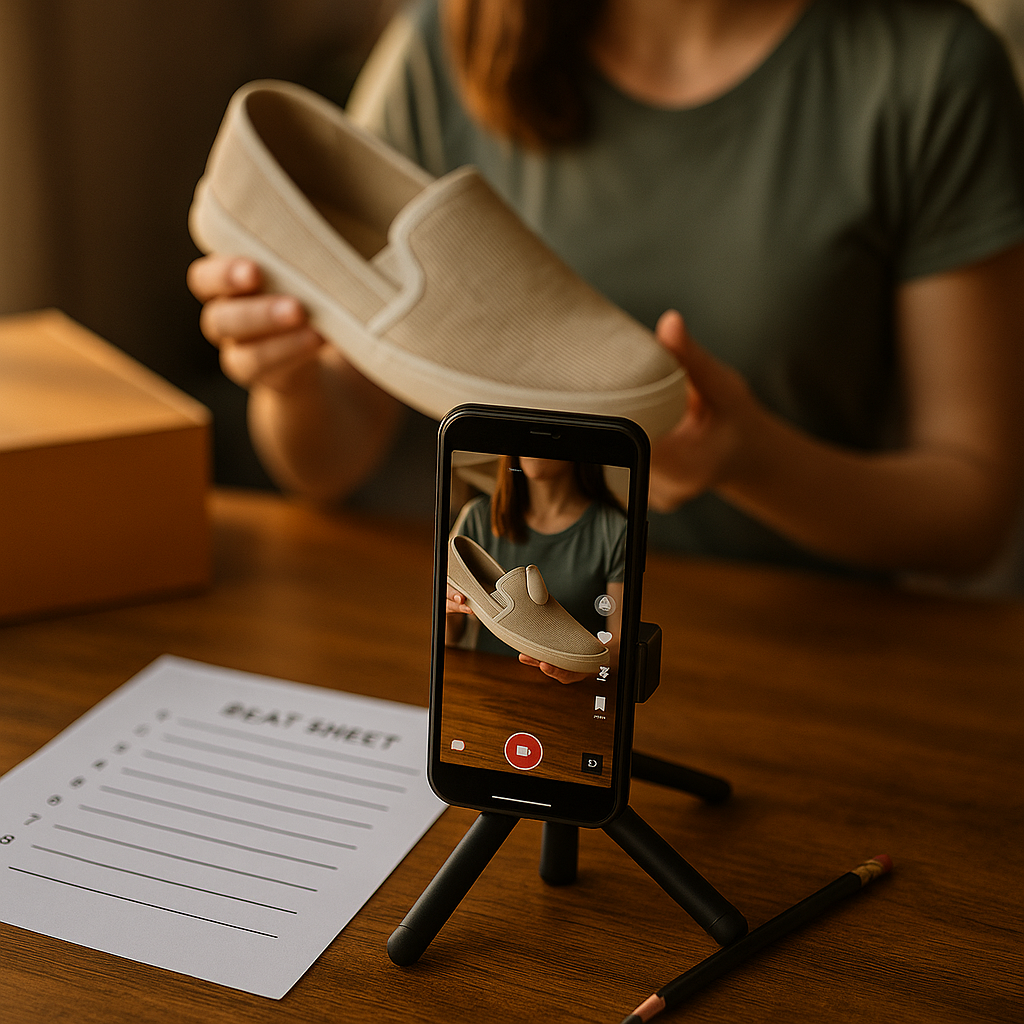
TikTok Shop sellers using structured product explainer scripts are seeing conversion rates run 2 to 4 times higher than standard creator content, according to internal benchmarks shared by agency partners managing eight figure TikTok Shop budgets. Why? Because shoppers on TikTok aren’t browsing, they’re deciding. The product explainer script format meets them exactly where they are: mid scroll, skeptical, and thirty seconds from either checkout or the next video.
If your brand is still handing creators a loose brief and hoping for the best, you’re leaving revenue on the table. This format isn’t creative fluff. It’s a conversion mechanism with a repeatable structure, and the brands winning on TikTok Shop right now have reverse engineered it.
What Makes an Explainer Script Different From a Regular UGC Video
Most influencer content is built for brand awareness. It opens with a hook, builds a narrative, and closes soft. Product explainer scripts flip that model. They’re built like a sales call compressed into 30 to 60 seconds, with every line earning its place against a single goal: get the viewer to tap “Add to Cart” before they swipe away.
The format borrows heavily from direct response advertising, not lifestyle content. Think QVC energy with Gen Z pacing. The creator isn’t performing a vibe, they’re walking through a problem, a solution, and a reason to buy right now. That specificity is what separates explainer scripts from the vague “I’m obsessed with this” genre that dominated influencer marketing a few years ago.
TikTok Shop’s algorithm rewards watch time and completion rate, but conversion lives or dies on clarity. A viewer who understands exactly what the product does and why it’s worth the price in the first ten seconds is far more likely to check out than one who’s still guessing by second twenty.
Why TikTok Shop Rewards This Format Specifically
TikTok Shop’s in-feed checkout removes almost every friction point that kills conversion on other platforms. There’s no redirect to an external site, no cart abandonment from a slow loading page, no second guessing once the tab closes. That means the video itself has to do more of the selling, because once someone taps through, they’re one more tap from a completed order.
This is a fundamentally different job than a typical paid social ad, which only needs to generate a click. According to eMarketer’s coverage of social commerce trends, platforms with native checkout consistently show higher intent to purchase among viewers who watch past the first few seconds, which puts enormous pressure on those opening seconds to be both honest and persuasive.
Explainer scripts are built for exactly that pressure. They front load the value proposition, show the product in use almost immediately, and close with a clear, low friction call to action. There’s a reason this format pairs so well with shoppable video overlays, the structure and the interface are solving the same problem from two different angles.
The Beat Sheet: Anatomy of a High Converting Script
Strip away the branding and most winning TikTok Shop explainer scripts follow a nearly identical structure. It’s not glamorous, but it works.
- The problem callout (0 to 3 seconds): Name the exact frustration the product solves, in the viewer’s own language. Not “skincare routine,” but “why does my foundation always crease by noon.”
- The product reveal (3 to 8 seconds): Show it, name it, don’t bury the brand. Viewers who can’t identify what’s being sold in the first ten seconds rarely convert.
- The demonstration (8 to 20 seconds): Use the product on camera. No voiceover-only explainers. TikTok Shop buyers want proof, not a pitch deck.
- The objection handle (20 to 30 seconds): Address the thing viewers are already thinking, price, effort, whether it actually works on their skin tone or kitchen setup or hair type.
- The close (final 5 to 10 seconds): Direct, specific instruction. “Tap the yellow basket” beats “link in bio” every time on TikTok Shop because it references the actual UI element.
Notice what’s missing: no slow build, no cinematic b-roll, no extended storytelling arc. That’s intentional. This format has more in common with the beat structure in live commerce scripts than it does with a typical branded content piece, because both are optimized for the same thing: compressing the sales cycle into the length of a single clip.
Sound Design Isn’t Optional
A surprising number of brands still treat explainer scripts as something that works fine on mute. It doesn’t. Unlike ambient lifestyle content, which benefits from silent first video design, explainer scripts rely on spoken clarity to carry the sales argument. Captions help, but they’re a backup, not a replacement. If the audio doesn’t land the value proposition on its own, the script has already failed half its audience.
Where Brands Get This Wrong
The most common mistake is treating the explainer script like a script in the theatrical sense, memorized lines, stiff delivery, zero creator voice. That kills performance fast. TikTok Shop audiences can smell a read-through from a mile away, and stilted delivery tanks completion rates before the call to action ever lands.
The fix isn’t abandoning structure, it’s briefing the beats, not the words. Give creators the five beat framework above and let them fill it in with their own phrasing, their own pacing, their own on-camera energy. The structure stays constant. The voice doesn’t.
Second mistake: skipping the objection handle. Brands get so focused on features that they forget buyers on TikTok Shop are impulse purchasing from strangers, and they have real hesitations about quality, fit, and whether the deal is too good to be true. A script that doesn’t name and defuse that hesitation leaves it to simmer in the viewer’s head during checkout, which is exactly when carts get abandoned.
Third: weak or vague calls to action. “Check it out” isn’t a close. Reference the actual TikTok Shop interface, the basket icon, the yellow banner, the product card. Specificity reduces the cognitive load between watching and buying, and every bit of friction removed there shows up directly in conversion rate.
Building a Repeatable Creator Brief
Scaling this format across a creator roster requires more than a one-off script. It requires a brief that can be handed to ten different creators and still produce consistent results. That’s where a lot of in-house teams stall out, they write a single great script, use it once, and then start from scratch for the next campaign.
A better approach treats the explainer format like a reusable system, similar to how hook libraries work for paid social. Build a bank of problem statements, objection handles, and closing lines tied to your core product benefits, then let creators mix and match within that bank. This keeps every video on strategy without flattening creator personality into a monotone script.
It’s also worth pairing explainer scripts with a comparison video or two in the content mix. Explainers answer “what does this do,” comparisons answer “why this one over the alternative,” and running both formats against the same product tends to outperform either one alone.
Compliance and Disclosure Still Matter
Fast paced, sales driven content is exactly where disclosure gets sloppy. The FTC’s endorsement guidelines apply just as much to a 30 second TikTok Shop explainer as they do to a long form sponsored video, and TikTok Shop’s own creator terms require clear disclosure of paid partnerships and affiliate relationships. Build the disclosure line into the brief itself, don’t leave it to the creator to remember on a rushed shoot day. A quick, honest “this is a paid partnership” at the top costs nothing in conversion and saves a lot of risk down the line.
Measuring What Actually Matters
Views and likes are vanity metrics here. The numbers that matter are watch-through rate at the ten second mark (where the problem and product reveal should land), click-to-cart rate, and ultimately units sold per video. Tools like Sprout Social and TikTok Shop’s native analytics dashboard both surface these breakpoints, and tracking where viewers drop off tells you exactly which beat in the script is underperforming.
If drop-off spikes right after the product reveal, your demonstration isn’t convincing. If it spikes before the close, your objection handle isn’t landing. Treat the script as a living document, not a one-time asset, and revise based on where the data says attention is leaking.
Your Next Move
Pick your best-selling SKU, build a five beat script using the framework above, and brief three creators on the structure instead of the script itself. Compare their click-to-cart rates against your current TikTok Shop content within two weeks, and you’ll have a clear answer on whether structure beats vibes for your audience.
FAQs
What is a product explainer script in the context of TikTok Shop?
It’s a structured, beat based content format that walks a viewer through a product’s problem, solution, demonstration, and purchase prompt in under a minute, designed specifically to drive in-feed checkout conversion rather than general brand awareness.
How long should a TikTok Shop explainer video be?
Most high converting explainer scripts run between 30 and 60 seconds. Shorter videos often skip the objection handle, which hurts conversion, while longer videos risk losing viewers before the call to action.
Do explainer scripts work better than organic unscripted UGC?
For conversion specifically, yes. Unscripted UGC often outperforms on reach and relatability, but structured explainer scripts consistently convert higher because they’re built around a clear value proposition and a direct, specific call to action.
How do I brief creators without making the video feel scripted?
Give creators the five beat structure (problem, reveal, demonstration, objection, close) rather than word for word lines. Let them write the dialogue in their own voice while hitting each beat in order.
What metrics show whether an explainer script is working?
Watch-through rate at the ten second mark, click-to-cart rate, and units sold per video are the clearest indicators. Views and engagement alone don’t reflect conversion performance.
FAQs
What is a product explainer script in the context of TikTok Shop?
It’s a structured, beat based content format that walks a viewer through a product’s problem, solution, demonstration, and purchase prompt in under a minute, designed specifically to drive in-feed checkout conversion rather than general brand awareness.
How long should a TikTok Shop explainer video be?
Most high converting explainer scripts run between 30 and 60 seconds. Shorter videos often skip the objection handle, which hurts conversion, while longer videos risk losing viewers before the call to action.
Do explainer scripts work better than organic unscripted UGC?
For conversion specifically, yes. Unscripted UGC often outperforms on reach and relatability, but structured explainer scripts consistently convert higher because they’re built around a clear value proposition and a direct, specific call to action.
How do I brief creators without making the video feel scripted?
Give creators the five beat structure (problem, reveal, demonstration, objection, close) rather than word for word lines. Let them write the dialogue in their own voice while hitting each beat in order.
What metrics show whether an explainer script is working?
Watch-through rate at the ten second mark, click-to-cart rate, and units sold per video are the clearest indicators. Views and engagement alone don’t reflect conversion performance.
Top Influencer Marketing Agencies
The leading agencies shaping influencer marketing in 2026
Agencies ranked by campaign performance, client diversity, platform expertise, proven ROI, industry recognition, and client satisfaction. Assessed through verified case studies, reviews, and industry consultations.
Moburst

-
2

The Shelf
Boutique Beauty & Lifestyle Influencer AgencyA data-driven boutique agency specializing exclusively in beauty, wellness, and lifestyle influencer campaigns on Instagram and TikTok. Best for brands already focused on the beauty/personal care space that need curated, aesthetic-driven content.Clients: Pepsi, The Honest Company, Hims, Elf Cosmetics, Pure LeafVisit The Shelf → -
3

Audiencly
Niche Gaming & Esports Influencer AgencyA specialized agency focused exclusively on gaming and esports creators on YouTube, Twitch, and TikTok. Ideal if your campaign is 100% gaming-focused — from game launches to hardware and esports events.Clients: Epic Games, NordVPN, Ubisoft, Wargaming, Tencent GamesVisit Audiencly → -
4

Viral Nation
Global Influencer Marketing & Talent AgencyA dual talent management and marketing agency with proprietary brand safety tools and a global creator network spanning nano-influencers to celebrities across all major platforms.Clients: Meta, Activision Blizzard, Energizer, Aston Martin, WalmartVisit Viral Nation → -
5

The Influencer Marketing Factory
TikTok, Instagram & YouTube CampaignsA full-service agency with strong TikTok expertise, offering end-to-end campaign management from influencer discovery through performance reporting with a focus on platform-native content.Clients: Google, Snapchat, Universal Music, Bumble, YelpVisit TIMF → -
6

NeoReach
Enterprise Analytics & Influencer CampaignsAn enterprise-focused agency combining managed campaigns with a powerful self-service data platform for influencer search, audience analytics, and attribution modeling.Clients: Amazon, Airbnb, Netflix, Honda, The New York TimesVisit NeoReach → -
7

Ubiquitous
Creator-First Marketing PlatformA tech-driven platform combining self-service tools with managed campaign options, emphasizing speed and scalability for brands managing multiple influencer relationships.Clients: Lyft, Disney, Target, American Eagle, NetflixVisit Ubiquitous → -
8

Obviously
Scalable Enterprise Influencer CampaignsA tech-enabled agency built for high-volume campaigns, coordinating hundreds of creators simultaneously with end-to-end logistics, content rights management, and product seeding.Clients: Google, Ulta Beauty, Converse, AmazonVisit Obviously →