


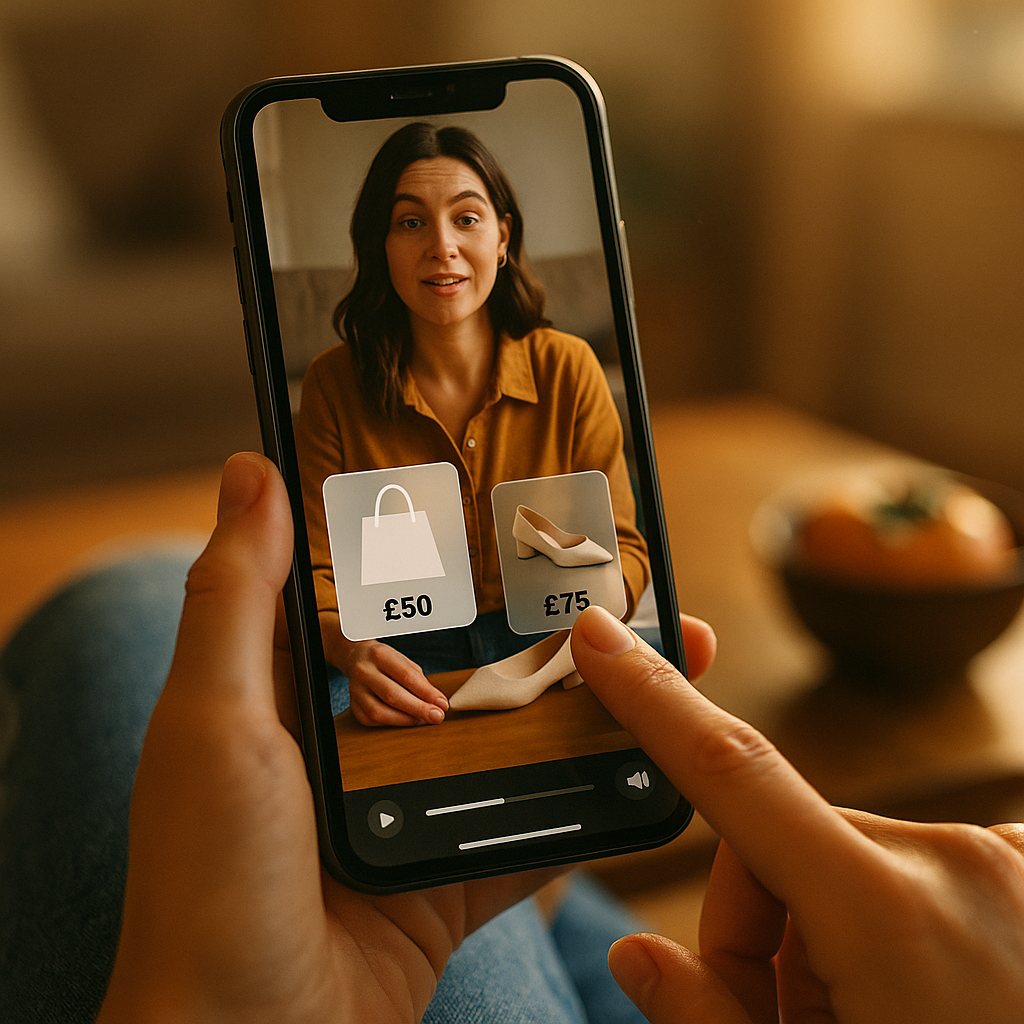
A viewer who has to leave TikTok, open a browser, search your product name, and find the right SKU is a viewer you’ve probably lost. Shoppable video overlays close that gap by turning the video itself into the storefront. No redirect, no search bar, no second-guessing. One tap on the screen and the click path starts right where attention already lives.
For brands still measuring influencer content by views and comments, that’s a problem. Views don’t pay invoices. Clicks that convert do.
Why Passive Views Stopped Being Enough
Platforms got good at keeping people inside the app. Really good. Instagram, TikTok, and YouTube Shorts all optimize for session length, not outbound traffic, which means every link in a bio or “swipe up” prompt is fighting the platform’s own incentives. The result: brands have been sitting on enormous reach numbers with conversion data that doesn’t match up.
Shoppable overlays flip that dynamic. Instead of asking a viewer to break their scroll and go find a product page, the overlay brings the product page to them, layered directly on top of the content they’re already watching. TikTok Shop, Instagram’s product tagging, and YouTube’s shopping tags all work on this principle now, and eMarketer has tracked steady growth in social commerce spend as brands chase exactly this kind of frictionless path.
A click path that requires zero platform-switching converts at a different rate than one that requires three steps and a login. That’s not a hypothesis, it’s basic funnel math.
What a Shoppable Overlay Actually Is
Strip away the jargon and a shoppable overlay is just a tappable layer sitting on top of a video: a product tag, a price badge, a “shop this look” button, or a carousel that appears at a specific timestamp. The viewer never leaves the content experience. They tap, see the product card, and either buy in-app or land on a pre-filtered product page.
There are a few common formats brands are running right now:
- Timestamp-triggered tags: a product appears exactly when the creator mentions or uses it, rather than sitting static for the whole video.
- Persistent shelf overlays: a small product rail stays visible throughout, useful for haul or multi-product content.
- End-card CTAs: a single, bold tap target at the close of the video, often paired with urgency (“only 40 left”).
- Swipeable carousels: multiple SKUs stacked for comparison, common in beauty and fashion creator content.
The format you choose should match the content’s job in the funnel, not just what looks nice. A comparison video benefits from a carousel so viewers can tap between the two products being discussed. A single-product demo is better served by a timestamp tag that fires the moment the product is shown on screen.
The Technical Side, Without the Headache
You don’t need custom development to run this. TikTok Shop and Instagram’s commerce tools handle the tagging natively if your product catalog is synced correctly, which is usually the real bottleneck. Brands running Shopify can connect catalogs directly; others route through a product feed. The harder lift isn’t the tech, it’s keeping inventory and pricing accurate in real time so a tagged product doesn’t lead to a “sold out” dead end mid-campaign.
For brands running influencer content across multiple platforms, third-party shoppable video tools (Firework, Bambuser, and similar players) let you overlay interactivity on content that doesn’t natively support it, like embedded site video or CTV-adjacent formats. Worth evaluating if your creator content lives on owned channels as much as social.
Where This Fits the Funnel
Shoppable overlays aren’t a top-of-funnel play. They’re a mid-to-lower-funnel accelerant, and treating them otherwise sets up the wrong expectations internally. A cold audience scrolling past a creator they’ve never heard of isn’t necessarily primed to buy in three seconds, overlay or not. Where overlays earn their keep is in retargeting flights, warm audience content, and anything built around demonstrated intent, like a retail walkthrough haul or a split-screen before-and-after ad where the product is already the hero.
That distinction matters for budget allocation. If you’re paying a premium to add shoppable functionality to awareness-stage content aimed at a cold audience, you’re likely overpaying for a click path that audience wasn’t ready to walk yet.
The Attribution Problem Nobody Talks About
Here’s the uncomfortable part. Shoppable overlays generate a cleaner click path, but “cleaner” doesn’t mean “fully attributable.” In-app checkouts (TikTok Shop purchases, for instance) often don’t pass full conversion data back to a brand’s primary analytics stack the way a traditional web conversion does. You can end up with strong platform-reported sales numbers that your own CRM or GA4 setup can’t fully reconcile.
Smart brands handle this with layered tracking: UTM-tagged links where the platform allows it, platform-native pixel installs, and a willingness to treat in-app shop data as directionally useful rather than gospel. Google’s support documentation and Meta’s business resources both outline current pixel and catalog requirements, and they change often enough that it’s worth a quarterly check rather than a set-it-and-forget-it install.
If your reporting can’t separate an organic creator click from a paid boost on the same video, you don’t have attribution. You have a guess with a dashboard attached.
Creator Selection Changes When Overlays Are Involved
Not every creator format plays nicely with shoppable tags. Fast-cut, trend-chasing content often moves too quickly for a viewer to register and tap a product card before the next clip starts. Slower-paced formats give the overlay room to breathe: silent-first video design with text-based product call-outs, ASMR-style product content where the product is lingered on, and founder-led demos all give the tag time to register visually before the viewer scrolls past.
This is also where briefing has to get more specific. Creators need to know not just what to say, but when to hold the product steady on camera so the tag timing actually lines up with the moment of maximum interest. A brief that doesn’t account for this results in overlays that feel bolted on rather than built in. For brands already working from format-specific creative briefs, adding a shoppable-timing note is a small addition with outsized payoff.
What the Data Suggests So Far
Social commerce isn’t a fringe bet anymore. Statista has tracked continued growth in global social commerce revenue, and platforms wouldn’t keep investing engineering resources in shoppable tagging if the conversion lift weren’t showing up somewhere in their own internal data, even if they’re not always eager to share the granular numbers publicly.
What brands running their own tests tend to report, informally and in case studies shared through agencies, is a consistent pattern: overlay-enabled content drives higher click-through on warm or retargeted audiences, with the effect far less pronounced on cold, top-of-funnel placements. That lines up with the funnel logic above. It’s not magic, it’s reduced friction applied to an audience that already had intent.
Sprout Social’s ongoing research on social media behavior also points to a broader shift: audiences increasingly expect to be able to buy where they discover, rather than treating social as a pure discovery layer separate from commerce. Brands that haven’t built for that expectation yet are, frankly, behind.
Common Mistakes Brands Make With Overlays
- Tagging every product in frame instead of the one the creator is actually talking about, which creates decision paralysis.
- Ignoring load speed on the landing experience after the tap. A slow product page kills the advantage the overlay just created.
- Treating the overlay as a substitute for a good hook. If the first three seconds don’t hold attention, no amount of tappable functionality matters.
- Skipping disclosure requirements. Shoppable tags on sponsored content still fall under standard endorsement guidance from the FTC, and that obligation doesn’t disappear because the CTA is embedded in the video rather than the caption.
That last point deserves its own emphasis. Legal and compliance teams reviewing influencer content need to know that a shoppable tag is still a commercial call-to-action, which means standard disclosure rules apply in full, regardless of how seamless the tap-to-buy experience feels to the end user.
Building This Into an Ongoing Program
One-off shoppable videos are easy to test. Scaling the approach across an always-on creator program is the harder, more valuable work. That means standardizing catalog feeds across every platform you run commerce on, briefing creators on tag timing as a default rather than an afterthought, and building reporting that doesn’t fall apart the moment a purchase happens inside an app instead of on your own site.
Brands running live commerce formats have already had to solve a version of this problem, since live shopping events depend entirely on frictionless, real-time product tagging. The lessons transfer directly: have your catalog clean before the content goes live, not after, and treat the overlay as part of the creative brief, not a bolt-on handled by a separate commerce team after the fact.
Brands repurposing creator clips into paid media, or feeding them into a franchise-style content series, should also check that shoppable tags carry through when content gets reformatted or re-cut. It’s a common gap: a tag that worked perfectly in the organic post disappears the moment the clip gets repurposed into a paid unit on a different placement.
FAQs
Frequently Asked Questions
Do shoppable video overlays actually increase conversion rates?
They tend to increase conversion rates specifically on warm or retargeted audiences by reducing the steps between interest and purchase. The effect is much weaker on cold, top-of-funnel audiences who aren’t yet primed to buy, so results depend heavily on where the content sits in the funnel.
Which platforms currently support shoppable overlays natively?
TikTok Shop, Instagram product tagging, and YouTube shopping tags all support native overlay functionality as of now, provided the brand’s product catalog is properly synced. Third-party tools like Firework and Bambuser extend this capability to owned channels and sites that don’t have native commerce support built in.
How does attribution work when a sale happens inside the app?
In-app purchases often don’t pass complete conversion data back to a brand’s own analytics stack, which is why layered tracking (UTM links where supported, platform pixels, and directional reporting) is standard practice rather than relying on a single source of truth.
Do FTC disclosure rules change when a video includes a shoppable tag?
No. A shoppable tag is still a commercial call-to-action, so standard endorsement and disclosure requirements apply the same way they would to a caption link or a verbal mention in the video.
What type of creator content works best with shoppable overlays?
Slower-paced formats that linger on a product, such as demos, founder-led explainers, or ASMR-style content, perform better than fast-cut trend content because they give viewers enough time to register and tap the overlay before scrolling past.
The next step isn’t a bigger creator budget, it’s an audit: pull your last quarter of top-performing creator content and check how many of those views had zero tappable path to purchase. That gap is where your next conversion lift is hiding.
Top Influencer Marketing Agencies
The leading agencies shaping influencer marketing in 2026
Agencies ranked by campaign performance, client diversity, platform expertise, proven ROI, industry recognition, and client satisfaction. Assessed through verified case studies, reviews, and industry consultations.
Moburst

-
2

The Shelf
Boutique Beauty & Lifestyle Influencer AgencyA data-driven boutique agency specializing exclusively in beauty, wellness, and lifestyle influencer campaigns on Instagram and TikTok. Best for brands already focused on the beauty/personal care space that need curated, aesthetic-driven content.Clients: Pepsi, The Honest Company, Hims, Elf Cosmetics, Pure LeafVisit The Shelf → -
3

Audiencly
Niche Gaming & Esports Influencer AgencyA specialized agency focused exclusively on gaming and esports creators on YouTube, Twitch, and TikTok. Ideal if your campaign is 100% gaming-focused — from game launches to hardware and esports events.Clients: Epic Games, NordVPN, Ubisoft, Wargaming, Tencent GamesVisit Audiencly → -
4

Viral Nation
Global Influencer Marketing & Talent AgencyA dual talent management and marketing agency with proprietary brand safety tools and a global creator network spanning nano-influencers to celebrities across all major platforms.Clients: Meta, Activision Blizzard, Energizer, Aston Martin, WalmartVisit Viral Nation → -
5

The Influencer Marketing Factory
TikTok, Instagram & YouTube CampaignsA full-service agency with strong TikTok expertise, offering end-to-end campaign management from influencer discovery through performance reporting with a focus on platform-native content.Clients: Google, Snapchat, Universal Music, Bumble, YelpVisit TIMF → -
6

NeoReach
Enterprise Analytics & Influencer CampaignsAn enterprise-focused agency combining managed campaigns with a powerful self-service data platform for influencer search, audience analytics, and attribution modeling.Clients: Amazon, Airbnb, Netflix, Honda, The New York TimesVisit NeoReach → -
7

Ubiquitous
Creator-First Marketing PlatformA tech-driven platform combining self-service tools with managed campaign options, emphasizing speed and scalability for brands managing multiple influencer relationships.Clients: Lyft, Disney, Target, American Eagle, NetflixVisit Ubiquitous → -
8

Obviously
Scalable Enterprise Influencer CampaignsA tech-enabled agency built for high-volume campaigns, coordinating hundreds of creators simultaneously with end-to-end logistics, content rights management, and product seeding.Clients: Google, Ulta Beauty, Converse, AmazonVisit Obviously →