


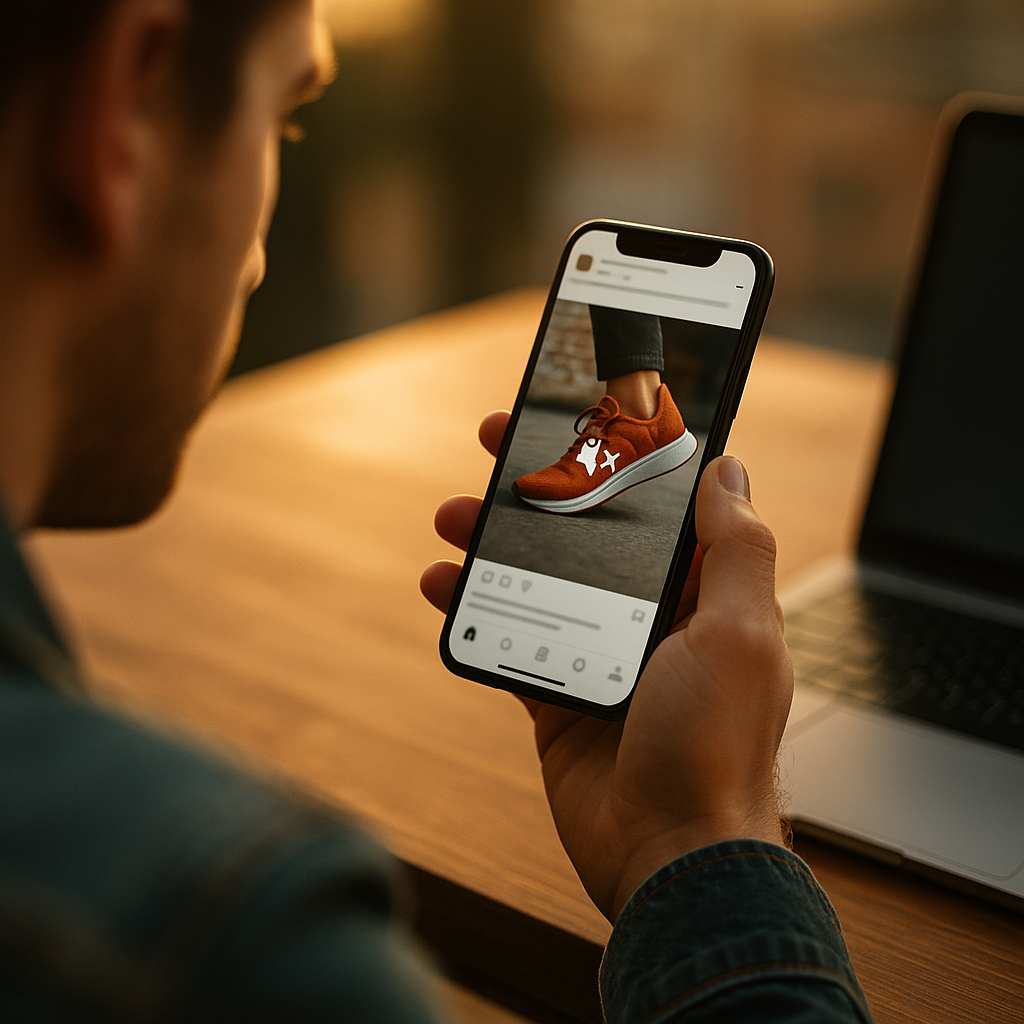
85% of video views on social feeds happen with the sound off. Yet most brand briefs still treat audio as the primary storytelling device, bolting on captions as an afterthought. Silent-first video design flips that logic: build for the muted scroll first, let sound be the bonus layer. For brands running creator programs at scale, this isn’t a nice-to-have. It’s the difference between a video that stops the thumb and one that gets swiped past in under a second.
Why Sound-Off Is the Default, Not the Exception
Facebook popularized the sound-off autoplay feed back in the mid-2010s, and TikTok, Instagram, and YouTube Shorts have all inherited that behavior pattern. People scroll feeds on buses, in waiting rooms, during meetings they’re pretending to pay attention to. Audio is a liability in most of those contexts, not an asset. Sprout Social’s own research on platform engagement consistently shows that silent-friendly formats, think text overlays and visual demonstrations, outperform audio-dependent storytelling on completion rate.
This matters for brand strategists because most creator briefs are still written like radio scripts with a camera attached. A creator says the hook out loud, explains the product verbally, delivers the CTA as spoken word. If the viewer never hears a word of it, the entire message collapses. Silent-first design means the visual and text layer carries 100% of the meaning, and audio becomes an enhancement for the smaller subset of viewers who unmute.
If your video’s core message only exists in the audio track, you’re optimizing for the minority of viewers who tap the speaker icon, not the majority who don’t.
What Silent-First Actually Means in Production
Silent-first isn’t the same as “add subtitles.” Subtitles are a patch. Silent-first is a design philosophy that starts at the storyboard stage. It asks: can a viewer understand the hook, the value proposition, and the action step without hearing a single syllable?
In practice, this changes several production decisions:
- Hooks become visual, not verbal. A jarring cut, a before/after reveal, or an on-screen text question in the first second does more work than a creator saying “wait for it.”
- Text overlays carry the narrative arc. Not just captions of speech, but structured on-screen copy that paces the story: problem, demo, payoff.
- Demonstrations replace explanations. Showing a product solving a problem visually beats a creator narrating the same solution.
- Facial expression and body language do the emotional lifting that tone of voice would normally handle.
This is also why formats like silent vlogs have gained traction. They were built for a sound-off world from the start, and brands adapting their creator briefs toward that aesthetic see higher watch-through on cold audiences who have never heard the brand name before.
The Caption Trap: Why Auto-Generated Subtitles Aren’t Enough
Auto-captioning tools like CapCut’s built-in subtitle generator or TikTok’s native caption feature are useful, but they’re not a substitute for silent-first scripting. Auto-captions transcribe what’s said. They don’t restructure the message for visual-first consumption. A creator who says “so basically what happens is the formula absorbs really fast, you don’t get that greasy residue” produces a caption wall that’s dense and slow to read. A silent-first script would instead cut to a close-up of the product absorbing on skin, with a three-word overlay: “Zero greasy residue.”
The lesson for brands briefing creators: don’t just require captions. Require a shot list that proves the story holds up with the sound muted and the captions hidden. If it doesn’t survive that test, it needs a rewrite.
Building the Brief: What to Tell Creators
Most influencer marketing managers hand creators a messaging doc and a product and hope for the best. Silent-first design requires more specificity, but not more restriction. It’s about giving creators a different lens, not a longer script.
A strong silent-first brief should specify:
- The visual hook for the first second. Not “grab attention,” but a concrete direction like “open mid-action, no intro shot.”
- Text overlay pacing. How many on-screen text beats, and roughly when they should land relative to the visual changes.
- Product demonstration requirement. At least one moment where the product’s function is shown, not described.
- CTA placement as both visual and text. A hand gesture toward a link sticker, paired with on-screen copy, outperforms a spoken “link in bio.”
This approach pairs well with job-specific creative briefs that already match format to funnel stage. Silent-first becomes another layer of specificity rather than a separate framework, since it’s less about what the video is for and more about how it has to perform mechanically in a muted feed.
Does Silent-First Kill ASMR and Voice-Led Formats?
No, and this is where brands get confused. Silent-first isn’t anti-sound. It’s sound-optional. Formats built around audio texture, like ASMR product content, still work because the visual layer (the crinkle of packaging, the pour, the texture close-up) communicates sensory appeal even without audio. The sound becomes a bonus reward for viewers who unmute, not the only carrier of meaning.
The same logic applies to recipe hack reels. A sizzle, a chop, a pour all read visually even in silence. The format survives the mute test because the physical action itself tells the story. Brands should audit existing formats against this standard rather than assuming silent-first requires an entirely new creative playbook.
Measuring What Actually Works
Standard video metrics don’t tell you whether your silent-first design is working. View count and average watch time are necessary but not sufficient. The metrics that matter more:
- 3-second and 6-second hold rate with sound off. Most platforms let you segment this in ad reporting; if you’re running organic-only creator content, A/B test with sound-off previews internally before publishing.
- Caption engagement rate. Are viewers tapping to expand captions, or ignoring the text layer entirely? Low engagement here suggests your text pacing is off.
- Unmute rate on paid placements. Meta Ads Manager and TikTok Ads both surface this. A high unmute rate tells you the visual hook is strong enough to make people curious about the audio.
- Completion rate delta between sound-on and sound-off cohorts. A big gap signals the video is still audio-dependent.
Brands running paid amplification on creator content should check platform-level guidance directly. Meta Business Help Center and TikTok Ads Manager both publish video creative benchmarks that break out sound-off performance, and these numbers shift often enough that it’s worth checking quarterly rather than relying on a one-time best-practices doc.
A video that performs identically with sound on or off isn’t a compromise. It’s proof the creative is doing its job twice as efficiently.
Where This Intersects With Compliance and Risk
There’s a risk-mitigation angle here that often gets missed. The FTC’s endorsement guidelines require disclosures to be clear and conspicuous, and a spoken “this is sponsored” that nobody hears because the sound is off doesn’t meet that bar in any meaningful sense, even if it technically satisfies the letter of a contract. Silent-first design actually reduces compliance risk, because a disclosure baked into on-screen text is seen by every viewer, muted or not. Brands auditing creator content for FTC compliance should treat visual disclosure placement as non-negotiable, not optional redundancy. The same logic applies internationally; UK brands referencing ICO guidance on transparency should build disclosure into the text layer by default.
This also connects to brand safety more broadly. Creator content repurposed into paid ads, included in original creator series or licensed for CTV, often loses its audio context entirely when clipped or reformatted. A video built silent-first survives that repurposing without needing a re-edit, which saves real production budget down the line.
A Quick Gut Check Before You Greenlight
Next time a creator submits a draft, mute it and watch it cold. If you can still follow the story, understand the product benefit, and see the CTA without reading lips or guessing, it passes. If you’re lost by the second cut, send it back. This five-second test catches more problems than a full round of written feedback ever will, and it trains creators to internalize the standard for future deliverables.
Formats like comparison videos and split-screen comparison ads tend to pass this test naturally because the visual contrast carries the argument. Formats that lean heavily on a creator’s personality and verbal delivery, like straight-to-camera testimonials, need the most rework to survive a silent-first audit.
FAQs
What is silent-first video design?
Silent-first video design is a creative approach where the visual and on-screen text layer carries the full story and call to action, so the video works whether or not the viewer has sound on. It’s built around the reality that most social feed views happen muted.
Why does sound-off autoplay matter for influencer marketing briefs?
Because most creator content is consumed with sound off by default on platforms like Instagram, TikTok, and Facebook. If a brief doesn’t account for this, the core message can fail to land for the majority of viewers, wasting creator and media spend.
Do auto-generated captions solve the sound-off problem?
Not fully. Auto-captions transcribe spoken dialogue but don’t restructure pacing or hook design for visual consumption. Silent-first scripts are built differently from the start, with text overlays timed to visual beats rather than just subtitling speech.
Does silent-first design hurt formats like ASMR content?
No. Silent-first doesn’t mean no sound, it means sound-optional. ASMR and recipe-style formats often pass the silent test easily because the physical action (pouring, chopping, texture close-ups) communicates sensory appeal visually, with audio as a bonus layer.
How do you measure whether a video is working in sound-off environments?
Track 3 and 6 second hold rate with sound off, unmute rate on paid placements, caption engagement, and the completion rate gap between sound-on and sound-off viewers. Both Meta and TikTok ad platforms report some of these metrics natively.
Does silent-first design help with FTC disclosure compliance?
Yes. Visual, on-screen disclosures are seen by every viewer regardless of audio setting, which better satisfies clear and conspicuous disclosure standards than a spoken disclaimer that muted viewers never hear.
Start your next creative review with the mute button, not the volume slider. If a creator’s draft can’t tell its story in total silence, it’s not ready to run, no matter how good the voiceover sounds.
Top Influencer Marketing Agencies
The leading agencies shaping influencer marketing in 2026
Agencies ranked by campaign performance, client diversity, platform expertise, proven ROI, industry recognition, and client satisfaction. Assessed through verified case studies, reviews, and industry consultations.
Moburst

-
2

The Shelf
Boutique Beauty & Lifestyle Influencer AgencyA data-driven boutique agency specializing exclusively in beauty, wellness, and lifestyle influencer campaigns on Instagram and TikTok. Best for brands already focused on the beauty/personal care space that need curated, aesthetic-driven content.Clients: Pepsi, The Honest Company, Hims, Elf Cosmetics, Pure LeafVisit The Shelf → -
3

Audiencly
Niche Gaming & Esports Influencer AgencyA specialized agency focused exclusively on gaming and esports creators on YouTube, Twitch, and TikTok. Ideal if your campaign is 100% gaming-focused — from game launches to hardware and esports events.Clients: Epic Games, NordVPN, Ubisoft, Wargaming, Tencent GamesVisit Audiencly → -
4

Viral Nation
Global Influencer Marketing & Talent AgencyA dual talent management and marketing agency with proprietary brand safety tools and a global creator network spanning nano-influencers to celebrities across all major platforms.Clients: Meta, Activision Blizzard, Energizer, Aston Martin, WalmartVisit Viral Nation → -
5

The Influencer Marketing Factory
TikTok, Instagram & YouTube CampaignsA full-service agency with strong TikTok expertise, offering end-to-end campaign management from influencer discovery through performance reporting with a focus on platform-native content.Clients: Google, Snapchat, Universal Music, Bumble, YelpVisit TIMF → -
6

NeoReach
Enterprise Analytics & Influencer CampaignsAn enterprise-focused agency combining managed campaigns with a powerful self-service data platform for influencer search, audience analytics, and attribution modeling.Clients: Amazon, Airbnb, Netflix, Honda, The New York TimesVisit NeoReach → -
7

Ubiquitous
Creator-First Marketing PlatformA tech-driven platform combining self-service tools with managed campaign options, emphasizing speed and scalability for brands managing multiple influencer relationships.Clients: Lyft, Disney, Target, American Eagle, NetflixVisit Ubiquitous → -
8

Obviously
Scalable Enterprise Influencer CampaignsA tech-enabled agency built for high-volume campaigns, coordinating hundreds of creators simultaneously with end-to-end logistics, content rights management, and product seeding.Clients: Google, Ulta Beauty, Converse, AmazonVisit Obviously →