


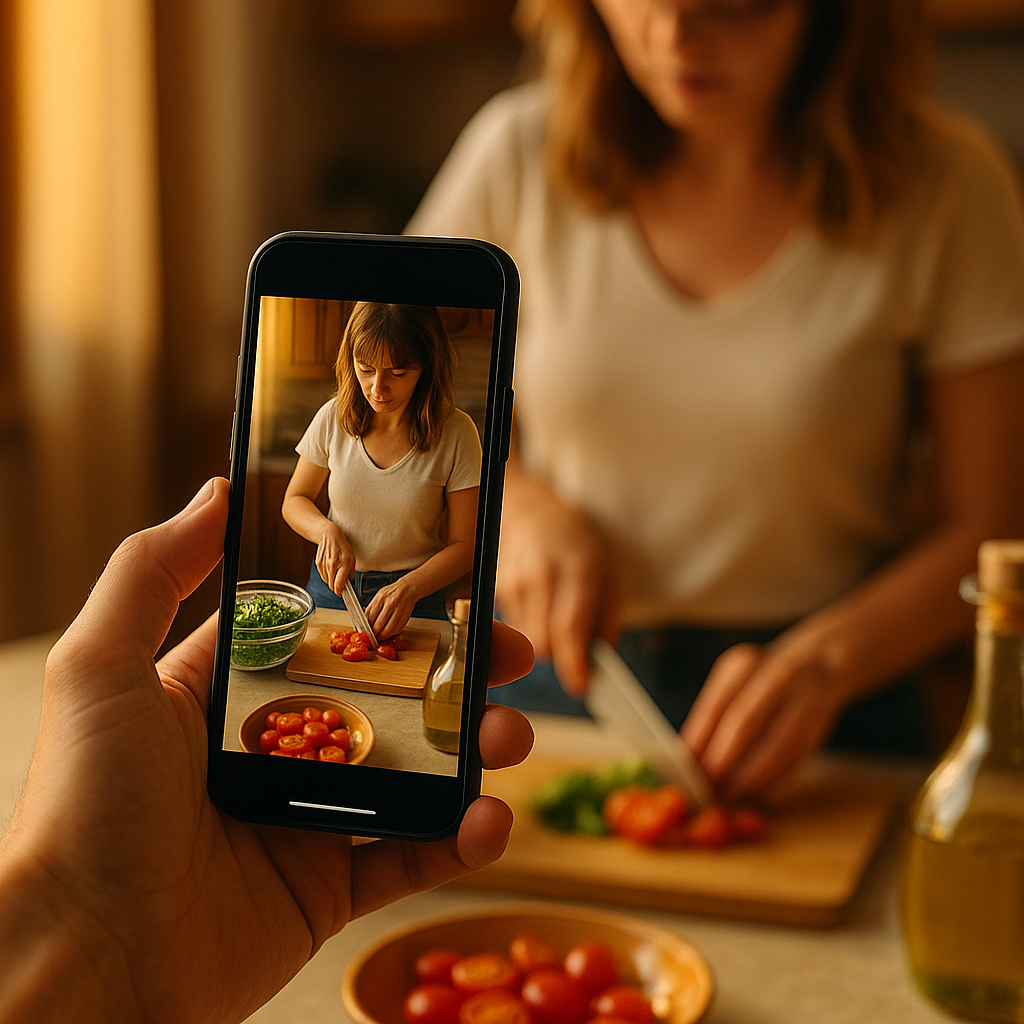
Food videos rack up more watch time than almost any other content category on TikTok, yet most branded recipe content still gets scrolled past in under two seconds. Why? Because it looks like an ad for a product instead of a hack for a problem. Recipe hack reels flip that script, and brands that build a real creative brief around the format are seeing completion rates that make their media buyers sit up.
This isn’t about handing a creator a product and a vague “make something fun” note. It’s about a repeatable brief structure that protects brand safety, keeps legal happy, and still lets the hack feel native to the platform.
Why “Hack” Beats “Recipe” in the Algorithm
A recipe implies commitment: ingredients list, prep time, a result you have to trust. A hack implies a shortcut, a trick, something you didn’t know you needed. That psychological difference changes how viewers engage. Hack framing triggers curiosity gaps (“wait, you put WHAT in the mac and cheese?”) that straight recipe content rarely generates.
Food and beverage marketers have caught on. Instead of briefing creators for “a recipe video featuring our sauce,” smart teams now brief for “a 3-ingredient shortcut that solves a Tuesday night dinner problem, where our sauce is the unlock.” Same product, completely different retention curve.
Hack framing works because it sells a problem solved, not a product consumed. The product becomes the twist, not the pitch.
This mirrors a broader shift in how briefs are written across the creator economy. If you haven’t read our breakdown of matching video format to funnel stage, it’s worth a look before you lock your recipe hack strategy. The format needs a job, not just a vibe.
The Five-Layer Brief Framework
After reviewing briefs from CPG brands, QSR chains, and beverage startups, a pattern emerges among the campaigns that actually convert. The strongest briefs share five layers, regardless of category or budget size.
- The hook sentence. One line the creator says in the first two seconds. Not a product tagline, a problem statement (“stop buying bottled salad dressing”).
- The twist moment. The exact second your product enters the frame and why it’s surprising, faster, or cheaper than the expected method.
- The sensory beat. A close-up shot direction: sizzle, pour, crunch, steam. Food content lives and dies on sound and texture cues.
- The payoff shot. The final plated result, timed to land before viewers swipe away, usually inside the first 12 to 15 seconds.
- The compliance note. Required disclosure language and any ingredient claims that need legal sign-off before the creator films.
Notice what’s missing: a script. Good recipe hack briefs give creators beats, not dialogue. The moment a brand hands over word-for-word lines, the video reads as an ad and loses the “I found this myself” credibility that makes the format work.
This structure overlaps heavily with what we’ve covered in recipe tutorial hybrids, where CPG brands blend tutorial pacing with ingredient storytelling. The hack format is a faster, punchier cousin of that approach, built for completion rate over watch-through depth.
Casting: Match the Creator to the Pantry, Not the Follower Count
Here’s a mistake that burns budget fast: casting a creator based on audience size instead of kitchen credibility. A creator with 40,000 followers who films in a real home kitchen with visible clutter will often outperform a polished studio creator with 400,000 followers. Viewers trust mess. Mess reads as “unsponsored,” even when it’s fully paid.
Build your casting brief around three filters. First, does the creator’s existing content show them actually cooking, not just plating finished dishes shipped from a studio? Second, do their past branded posts show organic engagement patterns, not just view counts that spike and die? Third, can they talk through a hack in under 20 seconds without a cut, which tests their comfort with the format before you pay for production?
Agencies running high-volume recipe hack programs often layer this casting criteria into the broader brief, similar to how multi creator collab challenges manage roster consistency across dozens of simultaneous shoots.
Compliance Landmines Unique to Food Content
Food and beverage briefs carry risk that other categories don’t deal with. Allergen claims, nutritional comparisons, and “healthier than” framing all sit under heavier regulatory scrutiny than a beauty hack or a tech unboxing. The FTC’s endorsement guidance applies here just like anywhere else, but food adds a second layer: any implied health claim needs to be defensible if a regulator or a competitor’s lawyer comes asking.
Build a compliance checklist directly into the brief document, not as a separate legal email thread that creators never read. Flag banned words upfront (words like “cures,” “detox,” or unverified “low sugar” claims without backing data). Require creators to film the disclosure statement on camera, not just drop it in the caption, since caption-only disclosures get flagged more often in platform audits.
A compliance note buried in a legal doc gets ignored. A compliance note built into the shot list gets followed.
Teams managing frequent collaborations should also study how stitch compilation reviews handle attribution and consent, since recipe hacks often get remixed or stitched by other creators after launch, which raises its own clearance questions.
Sound Design Isn’t Optional Here
Mute a recipe hack reel and you’ve killed it. The sizzle, the pour, the knife tap on the cutting board, these are the cues that keep thumbs from scrolling. Briefs that skip sound direction are leaving performance on the table.
Direct creators to capture clean audio on the sensory beats specifically, even if they’re planning to layer trending music over the rest of the edit. This two-track approach, ambient food sound plus trending audio, consistently outperforms single-track music-only edits in completion rate. Our deep dive on vertical video sound design covers the platform-specific cadence differences worth briefing for, since TikTok, Reels, and Shorts all reward slightly different pacing.
It’s also worth remembering why sound only demos beat silent UGC on conversion metrics. Food is one of the clearest categories where that research holds up, because taste and texture are almost entirely communicated through audio and visual sensory cues, not spoken claims.
Measuring What Matters Beyond Views
View count is the vanity metric everyone defaults to, and it’s the least useful number in a recipe hack campaign. Track these instead: completion rate (did they watch the payoff shot?), save rate (are people bookmarking it to actually cook later?), and comment sentiment around the specific product moment, not just overall post sentiment.
Save rate deserves special attention. According to Sprout Social’s platform research, food and recipe content consistently ranks among the highest-saved categories on short-form video, which makes it one of the few content types where saves can function as a leading indicator for later purchase intent, not just engagement filler.
Map this back to funnel stage. A hack reel built for top-of-funnel awareness should be judged on completion and shares. A hack reel built to drive site traffic needs a clear link-in-bio or shoppable tag strategy, something our funnel stage content mapping guide covers in more depth. Briefing for the wrong metric is the fastest way to declare a winning format a failure.
Benchmarking against category averages helps too. eMarketer’s creator economy data consistently shows food and beverage as one of the stronger-performing verticals for short-form video spend, which gives brand teams a defensible baseline when pitching budget increases internally.
Turning One Hack Into a Series
The brands getting the most mileage out of this format aren’t running one-off hacks. They’re building a recurring series: “5-minute dinner hacks,” “pantry remix Fridays,” something with a name and a rhythm viewers can anticipate. Serialization does two things a single video can’t: it builds a subscribe habit, and it gives the brand a reusable brief template instead of reinventing the wheel every month.
If you’re scaling past a handful of creators, look at how serialized UGC series structure retention mechanics, since the same logic applies almost directly to recipe content. A consistent format, swapped ingredients, keeps production costs predictable while giving the algorithm a recognizable pattern to push.
Frequently Asked Questions
What makes a recipe hack reel different from a standard recipe video?
A recipe hack reel leads with a problem or shortcut rather than a full ingredient list, creating curiosity in the first two seconds. Standard recipe videos assume viewer commitment upfront, while hack reels are built for scroll-stopping payoff within 12 to 15 seconds.
How detailed should a recipe hack brief be without sounding scripted?
Give creators beats, not dialogue. Specify the hook sentence, the twist moment, the sensory shot, and the payoff, but let the creator fill in the actual wording so the video keeps its native, unscripted feel.
What compliance issues should food brands watch for in creator content?
Watch for unverified health or nutritional claims, allergen misstatements, and disclosure placement. On-camera verbal disclosures hold up better under platform review than caption-only disclosures, and brands should maintain a banned-word list inside the brief itself.
Which metrics actually predict sales impact for recipe hack content?
Save rate and completion rate are stronger predictors than raw view count, since saves often signal intent to cook later. Comment sentiment tied specifically to the product moment is also more useful than overall post sentiment.
Should brands prioritize follower count or kitchen authenticity when casting creators?
Kitchen authenticity typically outperforms follower count for this format. Creators filming in real, lived-in kitchens tend to generate higher trust and completion rates than polished studio creators with larger audiences.
Start your next recipe hack brief with the hook sentence and the twist moment, not the shot list. If those two elements don’t create a genuine curiosity gap on paper, no amount of production polish will save the video in the feed.
Top Influencer Marketing Agencies
The leading agencies shaping influencer marketing in 2026
Agencies ranked by campaign performance, client diversity, platform expertise, proven ROI, industry recognition, and client satisfaction. Assessed through verified case studies, reviews, and industry consultations.
Moburst

-
2

The Shelf
Boutique Beauty & Lifestyle Influencer AgencyA data-driven boutique agency specializing exclusively in beauty, wellness, and lifestyle influencer campaigns on Instagram and TikTok. Best for brands already focused on the beauty/personal care space that need curated, aesthetic-driven content.Clients: Pepsi, The Honest Company, Hims, Elf Cosmetics, Pure LeafVisit The Shelf → -
3

Audiencly
Niche Gaming & Esports Influencer AgencyA specialized agency focused exclusively on gaming and esports creators on YouTube, Twitch, and TikTok. Ideal if your campaign is 100% gaming-focused — from game launches to hardware and esports events.Clients: Epic Games, NordVPN, Ubisoft, Wargaming, Tencent GamesVisit Audiencly → -
4

Viral Nation
Global Influencer Marketing & Talent AgencyA dual talent management and marketing agency with proprietary brand safety tools and a global creator network spanning nano-influencers to celebrities across all major platforms.Clients: Meta, Activision Blizzard, Energizer, Aston Martin, WalmartVisit Viral Nation → -
5

The Influencer Marketing Factory
TikTok, Instagram & YouTube CampaignsA full-service agency with strong TikTok expertise, offering end-to-end campaign management from influencer discovery through performance reporting with a focus on platform-native content.Clients: Google, Snapchat, Universal Music, Bumble, YelpVisit TIMF → -
6

NeoReach
Enterprise Analytics & Influencer CampaignsAn enterprise-focused agency combining managed campaigns with a powerful self-service data platform for influencer search, audience analytics, and attribution modeling.Clients: Amazon, Airbnb, Netflix, Honda, The New York TimesVisit NeoReach → -
7

Ubiquitous
Creator-First Marketing PlatformA tech-driven platform combining self-service tools with managed campaign options, emphasizing speed and scalability for brands managing multiple influencer relationships.Clients: Lyft, Disney, Target, American Eagle, NetflixVisit Ubiquitous → -
8

Obviously
Scalable Enterprise Influencer CampaignsA tech-enabled agency built for high-volume campaigns, coordinating hundreds of creators simultaneously with end-to-end logistics, content rights management, and product seeding.Clients: Google, Ulta Beauty, Converse, AmazonVisit Obviously →