


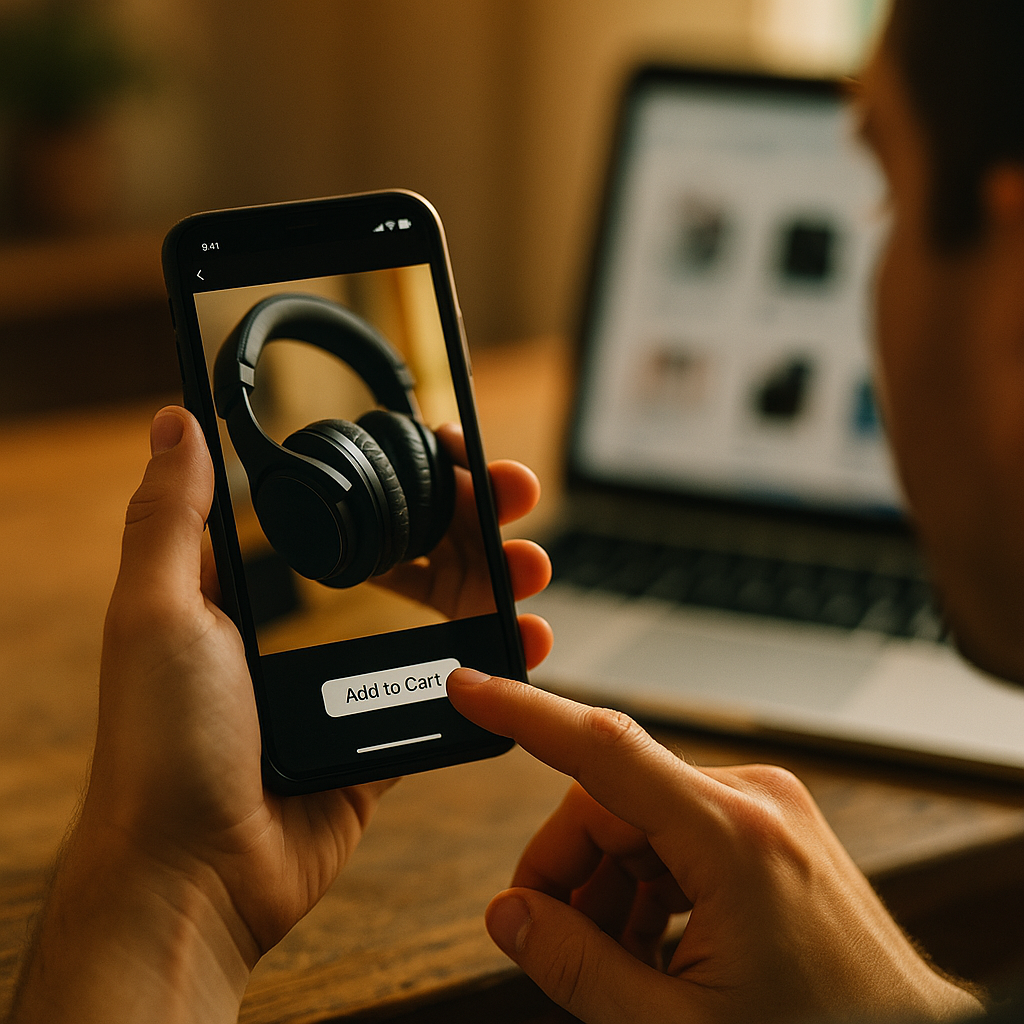
Scroll past a silent UGC clip and nobody blinks. Scroll past a crinkling package, a satisfying click, or a lid popping with that crisp little hiss, and thumbs stop cold. ASMR product demos are quietly outperforming standard UGC on add to cart rate across TikTok Shop and Instagram Reels, and the reason is almost embarrassingly simple: sound creates a sensory promise that text captions can’t fake.
This isn’t a TikTok novelty act anymore. It’s a measurable format with its own production rules, its own compliance quirks, and its own place in a funnel.
What Counts as an ASMR Product Demo, Exactly?
Not every quiet video with a microphone qualifies. A true ASMR product demo isolates the sound of the product itself: the snap of a hinge, the pour of a liquid, the scrape of a spoon against ceramic, the zip of a pouch. No music. No voiceover. No talking head narrating specs. The creator’s hands do the work, the mic does the storytelling, and the viewer’s brain fills in the sensory gap.
Brands in beauty, food and beverage, and home goods have leaned into this hardest. Skincare brands show the squelch of a serum being pumped. Snack brands mic the crunch. Candle brands capture the wick catching and the wax pooling. The common thread: the product has a physical, audible quality that’s genuinely satisfying to hear, not manufactured noise layered in post.
Sound on viewers on TikTok Shop convert at measurably higher rates than silent scroll traffic, because audio signals authenticity in a way visual polish can’t replicate.
Why Sound On Is Winning Back Attention
For the last three years, the dominant wisdom was “design for sound off.” Captions everywhere, text over b-roll, visual-first storytelling because most people scroll on mute in public. That strategy still has its place, and our silent captioned storytime format proves it still converts.
But something shifted. TikTok Shop’s commerce surfaces reward dwell time and completion rate more heavily than straight engagement, and ASMR content has absurdly high completion rates. Viewers don’t skip an ASMR demo halfway through, because the payoff (the sound) is the whole point. You can’t get that payoff from a thumbnail or a caption. You have to watch, and often you have to turn the volume up, which is a strange kind of permission a brand earns rather than demands.
This matters because TikTok Shop live and video commerce increasingly prioritizes watch-through behavior in its ranking signals. A format that naturally extends watch time without gimmicks is gold for discoverability, not just conversion.
The Data Behind the Click
Hard public benchmarks on ASMR-specific conversion lift are still thin, which is normal for a format this new. But directionally, the signals line up. eMarketer has tracked rising engagement for sensory and sound-forward short video across commerce platforms, and Sprout Social‘s creator content research consistently shows that videos triggering a physical or sensory response outperform purely informational clips on save and share rate, two metrics that correlate closely with purchase intent on TikTok Shop specifically.
Internally, brands running ASMR demos alongside standard UGC in the same campaign report add to cart rates that are noticeably higher on the ASMR variant, often by double digits in percentage terms, though results vary heavily by category. Food, beverage, and texture-driven beauty products (think clay masks, whipped moisturizers) see the biggest lift. A SaaS product trying to force an ASMR angle is going to look, and sound, ridiculous.
Briefing Creators for Sound, Not Just Visuals
This is where most brands fumble. A typical creator brief obsesses over lighting, framing, and messaging, then treats audio as an afterthought: “make sure there’s no background noise.” That’s not a brief, that’s a hope.
An ASMR brief needs to specify:
- Which specific product interactions should be mic’d (unboxing, application, closing the lid, pouring)
- Microphone placement guidance, since most creators are using a phone mic, not a binaural rig
- A strict no music, no voiceover rule, stated explicitly, because creators default to adding a trending sound out of habit
- Environmental silence requirements (no fans, no traffic noise, no roommates in the next room)
- A pacing note: ASMR content is slower than typical UGC, and creators used to fast cuts will want to rush it
Treat this the way you’d treat a vertical video sound design brief, because that’s effectively what it is. Sound isn’t a layer on top of the video, it’s the content.
Production Reality: Cheap Mic, Big Difference
Here’s the good news for budget-conscious teams. ASMR demos don’t require expensive gear. Most high-performing clips are shot on an iPhone with a clip-on lavalier mic positioned close to the product, not the creator’s face. A $30 to $60 mic solves 90% of the quality problem. What actually kills a demo is ambient noise: HVAC hum, a dog barking two rooms over, a Discord notification pinging in the background.
Brands sending creators a gifted mic alongside the product kit tends to pay off fast. It removes a production barrier and signals you’re invested in getting the format right, which usually translates into better creator effort on the brief.
Where ASMR Fits in the Funnel
ASMR demos aren’t a top-of-funnel awareness play in the traditional sense, and they’re not a hard-sell bottom-funnel format either. They sit in a weird, effective middle: a viewer already curious about a product category stumbles onto a sensory payoff that makes the product feel real and tactile in a way a studio shot never could. That’s closer to consideration than cold awareness.
If you’re mapping formats against buyer intent, ASMR demos work best paired with a clear product page and a frictionless TikTok Shop checkout, because the impulse they create is immediate and perishable. Wait too long between the sensory hook and the purchase action, and the urge fades. This is exactly the kind of sequencing problem covered in funnel stage content mapping, where format and buyer intent need to line up or you waste the content’s natural pull.
It also pairs surprisingly well with phygital content formats for brands with retail presence. A shopper who’s heard the satisfying crunch online is primed to pick the product off a shelf and want that same tactile confirmation in person.
Compliance and Disclosure: Don’t Skip This
ASMR demos are still sponsored content, and the FTC‘s endorsement guidance applies regardless of format. A whisper-quiet video with no spoken words still needs a visible disclosure, typically a text overlay or on-screen caption stating the partnership, since there’s no voiceover to say “this video is sponsored by.”
Brands sometimes assume that because there’s no talking, disclosure rules are murkier. They’re not. If anything, the FTC has signaled that disclosures need to be unmissable precisely when a video relies on visual or sensory elements rather than speech. Build the disclosure into the opening frames, not buried at the end where a viewer who’s already added to cart never sees it.
A sponsored ASMR clip without a clear on-screen disclosure is a compliance risk regardless of how satisfying the sound design is.
Platform Fit: TikTok Shop, Instagram, and Beyond
TikTok Shop remains the clearest home for this format, since its native shopping cart sits directly beneath a video that’s already earning high watch-through. Instagram Reels can replicate the format but lacks the same frictionless checkout layer unless paired with shoppable tags, so conversion tends to be softer.
YouTube Shorts audiences skew slightly more skeptical of overt commerce content, so ASMR demos there tend to perform better framed as “satisfying video” content first, with the product as a secondary beneficiary rather than the loud star of the caption.
For brands running paid amplification, spark ads amplification is worth testing specifically on organic ASMR winners. Because the format already earns high completion rates organically, it tends to carry that strength into paid placements without needing a different creative cut, which saves production budget twice over.
Measuring What Actually Matters
Standard video metrics (views, likes) are weak signals for this format. The metrics that matter are completion rate, sound-on percentage if your platform reports it, saves, and obviously add to cart rate tied to that specific video’s product tag. If a brand’s analytics dashboard only surfaces engagement rate, you’re flying blind on whether the ASMR angle is actually doing its job.
Run a simple A/B structure: the same product, same creator if possible, one cut with standard UGC narration and one cut as a pure ASMR demo. Compare add to cart rate and cost per add to cart across both. Most teams running this test find the ASMR version costs less to produce (no scripting, no voiceover talent, no complex edit) while performing as well or better on conversion, which is the kind of operational efficiency win that justifies testing the format even for skeptical finance teams.
When This Format Falls Flat
Worth saying plainly: ASMR doesn’t work for every category. B2B software, financial services, anything without a physical sensory interaction will feel forced and slightly cringeworthy if squeezed into this mold. It also fails when the sound itself isn’t genuinely satisfying, forcing an ASMR treatment onto a flimsy plastic product with a cheap-sounding click is going to highlight a quality problem, not disguise it.
Test on products with an inherently tactile or audible quality first: cosmetics with texture, food with crunch or pour, packaging with a satisfying open mechanism. Expand from there once you’ve proven the format converts for your specific catalog.
Next Step
Pick one product in your catalog with a genuinely satisfying sound, brief a creator with explicit no-music, no-voiceover instructions, and run it against your current best-performing UGC cut for two weeks. Let add to cart rate, not vanity metrics, decide if ASMR earns a permanent slot in your content mix.
FAQs
What makes ASMR product demos different from regular UGC?
ASMR demos remove music and voiceover entirely, letting the natural sound of the product (crunching, pouring, clicking) carry the storytelling. Standard UGC typically relies on spoken narration or trending audio layered over the visuals.
Which product categories perform best with ASMR demos?
Food and beverage, texture-driven beauty products, and packaging-forward goods see the strongest results. Categories without a physical, audible interaction (software, services, digital products) generally don’t translate well to this format.
Do ASMR videos still need FTC disclosure if there’s no spoken content?
Yes. Disclosure rules apply regardless of whether a video includes speech. Brands should use a clear, visible on-screen text disclosure placed early in the video, since there’s no voiceover to announce the partnership verbally.
What equipment do creators need to produce a good ASMR demo?
A basic clip-on lavalier mic in the $30 to $60 range, positioned near the product rather than the creator’s face, solves most quality issues. The bigger challenge is usually eliminating ambient background noise during filming.
How should brands measure ASMR demo performance?
Prioritize completion rate, save rate, and add to cart rate tied directly to the product tag over basic engagement metrics like likes. These signals correlate more closely with actual purchase intent on commerce-enabled platforms.
FAQs
What makes ASMR product demos different from regular UGC?
ASMR demos remove music and voiceover entirely, letting the natural sound of the product (crunching, pouring, clicking) carry the storytelling. Standard UGC typically relies on spoken narration or trending audio layered over the visuals.
Which product categories perform best with ASMR demos?
Food and beverage, texture-driven beauty products, and packaging-forward goods see the strongest results. Categories without a physical, audible interaction (software, services, digital products) generally don’t translate well to this format.
Do ASMR videos still need FTC disclosure if there’s no spoken content?
Yes. Disclosure rules apply regardless of whether a video includes speech. Brands should use a clear, visible on-screen text disclosure placed early in the video, since there’s no voiceover to announce the partnership verbally.
What equipment do creators need to produce a good ASMR demo?
A basic clip-on lavalier mic in the $30 to $60 range, positioned near the product rather than the creator’s face, solves most quality issues. The bigger challenge is usually eliminating ambient background noise during filming.
How should brands measure ASMR demo performance?
Prioritize completion rate, save rate, and add to cart rate tied directly to the product tag over basic engagement metrics like likes. These signals correlate more closely with actual purchase intent on commerce-enabled platforms.
Top Influencer Marketing Agencies
The leading agencies shaping influencer marketing in 2026
Agencies ranked by campaign performance, client diversity, platform expertise, proven ROI, industry recognition, and client satisfaction. Assessed through verified case studies, reviews, and industry consultations.
Moburst

-
2

The Shelf
Boutique Beauty & Lifestyle Influencer AgencyA data-driven boutique agency specializing exclusively in beauty, wellness, and lifestyle influencer campaigns on Instagram and TikTok. Best for brands already focused on the beauty/personal care space that need curated, aesthetic-driven content.Clients: Pepsi, The Honest Company, Hims, Elf Cosmetics, Pure LeafVisit The Shelf → -
3

Audiencly
Niche Gaming & Esports Influencer AgencyA specialized agency focused exclusively on gaming and esports creators on YouTube, Twitch, and TikTok. Ideal if your campaign is 100% gaming-focused — from game launches to hardware and esports events.Clients: Epic Games, NordVPN, Ubisoft, Wargaming, Tencent GamesVisit Audiencly → -
4

Viral Nation
Global Influencer Marketing & Talent AgencyA dual talent management and marketing agency with proprietary brand safety tools and a global creator network spanning nano-influencers to celebrities across all major platforms.Clients: Meta, Activision Blizzard, Energizer, Aston Martin, WalmartVisit Viral Nation → -
5

The Influencer Marketing Factory
TikTok, Instagram & YouTube CampaignsA full-service agency with strong TikTok expertise, offering end-to-end campaign management from influencer discovery through performance reporting with a focus on platform-native content.Clients: Google, Snapchat, Universal Music, Bumble, YelpVisit TIMF → -
6

NeoReach
Enterprise Analytics & Influencer CampaignsAn enterprise-focused agency combining managed campaigns with a powerful self-service data platform for influencer search, audience analytics, and attribution modeling.Clients: Amazon, Airbnb, Netflix, Honda, The New York TimesVisit NeoReach → -
7

Ubiquitous
Creator-First Marketing PlatformA tech-driven platform combining self-service tools with managed campaign options, emphasizing speed and scalability for brands managing multiple influencer relationships.Clients: Lyft, Disney, Target, American Eagle, NetflixVisit Ubiquitous → -
8

Obviously
Scalable Enterprise Influencer CampaignsA tech-enabled agency built for high-volume campaigns, coordinating hundreds of creators simultaneously with end-to-end logistics, content rights management, and product seeding.Clients: Google, Ulta Beauty, Converse, AmazonVisit Obviously →