


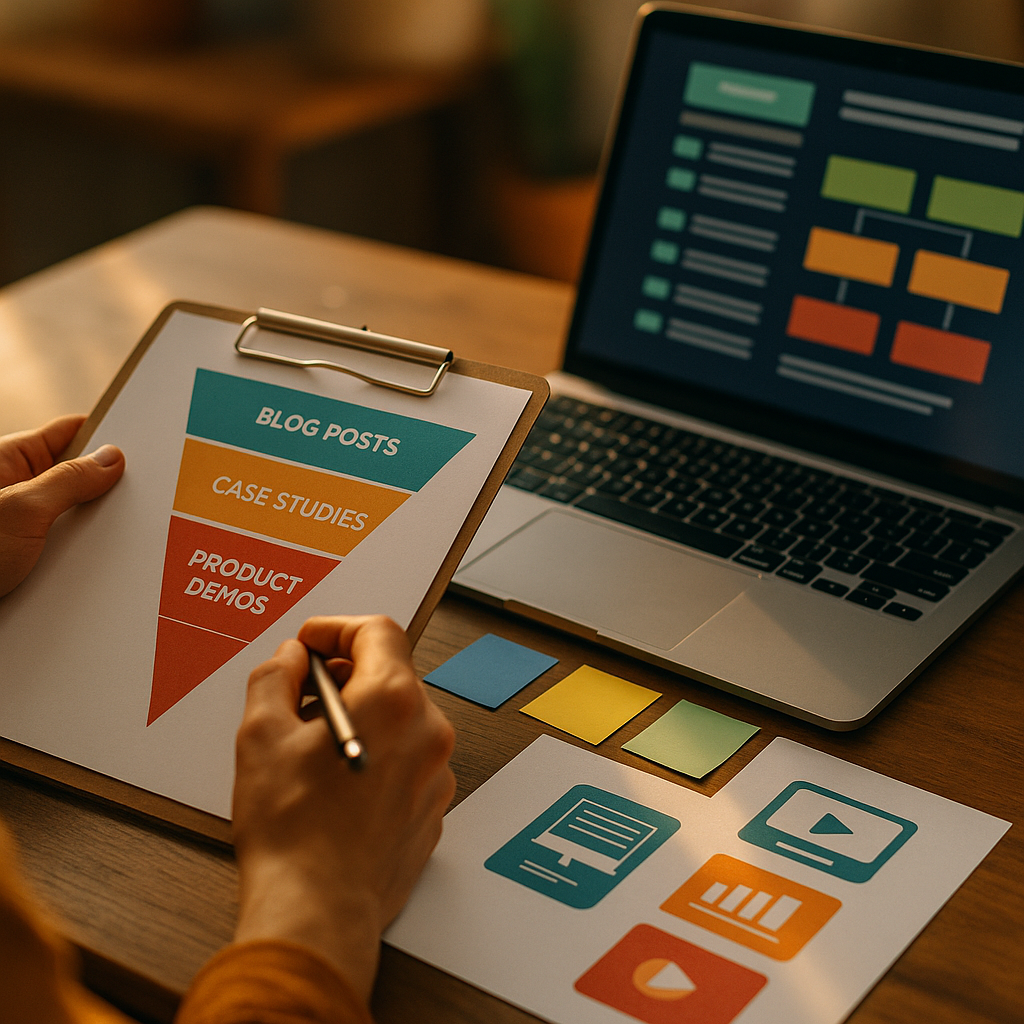
Only 22% of marketers say they consistently map content format to funnel stage, according to recent HubSpot research on content strategy maturity. The rest are posting demos to cold audiences and dropping 90 second stories on bottom funnel retargeting, then wondering why conversion rates stall. Matching content format to funnel stage isn’t a creative nicety. It’s the difference between a media budget that compounds and one that just burns.
This piece breaks down which formats earn attention, which build trust, and which close the sale, and why brands that skip the sequencing waste spend at every stage.
Why Format Mismatch Is Quietly Killing Your CAC
Here’s the uncomfortable truth: most influencer programs brief creators on vibe, not funnel intent. A brand wants “authentic” content, gets a nice story, and runs it to a cold prospecting audience expecting a 4x ROAS. It won’t happen. Stories are built for discovery, not decision making. Demos are built for consideration, not cold reach. Long form explainers are built for the shopper who’s already three tabs deep comparing you to a competitor.
When format and funnel stage don’t align, you get one of two failure modes. Either the content underperforms because it asks for too much commitment too early, or it underperforms because it’s too thin to close a warm, skeptical buyer. Both waste spend. Both get blamed on “creative fatigue” when the real issue is sequencing.
A story that stops the scroll in two seconds will never carry the weight of a 90 second explainer, and a long form demo will bore a cold audience before they’ve decided they care.
Top of Funnel: Stories Earn Attention, Not Trust
Top of funnel content has one job: interrupt the scroll and plant a flag. This is where Instagram and TikTok stories, short vertical clips, and meme style formats do the heavy lifting. Nobody is evaluating your return policy at this stage. They’re deciding whether to keep watching for another three seconds.
The best performing top funnel creative tends to lean on pattern interrupts, not polish. Formats like text over b roll consistently outperform talking head video for cold reach because the hook lives in the first frame, not the first sentence. Similarly, silent subtitled video wins on sound off feeds, which is most of them given that a majority of mobile video is watched muted according to data cited by Sprout Social.
Keep the ask low at this stage. You’re not briefing for conversion copy, you’re briefing for curiosity. A creator should be able to communicate the core hook without the viewer needing sound, context, or prior brand awareness. If your top funnel assets require explanation, they’re in the wrong lane.
- Best formats: short vertical stories, meme jacks, text over b roll, green screen reactions
- Primary metric: hook rate and 3 second view rate, not conversion
- Common mistake: briefing full product benefits into a 15 second asset
Consideration Stage: This Is Where Demos Do the Convincing
Once a prospect has stopped scrolling and clicked through once, they’re asking a different question: does this actually work? This is demo territory. Product demonstrations, before and after reveals, and ASMR style sensory formats all thrive here because they answer the “does it deliver” objection with evidence instead of adjectives.
Brands running performance creator programs should be briefing demo content with specificity. ASMR product demos have become a genuine conversion driver on TikTok Shop because the sensory cues (the click of a cap, the texture of a product) read as unscripted proof. Likewise, before and after transformation reels compress the proof cycle into a single clip, provided they’re scripted with FTC compliant disclosure baked in from the first draft, not bolted on after legal review.
First person POV formats also belong squarely in consideration. They let the viewer imagine themselves using the product rather than watching someone else use it, which is why POV framing consistently cuts CPA compared to standard UGC testimonials. The camera angle itself becomes a trust signal.
Bottom Funnel: Long Form Explainers Close the Deal
By the time someone reaches bottom funnel, they’ve seen your ad, maybe visited your site, possibly abandoned a cart. They don’t need another hook. They need their remaining objections answered in detail. This is where long form explainers, founder led walkthroughs, and even branded podcast segments earn their keep.
Long form content converts here because the viewer has already self selected for interest. A 90 second explainer that would get skipped in a cold feed will hold attention when the viewer is actively trying to decide. Founder cameo formats perform especially well at this stage because executive presence signals accountability in a way polished creator content can’t replicate. If the person who built the product is willing to stand behind it on camera, that’s a different kind of trust than an affiliate testimonial.
Branded podcast appearances work similarly. Scripting talk points for podcast guesting without turning it into a sales pitch gives bottom funnel prospects the long form context they’re actively seeking, usually while they’re already in research mode with higher intent than a casual scroller.
Bottom funnel buyers aren’t looking to be entertained. They’re looking for permission to buy, and long form explainers are where that permission gets granted.
How Do You Actually Sequence This Across a Campaign?
Mapping format to funnel sounds clean in theory. In practice, most brands run all three stages simultaneously across different audiences, which means your content calendar needs a format taxonomy, not just a posting schedule. Here’s a practical way to structure it:
- Audit existing assets by intent, not format. A “demo” video that spends 40 seconds on brand story before showing the product is actually a hybrid asset that will underperform in both lanes.
- Brief creators on funnel stage explicitly. Don’t just say “make content.” Specify: this is a cold prospecting asset, keep it under 15 seconds, hook in frame one.
- Repurpose instead of reshoot. A single long form demo can be cut into multiple micro video ad variants for different funnel stages, which keeps production costs down while maintaining format discipline.
- Match sound design to placement. A story designed for sound off scroll needs different pacing than a bottom funnel explainer watched with sound on in a focused session. Vertical video sound design should shift by funnel stage, not just by platform.
- Scale what works with paid amplification. Once an organic asset proves itself at a given funnel stage, spark ads amplification lets you push budget behind it without losing the authenticity signal that made it work in the first place.
This is also where measurement needs to split. Top funnel assets should be judged on hook rate and reach efficiency. Consideration content should be judged on click through and saves. Bottom funnel explainers should be judged on conversion rate and, ideally, assisted conversion paths tracked through a platform like Meta Business Suite or similar attribution tooling. Judging a story by conversion rate, or a demo by reach, will always make the wrong format look like it’s failing.
What About Budget Allocation Across Stages?
A reasonable default split for most DTC and mid-market B2B brands is roughly 50% top funnel, 30% consideration, 20% bottom funnel, adjusted based on category purchase cycle length. High consideration categories (think financial services, skincare with actives, or enterprise software) should weight more heavily toward demo and explainer content since the buying decision takes longer and requires more proof points before conversion.
Don’t treat this split as fixed. Review it quarterly against actual funnel performance data, pulled from your ad platform plus whatever attribution model you’re running through tools like Statista benchmarking or internal analytics. If bottom funnel content is converting at double the rate of your spend allocation, that’s a signal to shift budget, not just a nice stat for the quarterly deck.
Frequently Asked Questions
What’s the biggest mistake brands make when matching content to funnel stage?
Running a single format across all funnel stages. Most commonly, brands push polished demo content to cold prospecting audiences, which underperforms because cold viewers haven’t earned the right to a detailed pitch yet.
Should every creator produce content for every funnel stage?
No. Some creators excel at scroll stopping top funnel hooks but struggle with longer form explainer pacing, and vice versa. Match creator strengths to the funnel stage you’re briefing for rather than expecting one creator to nail all three.
How long should a bottom funnel explainer actually be?
Long enough to answer the remaining objection, typically 60 to 120 seconds for consumer products and longer for considered B2B purchases. The test isn’t runtime, it’s whether the viewer’s specific hesitation gets addressed before they drop off.
Can one piece of content work at multiple funnel stages?
Rarely without editing. A hybrid asset that tries to hook, demo, and close in one breath usually underperforms at each stage compared to purpose built versions. Repurposing a long form asset into shorter cuts for upper funnel use works better than stretching a short hook into a full explainer.
How do I measure success differently across funnel stages?
Top funnel: hook rate and 3 second view rate. Consideration: click through rate and saves. Bottom funnel: conversion rate and assisted conversions. Applying a single KPI like ROAS across all three will misrepresent performance at the awareness and consideration stages.
Start by auditing your last ten pieces of creator content against funnel intent, not format preference. If more than half were briefed without a clear stage in mind, that’s your next quarter’s biggest efficiency gain.
FAQs
What’s the biggest mistake brands make when matching content to funnel stage?
Running a single format across all funnel stages. Most commonly, brands push polished demo content to cold prospecting audiences, which underperforms because cold viewers haven’t earned the right to a detailed pitch yet.
Should every creator produce content for every funnel stage?
No. Some creators excel at scroll stopping top funnel hooks but struggle with longer form explainer pacing, and vice versa. Match creator strengths to the funnel stage you’re briefing for rather than expecting one creator to nail all three.
How long should a bottom funnel explainer actually be?
Long enough to answer the remaining objection, typically 60 to 120 seconds for consumer products and longer for considered B2B purchases. The test isn’t runtime, it’s whether the viewer’s specific hesitation gets addressed before they drop off.
Can one piece of content work at multiple funnel stages?
Rarely without editing. A hybrid asset that tries to hook, demo, and close in one breath usually underperforms at each stage compared to purpose built versions. Repurposing a long form asset into shorter cuts for upper funnel use works better than stretching a short hook into a full explainer.
How do I measure success differently across funnel stages?
Top funnel: hook rate and 3 second view rate. Consideration: click through rate and saves. Bottom funnel: conversion rate and assisted conversions. Applying a single KPI like ROAS across all three will misrepresent performance at the awareness and consideration stages.
Top Influencer Marketing Agencies
The leading agencies shaping influencer marketing in 2026
Agencies ranked by campaign performance, client diversity, platform expertise, proven ROI, industry recognition, and client satisfaction. Assessed through verified case studies, reviews, and industry consultations.
Moburst

-
2

The Shelf
Boutique Beauty & Lifestyle Influencer AgencyA data-driven boutique agency specializing exclusively in beauty, wellness, and lifestyle influencer campaigns on Instagram and TikTok. Best for brands already focused on the beauty/personal care space that need curated, aesthetic-driven content.Clients: Pepsi, The Honest Company, Hims, Elf Cosmetics, Pure LeafVisit The Shelf → -
3

Audiencly
Niche Gaming & Esports Influencer AgencyA specialized agency focused exclusively on gaming and esports creators on YouTube, Twitch, and TikTok. Ideal if your campaign is 100% gaming-focused — from game launches to hardware and esports events.Clients: Epic Games, NordVPN, Ubisoft, Wargaming, Tencent GamesVisit Audiencly → -
4

Viral Nation
Global Influencer Marketing & Talent AgencyA dual talent management and marketing agency with proprietary brand safety tools and a global creator network spanning nano-influencers to celebrities across all major platforms.Clients: Meta, Activision Blizzard, Energizer, Aston Martin, WalmartVisit Viral Nation → -
5

The Influencer Marketing Factory
TikTok, Instagram & YouTube CampaignsA full-service agency with strong TikTok expertise, offering end-to-end campaign management from influencer discovery through performance reporting with a focus on platform-native content.Clients: Google, Snapchat, Universal Music, Bumble, YelpVisit TIMF → -
6

NeoReach
Enterprise Analytics & Influencer CampaignsAn enterprise-focused agency combining managed campaigns with a powerful self-service data platform for influencer search, audience analytics, and attribution modeling.Clients: Amazon, Airbnb, Netflix, Honda, The New York TimesVisit NeoReach → -
7

Ubiquitous
Creator-First Marketing PlatformA tech-driven platform combining self-service tools with managed campaign options, emphasizing speed and scalability for brands managing multiple influencer relationships.Clients: Lyft, Disney, Target, American Eagle, NetflixVisit Ubiquitous → -
8

Obviously
Scalable Enterprise Influencer CampaignsA tech-enabled agency built for high-volume campaigns, coordinating hundreds of creators simultaneously with end-to-end logistics, content rights management, and product seeding.Clients: Google, Ulta Beauty, Converse, AmazonVisit Obviously →