


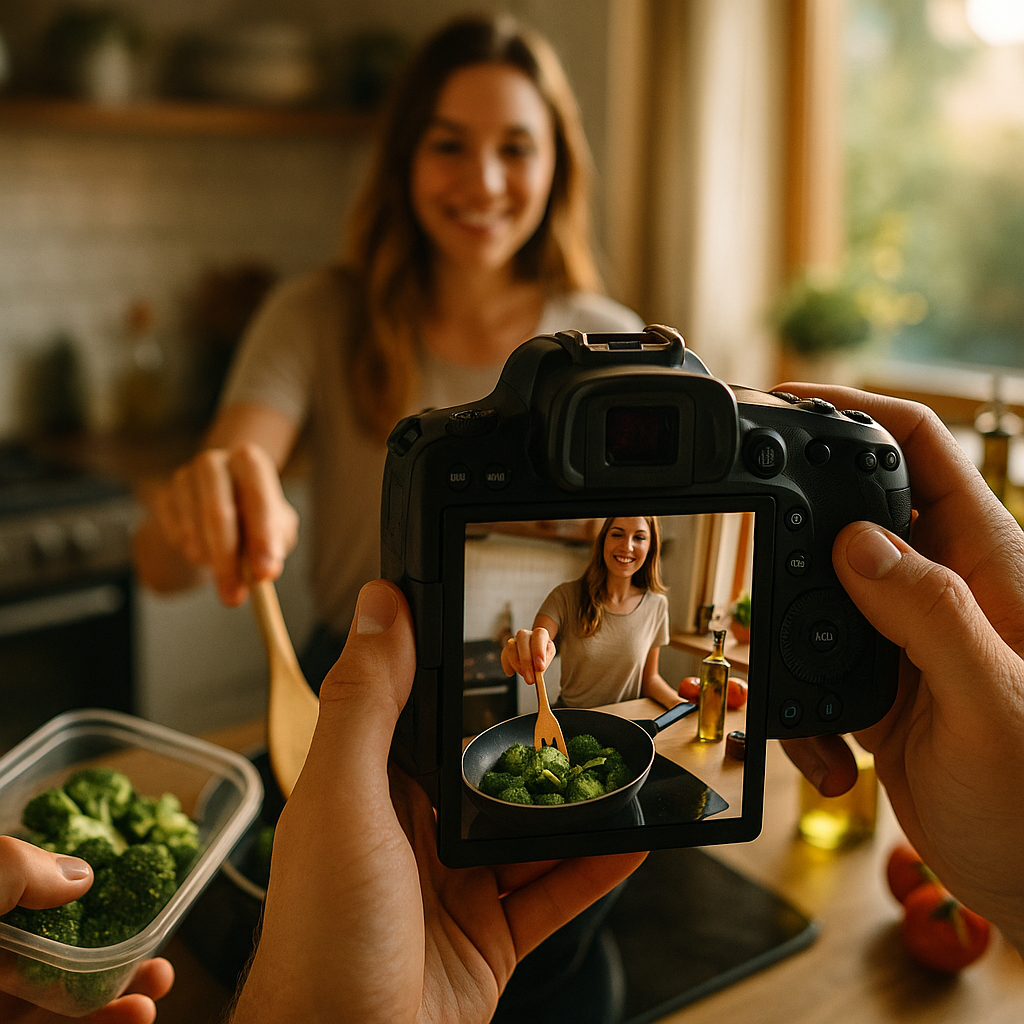
Scroll-stopping ads now share one trait: a shaky handheld angle that makes viewers feel like they’re holding the phone themselves. POV style ads are quietly outperforming traditional UGC across TikTok, Instagram, and YouTube Shorts, with some media buyers reporting 20 to 40 percent lower cost per acquisition when first person framing replaces standard testimonial formats. Why does a camera angle move performance numbers this much?
What Makes POV Format Different From Standard UGC
Traditional UGC puts a creator in front of the camera, talking at the viewer. It’s a testimonial, dressed up in casual lighting. POV style ads flip the lens. The viewer becomes the protagonist: unboxing the product, applying the serum, driving the car, opening the app. There’s no third party mediating the experience. You’re not watching someone else’s story, you’re living a version of it yourself.
That distinction matters more than it sounds. Psychologically, first person perspective triggers something closer to embodied simulation, the same mechanism that makes video games and VR feel immersive. Marketers have known for years that demonstration beats declaration. POV just removes the demonstrator from view and hands the controls to the audience.
First person framing doesn’t just show the product experience, it simulates ownership before the purchase happens, which is why POV ads consistently lift add to cart rates over face forward testimonials.
The Data Behind the Shift
Platforms have been nudging creators toward this format for a reason. Internal creative benchmarking shared by agencies working with Meta’s ad platform has pointed to higher hook rates (the percentage of viewers who watch past the first three seconds) for POV cuts compared to static or face-to-camera UGC. TikTok’s own creative guidance has leaned into “show, don’t tell” structures for years, and POV is the purest execution of that principle.
Separately, eMarketer has tracked rising ad spend allocation toward short-form creator content, with brands increasingly briefing for camera angle and perspective rather than just script and talent. That’s a meaningful operational shift. Five years ago, a creative brief specified talent demographics and key messaging. Now it specifies lens height, hand positioning, and whether the product enters frame from the left or right.
If you’ve already tested the format at a basic level, you’ve likely seen the lift documented in our breakdown of camera angle and add to cart rate. The pattern holds across verticals: beauty, food, fitness equipment, even B2B SaaS demos shot from a “my first day using this tool” perspective.
Why Brands Are Reallocating Budget Toward First Person Content
From a budget owner’s perspective, the appeal isn’t just performance, it’s efficiency. POV content requires less talent direction. You’re not coaching a creator on delivery, tone, or eye contact. You’re coaching a hand, a bathroom counter, a car dashboard. That lowers production friction and shortens the feedback loop between brief and deliverable.
There’s also a risk mitigation angle that doesn’t get discussed enough. Traditional UGC testimonials carry higher compliance exposure because the creator is making claims, verbal or implied, that need FTC disclosure review. POV content, by contrast, often shows rather than states. A hand applying a product and reacting to the result carries less legal weight than a creator saying “this cured my eczema in three days.” That doesn’t eliminate disclosure obligations, but it changes the risk profile your legal team is reviewing.
- Lower production cost per asset due to simplified shot lists
- Faster creator turnaround since there’s no on-camera performance pressure
- Reduced compliance friction when claims are implied through demonstration rather than stated outright
- Higher completion rates because the format mimics organic scroll content rather than an ad unit
Where POV Breaks Down (and It Does)
POV isn’t a universal fix. It struggles when the product benefit isn’t visually demonstrable. A software subscription renewal or a B2B compliance tool doesn’t lend itself to hand-held immersion the way skincare or food does. Forcing POV onto a category that doesn’t suit it produces awkward, gimmicky content that undercuts trust rather than building it.
It also underperforms when the brand needs explicit credibility signals, like a dermatologist explaining a formulation or a founder addressing a controversy. In those cases, face forward delivery still wins because the audience needs to see who is speaking and judge their authority. That’s part of why formats like the founder cameo format continue to perform well alongside POV, rather than being replaced by it. Different jobs, different formats.
One more limitation worth naming: POV content ages fast. The specific hand gestures, pacing, and editing style that feel native today will feel dated within a couple of quarters, much the way certain transition effects and filters cycle in and out. Brands that lean entirely on one POV template without refreshing shot style risk audience fatigue faster than they’d expect.
Briefing for POV Without Losing the Authenticity
Here’s the paradox every brand marketer runs into: the moment you over-script POV content, it stops working. The format’s entire value proposition is that it feels unscripted, intimate, almost accidental. So how do you brief for a format that depends on feeling unbriefed?
The answer is structural briefing rather than scripted briefing. Instead of handing creators exact lines, give them:
- A specific moment to capture (first application, first bite, first login)
- A required product visibility window (how many seconds the product needs clear frame time)
- A reaction beat, whether verbal or nonverbal, that signals satisfaction or surprise
- Technical specs for hand positioning, lighting, and audio pickup
This mirrors the approach brands use for silent captioned storytime content, where structure replaces script to preserve authenticity. The creative team at Sprout Social has noted similar findings in their content strategy guidance: structured flexibility outperforms rigid scripting for nearly every UGC-adjacent format, not just POV.
Editing matters too. Most high-performing POV ads are cut using lightweight, fast-turnaround tools rather than full post-production pipelines. If your team is still manually editing every POV variant, you’re leaving speed on the table. Pairing a solid brief with an AI editing stack lets you produce five or six POV variants in the time it used to take to finish one polished testimonial cut.
Scaling POV Without Burning Out Your Creator Roster
Once a POV concept proves itself, the temptation is to run it everywhere. Resist running it everywhere unchanged. Instead, treat the winning concept as a template and vary the execution: different creators, different lighting, different product angles within the same structural brief. This is the same logic behind micro video ad variants, where small production shifts prevent ad fatigue without requiring an entirely new creative concept.
It’s also worth testing whether your best organic POV performer deserves paid amplification. Many brands are now pushing their top-performing POV posts into paid media rather than commissioning separate ad creative, a practice covered in depth in our piece on turning organic winners into paid scale. If an organic POV clip is already pulling strong engagement, there’s no reason to reinvent the wheel for the paid version.
Platforms like TikTok Ads Manager make this handoff relatively seamless, letting you boost organic posts directly without rebuilding creative from scratch. That’s a meaningful time savings for lean marketing teams managing dozens of concurrent creator campaigns.
The Bottom Line for Budget Owners
POV isn’t a replacement for every UGC format in your rotation, but it deserves a larger share of test budget than most brands currently give it. Start by auditing your current creative mix: if POV represents less than 20 percent of your active UGC spend, you’re likely under-indexed relative to where performance data is pointing. Run a structured test against your best-performing traditional UGC asset, measure hook rate and add to cart separately, and let the numbers decide the next quarter’s brief.
Frequently Asked Questions
What exactly counts as a POV style ad?
A POV style ad is filmed from the viewer’s implied perspective, typically using a hand-held or first person camera angle so the audience feels like they’re performing the action themselves rather than watching someone else do it.
Do POV ads need FTC disclosure like regular influencer content?
Yes. Even without a visible creator making spoken claims, disclosure requirements still apply if the content is sponsored or if the brand compensated the creator. Review current guidance at the FTC’s endorsement guide resources before publishing.
Which industries see the strongest results from POV format content?
Beauty, food and beverage, fitness equipment, home goods, and fashion tend to perform best because the product benefit is visually demonstrable. Service-based or abstract digital products often need hybrid formats instead.
How is POV different from the founder cameo format?
POV removes the speaker from frame entirely to simulate the viewer’s own experience, while founder cameo content puts an identifiable executive on camera to build credibility and trust. They solve different problems and often work better paired than used interchangeably.
Can POV ads be repurposed for paid media?
Yes, and many brands are doing exactly that. Strong organic POV performers are frequently pushed directly into paid amplification rather than requiring brand new ad-specific creative.
Frequently Asked Questions
What exactly counts as a POV style ad?
A POV style ad is filmed from the viewer’s implied perspective, typically using a hand-held or first person camera angle so the audience feels like they’re performing the action themselves rather than watching someone else do it.
Do POV ads need FTC disclosure like regular influencer content?
Yes. Even without a visible creator making spoken claims, disclosure requirements still apply if the content is sponsored or if the brand compensated the creator. Review current guidance at the FTC’s endorsement guide resources before publishing.
Which industries see the strongest results from POV format content?
Beauty, food and beverage, fitness equipment, home goods, and fashion tend to perform best because the product benefit is visually demonstrable. Service-based or abstract digital products often need hybrid formats instead.
How is POV different from the founder cameo format?
POV removes the speaker from frame entirely to simulate the viewer’s own experience, while founder cameo content puts an identifiable executive on camera to build credibility and trust. They solve different problems and often work better paired than used interchangeably.
Can POV ads be repurposed for paid media?
Yes, and many brands are doing exactly that. Strong organic POV performers are frequently pushed directly into paid amplification rather than requiring brand new ad-specific creative.
Top Influencer Marketing Agencies
The leading agencies shaping influencer marketing in 2026
Agencies ranked by campaign performance, client diversity, platform expertise, proven ROI, industry recognition, and client satisfaction. Assessed through verified case studies, reviews, and industry consultations.
Moburst

-
2

The Shelf
Boutique Beauty & Lifestyle Influencer AgencyA data-driven boutique agency specializing exclusively in beauty, wellness, and lifestyle influencer campaigns on Instagram and TikTok. Best for brands already focused on the beauty/personal care space that need curated, aesthetic-driven content.Clients: Pepsi, The Honest Company, Hims, Elf Cosmetics, Pure LeafVisit The Shelf → -
3

Audiencly
Niche Gaming & Esports Influencer AgencyA specialized agency focused exclusively on gaming and esports creators on YouTube, Twitch, and TikTok. Ideal if your campaign is 100% gaming-focused — from game launches to hardware and esports events.Clients: Epic Games, NordVPN, Ubisoft, Wargaming, Tencent GamesVisit Audiencly → -
4

Viral Nation
Global Influencer Marketing & Talent AgencyA dual talent management and marketing agency with proprietary brand safety tools and a global creator network spanning nano-influencers to celebrities across all major platforms.Clients: Meta, Activision Blizzard, Energizer, Aston Martin, WalmartVisit Viral Nation → -
5

The Influencer Marketing Factory
TikTok, Instagram & YouTube CampaignsA full-service agency with strong TikTok expertise, offering end-to-end campaign management from influencer discovery through performance reporting with a focus on platform-native content.Clients: Google, Snapchat, Universal Music, Bumble, YelpVisit TIMF → -
6

NeoReach
Enterprise Analytics & Influencer CampaignsAn enterprise-focused agency combining managed campaigns with a powerful self-service data platform for influencer search, audience analytics, and attribution modeling.Clients: Amazon, Airbnb, Netflix, Honda, The New York TimesVisit NeoReach → -
7

Ubiquitous
Creator-First Marketing PlatformA tech-driven platform combining self-service tools with managed campaign options, emphasizing speed and scalability for brands managing multiple influencer relationships.Clients: Lyft, Disney, Target, American Eagle, NetflixVisit Ubiquitous → -
8

Obviously
Scalable Enterprise Influencer CampaignsA tech-enabled agency built for high-volume campaigns, coordinating hundreds of creators simultaneously with end-to-end logistics, content rights management, and product seeding.Clients: Google, Ulta Beauty, Converse, AmazonVisit Obviously →