


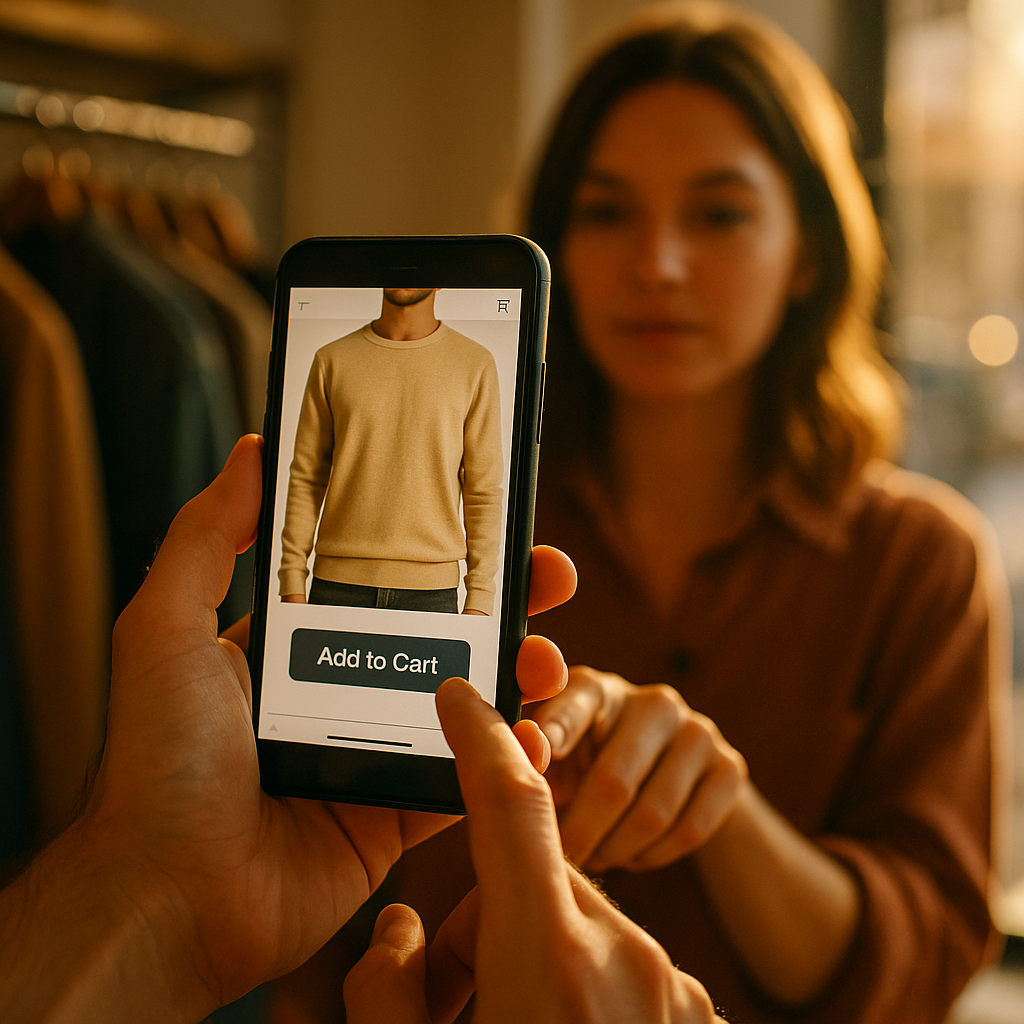
A camera held at arm’s length, shot from the buyer’s own eyes, outperforms polished product demos by wide margins on add to cart rate. That is not a hunch. Media buyers running direct response campaigns on Meta and TikTok have been quietly reallocating budget toward POV format ads because the data keeps pointing the same direction: first person creator video converts browsers into cart adds at a rate that studio footage simply cannot match.
Why does a shaky, handheld clip filmed like a selfie beat a $15,000 product shoot? The answer has less to do with production value and more to do with how the human brain processes perspective.
What Makes POV Format Ads Different
POV, short for point of view, means the viewer sees the product the way the creator sees it. No third person framing, no studio lighting rig visible in a mirror, no voiceover narrating from a distance. The phone is the eye. The hand reaching for the serum bottle, the fingers peeling back packaging, the mirror check before walking out the door: that is the entire shot.
This matters because most feed scrolling happens in a passive, low trust state. Viewers have been trained by years of polished brand ads to discount anything that looks like a commercial. POV format ads sidestep that skepticism by looking like something a friend sent you, not something a brand paid to produce.
The closer an ad resembles a text from a friend rather than a broadcast from a brand, the higher its conversion ceiling tends to climb.
The Add to Cart Connection: Why Perspective Drives Action
Add to cart is a commitment signal. It is the moment a scroller decides this product is worth a second look on the product page. Getting someone there requires closing a trust gap fast, usually within the first three seconds of a video ad.
First person footage closes that gap through a psychological mechanism marketers sometimes call embodied cognition: when you watch someone’s hands do something from their own visual perspective, your brain partially simulates doing it yourself. Mirror neuron research, widely cited in consumer behavior literature, suggests this simulation effect increases perceived ownership of a product before a single dollar changes hands. Retail psychologists have leaned on this concept for decades in physical stores (think “try before you buy” counters). POV ads recreate that same sensation on a phone screen.
Compare that to a third person product shot: a model holding an item, smiling, angled for the camera. It looks aspirational, but it also looks like an ad. The viewer stays a spectator. POV removes the spectator distance and turns the viewer into a temporary participant.
Format Mechanics That Actually Move the Needle
Not every first person clip performs the same. Media buyers running iterative tests across Meta Ads Manager and TikTok Ads Manager have isolated a handful of mechanical choices that separate high converting POV creative from flat performers.
- Hand visibility in the first two seconds. Ads that open on a hand already touching or holding the product outperform ads that open on a talking head, according to internal creative testing shared by several agency partners at industry panels this year.
- Bathroom, car, and bedroom settings. These are the locations where real product discovery happens, and they read as authentic precisely because they are unremarkable.
- Minimal or no scripted voiceover. Captions or light narration beat a rehearsed script. Over polished delivery breaks the illusion of a candid moment.
- Vertical, uncropped framing. Anything that looks letterboxed or resized from a horizontal shoot signals “ad” instantly.
- A visible reaction, not just a demo. Genuine surprise, relief, or satisfaction on camera reads as proof, not performance.
These details sound small individually, but stacked together they are the difference between a POV clip that gets skipped in 1.5 seconds and one that holds attention through the full add to cart moment on the landing page.
Where This Fits Inside a Broader Creative Strategy
POV should not be a standalone bet. It works best as one format inside a rotating testing system, alongside testimonial stitch ads and reaction based formats. The reason: ad fatigue sets in fast on paid social, and even the highest converting POV hook loses efficiency after a few weeks of heavy spend. Brands that build a rotating library of micro video ad variants keep frequency fresh without starting creative production from zero each sprint.
There is also an efficiency argument. Because POV footage is cheap to shoot (a creator, a phone, natural light), it pairs well with high volume testing workflows. Teams running AI concept to script pipelines can generate dozens of POV script variations from a single winning hook, then let the algorithm sort which hand movement, which setting, which opening line actually drives the add to cart lift.
For brands managing legal risk, POV format ads also tend to sit comfortably alongside transformation reveal scripts when disclosure language is built into the opening seconds rather than bolted on as an afterthought. The FTC’s endorsement guidance still applies fully to first person creator content, regardless of how organic it looks.
Do not mistake authenticity in tone for exemption from compliance.
Testing and Measuring POV Creative Without Guessing
Here is where a lot of marketing teams fumble the format. They shoot one POV video, run it for a week, see a decent CTR, and call it a win. That is not testing, that is anecdote.
A structured approach looks more like this:
- Brief three to five creators on the same product with the same basic shot list, but let each bring their own setting and delivery style.
- Run all variants at equal spend through the awareness to add to cart funnel for a minimum 5 to 7 day learning window.
- Segment performance by placement (Reels, TikTok For You feed, Stories) since POV performs differently depending on native feed behavior.
- Pull add to cart rate, not just CTR or thumb stop rate, as the primary decision metric.
- Feed winning hooks back into a frame grab stills workflow to extend the winning moment into static placements.
Platforms like Meta Business Suite and TikTok Ads Manager both support creative level breakdowns that make this segmentation manageable without a separate BI tool. If the team already tracks social engagement benchmarks through Sprout Social or a similar platform, cross reference organic POV performance too. Organic engagement patterns are often a leading indicator of which POV angle will convert once it gets paid distribution.
Add to cart rate, not thumb stop rate, is the metric that tells you whether a POV ad is actually moving buyers closer to purchase, not just holding their attention for a few extra seconds.
When POV Format Ads Underperform
POV is not magic. It fails in a few predictable scenarios worth flagging before a brand overcommits budget.
High consideration purchases (think furniture, enterprise software, anything over a few hundred dollars) often need more context than a 15 second first person clip can deliver. POV works best for impulse and mid consideration categories: beauty, wellness, food and beverage, apparel, home goods under a certain price point.
It also underperforms when the creator clearly is not a believable user of the product. A 22 year old filming a POV unboxing of a retirement planning app reads as forced, not authentic. Casting discipline matters here as much as shot composition.
Finally, POV loses effectiveness when brands over direct the script. The entire value of the format rests on it feeling unscripted. A creator reciting brand approved talking points word for word in a bathroom mirror selfie video creates a jarring mismatch between visual authenticity and verbal stiffness. Better to give creators a loose framework, similar to the approach outlined in brand approved hooks guidance, and let delivery stay natural.
FAQs
Frequently Asked Questions
What exactly counts as a POV format ad?
A POV format ad is a video shot from the creator’s own first person perspective, typically showing hands interacting with a product as if the viewer were holding it themselves, rather than a third person shot of someone else using the product.
Why do POV ads lift add to cart rate specifically, not just watch time?
The first person camera angle simulates ownership before purchase, which reduces the psychological distance between scrolling and buying, pushing viewers further down the funnel toward the add to cart action rather than just keeping them watching.
Does POV format work for every product category?
No. It performs strongest for impulse and mid consideration categories like beauty, food, apparel, and home goods. High consideration or high price purchases generally need more context than a short first person clip provides.
How many POV creator variants should a brand test before scaling spend?
Most media buyers recommend at least three to five distinct creator and script variants run at equal spend for five to seven days before identifying a clear winner to scale.
Are there FTC disclosure requirements specific to POV ads?
Yes. FTC endorsement guidance applies regardless of shooting style, so any paid or sponsored POV content still needs clear, upfront disclosure language, ideally built into the opening seconds of the script.
Can POV footage be repurposed into other ad formats?
Yes. Strong POV hooks can be extracted as static stills or cut into shorter micro variants to extend reach across placements without a new production shoot.
Next step: pull your last 90 days of paid social creative, tag every asset by camera perspective, and compare add to cart rate side by side. If first person footage is already outperforming, that is your signal to shift next quarter’s production budget toward more POV shoots, not fewer.
Frequently Asked Questions
What exactly counts as a POV format ad?
A POV format ad is a video shot from the creator’s own first person perspective, typically showing hands interacting with a product as if the viewer were holding it themselves, rather than a third person shot of someone else using the product.
Why do POV ads lift add to cart rate specifically, not just watch time?
The first person camera angle simulates ownership before purchase, which reduces the psychological distance between scrolling and buying, pushing viewers further down the funnel toward the add to cart action rather than just keeping them watching.
Does POV format work for every product category?
No. It performs strongest for impulse and mid consideration categories like beauty, food, apparel, and home goods. High consideration or high price purchases generally need more context than a short first person clip provides.
How many POV creator variants should a brand test before scaling spend?
Most media buyers recommend at least three to five distinct creator and script variants run at equal spend for five to seven days before identifying a clear winner to scale.
Are there FTC disclosure requirements specific to POV ads?
Yes. FTC endorsement guidance applies regardless of shooting style, so any paid or sponsored POV content still needs clear, upfront disclosure language, ideally built into the opening seconds of the script.
Can POV footage be repurposed into other ad formats?
Yes. Strong POV hooks can be extracted as static stills or cut into shorter micro variants to extend reach across placements without a new production shoot.
Top Influencer Marketing Agencies
The leading agencies shaping influencer marketing in 2026
Agencies ranked by campaign performance, client diversity, platform expertise, proven ROI, industry recognition, and client satisfaction. Assessed through verified case studies, reviews, and industry consultations.
Moburst

-
2

The Shelf
Boutique Beauty & Lifestyle Influencer AgencyA data-driven boutique agency specializing exclusively in beauty, wellness, and lifestyle influencer campaigns on Instagram and TikTok. Best for brands already focused on the beauty/personal care space that need curated, aesthetic-driven content.Clients: Pepsi, The Honest Company, Hims, Elf Cosmetics, Pure LeafVisit The Shelf → -
3

Audiencly
Niche Gaming & Esports Influencer AgencyA specialized agency focused exclusively on gaming and esports creators on YouTube, Twitch, and TikTok. Ideal if your campaign is 100% gaming-focused — from game launches to hardware and esports events.Clients: Epic Games, NordVPN, Ubisoft, Wargaming, Tencent GamesVisit Audiencly → -
4

Viral Nation
Global Influencer Marketing & Talent AgencyA dual talent management and marketing agency with proprietary brand safety tools and a global creator network spanning nano-influencers to celebrities across all major platforms.Clients: Meta, Activision Blizzard, Energizer, Aston Martin, WalmartVisit Viral Nation → -
5

The Influencer Marketing Factory
TikTok, Instagram & YouTube CampaignsA full-service agency with strong TikTok expertise, offering end-to-end campaign management from influencer discovery through performance reporting with a focus on platform-native content.Clients: Google, Snapchat, Universal Music, Bumble, YelpVisit TIMF → -
6

NeoReach
Enterprise Analytics & Influencer CampaignsAn enterprise-focused agency combining managed campaigns with a powerful self-service data platform for influencer search, audience analytics, and attribution modeling.Clients: Amazon, Airbnb, Netflix, Honda, The New York TimesVisit NeoReach → -
7

Ubiquitous
Creator-First Marketing PlatformA tech-driven platform combining self-service tools with managed campaign options, emphasizing speed and scalability for brands managing multiple influencer relationships.Clients: Lyft, Disney, Target, American Eagle, NetflixVisit Ubiquitous → -
8

Obviously
Scalable Enterprise Influencer CampaignsA tech-enabled agency built for high-volume campaigns, coordinating hundreds of creators simultaneously with end-to-end logistics, content rights management, and product seeding.Clients: Google, Ulta Beauty, Converse, AmazonVisit Obviously →