


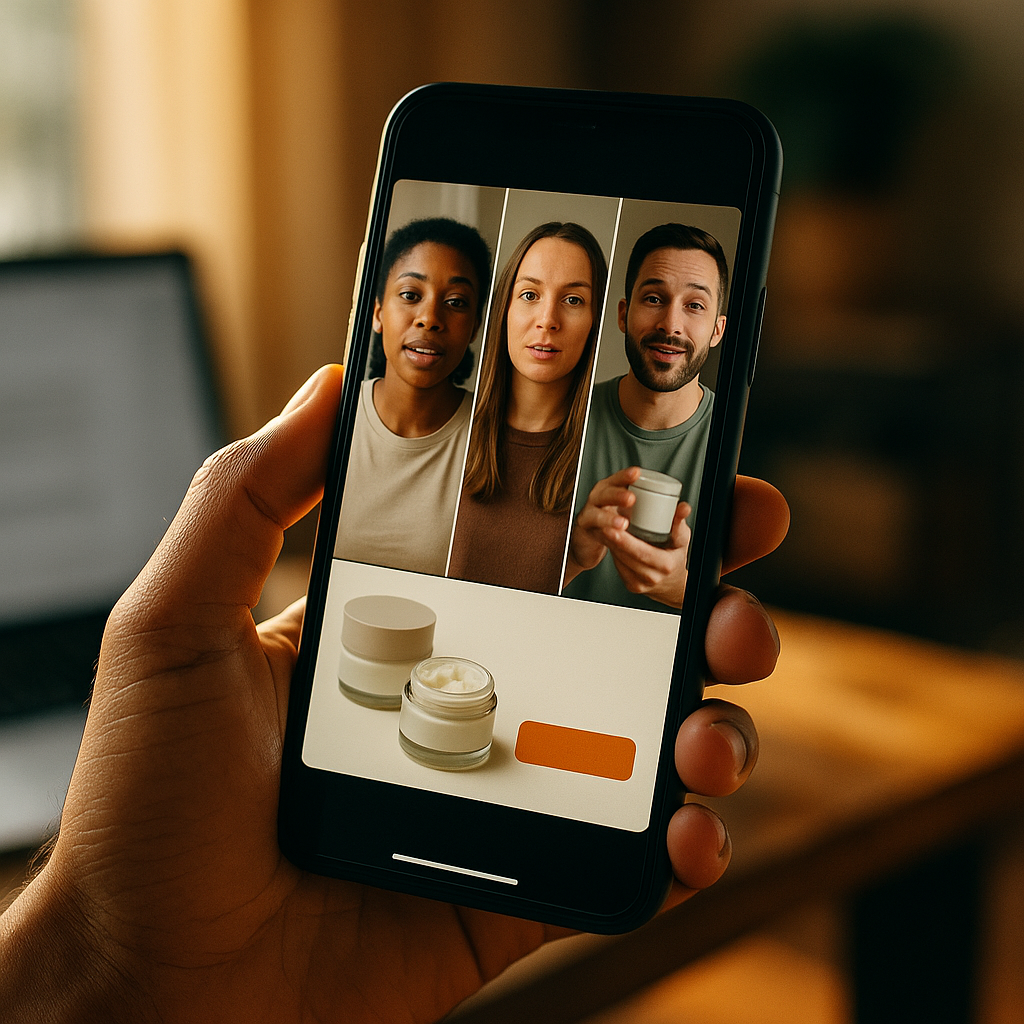
Only 4% of consumers say they fully trust brand advertising, but 88% trust recommendations from people they know or perceive as authentic. That gap is exactly why the testimonial stitch ad has become the quiet workhorse of performance creative teams in 2026. It’s not flashy. It doesn’t chase trends. It just works, and it works consistently enough that smart brands are building entire content pipelines around it.
If your influencer program still treats testimonials as an afterthought, something you bolt onto the end of a campaign wrap report, you’re leaving trust signal on the table. This brief breaks down what a testimonial stitch ad actually is, why it outperforms polished brand testimonials, and how to build a repeatable production system around it.
What Exactly Is a Testimonial Stitch Ad?
A testimonial stitch ad combines multiple short customer or creator testimonials into a single, fast-cut video asset. Think of it as a supercut of trust: five, eight, sometimes twelve people saying variations of “I was skeptical, then I tried it, now I can’t go back,” each clip trimmed to its sharpest three to six seconds and stitched together with jump cuts, on-screen captions, and a driving audio bed.
The format borrows its editing logic from TikTok’s native stitch feature, but it’s not necessarily built on the platform’s stitch tool itself. It’s a production philosophy: take fragmented, authentic reactions and assemble them into a single narrative arc that mirrors how word-of-mouth actually spreads. One voice is an anecdote. Eight voices, cut together, start to feel like a verdict.
The power of the testimonial stitch isn’t any single clip. It’s the cumulative weight of repetition across different faces, voices, and phrasing, which signals social consensus faster than any single influencer post can.
This format sits adjacent to other UGC styles covered here before, like reaction style UGC and trend stitch duets, but it’s distinct in purpose. Those formats chase cultural relevance and speed. Testimonial stitches chase trust, and they do it methodically.
Why This Format Is Winning Budget Right Now
Ad fatigue is real, and consumers have gotten scarily good at pattern-matching branded content within the first second of a scroll. A polished single-testimonial ad, shot with a ring light and a script that sounds like it was approved by legal, triggers the skip reflex almost instantly. A stitch of six imperfect, differently-lit, differently-paced testimonials does not. The visual inconsistency is the trust signal.
There’s also a cost efficiency angle that finance teams appreciate. Instead of producing one hero testimonial ad that might flop, you’re aggregating raw clips from a creator batch, often the same batch used for other formats like multi hook shoots, and repurposing the strongest reaction beats. One shoot day can feed a testimonial stitch, a standalone UGC ad, and a set of organic clips. That’s real leverage on production spend.
According to Sprout Social’s ongoing research into consumer trust, authenticity consistently ranks above production polish as a purchase driver, particularly for mid-funnel consideration content. Testimonial stitches lean into that finding directly. They’re not trying to look expensive. They’re trying to look believed.
Building the Brief: What to Actually Ask Creators For
The mistake most brands make is briefing testimonials the way they’d brief a product demo, with a rigid script and brand-approved talking points. That kills the format. Testimonial stitches only work if the individual clips feel unscripted, even when they’re loosely guided.
Here’s a brief structure that consistently produces usable footage:
- Open with the objection, not the praise. Ask creators to start with what they doubted before trying the product. “I thought this was going to be another overhyped skincare thing” performs better as an opener than “I love this product.”
- Request three distinct takes per creator. One skeptical opener, one specific result callout, one comparison to a previous solution they used. This gives editors flexibility to build different narrative sequences from the same shoot.
- Ban brand-speak explicitly. No “game-changer,” no “obsessed,” no “highly recommend.” These phrases read as scripted even when they’re not. Push for specific, sensory language instead.
- Capture vertical, unedited, natural light footage. Overproduction is the enemy here. This pairs well with the framing in hook first UGC briefs, where the emotional beat matters more than visual polish.
- Get explicit usage rights upfront. Testimonial stitches often get reused across paid channels for months. Confirm this before the shoot, not after, using a framework like the one in paid amplification rights checklists.
Aim for a minimum of eight to ten creator submissions per stitch batch. Not every clip will make the final cut, and you want enough raw material to select for tonal variety, different demographics, and different objection types.
Editing Logic: Pacing Is the Whole Game
A testimonial stitch ad lives or dies on pacing. Too slow, and it feels like a customer review page read aloud. Too fast, and viewers can’t register what anyone actually said. The sweet spot most performance editors land on is a new speaker every four to seven seconds, with captions burned in for sound-off viewing, which matters enormously given how much feed consumption happens muted.
This is where lessons from silent autoplay editing apply directly. If your captions can’t carry the emotional weight of the testimonial on their own, the cut isn’t working. Test it by watching the full stitch with the volume off. If you still feel the momentum building, you’ve nailed the pacing.
Structure the sequence with intent rather than randomizing clip order. A common winning arc:
- Open with the strongest skeptic-to-convert clip, the one with the most emotional swing.
- Follow with two or three quick-hit specific results (numbers, timeframes, comparisons).
- Include one clip that addresses a common objection directly (price, effectiveness, ease of use).
- Close on the most quotable, screenshot-worthy line. This is your ad’s “sticky” moment, the one line people remember after scrolling past.
Treat the closing testimonial line the way you’d treat a headline. It’s the one piece of the ad most likely to get repeated, screenshotted, or quoted back in comments.
For brands running the format across multiple platforms, the editing workflow from multi platform master edits is worth adapting here, since aspect ratio and caption placement need to shift between TikTok, Reels, and LinkedIn without a full reshoot.
Where Testimonial Stitches Actually Belong in the Funnel
Don’t run these as top-of-funnel cold prospecting creative. They perform best in retargeting and mid-funnel consideration stages, where the viewer already has some product awareness but hasn’t converted yet. Someone who added to cart and abandoned, or someone who’s engaged with three product posts but hasn’t clicked through, is exactly the audience that a wall of “other people like you were skeptical too” resonates with.
Retail and DTC brands have had strong results pairing testimonial stitches with retargeting sequences on Meta and TikTok. B2B and services brands are catching on too. A stitch of client testimonials addressing implementation fears works similarly to how LinkedIn product showcase reels build buyer trust for longer sales cycles, just with more emotional range in the delivery.
Data from eMarketer has repeatedly shown that consideration-stage creative with social proof elements outperforms generic product benefit messaging on cost per acquisition, particularly in categories with high price sensitivity or skepticism (supplements, financial apps, subscription services). Testimonial stitches are, in effect, a compressed social proof delivery mechanism built specifically for that stage.
Compliance Isn’t Optional Here
Because testimonial stitches aggregate real customer claims, they carry more regulatory exposure than a typical branded ad. The FTC’s endorsement guidelines require that testimonials reflect typical results, and if a creator’s experience is atypical (dramatic weight loss, unusually fast results, exceptional ROI), that needs to be disclosed clearly on screen, not buried in a caption.
Run every testimonial batch through a compliance check before it goes into paid rotation. Confirm:
- Claims are substantiated and not exaggerated beyond what the creator actually experienced.
- Material connections (paid partnerships, free product, affiliate links) are disclosed per FTC requirements.
- Usage rights cover the specific platforms and duration you intend to run the stitch, tracked properly through a system like the one described in UGC rights registries.
This isn’t bureaucratic box-checking. Regulators have gotten more active on testimonial-based advertising precisely because the format is so effective at driving conversion, which makes it a magnet for scrutiny when claims run ahead of reality.
Measuring What Actually Matters
Standard ad metrics undersell testimonial stitches if you’re only looking at click-through rate. Watch time and completion rate are better early indicators, since a viewer who stays for the fourth or fifth testimonial is demonstrating exactly the kind of trust-building engagement the format is designed to create. Comment sentiment matters too. If viewers start replying with their own “this happened to me” stories, you’ve built a genuine trust loop, not just an ad.
Track cost per acquisition against retargeting audiences specifically, rather than blending performance with cold traffic campaigns. The format’s real strength shows up in that mid-funnel comparison, and brands that judge it against top-of-funnel benchmarks often kill a working format prematurely because they’re measuring the wrong stage of the journey.
Frequently Asked Questions
FAQs
What makes a testimonial stitch ad different from a regular customer testimonial video?
A regular testimonial video usually features one customer speaking at length in a polished setting. A testimonial stitch combines short clips from multiple customers or creators into one fast-paced sequence, which creates a stronger sense of social consensus than a single voice can.
How many creators do I need for one testimonial stitch ad?
Aim to collect submissions from eight to ten creators or customers per batch, even though only five to eight clips will likely make the final cut. This gives editors enough variety in tone, objection type, and delivery style to build a compelling sequence.
Where should testimonial stitch ads run in the marketing funnel?
They perform best in mid-funnel retargeting, aimed at people who’ve shown product interest but haven’t converted. They’re less effective as cold, top-of-funnel prospecting creative because they assume some existing product awareness.
Do testimonial stitch ads require FTC disclosure?
Yes. If any testimonial reflects atypical results, that needs to be disclosed on screen. Paid partnerships or free product arrangements with creators must also be disclosed clearly, following FTC endorsement guidelines.
Can I reuse footage from other UGC shoots for testimonial stitches?
Often yes, provided usage rights cover the intended platforms and campaign duration. Many brands capture testimonial material during the same shoot day used for other UGC formats, which improves production efficiency significantly.
What’s the ideal length for a testimonial stitch ad?
Most high-performing testimonial stitches run between thirty and sixty seconds, with each individual clip trimmed to four to seven seconds. Longer formats risk losing viewer attention before the strongest testimonials appear.
Next step: Pull footage from your last three UGC shoots, isolate the skeptic-to-convert moments, and build one test stitch this week. Run it against your warmest retargeting audience before you commission a single new creator brief.
Top Influencer Marketing Agencies
The leading agencies shaping influencer marketing in 2026
Agencies ranked by campaign performance, client diversity, platform expertise, proven ROI, industry recognition, and client satisfaction. Assessed through verified case studies, reviews, and industry consultations.
Moburst

-
2

The Shelf
Boutique Beauty & Lifestyle Influencer AgencyA data-driven boutique agency specializing exclusively in beauty, wellness, and lifestyle influencer campaigns on Instagram and TikTok. Best for brands already focused on the beauty/personal care space that need curated, aesthetic-driven content.Clients: Pepsi, The Honest Company, Hims, Elf Cosmetics, Pure LeafVisit The Shelf → -
3

Audiencly
Niche Gaming & Esports Influencer AgencyA specialized agency focused exclusively on gaming and esports creators on YouTube, Twitch, and TikTok. Ideal if your campaign is 100% gaming-focused — from game launches to hardware and esports events.Clients: Epic Games, NordVPN, Ubisoft, Wargaming, Tencent GamesVisit Audiencly → -
4

Viral Nation
Global Influencer Marketing & Talent AgencyA dual talent management and marketing agency with proprietary brand safety tools and a global creator network spanning nano-influencers to celebrities across all major platforms.Clients: Meta, Activision Blizzard, Energizer, Aston Martin, WalmartVisit Viral Nation → -
5

The Influencer Marketing Factory
TikTok, Instagram & YouTube CampaignsA full-service agency with strong TikTok expertise, offering end-to-end campaign management from influencer discovery through performance reporting with a focus on platform-native content.Clients: Google, Snapchat, Universal Music, Bumble, YelpVisit TIMF → -
6

NeoReach
Enterprise Analytics & Influencer CampaignsAn enterprise-focused agency combining managed campaigns with a powerful self-service data platform for influencer search, audience analytics, and attribution modeling.Clients: Amazon, Airbnb, Netflix, Honda, The New York TimesVisit NeoReach → -
7

Ubiquitous
Creator-First Marketing PlatformA tech-driven platform combining self-service tools with managed campaign options, emphasizing speed and scalability for brands managing multiple influencer relationships.Clients: Lyft, Disney, Target, American Eagle, NetflixVisit Ubiquitous → -
8

Obviously
Scalable Enterprise Influencer CampaignsA tech-enabled agency built for high-volume campaigns, coordinating hundreds of creators simultaneously with end-to-end logistics, content rights management, and product seeding.Clients: Google, Ulta Beauty, Converse, AmazonVisit Obviously →