


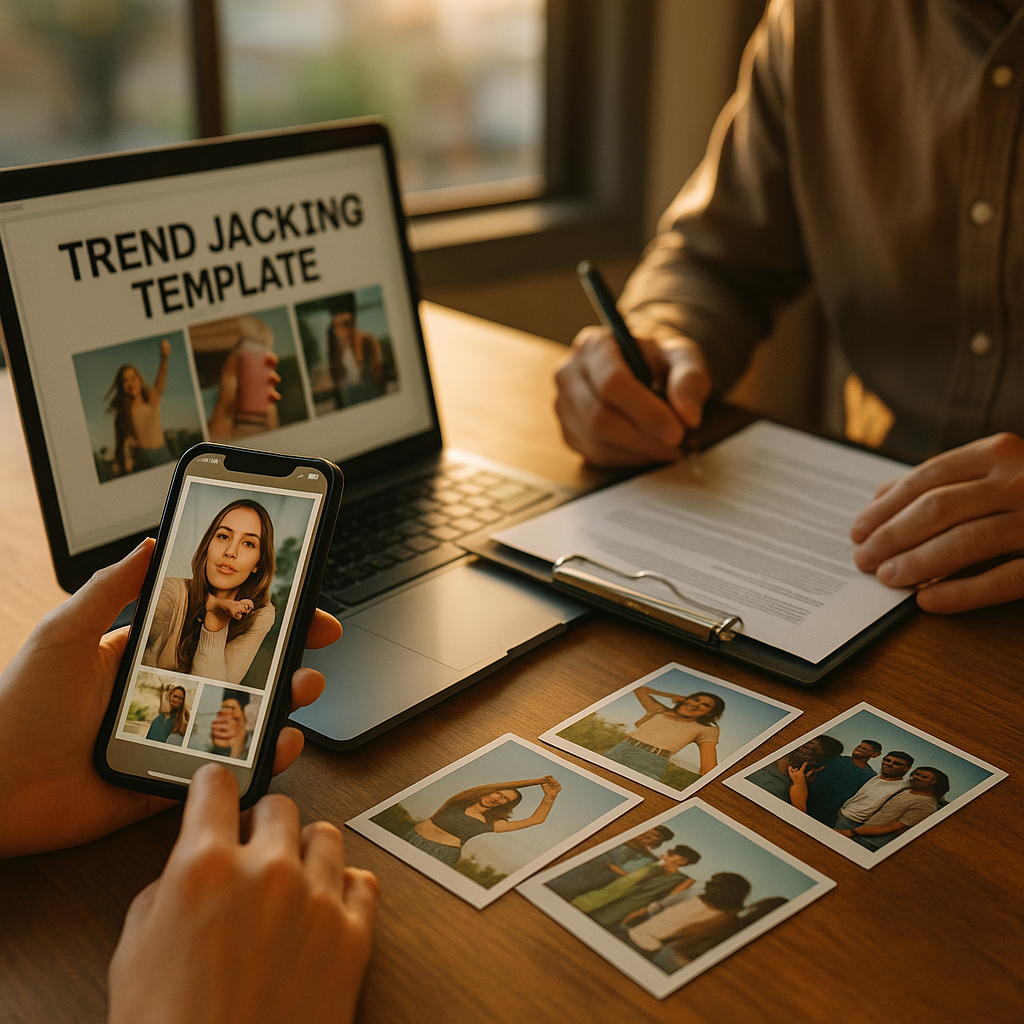
Half the videos in your “For You” feed today will be dead trends by Friday. Brands that win aren’t the ones chasing every viral clip, they’re the ones running a trend jacking template that turns any breakout format into a compliant, on-brand ad within 48 hours. The catch? Most legal teams still think “replicate” means “copy,” and that misunderstanding is costing marketing teams weeks they don’t have.
This piece breaks down how to build a repeatable system for jumping on viral UGC formats without stepping on copyright, trademark, or platform policy landmines.
Why Speed Without a System Gets Brands Sued (or Just Embarrassed)
Trend jacking has a bad reputation, and honestly, it earned it. Marketers see a viral format, brief a creator to “do that but with our product,” and ship it without checking who owns the sound, the choreography, or the joke structure. Sometimes it works. Often it triggers a takedown notice, a platform strike, or a very awkward call with legal after a competitor’s fans notice the resemblance.
The fix isn’t slowing down. It’s building a template that separates the legally protected elements of a trend (specific audio, copyrighted footage, a creator’s likeness) from the structurally replicable elements (pacing, hook style, camera angle, text overlay rhythm). That distinction is the entire game.
You can’t own a format. You can own a specific execution of it. Trend jacking templates work because they legally replicate the format’s DNA, not the copyrighted footage running through it.
What Actually Makes a UGC Trend “Legal” to Replicate
Copyright protects specific creative expression, not general ideas or formats. A “get ready with me” structure, a stitch-reaction format, or a three-beat product reveal is a structural pattern, not a copyrighted work. What is protected: the original audio track (unless it’s a licensed sound on the platform’s library), specific choreography, a creator’s face and voice, and any footage lifted directly from another account.
According to the FTC’s endorsement guidance, the bigger legal exposure for most brands isn’t format replication at all. It’s disclosure failures and misrepresenting whether content is organic or paid. Trend jacking done right actually reduces risk, because you’re briefing original creators to perform an original take rather than repurposing someone else’s viral clip without consent.
Building the Template: The Four Layers Every Brief Needs
A trend jacking template isn’t a mood board. It’s a structured brief with four locked layers that let creators move fast without your legal team reviewing every single asset from scratch.
- Structural layer: Shot count, pacing, hook placement, and text overlay timing, lifted from the trend’s format, not its footage.
- Audio layer: Either a licensed sound from the platform’s commercial library or an original voiceover that echoes the trend’s cadence without using the actual clip.
- Talent layer: A brief clarifying the creator is performing an original take, not impersonating or referencing a specific person’s likeness.
- Rights layer: Pre-negotiated usage terms so the finished asset can go straight to paid media without a second contract cycle.
This is essentially the same discipline behind hook first UGC briefs, where creators are scripted like actors around a proven structure instead of improvising and hoping something lands. The trend jacking version just adds a compliance layer on top, because you’re working against someone else’s viral moment instead of a blank page.
The 48 Hour Window Is Real, and It’s Shrinking
Data from Sprout Social’s platform research consistently shows trend lifecycles on TikTok compressing further each year, with most formats peaking and declining within a single week. If your creative approval process takes ten business days, you’re not trend jacking, you’re trend archaeology.
Brands solving this well have already mapped out a 48 hour trend response clock, a pre-approved workflow that skips redundant legal review because the template itself was cleared once, upfront, for repeated use.
Pick the Format Before You Pick the Trend
Here’s a mistake I see constantly: teams chase whatever’s trending this week instead of building a library of format templates that can absorb any trend. The smarter move is reverse engineering four or five durable UGC formats your brand can legally replicate on demand, then slotting new trend energy into that existing structure.
Reaction-style content is the easiest entry point because it’s inherently commentary, which sits comfortably inside fair use conversations. The reaction style UGC format lets creators respond to a trending sound or moment with original commentary, which is a meaningfully different legal position than re-creating the trend’s original footage frame by frame.
Stitch and duet formats deserve their own mention because platforms literally built the legal permission into the feature. When a creator stitches or duets a public post using native platform tools, they’re operating inside the terms of service both parties agreed to. That’s why trend stitch duets have become the safest fast-turnaround format for brands nervous about IP exposure.
Multi Hook Shoots: Getting More Templates Out of One Session
If you’re building templates instead of one-off assets, don’t shoot one video per creator session. A single well-briefed shoot can produce five distinct hooks covering five different trend structures, which is exactly the logic behind multi hook shoots. It cuts cost per asset dramatically and gives your media buying team more raw material to test against whatever trend surfaces next.
This matters because trend jacking isn’t a one-and-done tactic, it’s an ongoing operational muscle. The brands winning this game in 2026 aren’t the ones with the best single viral hit. They’re the ones with a production pipeline that can output legally clean, on-brand trend responses every single week without reinventing the brief from scratch.
The real ROI of a trend jacking template isn’t the one video that goes viral. It’s the twenty templated videos that quietly outperform your evergreen content at a fraction of the production cost.
Rights Management Is the Part Everyone Skips
You built the template, the creator delivered the asset, the video is performing. Now what? If you haven’t locked usage rights before the shoot, you’re stuck renegotiating every time you want to boost spend behind a winning piece. This is where most trend jacking programs quietly fall apart, not at the creative stage but at the paid amplification stage.
Run through the paid amplification rights checklist before a single dollar goes into ad spend, and keep a live UGC rights registry so nobody on the media buying team accidentally boosts an asset with expired usage terms.
According to eMarketer’s creator economy research, brands allocating budget toward influencer and UGC content continue to increase spend year over year, which means the rights management stakes only get higher. A missing usage clause on a single high-performing asset can mean pulling spend mid-flight, right when a trend is peaking.
Casting Fast Without Overpaying for Follower Count
Trend jacking templates only move fast if your casting process moves fast too. If your team is still manually vetting creators by follower count and negotiating rates individually, you’ll miss the window every time. Shifting to follower free casting criteria, where creators are selected on performance history and format fit rather than audience size, cuts both cost and time to launch.
Pair that with scripted, actor-style direction so creators aren’t improvising legally risky commentary on the fly. The actor style UGC script approach gives creators a clear performance framework, which incidentally also protects the brand because the final line reads are pre-approved rather than ad-libbed in the moment.
What About Platform-Specific Risk?
TikTok, Instagram, and YouTube each have slightly different policies on sound licensing, commercial use, and duet/stitch permissions. A trend jacking template built for TikTok’s Commercial Music Library won’t automatically clear on Instagram Reels, and vice versa. Check TikTok’s advertising policies and Meta’s business platform guidelines before assuming a cleared asset on one platform is cleared everywhere. This is a five-minute check that saves a very uncomfortable takedown conversation later.
Operationalizing It: From One-Off Wins to a Repeatable Pipeline
The teams doing this best have essentially built a small internal studio system. They maintain a bank of pre-cleared formats, a roster of creators briefed on performance rather than improvisation, and a rights registry that lets media buyers move without waiting on legal. If any of that sounds like overkill for what’s supposed to be scrappy, fast-turnaround content, consider that the alternative is rebuilding your legal review from zero every time a new trend surfaces, which is precisely how brands miss the window entirely.
Think of your trend jacking template less like a creative brief and more like an operational asset, similar to how TikTok creator ops workflows treat briefing and payment as one continuous pipeline instead of separate manual steps.
Next step: audit your last three viral-adjacent campaigns. If any of them required a fresh legal review or a new creator contract from scratch, you don’t have a trend jacking template yet, you have a lucky streak. Build the four-layer brief once, clear it for reuse, and let your team move at trend speed instead of committee speed.
FAQs
Is trend jacking legal for brands to do?
Yes, when brands replicate the structural format of a trend (pacing, hook style, editing rhythm) rather than copying protected elements like original audio, choreography, or another creator’s specific footage. The safest approach uses original creators, licensed or original audio, and a pre-cleared brief.
What’s the difference between trend jacking and content theft?
Trend jacking replicates a format’s structure using original talent, audio, and footage. Content theft reuses someone else’s actual video, sound, or likeness without permission. The line is drawn at specific creative expression versus general structural patterns, which aren’t protected by copyright.
How fast can a brand realistically turn around a trend jacking video?
With a pre-approved template and rights framework already in place, brands can go from trend identification to published asset in 24 to 48 hours. Without a template, the process typically takes one to two weeks, by which point most trends have already peaked.
Do I need a new contract every time I reuse a trend format?
No, if you build usage rights into the original creator agreement upfront. A well-structured contract should cover the specific format, platform usage, and paid amplification terms so the same creator relationship can support multiple trend-jacked assets without renegotiation.
What’s the biggest legal mistake brands make with trend jacking?
Using the trend’s original audio track or lifting footage directly instead of commissioning an original take. The second most common mistake is skipping FTC-required disclosure when the content is paid or brand-directed, even if it looks organic.
Top Influencer Marketing Agencies
The leading agencies shaping influencer marketing in 2026
Agencies ranked by campaign performance, client diversity, platform expertise, proven ROI, industry recognition, and client satisfaction. Assessed through verified case studies, reviews, and industry consultations.
Moburst

-
2

The Shelf
Boutique Beauty & Lifestyle Influencer AgencyA data-driven boutique agency specializing exclusively in beauty, wellness, and lifestyle influencer campaigns on Instagram and TikTok. Best for brands already focused on the beauty/personal care space that need curated, aesthetic-driven content.Clients: Pepsi, The Honest Company, Hims, Elf Cosmetics, Pure LeafVisit The Shelf → -
3

Audiencly
Niche Gaming & Esports Influencer AgencyA specialized agency focused exclusively on gaming and esports creators on YouTube, Twitch, and TikTok. Ideal if your campaign is 100% gaming-focused — from game launches to hardware and esports events.Clients: Epic Games, NordVPN, Ubisoft, Wargaming, Tencent GamesVisit Audiencly → -
4

Viral Nation
Global Influencer Marketing & Talent AgencyA dual talent management and marketing agency with proprietary brand safety tools and a global creator network spanning nano-influencers to celebrities across all major platforms.Clients: Meta, Activision Blizzard, Energizer, Aston Martin, WalmartVisit Viral Nation → -
5

The Influencer Marketing Factory
TikTok, Instagram & YouTube CampaignsA full-service agency with strong TikTok expertise, offering end-to-end campaign management from influencer discovery through performance reporting with a focus on platform-native content.Clients: Google, Snapchat, Universal Music, Bumble, YelpVisit TIMF → -
6

NeoReach
Enterprise Analytics & Influencer CampaignsAn enterprise-focused agency combining managed campaigns with a powerful self-service data platform for influencer search, audience analytics, and attribution modeling.Clients: Amazon, Airbnb, Netflix, Honda, The New York TimesVisit NeoReach → -
7

Ubiquitous
Creator-First Marketing PlatformA tech-driven platform combining self-service tools with managed campaign options, emphasizing speed and scalability for brands managing multiple influencer relationships.Clients: Lyft, Disney, Target, American Eagle, NetflixVisit Ubiquitous → -
8

Obviously
Scalable Enterprise Influencer CampaignsA tech-enabled agency built for high-volume campaigns, coordinating hundreds of creators simultaneously with end-to-end logistics, content rights management, and product seeding.Clients: Google, Ulta Beauty, Converse, AmazonVisit Obviously →