


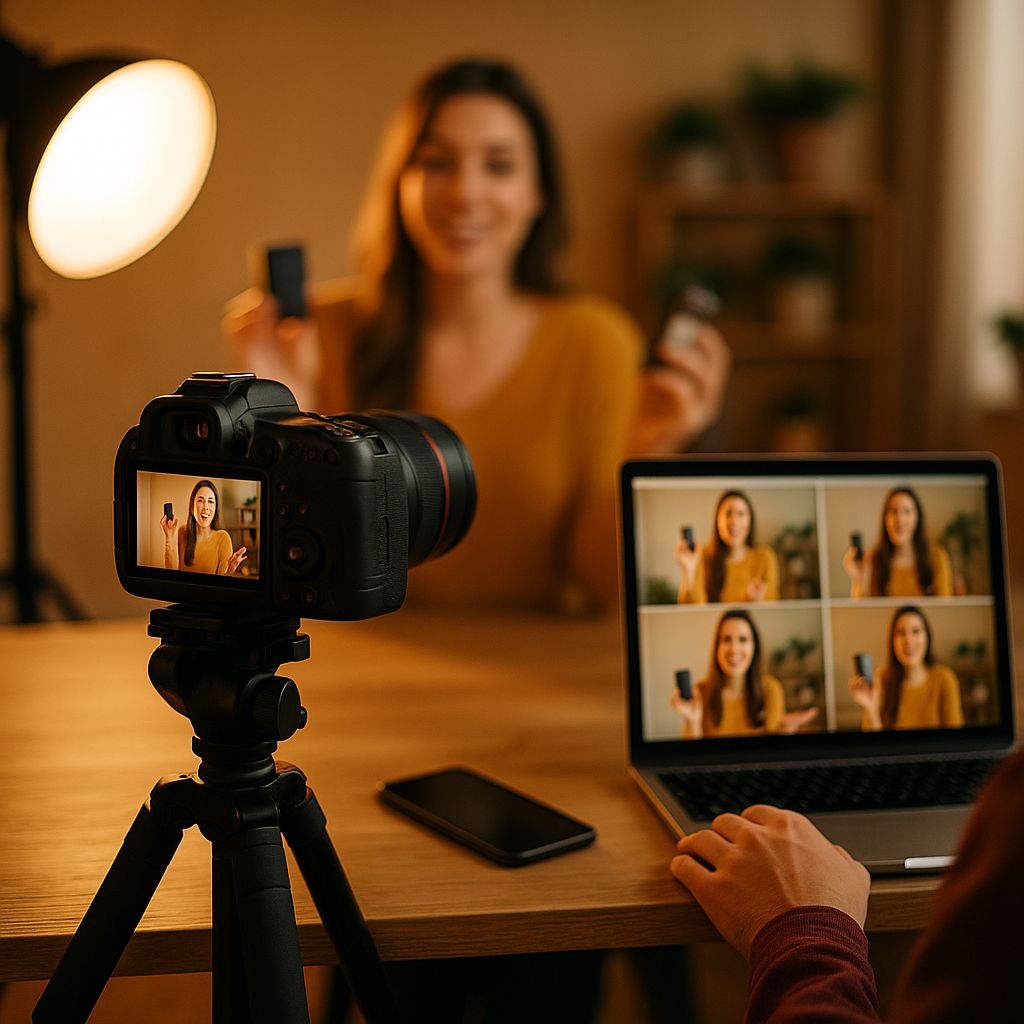
One shoot day. Five hooks. Zero reshoots. Brands running multi hook testing report finding a winning ad variant up to 3x faster than teams that shoot one creative per concept, according to internal benchmarks shared by performance agencies working across Meta and TikTok. If your team is still booking separate sessions for every hook idea, you’re burning budget on redundancy, not creative insight.
Multi hook testing means treating a single creator shoot as raw material for multiple ad variants rather than one finished asset. The body of the video stays largely the same. The hook, that critical first three seconds, changes five different ways. This isn’t a new idea in direct response marketing, but the way brands are operationalizing it with UGC creators in 2026 has gotten sharper, faster, and considerably cheaper.
Why One Shoot Should Never Produce Just One Ad
Think about the economics for a second. A single creator shoot, factoring in creator fees, direction, and editing, typically runs anywhere from $400 to $2,500 depending on the creator’s tier and the complexity of the brief. If that shoot produces one ad, your cost per tested concept is the full shoot cost. If it produces five hook variants, you’ve divided your cost basis by five while multiplying your testing surface area.
This matters more than ever because hook performance has become the single biggest lever in paid social creative. Meta’s advertising resources consistently point to the first few seconds as the make-or-break moment for retention, and TikTok’s own creative guidance echoes this. A mediocre hook tanks an otherwise strong product demo. A great hook can rescue mediocre footage. So why are so many brands still testing one hook per shoot and calling it a day?
Teams that separate hook testing from body testing typically see a 20 to 40 percent reduction in cost per acquisition within the first month of running variants, simply because they stop wasting spend on hooks that never had a chance.
The Anatomy of a Five Hook Shoot
A well-planned multi hook shoot isn’t chaos on set. It’s a structured production sprint. Here’s the typical breakdown agencies use:
- Problem-first hook: “I didn’t realize my skin was doing this until my dermatologist pointed it out.”
- Curiosity hook: “Nobody tells you this about [product category], and it’s costing you money.”
- Social proof hook: “My followers keep asking what I use for this, so here’s the honest answer.”
- Contrarian hook: “Everyone says you need [common solution]. I disagree, and here’s why.”
- Direct offer hook: “If you’ve been putting off trying [product], this is your sign.”
Each hook runs 5 to 8 seconds. The creator delivers all five back to back, sometimes with a wardrobe or location tweak between takes to add visual variety, before moving into the shared body content that sells the product. Editors then stitch each hook to the same body footage, producing five distinct ads from roughly 90 minutes of additional filming time.
This approach pairs naturally with structured briefing. Teams that already use hook first UGC briefs find the transition easy, because the creator is already accustomed to treating the opening line as a distinct, swappable script element rather than an improvised aside.
What Actually Changes Between Variants
Not everything should vary. That’s the point. Keep the product demonstration, the core claims, and the call to action consistent across all five cuts. Vary only the emotional entry point: fear, curiosity, aspiration, skepticism, urgency. This isolates the hook as the tested variable, which is the only way you get clean read on what’s actually driving performance versus what’s just noise from a different body edit.
Some teams also test delivery style within the hook itself, having the creator whisper one version and shout another. That’s a legitimate sixth or seventh variant if your shoot schedule allows it, but five is the sweet spot most agencies land on before diminishing returns and creator fatigue set in.
Casting for Range, Not Just Fit
Multi hook testing puts different demands on creator selection than a single-concept shoot. You need someone who can deliver five distinct emotional registers convincingly in one session without sounding like they’re reading a script, even though they absolutely are. This is where actor style UGC scripts earn their keep: they give creators a framework for hitting different tones without losing authenticity.
Not every creator can do this well. Some nail one register beautifully and sound wooden on the other four. Screen for range during casting calls by asking creators to submit a quick sample delivering two contrasting hooks. It’s a small ask that saves you from discovering the limitation on shoot day when reshoots aren’t in the budget.
Brands also increasingly cast without follower count as the primary filter, focusing instead on delivery skill and audience trust signals. If that’s new territory for your team, follower free casting briefs offer a useful rewrite of the standard casting call.
Testing Framework: How to Actually Read the Results
Producing five hooks is only half the job. Reading the results correctly is where most teams fumble. A few operational rules:
- Equal spend, equal duration. Run all five variants with identical budget allocation for at least 48 to 72 hours before making cuts. Early volatility in CPMs skews results if you kill variants too fast.
- Watch hook rate and hold rate separately. A hook can stop the scroll (high hook rate) but fail to hold attention into the body (low hold rate). That’s a mismatch between the hook’s promise and the body’s payoff, not necessarily a bad hook.
- Don’t average across placements. A hook that performs on TikTok’s For You feed may underperform on Instagram Reels. Segment your read by platform before declaring a winner.
- Retire losers fast, but don’t delete them. Archive underperforming hooks. Six months later, a “losing” hook might resonate with a different audience segment or seasonal moment.
This is essentially the same testing logic used in canvas style hook testing, adapted for a scenario where all five variants share production DNA rather than coming from entirely separate shoots. The shared body footage actually makes your read cleaner, since you’re not accidentally testing editing style alongside hook copy.
Speed Matters More Than Perfection
There’s a temptation to overthink hook selection before the shoot, treating it like a creative brief that needs three rounds of internal approval. Resist it. The entire value proposition of multi hook testing is speed to signal. If you’re spending two weeks refining five hook scripts, you’ve erased the efficiency gain.
Some of the fastest-moving performance teams operate closer to a 48 hour trend response clock, where hooks get drafted, shot, and live within two days of a trend or news cycle emerging. That pace isn’t necessary for every campaign, but it illustrates how much slack exists in traditional creative timelines.
Where This Breaks Down (And How to Avoid It)
Multi hook testing isn’t magic. A few common failure modes:
Hook whiplash. If your five hooks are tonally identical (five variations of “wait, what?”), you’re not really testing anything. You’re testing minor wording changes, which rarely produces meaningful signal. Make sure your hooks represent genuinely distinct psychological angles.
Body fatigue. If the shared body content is weak, no hook will save the ad long term. You might see an initial hook rate spike followed by a hold rate collapse across all five variants. That’s a signal to fix the body, not to shoot five new hooks.
Rights confusion. Because you’re producing five distinct ad assets from one contracted shoot, usage rights and paid amplification terms need to be crystal clear before you start spending. Run through a proper paid amplification rights checklist so you’re not caught boosting content the creator never cleared for five separate ad placements.
No sound-off plan. Many hooks rely on spoken delivery, but a huge share of feed impressions play muted. Make sure captions or on-screen text carry the hook’s meaning independent of audio, following the same logic covered in silent autoplay cuts.
Compliance is worth a direct mention here too. When creators are delivering multiple claims-adjacent hooks in one session, it’s easy for a “curiosity” hook to drift into implied claims that never went through legal review. Loop in your compliance team on hook scripts the same way you would a single-hero ad, and keep FTC endorsement guidance in view, particularly around disclosure requirements for sponsored content. Five hooks means five separate opportunities for a compliance miss if scripts aren’t reviewed as a batch.
Building It Into Your Production Workflow
The teams getting the most out of multi hook testing aren’t treating it as a one-off tactic. They’ve built it into the standard shoot brief template: every creator session includes a hook block by default, regardless of the campaign. That means updating your standard creator contract to account for multiple ad variants upfront, rather than renegotiating usage after the fact.
It also means your editing pipeline needs to support rapid variant assembly. If your editor is manually re-cutting the body footage five times, you’re losing the efficiency gain on the back end. Templates and modular editing timelines, similar to what’s used in CapCut speed edit templates, let editors drop in a new hook without rebuilding the entire timeline.
According to eMarketer’s advertising research, brands are increasing the share of budget allocated to creative testing relative to media spend, a shift that reflects growing recognition that creative variation drives more incremental performance than platform or targeting optimization at this point in paid social’s maturity. Multi hook testing is one of the more budget-efficient ways to act on that shift.
Track this as an ongoing library, not a campaign-specific exercise. Tag each hook by angle, creator, and performance tier in your asset management system so six months from now you’re not starting from zero. The value compounds. A hook that failed against last quarter’s audience might be exactly what a new product launch needs.
Next Step
Before your next creator shoot, draft five distinct hook angles using the categories above, brief the creator to deliver all five in one session, and set up equal-spend testing before you touch the body edit. The shoot cost stays flat. Your testing surface just got five times bigger.
FAQs
How many hooks should we test from a single shoot?
Five is the practical sweet spot for most brands. It’s enough to cover distinct psychological angles (problem, curiosity, social proof, contrarian, direct offer) without overloading the creator or diluting shoot time. Some teams push to six or seven when budget and creator stamina allow, but returns diminish past five.
Does multi hook testing work for every product category?
It works best for products with a clear problem/solution narrative or a demonstrable use case, since the shared body footage needs to support multiple emotional entry points. Highly technical B2B products can still use it, but the hook angles typically need to reflect different buyer pain points rather than pure emotional triggers.
How long should each variant run before we call a winner?
Give each hook at least 48 to 72 hours of equal spend before making cuts. Early CPM volatility and audience learning phases on platforms like Meta and TikTok can distort results if you judge too quickly.
Do we need separate usage rights for each hook variant?
Usage rights should cover the full set of variants produced from the shoot, not just the primary edit. Clarify this in the creator contract before shoot day, since ambiguity here is one of the most common causes of paid amplification delays.
What’s the biggest mistake brands make with multi hook testing?
Making the five hooks too similar to each other. If all five hooks use the same structure with minor wording tweaks, the test won’t produce meaningful signal about what’s actually driving performance.
Top Influencer Marketing Agencies
The leading agencies shaping influencer marketing in 2026
Agencies ranked by campaign performance, client diversity, platform expertise, proven ROI, industry recognition, and client satisfaction. Assessed through verified case studies, reviews, and industry consultations.
Moburst

-
2

The Shelf
Boutique Beauty & Lifestyle Influencer AgencyA data-driven boutique agency specializing exclusively in beauty, wellness, and lifestyle influencer campaigns on Instagram and TikTok. Best for brands already focused on the beauty/personal care space that need curated, aesthetic-driven content.Clients: Pepsi, The Honest Company, Hims, Elf Cosmetics, Pure LeafVisit The Shelf → -
3

Audiencly
Niche Gaming & Esports Influencer AgencyA specialized agency focused exclusively on gaming and esports creators on YouTube, Twitch, and TikTok. Ideal if your campaign is 100% gaming-focused — from game launches to hardware and esports events.Clients: Epic Games, NordVPN, Ubisoft, Wargaming, Tencent GamesVisit Audiencly → -
4

Viral Nation
Global Influencer Marketing & Talent AgencyA dual talent management and marketing agency with proprietary brand safety tools and a global creator network spanning nano-influencers to celebrities across all major platforms.Clients: Meta, Activision Blizzard, Energizer, Aston Martin, WalmartVisit Viral Nation → -
5

The Influencer Marketing Factory
TikTok, Instagram & YouTube CampaignsA full-service agency with strong TikTok expertise, offering end-to-end campaign management from influencer discovery through performance reporting with a focus on platform-native content.Clients: Google, Snapchat, Universal Music, Bumble, YelpVisit TIMF → -
6

NeoReach
Enterprise Analytics & Influencer CampaignsAn enterprise-focused agency combining managed campaigns with a powerful self-service data platform for influencer search, audience analytics, and attribution modeling.Clients: Amazon, Airbnb, Netflix, Honda, The New York TimesVisit NeoReach → -
7

Ubiquitous
Creator-First Marketing PlatformA tech-driven platform combining self-service tools with managed campaign options, emphasizing speed and scalability for brands managing multiple influencer relationships.Clients: Lyft, Disney, Target, American Eagle, NetflixVisit Ubiquitous → -
8

Obviously
Scalable Enterprise Influencer CampaignsA tech-enabled agency built for high-volume campaigns, coordinating hundreds of creators simultaneously with end-to-end logistics, content rights management, and product seeding.Clients: Google, Ulta Beauty, Converse, AmazonVisit Obviously →