


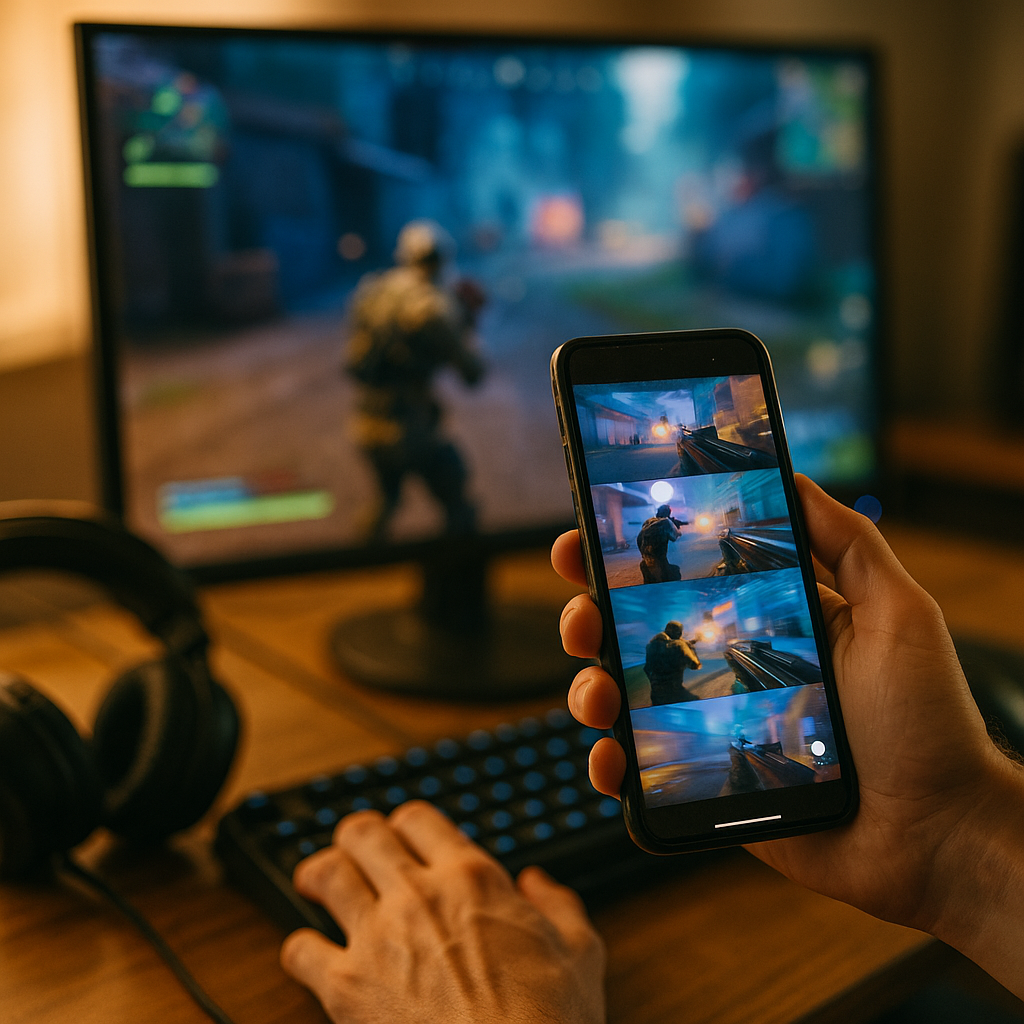
Twitch and YouTube gaming audiences watched over 100 billion hours of gameplay content last year, and almost none of it came from polished agency shoots. It came from clip compilations, stitched together by players, streamers, and fans who understand pacing better than most creative directors. A gaming clip compilation format brief is how brands tap that instinct without losing control of the message. Here’s how to write one that actually performs.
Why Clip Compilations Outperform Scripted Gaming Ads
Gamers have a finely tuned radar for anything that smells like an ad. Scripted spots inside gaming content get skipped, muted, or roasted in the comments. Clip compilations dodge that reflex because they look like organic highlight reels, the kind creators have posted for free since the earliest days of YouTube Gaming.
The format works because it borrows credibility from a genre the audience already trusts. A montage of clutch plays, funny fails, or absurd glitches reads as authentic even when a brand commissioned it. That’s not a loophole, it’s the entire value proposition. You’re not asking viewers to accept an ad, you’re asking them to accept a highlight reel that happens to feature your product placement, sponsor bumper, or branded overlay.
Clip compilations succeed because they inherit the trust of a format audiences already consume voluntarily, not because brands invented something new.
Compare that to standard influencer UGC. A single testimonial video asks viewers to sit through one uninterrupted pitch. A compilation delivers ten micro moments in the same runtime, each one a fresh hook. That density is why compilation-style edits consistently post higher average view duration on platforms like YouTube Shorts and TikTok, where the algorithm rewards retention above almost everything else.
The Data Behind the Format
Newzoo and other industry trackers have repeatedly shown that gaming content consumption skews toward short, replayable clips rather than long-form streams for younger demographics. Statista’s gaming audience research shows mobile and Gen Z viewers in particular prefer bite-sized highlight formats over full VOD replays. That preference is exactly what a compilation brief is built to exploit.
What Belongs in a Clip Compilation Brief
A brief that just says “send us your best gaming clips” will get you a folder of unusable footage. Structure matters. Here’s what a working brief should specify:
- Clip count and runtime target: Ask for 8 to 15 clips per compilation, each between 2 and 6 seconds, totaling 30 to 60 seconds. Anything longer starts losing retention.
- Moment categories: Give creators buckets to pull from, like “clutch win,” “funny fail,” “unexpected item drop,” or “reaction shot.” This keeps submissions varied without micromanaging content.
- Brand integration points: Specify exactly where the product, overlay, or sponsor card appears. Usually that’s a bumper at the start, a corner watermark throughout, or a callout during one specific clip.
- Audio requirements: Decide upfront whether original game audio, creator commentary, or a licensed track carries the edit. Mixed audio without a plan sounds chaotic fast.
- Platform destination: A compilation built for YouTube Shorts needs different pacing than one built for a Twitch clip channel or a TikTok feed. Note the primary platform before creators start editing.
- Rights and usage terms: Confirm whether the brand can repost, boost as paid media, or repurpose clips across other channels. This should never be an afterthought.
If you’re already running a broader UGC program, this brief should slot into the same intake and payment workflow you use for other formats. Teams managing high creator volume often lean on a structured system like the one outlined in TikTok creator ops workflows to avoid the spreadsheet chaos that kills gaming programs at scale.
Sourcing Clips Without Killing the Vibe
Here’s the tension every brand runs into: you need enough creative control to protect the brand, but too much control kills the authenticity that made the format work in the first place. So how do you thread that needle?
Start by casting streamers and clippers who already produce this content unpaid. Their existing archive tells you exactly what their editing instincts look like before you commit budget. This is less risky than commissioning fresh footage from an unknown creator and hoping the pacing lands.
Second, resist the urge to over-script the gameplay itself. You can brief the moment types and the brand touchpoints, but dictating exact plays or forcing a scripted reaction reads as fake instantly. Gaming audiences can tell staged footage from genuine clutch moments within seconds. If your brief starts to resemble a shot list for a commercial, you’ve lost the format.
Third, build in a review checkpoint before final export, not after. Catching a misplaced logo or an off-brand callout after the creator has rendered and uploaded costs everyone time. A lightweight approval step on the rough cut avoids the reshoot spiral that plagues so many UGC programs, similar to the fixes described in UGC rights registry workflows for other content types.
Should You Use Streamer Clips or Commissioned Gameplay?
Both have a place. Streamer-sourced clips carry more authenticity and lower production cost, since you’re licensing existing footage rather than paying for a full gameplay session. Commissioned gameplay gives you control over product visibility and messaging timing, useful when launching a specific in-game item, skin, or partnership. Most mature programs run a mix: streamer clips for organic-feeling top-of-funnel content, commissioned sessions for anything tied to a paid campaign or launch date.
Editing for Retention, Not Just Highlights
The edit is where most compilations win or lose the algorithm. Pacing has to escalate. Open with your strongest clip, not your best-lit one. Cut on the beat if you’re using music, and cut on the action peak if you’re using raw game audio. Silence between clips longer than half a second reads as dead air on mobile.
Captions matter more here than in almost any other UGC format, because a huge share of gaming clip viewers watch muted while multitasking on a second screen or scrolling in a queue. Teams building compilations should apply the same sound-off logic covered in silent autoplay editing guidance, layering in on-screen text for key moments rather than relying on commentary alone.
Tools like CapCut and Adobe Premiere Rush have templates built specifically for montage pacing, with beat-synced cut markers that speed up the edit significantly. If your team is producing these weekly, a templated approach modeled on speed edit templates cuts turnaround time without sacrificing quality.
If viewers can’t follow the highlight with the sound off, the compilation isn’t finished, it’s just exported.
Where Compilations Fit in the Bigger Content Mix
Clip compilations rarely stand alone in a healthy influencer program. They pair well with longer creator content, like a streamer’s full VOD or a founder-style explainer, because the compilation acts as the top-of-funnel hook that drives viewers toward deeper engagement. This mirrors the multi-format logic behind multi hook shoot sessions, where one production effort feeds several downstream assets.
They also travel well across platforms once reformatted. A TikTok-native compilation can be reframed for CTV pre-roll or a YouTube Shorts feed with minor aspect ratio and caption adjustments, similar to the approach detailed in multi platform master edit workflows. That reuse is where the real ROI shows up, since a single compilation shoot can generate assets for three or four channels instead of one.
If your compilations are pulling footage from live streams rather than pre-recorded sessions, the replay-to-asset pipeline described in replay clipping frameworks is worth building into your standard operating procedure. It turns every stream into a clip bank instead of a one-time broadcast.
Compliance and Disclosure, Don’t Skip This Part
Sponsored gaming content still falls under the same disclosure rules as any other paid partnership. The FTC’s endorsement guidelines require clear and conspicuous disclosure whenever a creator receives payment or product in exchange for featuring a brand, and that includes clip compilations even when the branding is a small corner watermark. Bury a disclosure in a description box at your own legal risk.
Platforms have their own overlays too. Twitch’s branded content tools and YouTube’s paid promotion toggle both exist specifically so creators can flag sponsorship without relying on text alone. Build the disclosure requirement into your brief the same way you’d specify runtime or clip count. It’s not optional, and treating it as an afterthought is how brands end up explaining themselves to regulators instead of customers.
What Metrics Actually Prove This Format Works?
Watch through rate and average view duration are the two metrics that matter most for compilations, more than raw view count. A compilation that holds viewers through 80% of its runtime is doing its job, regardless of whether it hit a million views. Click through rate on any linked product or landing page matters too, especially if the compilation is running as paid amplification. Sprout Social’s engagement benchmarks are a useful baseline for comparing your numbers against category averages before declaring victory.
Next Step
Draft one clip compilation brief this week using the structure above, run it with two or three streamers already active in your category, and measure watch through rate against your standard UGC benchmark before scaling the format further.
FAQs
What is a gaming clip compilation in influencer marketing?
It’s a short branded video assembled from multiple gameplay highlights, typically 8 to 15 clips totaling 30 to 60 seconds, used to feel like organic highlight content rather than a scripted ad.
How long should a gaming clip compilation be?
Most perform best between 30 and 60 seconds, with individual clips lasting 2 to 6 seconds each to keep pacing tight and retention high.
Do gaming clip compilations need FTC disclosure?
Yes. Any compensated brand integration, even a small watermark or corner logo, requires clear disclosure under FTC endorsement guidelines and applicable platform sponsorship tools.
Should brands commission gameplay or source existing streamer clips?
Both work depending on the goal. Streamer-sourced clips feel more authentic and cost less, while commissioned gameplay offers tighter control for product launches or specific messaging needs.
Which platforms perform best for clip compilations?
YouTube Shorts, TikTok, and Twitch clip channels see the strongest performance, since all three algorithms favor high retention short-form content over longer uncut streams.
Top Influencer Marketing Agencies
The leading agencies shaping influencer marketing in 2026
Agencies ranked by campaign performance, client diversity, platform expertise, proven ROI, industry recognition, and client satisfaction. Assessed through verified case studies, reviews, and industry consultations.
Moburst

-
2

The Shelf
Boutique Beauty & Lifestyle Influencer AgencyA data-driven boutique agency specializing exclusively in beauty, wellness, and lifestyle influencer campaigns on Instagram and TikTok. Best for brands already focused on the beauty/personal care space that need curated, aesthetic-driven content.Clients: Pepsi, The Honest Company, Hims, Elf Cosmetics, Pure LeafVisit The Shelf → -
3

Audiencly
Niche Gaming & Esports Influencer AgencyA specialized agency focused exclusively on gaming and esports creators on YouTube, Twitch, and TikTok. Ideal if your campaign is 100% gaming-focused — from game launches to hardware and esports events.Clients: Epic Games, NordVPN, Ubisoft, Wargaming, Tencent GamesVisit Audiencly → -
4

Viral Nation
Global Influencer Marketing & Talent AgencyA dual talent management and marketing agency with proprietary brand safety tools and a global creator network spanning nano-influencers to celebrities across all major platforms.Clients: Meta, Activision Blizzard, Energizer, Aston Martin, WalmartVisit Viral Nation → -
5

The Influencer Marketing Factory
TikTok, Instagram & YouTube CampaignsA full-service agency with strong TikTok expertise, offering end-to-end campaign management from influencer discovery through performance reporting with a focus on platform-native content.Clients: Google, Snapchat, Universal Music, Bumble, YelpVisit TIMF → -
6

NeoReach
Enterprise Analytics & Influencer CampaignsAn enterprise-focused agency combining managed campaigns with a powerful self-service data platform for influencer search, audience analytics, and attribution modeling.Clients: Amazon, Airbnb, Netflix, Honda, The New York TimesVisit NeoReach → -
7

Ubiquitous
Creator-First Marketing PlatformA tech-driven platform combining self-service tools with managed campaign options, emphasizing speed and scalability for brands managing multiple influencer relationships.Clients: Lyft, Disney, Target, American Eagle, NetflixVisit Ubiquitous → -
8

Obviously
Scalable Enterprise Influencer CampaignsA tech-enabled agency built for high-volume campaigns, coordinating hundreds of creators simultaneously with end-to-end logistics, content rights management, and product seeding.Clients: Google, Ulta Beauty, Converse, AmazonVisit Obviously →