


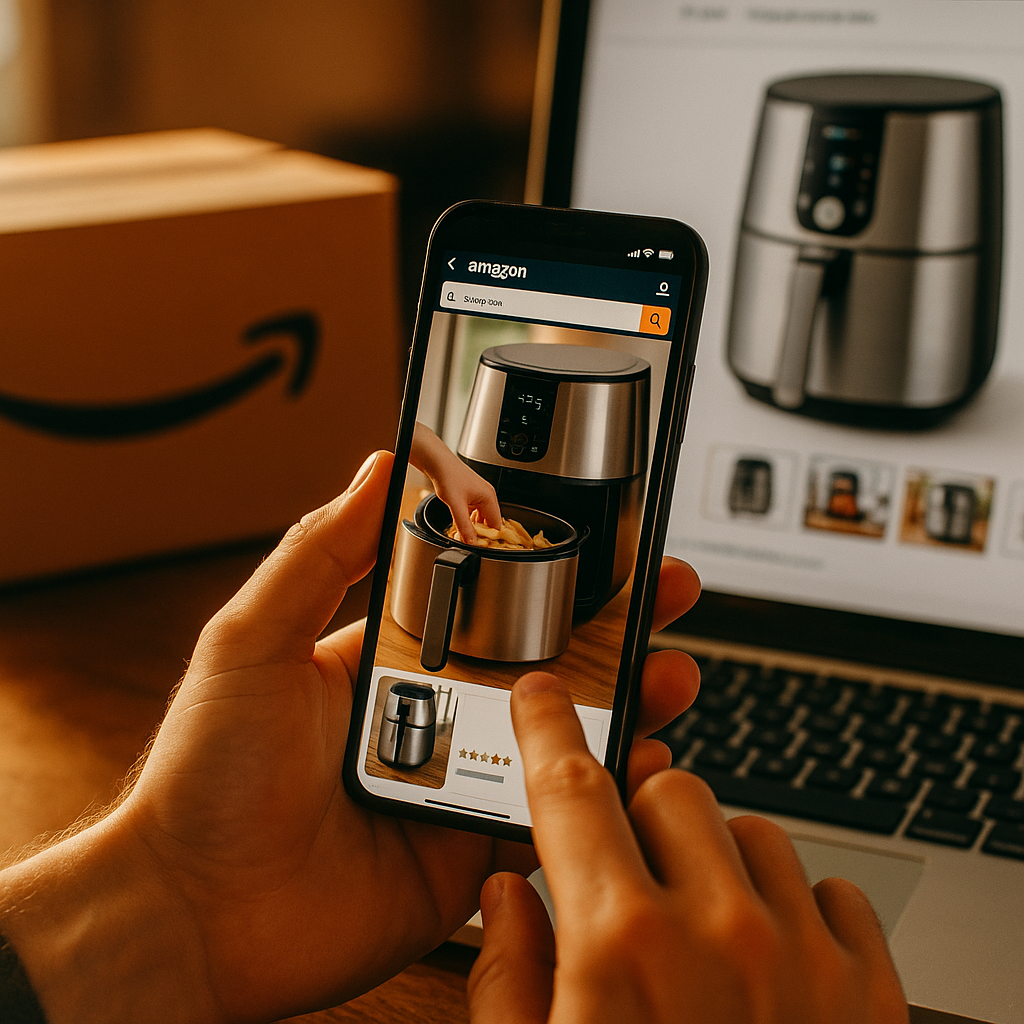
Amazon shoppers now scroll before they click. Sponsored Brands video placements report engagement rates that dwarf static image ads, and vertical product demo ads are quietly becoming the default unit for anyone serious about conversion on the platform. If your listing still leans on a hero image and four bullet points, you are competing against sellers who show the product moving, working, and solving a problem in nine seconds flat.
Why Static Listings Are Losing Ground
Static images had a good run. They were cheap to produce, easy to A/B test, and Amazon’s algorithm treated them as the default currency for years. But shopper behavior has shifted hard toward video first discovery, and Amazon’s own ad infrastructure has followed suit. Sponsored Brands video and the newer vertical video placements inside search results now sit above or beside traditional listings, and they get the thumb stop.
Think about how people actually shop on mobile. They are not reading bullet points closely. They are scanning, and a moving thumbnail in a sea of static tiles is going to win attention almost every time. That is not a theory, it is basic pattern interruption.
Vertical product demo ads work because they exploit a simple truth: on mobile, motion beats text for the first two seconds of attention, and those two seconds decide whether a shopper clicks or scrolls past.
What Exactly Is a Vertical Product Demo Ad?
It is a short, mobile-native video, typically 6 to 15 seconds, shot or edited in the 9:16 aspect ratio, that shows a product being used rather than described. No studio lighting rig required. No agency voiceover. Just the product, a hand or a face, and a clear demonstration of the benefit in motion. Think unboxing, application, before-and-after, or a quick side-by-side comparison.
These ads live in Amazon’s Sponsored Brands video slots, in Posts, and increasingly in DSP placements that push the same creative to Amazon Fire TV, third party apps, and off-platform retargeting. The format is portable, which is exactly why brands are consolidating budget around it instead of building separate assets for every channel.
This is not a new idea borrowed from Amazon. It is the same creative logic that has powered TikTok and Reels growth for years, just repointed at a purchase-intent audience. If your team has already built a workflow around sound off feed editing, you already have most of the skill set needed to win here.
The ROI Case Brands Actually Care About
Marketing teams don’t adopt new formats because they’re trendy. They adopt them because finance can see the delta. Here is what changes when a brand swaps static hero shots for vertical demo video on Amazon:
- Higher click through on Sponsored Brands video, which lowers effective cost per click even when CPMs look comparable to static.
- Lower return rates on categories where fit, texture, or function is hard to convey in a photo, because the video pre-answers the “will this actually work for me” question.
- Better creative reuse across TikTok Shop, Instagram Shopping, and CTV retargeting, since the vertical format was built portable from the start.
- Faster iteration cycles, because a 10 second demo is quicker and cheaper to reshoot than a full studio session.
Amazon’s own advertising resources and third party benchmarking from eMarketer have flagged video as the fastest growing ad format on retail media networks generally, and Amazon is no exception. If your media plan hasn’t shifted spend toward video placements yet, you are likely paying a premium for underperforming inventory.
Where the Format Fits Inside a Broader Media Plan
Vertical demo ads shouldn’t live in isolation. The smartest brands treat them as one node in a larger creator content pipeline, feeding the same raw footage into Amazon Posts, brand store video tiles, and paid social. If you’re already running a multi platform master edit workflow, adding an Amazon-specific cutdown is a marginal cost, not a new production line.
This is also where a lot of brands waste money. They shoot bespoke footage for Amazon, bespoke footage for TikTok, and bespoke footage for CTV, when one well-planned shoot day with a creator can generate all three. The multi hook shoot method was built exactly for this kind of cross-platform efficiency, and it maps cleanly onto Amazon’s video ad specs.
Sourcing Creators for Amazon-Specific Demos
Here is a mistake we keep seeing: brands hire creators purely on follower count for Amazon demo content, then wonder why conversion doesn’t move. Amazon shoppers aren’t following an influencer’s personal brand, they’re evaluating a product. What matters is whether the creator can demonstrate the product clearly, in good light, with a hook that survives the first two seconds of a scroll.
That’s a casting problem, not a reach problem. Brands running lean influencer programs have had strong results with follower free casting, prioritizing camera presence and demo clarity over audience size. It’s cheaper, and frankly it performs better for this specific format because Amazon isn’t paying for the creator’s audience, it’s paying for the ad placement.
Scripting matters more than most brands assume too. A demo video without a scripted hook is just footage. Borrowing structure from hook first UGC briefs gives creators a clear beat to hit in the first second, which is the difference between a scroll-stopper and wasted spend.
Production Specs and Common Mistakes
Amazon’s Sponsored Brands video specs are fairly forgiving, but there are hard rules worth knowing before you brief a creator or agency:
- Vertical or square aspect ratios generally perform better in mobile search results than horizontal.
- Keep the runtime tight. Longer isn’t better, most winning creative sits under 15 seconds.
- Lead with the product benefit, not the brand logo. Amazon shoppers are task-focused, not brand-loyal at the click stage.
- Avoid excessive on-screen text that Amazon’s ad review might flag as misleading or overlapping with required disclosures.
- Design for sound off. Most Amazon browsing happens without audio, so sound off editing techniques apply directly.
One recurring mistake: brands treat the vertical demo ad as a one-and-done asset. In reality, this format rewards testing multiple hooks against the same core product footage, similar to how hook testing frameworks work on paid social. Cut three or four different openers, run them as separate Sponsored Brands video campaigns, and let the data pick the winner before you scale spend.
Compliance and Rights: The Part Brands Skip
This is where risk mitigation actually lives, and it’s the section legal teams will thank you for reading. If you’re using creator-shot footage in paid Amazon placements, you need documented usage rights that specifically cover retail media, not just organic social posting. A creator agreement that only grants rights for Instagram use does not automatically cover Amazon DSP or Sponsored Brands spend.
Run every piece of creator content through a rights check before it touches paid media. The paid amplification rights checklist is built for exactly this scenario, and skipping it is how brands end up with takedown requests mid-campaign, which tanks momentum and wastes ad spend on paused creative.
A vertical demo ad that gets pulled for a rights dispute three weeks into a campaign doesn’t just lose that creative, it resets your entire testing timeline and burns budget on paused placements.
If your team manages a high volume of creator assets across multiple retail and social channels, building out a proper rights registry system pays for itself the first time you avoid an emergency reshoot. Also worth reviewing: the FTC’s endorsement guidance if your demo content includes any creator commentary or claims about product performance, since disclosure rules apply on retail platforms just as they do on social.
What This Means for Your Next Quarter’s Budget
If you’re still running static-only Amazon listings in a category where competitors have moved to video, you’re not just losing clicks, you’re losing the algorithmic favor that Amazon increasingly gives to video-forward Sponsored Brands campaigns. The production lift is smaller than most teams expect, especially if you’re already generating creator content for other channels.
Start with one hero product, cast for demo clarity over follower count, script a tight hook, and cut multiple versions for testing. Tools like HubSpot’s marketing resources and Amazon’s own advertising console documentation can help teams new to retail media get spec details right on the first attempt.
Frequently Asked Questions
What size and length should a vertical product demo ad be for Amazon?
Most winning creative runs under 15 seconds in a 9:16 or 1:1 aspect ratio, though brands should always confirm current specs against Amazon’s Sponsored Brands video guidelines before final production, since requirements can shift.
Do vertical demo ads actually outperform static Amazon listing images?
Video placements on Amazon consistently show higher engagement and click through rates than static images in the same search results, particularly on mobile, where motion interrupts the scroll far more effectively than a still photo.
Can I reuse TikTok or Instagram creator content for Amazon ads?
Only if your creator agreement explicitly grants retail media or paid amplification rights. Organic social usage rights do not automatically extend to Amazon DSP or Sponsored Brands placements, so always verify usage terms before repurposing.
Do I need a professional agency to produce vertical demo ads?
No. Most high-performing demo ads are creator-shot on a smartphone with good lighting and a clear script. The format rewards authenticity and clarity over studio polish.
How many creative variations should I test before scaling spend?
Most brands see meaningful signal from three to five hook variations run against the same core product footage before committing full budget to a single winning version.
Next step: pull your worst-converting static Amazon listing this week, cast one creator for a fast demo shoot, and run it against your current image ad for two weeks before touching the rest of your catalog.
FAQs
What size and length should a vertical product demo ad be for Amazon?
Most winning creative runs under 15 seconds in a 9:16 or 1:1 aspect ratio, though brands should always confirm current specs against Amazon’s Sponsored Brands video guidelines before final production, since requirements can shift.
Do vertical demo ads actually outperform static Amazon listing images?
Video placements on Amazon consistently show higher engagement and click through rates than static images in the same search results, particularly on mobile, where motion interrupts the scroll far more effectively than a still photo.
Can I reuse TikTok or Instagram creator content for Amazon ads?
Only if your creator agreement explicitly grants retail media or paid amplification rights. Organic social usage rights do not automatically extend to Amazon DSP or Sponsored Brands placements, so always verify usage terms before repurposing.
Do I need a professional agency to produce vertical demo ads?
No. Most high-performing demo ads are creator-shot on a smartphone with good lighting and a clear script. The format rewards authenticity and clarity over studio polish.
How many creative variations should I test before scaling spend?
Most brands see meaningful signal from three to five hook variations run against the same core product footage before committing full budget to a single winning version.
Top Influencer Marketing Agencies
The leading agencies shaping influencer marketing in 2026
Agencies ranked by campaign performance, client diversity, platform expertise, proven ROI, industry recognition, and client satisfaction. Assessed through verified case studies, reviews, and industry consultations.
Moburst

-
2

The Shelf
Boutique Beauty & Lifestyle Influencer AgencyA data-driven boutique agency specializing exclusively in beauty, wellness, and lifestyle influencer campaigns on Instagram and TikTok. Best for brands already focused on the beauty/personal care space that need curated, aesthetic-driven content.Clients: Pepsi, The Honest Company, Hims, Elf Cosmetics, Pure LeafVisit The Shelf → -
3

Audiencly
Niche Gaming & Esports Influencer AgencyA specialized agency focused exclusively on gaming and esports creators on YouTube, Twitch, and TikTok. Ideal if your campaign is 100% gaming-focused — from game launches to hardware and esports events.Clients: Epic Games, NordVPN, Ubisoft, Wargaming, Tencent GamesVisit Audiencly → -
4

Viral Nation
Global Influencer Marketing & Talent AgencyA dual talent management and marketing agency with proprietary brand safety tools and a global creator network spanning nano-influencers to celebrities across all major platforms.Clients: Meta, Activision Blizzard, Energizer, Aston Martin, WalmartVisit Viral Nation → -
5

The Influencer Marketing Factory
TikTok, Instagram & YouTube CampaignsA full-service agency with strong TikTok expertise, offering end-to-end campaign management from influencer discovery through performance reporting with a focus on platform-native content.Clients: Google, Snapchat, Universal Music, Bumble, YelpVisit TIMF → -
6

NeoReach
Enterprise Analytics & Influencer CampaignsAn enterprise-focused agency combining managed campaigns with a powerful self-service data platform for influencer search, audience analytics, and attribution modeling.Clients: Amazon, Airbnb, Netflix, Honda, The New York TimesVisit NeoReach → -
7

Ubiquitous
Creator-First Marketing PlatformA tech-driven platform combining self-service tools with managed campaign options, emphasizing speed and scalability for brands managing multiple influencer relationships.Clients: Lyft, Disney, Target, American Eagle, NetflixVisit Ubiquitous → -
8

Obviously
Scalable Enterprise Influencer CampaignsA tech-enabled agency built for high-volume campaigns, coordinating hundreds of creators simultaneously with end-to-end logistics, content rights management, and product seeding.Clients: Google, Ulta Beauty, Converse, AmazonVisit Obviously →