


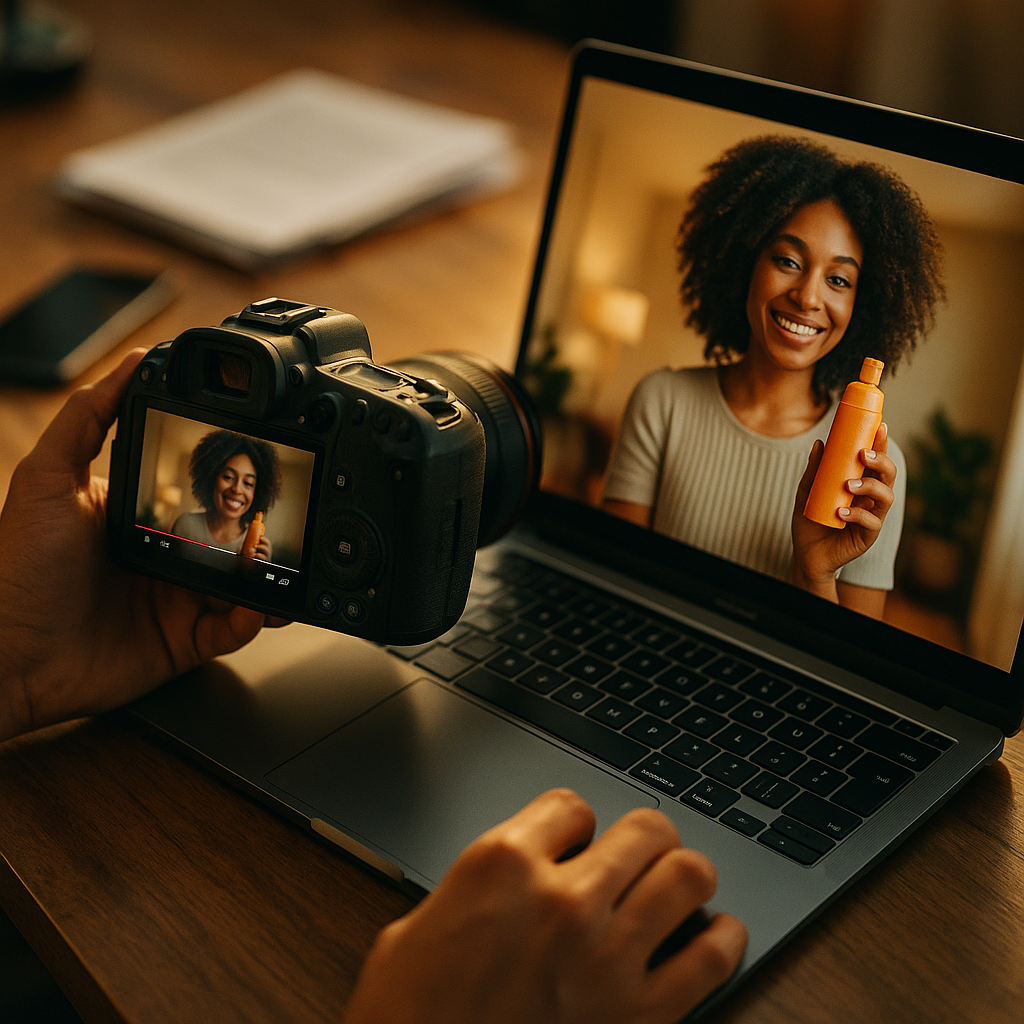
Meta’s own ad library data shows static image ads still make up over a third of top-performing creative on Facebook and Instagram, even as video dominates organic feeds. So why are brands still commissioning separate photo shoots when the video they already paid for is sitting right there? Still photography repurposing, the practice of pulling paid-ready frame grabs from creator video, is quietly becoming one of the cheapest ways to fill a static ad calendar.
It sounds almost too simple. Shoot the video, extract the best frames, run them as standalone ads. But the brands doing this well aren’t just hitting pause and screenshotting. There’s a workflow, a rights framework, and a set of technical standards that separate a usable frame from a blurry mess that tanks your CTR.
The Frame Grab Economy: Why Static Still Wins Budget
Video production is expensive. A single creator UGC package with usage rights can run anywhere from a few hundred dollars to several thousand, depending on the creator’s following and the scope of the license. Once that invoice is paid, smart media buyers treat the raw footage as a raw material, not a finished product. Every ten-second clip contains dozens of potential still frames: a hand holding the product at the perfect angle, a facial expression mid-reaction, a before-and-after moment frozen at its most dramatic point.
Static ads also still convert. HubSpot’s research on ad performance consistently shows that image ads can match or beat video on cost-per-click in retargeting and lower-funnel placements, largely because they load faster and demand less attention to parse. HubSpot’s marketing benchmarks back this up across multiple verticals, especially for direct-response ecommerce.
A brand that treats every creator video as one deliverable is leaving five or six paid assets on the table, assets that already have built-in authenticity because they weren’t staged as ads in the first place.
This is the real advantage. A frame pulled from an organic-feeling UGC clip doesn’t look like a stock photo. It looks like a moment someone actually captured, because it was.
How the Repurposing Workflow Actually Works
The process is straightforward once you build it into your production pipeline, but most teams skip the planning stage and end up scrambling after the fact.
- Shoot with extraction in mind. Brief creators to hold key moments (product reveal, reaction, hero shot) for a beat longer than feels natural on video. That extra half-second gives editors clean, non-blurry frames to pull.
- Export at native resolution. Most creator video is shot vertically at 1080×1920 or higher on modern phones, which is plenty for a still ad, but only if you extract from the original file, not a compressed export that’s already been through a platform’s video compressor.
- Grade for consistency. A frame grab often needs color correction to match brand guidelines. Video color grading and static ad color grading aren’t the same discipline, so budget a light editing pass.
- Add ad-specific overlays. Text, logo lockups, and CTAs get added post-extraction. Never bake these into the original video shoot.
- Test in the same ad sets as video. Run the still alongside its source video as a creative variant, not a separate campaign, so you get a clean read on which format the algorithm favors for that specific audience.
This workflow pairs naturally with a multi hook shoot approach, where a single session is briefed to generate multiple angles and reactions. If you’re already capturing five video variations, you’re capturing dozens of extractable stills at the same time, essentially for free.
Where Static Beats Native Photography (and Where It Doesn’t)
Let’s be honest about the limits here. A professionally lit product photo, shot for that purpose, will almost always beat a frame grab on pure image quality. If you’re running a hero image on a product detail page or a print catalog, commission real photography. Nobody’s arguing otherwise.
But for paid social, especially top-of-funnel prospecting, imperfection is often the point. Sproutsocial’s creative research has repeatedly found that ads which look “native” to the platform, meaning less polished and more like something a friend might post, tend to outperform overly produced creative on scroll-stopping metrics. Sprout Social’s platform benchmarks reinforce this pattern across Instagram and TikTok feeds specifically.
A frame grab carries that native texture inherently. The lighting is a little imperfect. The framing has personality. It reads as a real moment because it is one, not a recreation of one. That’s a hard thing to fake with a studio shoot, and it’s exactly why formats like photo dump carousels have gained so much traction. They lean into the same “unpolished but intentional” aesthetic that frame grabs deliver naturally.
Rights, Releases, and the Compliance Gap Brands Miss
Here’s where a lot of teams get sloppy, and it’s the part legal and compliance leads should be reading twice. A usage license negotiated for “video content” does not automatically cover still image extraction. If your creator agreement specifies “one 15-second UGC video with paid usage rights for 90 days,” a lawyer could reasonably argue that pulling frames for a separate static ad campaign falls outside that scope.
The fix is simple but requires discipline: build frame extraction rights into the original contract, not as an afterthought. Specify that the brand retains rights to “derivative still images extracted from the delivered video content” alongside the video usage terms. This single clause avoids a renegotiation headache down the line and keeps you compliant with FTC disclosure expectations, since the same sponsorship disclosure rules that apply to the video generally carry over to any still derived from it.
If your team already has a process for this on the video side, extend it rather than reinvent it. The paid amplification rights checklist most brands use before boosting UGC video is a good starting template, you just need to add a line item specifically for still derivatives. The FTC’s endorsement guidance doesn’t distinguish between formats when it comes to disclosure obligations, so don’t assume a still image is somehow lower risk than the video it came from.
Picking the Right Frames: A Practical Checklist
Not every frame is worth extracting. Editors reviewing footage for still candidates should be looking for a specific set of qualities, not just “the clearest shot.”
- Sharp focus on the product or the creator’s face, no motion blur
- A clear emotional beat: surprise, satisfaction, curiosity, relief
- Product visibility that doesn’t require a caption to explain what’s happening
- Negative space for text overlay or CTA placement
- Composition that works in both square and vertical crops, since ad placements vary
That last point matters more than people think. Meta’s placement system will serve your creative across Feed, Stories, and Reels, each with different aspect ratio requirements. A frame that’s perfectly composed for a 1:1 crop can look awkward and off-center when the platform auto-crops it to 9:16. Meta’s ad specifications guide lays out the exact ratios to plan for, and it’s worth checking before you finalize which frames make the cut.
Building the Habit Into Your Production Calendar
The brands getting the most mileage out of this tactic aren’t treating it as a one-off hack. They’ve built frame extraction into their standard post-production checklist, right alongside captioning and aspect ratio conversion. Every creator video that comes in gets reviewed for still potential before it’s archived.
This mirrors the logic behind spark ads amplification, where an organic winner gets a second life as paid media. Frame grabs are the same principle applied one format down: an asset that already proved it resonates gets stretched into a new placement type instead of retired after one use.
It also creates a natural testing pipeline. Run the video and its extracted stills in the same campaign, let the algorithm decide which format the audience responds to, and feed that signal back into your next creator brief. Over a few cycles, you start to see patterns, certain creators or certain content types consistently produce better still frames than others, and you can brief accordingly.
Treat every creator video shoot as two deliverables in one: a video asset and a bank of extractable still frames. The marginal cost of the second is close to zero.
eMarketer’s ongoing coverage of creative testing trends notes that advertisers running multiple format variants of the same core asset see meaningfully lower cost-per-acquisition than those running single-format campaigns, simply because it gives the ad platform’s optimization engine more signal to work with. eMarketer’s creative benchmarks are a useful reference point when you’re building the business case internally for why this workflow deserves dedicated time in your production schedule.
Where Testimonial and Reaction Footage Shines Brightest
Not all creator content extracts equally well. Testimonial-style footage and reaction videos tend to produce the strongest still frames because they’re built around a single emotional peak, exactly the kind of moment a still image needs to communicate instantly. Product demo footage, by contrast, often relies on movement to show functionality, which makes it harder to extract a compelling static frame from.
If you’re planning a shoot specifically with repurposing in mind, formats like testimonial stitch ads are worth prioritizing in the brief. Ask the creator to pause and hold their reaction for a beat before continuing. It costs nothing in production time and doubles your usable asset count.
The same logic applies to before-and-after content, where the “after” reveal moment is practically begging to be a standalone still ad. If you’re already running a before and after UGC format, make sure your editors are pulling that reveal frame every single time. It’s usually the single best-performing still in the entire shoot.
Get this workflow into your next production brief: instruct creators to hold key moments an extra beat, add a still-extraction clause to your usage rights, and test the resulting frames against your video creative in the same ad set. The data will tell you fast whether your audience wants motion or a moment frozen in time.
Frequently Asked Questions
What is still photography repurposing in influencer marketing?
It’s the practice of extracting individual frames from creator video content and using them as standalone static ads, rather than commissioning separate photography. Brands pull high-quality moments, like a product reveal or reaction shot, directly from footage they’ve already licensed.
Do I need separate usage rights for extracted still images?
In most cases, yes. A licensing agreement covering video usage doesn’t automatically extend to derivative still images. It’s best practice to add a specific clause covering “derivative still images extracted from delivered video” in your creator contracts before you rely on this workflow at scale.
What resolution do I need for a usable frame grab?
Extract from the original, uncompressed video file rather than a platform-downloaded version. Most modern creator footage shot on smartphones runs at 1080×1920 or higher, which provides more than enough resolution for standard paid social placements once graded and cropped.
Which types of creator content produce the best still frames?
Testimonial-style and reaction content tend to extract best because they’re built around a single emotional peak. Before-and-after reveals and product-in-hand shots also tend to work well. Fast-moving demo footage is harder to extract clean stills from.
Does static creative actually perform as well as video on paid social?
It varies by placement and funnel stage. Static ads often perform comparably or better in retargeting and lower-funnel placements due to faster load times and quicker message comprehension, while video tends to dominate top-of-funnel awareness campaigns. Testing both formats from the same source asset is the most reliable way to know for your specific audience.
Top Influencer Marketing Agencies
The leading agencies shaping influencer marketing in 2026
Agencies ranked by campaign performance, client diversity, platform expertise, proven ROI, industry recognition, and client satisfaction. Assessed through verified case studies, reviews, and industry consultations.
Moburst

-
2

The Shelf
Boutique Beauty & Lifestyle Influencer AgencyA data-driven boutique agency specializing exclusively in beauty, wellness, and lifestyle influencer campaigns on Instagram and TikTok. Best for brands already focused on the beauty/personal care space that need curated, aesthetic-driven content.Clients: Pepsi, The Honest Company, Hims, Elf Cosmetics, Pure LeafVisit The Shelf → -
3

Audiencly
Niche Gaming & Esports Influencer AgencyA specialized agency focused exclusively on gaming and esports creators on YouTube, Twitch, and TikTok. Ideal if your campaign is 100% gaming-focused — from game launches to hardware and esports events.Clients: Epic Games, NordVPN, Ubisoft, Wargaming, Tencent GamesVisit Audiencly → -
4

Viral Nation
Global Influencer Marketing & Talent AgencyA dual talent management and marketing agency with proprietary brand safety tools and a global creator network spanning nano-influencers to celebrities across all major platforms.Clients: Meta, Activision Blizzard, Energizer, Aston Martin, WalmartVisit Viral Nation → -
5

The Influencer Marketing Factory
TikTok, Instagram & YouTube CampaignsA full-service agency with strong TikTok expertise, offering end-to-end campaign management from influencer discovery through performance reporting with a focus on platform-native content.Clients: Google, Snapchat, Universal Music, Bumble, YelpVisit TIMF → -
6

NeoReach
Enterprise Analytics & Influencer CampaignsAn enterprise-focused agency combining managed campaigns with a powerful self-service data platform for influencer search, audience analytics, and attribution modeling.Clients: Amazon, Airbnb, Netflix, Honda, The New York TimesVisit NeoReach → -
7

Ubiquitous
Creator-First Marketing PlatformA tech-driven platform combining self-service tools with managed campaign options, emphasizing speed and scalability for brands managing multiple influencer relationships.Clients: Lyft, Disney, Target, American Eagle, NetflixVisit Ubiquitous → -
8

Obviously
Scalable Enterprise Influencer CampaignsA tech-enabled agency built for high-volume campaigns, coordinating hundreds of creators simultaneously with end-to-end logistics, content rights management, and product seeding.Clients: Google, Ulta Beauty, Converse, AmazonVisit Obviously →