


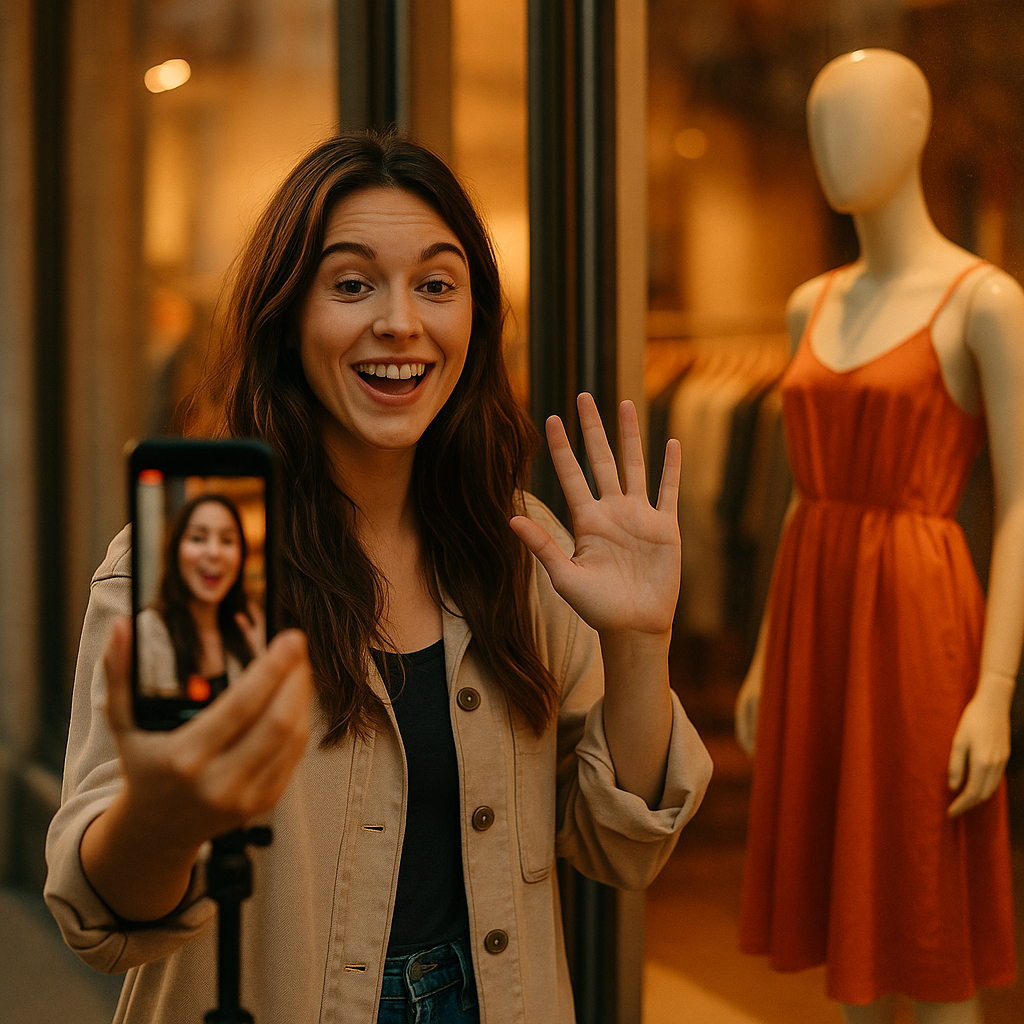
73% of consumers now research a product online before buying it in a physical store, yet most influencer briefs still treat “drive sales” as a purely digital metric. That gap is costing retail brands real foot traffic. Phygital content formats, the deliberate blending of digital creator video with physical store cues, are becoming the fix. Done right, they turn a fifteen-second Reel into a reason someone gets off the couch and walks into a location.
This isn’t about slapping a store locator link in a caption. It’s a design discipline: specific shot types, specific CTAs, specific tracking mechanisms that connect a view to a visit. Here’s how brand teams are building that bridge without torching production budgets or compliance guardrails.
What “Phygital” Actually Means for a Creator Brief
Phygital content is any creator video engineered to move a viewer from a screen to a physical location, and then prove it happened. That proof part matters. A format that merely mentions a store without a trackable mechanism is just an ad with extra steps.
The strongest phygital briefs include three elements: a location-specific hook, an in-store visual anchor the viewer will recognize on arrival, and a trackable redemption point (QR code, unique coupon, geofenced offer). Strip out any one of those and you’re back to generic brand awareness content, which is fine, but it’s not what phygital is built to solve.
A creator video that drives store visits needs the same specificity as a performance ad: one location, one offer, one measurable action. Vague “come check us out” CTAs almost never convert foot traffic.
The Formats Actually Working in Retail Right Now
Not every video style translates to in-store traffic. A handful of formats consistently outperform because they give the viewer something concrete to look for when they arrive.
- Shelf-find challenges: creators film themselves locating a product on an actual shelf, panning to show packaging, aisle signage, or end-cap placement. Viewers screenshot the visual as a mental map.
- “What I bought today” hauls filmed in-store: this leans on the photo dump carousel instinct but shot live at point of purchase, with receipt or bag visible for authenticity.
- QR-coded demo videos: a product demo ends with an on-screen QR linked to a geofenced redemption, pulling the ASMR product demo format into a physical conversion path.
- Staff cameo duets: a creator duets a store employee’s honest reaction, which builds trust the same way green screen duets do for launch hype, but anchored to a specific store address.
- POV “walk to the store” openers: borrowing the first-person framing that already cuts CPA over standard UGC, these videos start the walk before the hook even lands, creating implicit urgency.
Notice the pattern: every format gives the viewer a literal image to pattern-match against when they walk in. That’s the design principle, not the platform or the trend audio.
Why Sound-Off Design Still Matters Here
Most retail-intent scrolling happens in public, on mute, in a parking lot or waiting room. If your phygital hook depends on narration, you’ve already lost half the audience before the store name appears on screen.
That’s why the strongest phygital briefs borrow structure from silent, subtitled video formats rather than talking-head explainers. Text overlay carries the location, the offer, and the urgency; the visual carries the product. Sound becomes a bonus layer, not a requirement. The same logic that makes text over B-roll outperform talking-head video applies directly to store-visit content: clarity has to survive on mute.
Pacing matters too. A viewer deciding whether to detour to a store needs the offer and location within the first three seconds, which means sound design has to match platform cadence exactly, not just carry a trending audio clip. The same cadence principles that govern scroll-stopping hooks apply here, just with a retail CTA bolted on.
Tracking the Walk: How Brands Actually Measure Store Visits From Video
This is where most retail marketing teams stall. Attribution from a Reel view to a physical visit isn’t native to any platform dashboard, so it has to be engineered manually.
Three mechanisms currently do the heavy lifting:
- Unique in-video QR codes tied to a specific creator and store location, scanned at point of sale.
- Geofenced ad retargeting that serves a follow-up offer to anyone who viewed the creator’s video and later entered a radius around the store, using tools inside Meta’s ad platform.
- Store-level promo codes unique to each creator, reconciled against POS data weekly rather than monthly, since influencer campaigns move fast and stale data kills optimization windows.
None of these are perfect. QR scan rates undercount because plenty of shoppers just remember the offer and ask a cashier. But directional data beats no data, and brands running phygital programs without any redemption tracking are flying blind on ROI conversations with finance.
If you can’t tie a specific creator’s video to a specific redemption code or geofenced visit, you’re not running a phygital program, you’re running brand awareness with a retail aesthetic.
Platforms are also getting better at native local discovery. Google Business Profile integrations and TikTok’s local search push both increasingly surface store-specific content when users search “near me” queries, which rewards brands that tag location consistently across creator content.
Briefing Creators Without Killing Authenticity
Here’s the tension every brand manager runs into: the moment you hand a creator a script full of store names, hours, and QR placement instructions, the video starts feeling like an ad. And retail shoppers, maybe more than any other audience, smell a scripted ad instantly.
The fix isn’t less direction, it’s better-placed direction. Brief the non-negotiables (location name, offer terms, QR or code placement, disclosure language per FTC endorsement guidelines) and leave everything else, tone, reaction, framing choices, to the creator. This mirrors the approach brands use for founder-led creator videos: structure the skeleton, let the person carry the delivery.
A practical brief template for phygital store-visit content includes:
- Exact store address and any seasonal signage to reference
- The redemption mechanism and where it must appear on screen (last 3 seconds works best for QR legibility)
- Required disclosure placement, visible and legible per current FTC and ICO guidance where applicable
- A single clear CTA, not a stacked list of asks
- Flexibility on hook style, pacing, and personal framing
Brands that over-script lose the authenticity that made creator marketing effective in the first place. Brands that under-brief end up with gorgeous videos that never mention where to buy anything. The sweet spot is narrow, but it’s learnable.
Turning One Shoot Into a Full Local Campaign
Store-visit content shouldn’t live and die as a single post. The same raw footage from one creator shoot can be sliced into micro variants for different store locations, paid amplification through spark ads, and even static frame grabs for local geo-targeted display ads near each location.
For multi-market brands, this also means adapting captions for regional language and local store naming conventions, following the same logic as multi-language caption overlays used in global UGC programs. A single well-briefed shoot can realistically fund content across five to ten store locations if the editing team plans for variant cuts up front rather than as an afterthought.
According to eMarketer research on retail media trends, brands that pair digital creator content with localized in-store promotion consistently report higher incremental foot traffic than either channel run in isolation. That’s the core argument for phygital investment: it’s not either/or, it’s compounding.
Quick Takeaway
Start with one store location, one creator, one QR-tracked offer, and measure redemption for thirty days before scaling. Phygital content only proves its ROI when the walk from screen to shelf is actually trackable, so build the measurement mechanism before you build the shot list.
FAQs
What makes a creator video “phygital” instead of just a regular store ad?
A phygital video includes a specific location cue, a recognizable in-store visual anchor, and a trackable redemption mechanism like a QR code or unique promo code. Without that tracking element, it’s standard brand content rather than a measurable store-visit driver.
How do brands track store visits from a creator video?
Most programs combine unique QR codes per creator or location, geofenced retargeting ads, and store-level promo codes reconciled weekly against point-of-sale data. None are perfectly accurate alone, but together they give directional ROI data.
Do phygital formats work for e-commerce brands without physical stores?
Not really. Phygital formats are specifically built around a physical visit action. Brands without retail locations should focus on formats optimized for online conversion, like POV ads or transformation reveals, rather than store-visit mechanics.
How much creative freedom should creators get in a phygital brief?
Lock down the non-negotiables (location, offer, redemption placement, disclosure language) and leave tone, pacing, and personal framing to the creator. Over-scripted store content tends to read as inauthentic and underperforms looser, creator-led delivery.
What’s the biggest mistake brands make with phygital campaigns?
Launching without a redemption tracking mechanism in place. Without a QR code, geofence, or unique promo code, there’s no way to connect video views to actual foot traffic, which makes it impossible to justify budget in the next planning cycle.
FAQs
What makes a creator video “phygital” instead of just a regular store ad?
A phygital video includes a specific location cue, a recognizable in-store visual anchor, and a trackable redemption mechanism like a QR code or unique promo code. Without that tracking element, it’s standard brand content rather than a measurable store-visit driver.
How do brands track store visits from a creator video?
Most programs combine unique QR codes per creator or location, geofenced retargeting ads, and store-level promo codes reconciled weekly against point-of-sale data. None are perfectly accurate alone, but together they give directional ROI data.
Do phygital formats work for e-commerce brands without physical stores?
Not really. Phygital formats are specifically built around a physical visit action. Brands without retail locations should focus on formats optimized for online conversion, like POV ads or transformation reveals, rather than store-visit mechanics.
How much creative freedom should creators get in a phygital brief?
Lock down the non-negotiables (location, offer, redemption placement, disclosure language) and leave tone, pacing, and personal framing to the creator. Over-scripted store content tends to read as inauthentic and underperforms looser, creator-led delivery.
What’s the biggest mistake brands make with phygital campaigns?
Launching without a redemption tracking mechanism in place. Without a QR code, geofence, or unique promo code, there’s no way to connect video views to actual foot traffic, which makes it impossible to justify budget in the next planning cycle.
Top Influencer Marketing Agencies
The leading agencies shaping influencer marketing in 2026
Agencies ranked by campaign performance, client diversity, platform expertise, proven ROI, industry recognition, and client satisfaction. Assessed through verified case studies, reviews, and industry consultations.
Moburst

-
2

The Shelf
Boutique Beauty & Lifestyle Influencer AgencyA data-driven boutique agency specializing exclusively in beauty, wellness, and lifestyle influencer campaigns on Instagram and TikTok. Best for brands already focused on the beauty/personal care space that need curated, aesthetic-driven content.Clients: Pepsi, The Honest Company, Hims, Elf Cosmetics, Pure LeafVisit The Shelf → -
3

Audiencly
Niche Gaming & Esports Influencer AgencyA specialized agency focused exclusively on gaming and esports creators on YouTube, Twitch, and TikTok. Ideal if your campaign is 100% gaming-focused — from game launches to hardware and esports events.Clients: Epic Games, NordVPN, Ubisoft, Wargaming, Tencent GamesVisit Audiencly → -
4

Viral Nation
Global Influencer Marketing & Talent AgencyA dual talent management and marketing agency with proprietary brand safety tools and a global creator network spanning nano-influencers to celebrities across all major platforms.Clients: Meta, Activision Blizzard, Energizer, Aston Martin, WalmartVisit Viral Nation → -
5

The Influencer Marketing Factory
TikTok, Instagram & YouTube CampaignsA full-service agency with strong TikTok expertise, offering end-to-end campaign management from influencer discovery through performance reporting with a focus on platform-native content.Clients: Google, Snapchat, Universal Music, Bumble, YelpVisit TIMF → -
6

NeoReach
Enterprise Analytics & Influencer CampaignsAn enterprise-focused agency combining managed campaigns with a powerful self-service data platform for influencer search, audience analytics, and attribution modeling.Clients: Amazon, Airbnb, Netflix, Honda, The New York TimesVisit NeoReach → -
7

Ubiquitous
Creator-First Marketing PlatformA tech-driven platform combining self-service tools with managed campaign options, emphasizing speed and scalability for brands managing multiple influencer relationships.Clients: Lyft, Disney, Target, American Eagle, NetflixVisit Ubiquitous → -
8

Obviously
Scalable Enterprise Influencer CampaignsA tech-enabled agency built for high-volume campaigns, coordinating hundreds of creators simultaneously with end-to-end logistics, content rights management, and product seeding.Clients: Google, Ulta Beauty, Converse, AmazonVisit Obviously →