


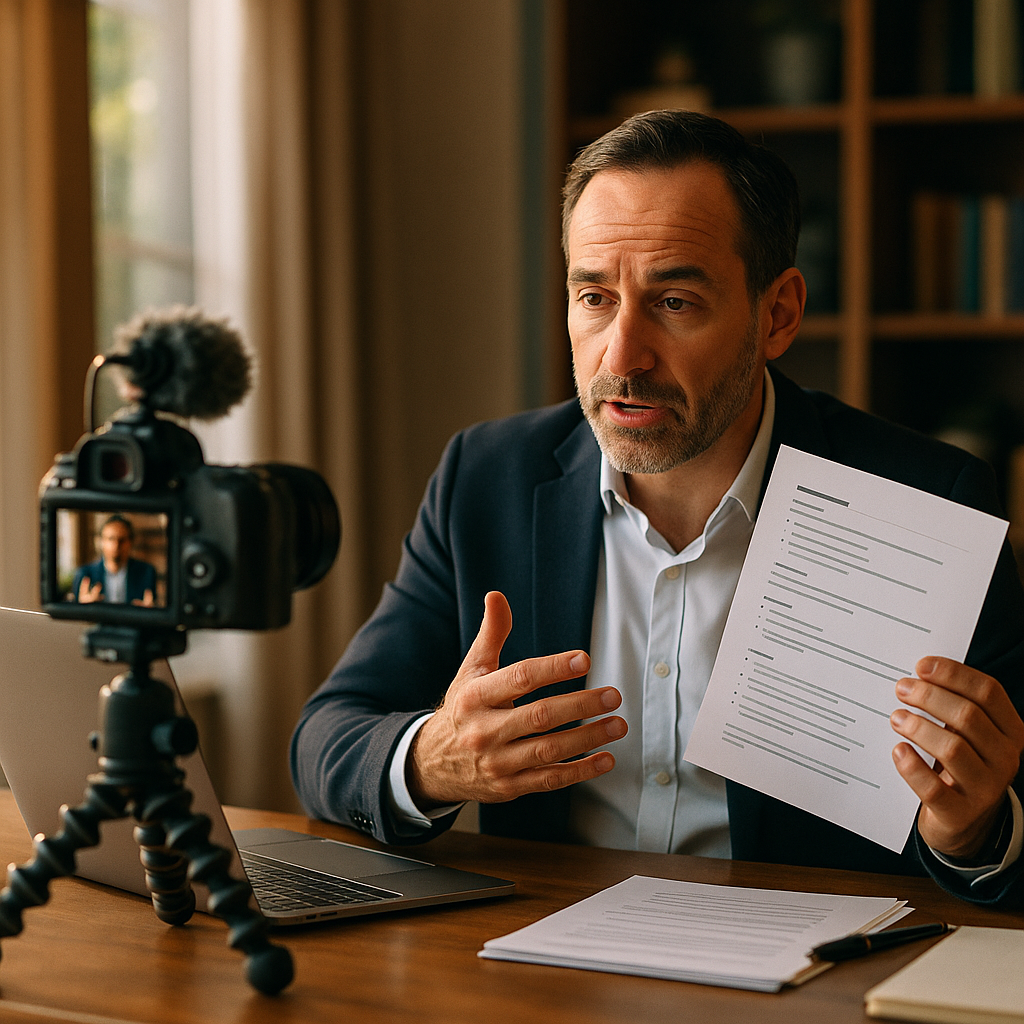
Founder as creator videos now outperform polished brand ads by wide margins on watch time and conversion, yet most executives still refuse to pick up a phone camera. Why? Because nobody handed them a brief. This is that brief, built for marketing leads who need their CEO or founder on camera without turning it into a compliance nightmare or a vanity project.
Why Founder Videos Are Outperforming Paid Creator Content
Something shifted in the last two years. Audiences stopped trusting the polished testimonial and started trusting the person who actually built the thing. Founder led content on LinkedIn and TikTok routinely pulls higher engagement rates than agency produced UGC, and internal data from several DTC brands we’ve spoken with shows founder videos driving lower cost per click than paid creator content in the same campaign.
This isn’t nostalgia for “authentic” marketing. It’s a measurable shift in how buyers evaluate trust signals. A founder talking through a product flaw, a pricing decision, or a hiring mistake reads as credible in a way that a scripted testimonial never will. Sprout Social’s research on brand trust consistently finds that audiences rate executive and employee generated content as more trustworthy than brand accounts.
Founder videos don’t need production value. They need a point of view sharp enough that skipping past it feels like missing information.
What Counts as a “Founder as Creator” Video, Exactly
Not every clip of your CEO talking counts. The format has specific characteristics that separate it from a keynote clip or an investor update repurposed for social.
- Camera facing, direct address. The founder talks to the lens, not a crowd or an interviewer.
- Opinionated, not promotional. The best performing clips take a stance on an industry problem, not a product feature.
- Native to the platform. Vertical, unpolished, shot on a phone. This isn’t the format for a studio setup.
- Recurring, not one off. A single viral founder clip is luck. A weekly cadence is a program.
Think of it as the executive version of the founder voice memo format, but built specifically for on camera delivery rather than audio only. The two work well as a paired content system: voice memos for quick reactive takes, camera videos for the higher stakes moments that need a face attached to the message.
The Format Brief: What to Actually Hand Your Executive
Most founder video programs collapse because marketing hands the executive a vague ask (“just be authentic!”) instead of a structured brief. Executives are busy, risk averse, and generally uncomfortable improvising on camera. Treat this like any other content brief, not a personality test.
1. Define the three content pillars
Give the founder three recurring topics, no more. Something like: industry hot takes, behind the build (product or company decisions), and direct customer response. Rotating pillars prevents the “what do I even talk about” paralysis that kills most executive content programs in week three.
2. Script the hook, not the whole video
The first three seconds decide whether the video gets watched. Write the hook line for the founder, then let them speak the rest in their own words. This mirrors the logic behind hook first UGC briefs, where the opening line is treated as a separate creative decision from the body of the script. A founder reading a full teleprompter script looks stiff and kills the trust signal you’re trying to build.
3. Set a realistic cadence
Weekly is sustainable for most executives. Daily burns them out and daily rarely produces better ideas anyway. Batch record: one 45 minute session can produce four or five videos if you plan topics in advance, similar to the efficiency logic in multi hook shoot planning.
4. Build a lightweight review loop, not a legal gauntlet
If every founder video needs three rounds of legal review, the format dies. Set clear guardrails up front (no forward looking financial claims, no unverified competitor comparisons, no health or efficacy claims without substantiation) and let the founder post within those lines without a committee.
Compliance Isn’t Optional Just Because It’s the CEO
Here’s where a lot of brands get sloppy. Because the founder is talking about their own company, teams assume disclosure rules don’t apply the same way. They do. If a founder is discussing a paid partnership, an affiliate relationship, or making claims about product performance, the same FTC endorsement guidelines apply as they would to any paid creator. The fact that the person on camera owns equity in the company doesn’t exempt the content from disclosure requirements if there’s any material connection being obscured.
This matters more in regulated categories: finance, health, supplements, beauty claims. If your founder is going to make an efficacy claim on camera, that claim needs the same substantiation trail you’d require from a paid UGC creator. Review the FTC framework for before and after content if your founder videos will include any transformation or results based claims. Legal teams should treat founder video scripts the same way they’d treat any influencer contract deliverable, just with a faster turnaround expectation.
The camera doesn’t care that the person on it owns the company. Regulators certainly don’t.
Where Founder Videos Actually Convert (and Where They Don’t)
Founder as creator content tends to overperform in specific funnel positions and underperform in others. It’s a trust building format, not necessarily a direct response format.
- Top of funnel awareness: Strongest use case. Opinionated founder takes travel well organically and build brand recall.
- Mid funnel objection handling: Strong. A founder addressing “why is this more expensive” or “why did you change the formula” performs better here than a support article.
- Bottom of funnel conversion ads: Weaker on its own. Founder credibility helps, but paid conversion ads still benefit from structured, tested creative like the approach in testimonial stitch ad formats.
The smartest teams we’ve tracked pair founder videos with paid amplification once organic performance signals a winner. Before pushing spend behind a founder clip, confirm usage rights are actually in place. That sounds obvious for an executive, but internal legal and external agency contracts sometimes don’t cover the founder’s likeness the same way they cover hired creators. Run it through the same checklist outlined in paid amplification rights guidance before boosting anything.
Common Failure Modes (and How to Avoid Them)
Three things kill founder video programs consistently.
Over-scripting. A founder reading verbatim copy loses the entire value of the format. If it sounds like an ad, it performs like an ad, meaning worse than an ad, because audiences expect more honesty from a founder’s face.
Inconsistent posting. One viral clip followed by three months of silence teaches the algorithm and the audience that this isn’t a channel worth following. HubSpot’s research on content consistency backs up what most social teams already know intuitively: irregular posting tanks reach recovery time.
No editorial calendar. Founders are not full time creators. Without a simple shared doc of upcoming topics, response ideas, and trending conversations to react to, the program relies entirely on the founder’s spontaneous inspiration, which runs out fast.
A useful fix borrowed from paid UGC production: treat founder content like a concept to script pipeline, where marketing feeds the founder pre-researched topics and trending questions from customer support, sales calls, and social comments. The founder just needs to react and add their own perspective, not generate topics from scratch every week.
Measuring What Actually Matters
Vanity metrics mislead here more than almost anywhere else. A founder video with 500,000 views and zero saves or shares is entertainment, not brand building. Track saves, shares, and comment sentiment over raw view count. For B2B founders specifically, LinkedIn’s content analytics surface a useful metric: the ratio of profile visits to impressions, which signals whether the content is actually pulling people toward the company, not just entertaining them in the feed.
On the paid side, run founder video against your best performing UGC ad in a controlled test. Several brands running this comparison in the current climate have seen founder content beat paid creator ads on click through rate but lag slightly on conversion rate, reinforcing the earlier point: founder video builds trust, structured UGC closes the sale.
Next Step
Don’t wait for your founder to feel “camera ready.” Hand them three topics, a five second hook line, and a phone tripod, then commit to four weeks of weekly posting before judging the results.
Frequently Asked Questions
How often should a founder post creator style videos?
Weekly is the most sustainable cadence for most executives. Daily posting tends to burn out founders and rarely improves content quality, while monthly posting is too infrequent to build algorithmic momentum or audience habit.
Do founder videos need FTC disclosures?
Yes, if the video involves a material connection, paid partnership, affiliate link, or specific product claims. Ownership of the company doesn’t exempt the content from standard endorsement disclosure rules.
What equipment does a founder actually need?
A smartphone, a basic tripod or stand, and decent natural lighting. Overproduced founder content often performs worse because it reads as inauthentic. Save studio production for evergreen brand assets, not founder clips.
Should marketing write the full script for the founder?
No. Write the hook line and define the topic, but let the founder speak the body of the video in their own words. Fully scripted delivery is usually the fastest way to kill the format’s credibility.
How is founder as creator content different from a testimonial video?
A testimonial is typically produced, edited, and promotional. Founder as creator content is unscripted, opinion driven, and posted natively, closer to how an individual creator would post than how a brand asset is produced.
Can founder videos replace paid UGC entirely?
No. They serve different funnel stages. Founder videos build top of funnel trust and brand recall, while structured paid UGC still outperforms for bottom funnel conversion advertising.
FAQs
How often should a founder post creator style videos?
Weekly is the most sustainable cadence for most executives. Daily posting tends to burn out founders and rarely improves content quality, while monthly posting is too infrequent to build algorithmic momentum or audience habit.
Do founder videos need FTC disclosures?
Yes, if the video involves a material connection, paid partnership, affiliate link, or specific product claims. Ownership of the company doesn’t exempt the content from standard endorsement disclosure rules.
What equipment does a founder actually need?
A smartphone, a basic tripod or stand, and decent natural lighting. Overproduced founder content often performs worse because it reads as inauthentic. Save studio production for evergreen brand assets, not founder clips.
Should marketing write the full script for the founder?
No. Write the hook line and define the topic, but let the founder speak the body of the video in their own words. Fully scripted delivery is usually the fastest way to kill the format’s credibility.
How is founder as creator content different from a testimonial video?
A testimonial is typically produced, edited, and promotional. Founder as creator content is unscripted, opinion driven, and posted natively, closer to how an individual creator would post than how a brand asset is produced.
Can founder videos replace paid UGC entirely?
No. They serve different funnel stages. Founder videos build top of funnel trust and brand recall, while structured paid UGC still outperforms for bottom funnel conversion advertising.
Top Influencer Marketing Agencies
The leading agencies shaping influencer marketing in 2026
Agencies ranked by campaign performance, client diversity, platform expertise, proven ROI, industry recognition, and client satisfaction. Assessed through verified case studies, reviews, and industry consultations.
Moburst

-
2

The Shelf
Boutique Beauty & Lifestyle Influencer AgencyA data-driven boutique agency specializing exclusively in beauty, wellness, and lifestyle influencer campaigns on Instagram and TikTok. Best for brands already focused on the beauty/personal care space that need curated, aesthetic-driven content.Clients: Pepsi, The Honest Company, Hims, Elf Cosmetics, Pure LeafVisit The Shelf → -
3

Audiencly
Niche Gaming & Esports Influencer AgencyA specialized agency focused exclusively on gaming and esports creators on YouTube, Twitch, and TikTok. Ideal if your campaign is 100% gaming-focused — from game launches to hardware and esports events.Clients: Epic Games, NordVPN, Ubisoft, Wargaming, Tencent GamesVisit Audiencly → -
4

Viral Nation
Global Influencer Marketing & Talent AgencyA dual talent management and marketing agency with proprietary brand safety tools and a global creator network spanning nano-influencers to celebrities across all major platforms.Clients: Meta, Activision Blizzard, Energizer, Aston Martin, WalmartVisit Viral Nation → -
5

The Influencer Marketing Factory
TikTok, Instagram & YouTube CampaignsA full-service agency with strong TikTok expertise, offering end-to-end campaign management from influencer discovery through performance reporting with a focus on platform-native content.Clients: Google, Snapchat, Universal Music, Bumble, YelpVisit TIMF → -
6

NeoReach
Enterprise Analytics & Influencer CampaignsAn enterprise-focused agency combining managed campaigns with a powerful self-service data platform for influencer search, audience analytics, and attribution modeling.Clients: Amazon, Airbnb, Netflix, Honda, The New York TimesVisit NeoReach → -
7

Ubiquitous
Creator-First Marketing PlatformA tech-driven platform combining self-service tools with managed campaign options, emphasizing speed and scalability for brands managing multiple influencer relationships.Clients: Lyft, Disney, Target, American Eagle, NetflixVisit Ubiquitous → -
8

Obviously
Scalable Enterprise Influencer CampaignsA tech-enabled agency built for high-volume campaigns, coordinating hundreds of creators simultaneously with end-to-end logistics, content rights management, and product seeding.Clients: Google, Ulta Beauty, Converse, AmazonVisit Obviously →