


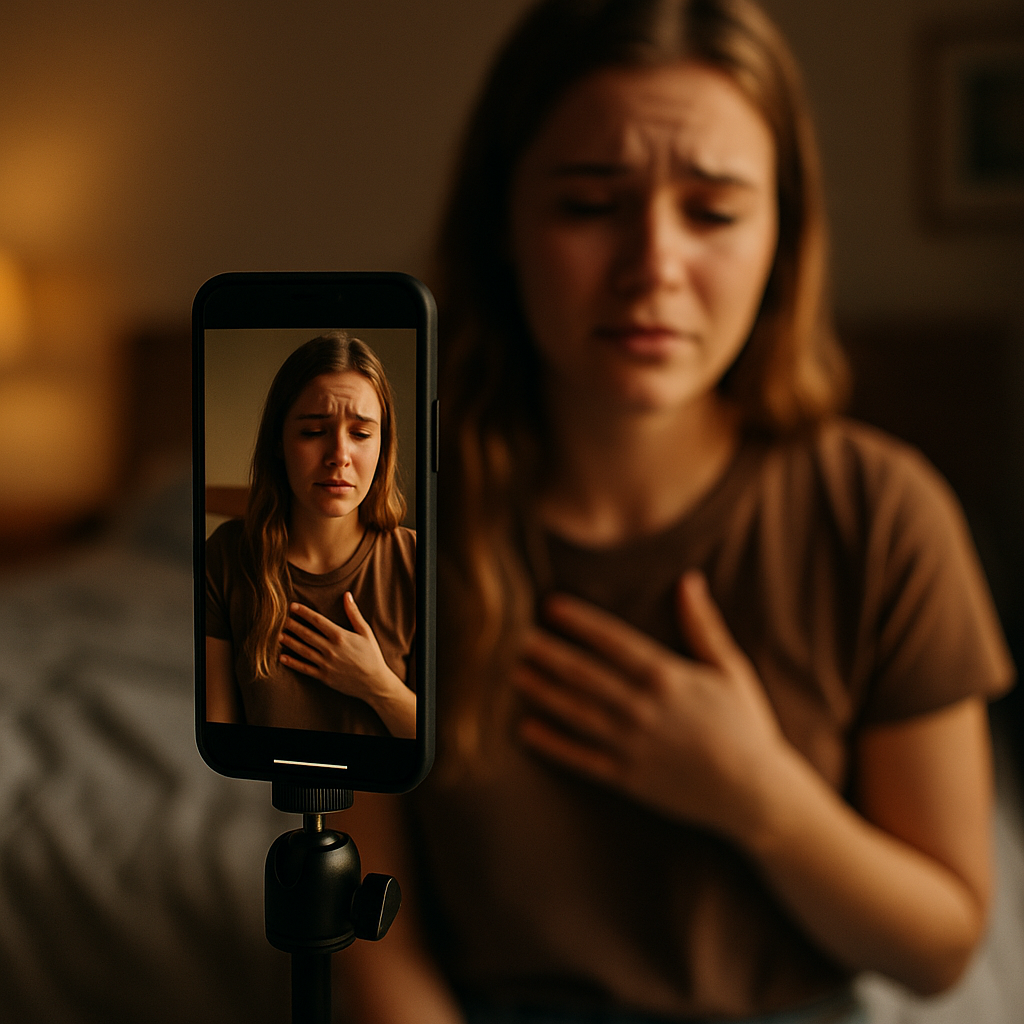
Silent story time videos with text overlay confessionals are pulling watch times that voiceover UGC hasn’t touched in months. Why does a creator typing out a breakup story, a work drama, or a “can we talk about this” moment beat the same script read aloud? Because the pause between text cards forces the viewer to fill in the emotion themselves, and that’s a stickier kind of engagement than any voiceover can manufacture.
Brands running influencer programs are noticing the pattern in their own reporting dashboards. Completion rates on silent confessional formats are consistently higher than narrated equivalents in the same niche, and the format costs less to produce. No audio mixing, no re-recorded voiceover takes when a creator flubs a line, no dubbing headaches for international rollout. Just text, timing, and a face doing the emotional labor.
What Is the Silent Story Time Format, Exactly?
It’s the TikTok and Reels staple where a creator sits, often in a car, bathroom, or bed, and tells a story entirely through on screen text while their face reacts in real time. No spoken narration. Sometimes there’s ambient sound or a trending audio bed underneath, but the story itself unfolds through captions the viewer has to read.
This is different from standard subtitled video, where captions simply transcribe spoken words for accessibility or sound off viewing. In the silent confessional format, text isn’t a backup channel. It’s the primary narrative device. If you’re already leaning on caption heavy editing, this format is a natural extension. We covered the broader mechanics in the format winning sound off feeds, and the confessional variant takes that logic one step further by removing voiceover entirely, even when sound is on.
The creator’s face becomes the emotional soundtrack. Micro expressions, a raised eyebrow, a held breath before the next card loads. That’s the performance. It’s closer to silent film acting than to a typical talking head ad.
Why Text Overlay Beats Voiceover on Trust Metrics
Voiceover has a credibility problem it can’t shake in feed environments. The moment a viewer hears a polished, radio ready voice narrating a “true story,” their brain flags it as produced content. Produced content reads as sponsored, even when it isn’t. Text confessionals dodge that flag almost entirely because the format visually mimics how people actually process real drama: through texts, DMs, and group chat screenshots.
Viewers don’t trust a voice performing emotion nearly as much as they trust a face reacting to text it’s reading in real time, even when both are scripted identically.
Think about where your audience already consumes serialized emotional content. It’s screenshots of arguments, subtitled reality TV clips, group chat recaps. The silent confessional format borrows that visual grammar. A voiceover breaks the illusion because it introduces a layer of performance the audience associates with ads and explainer videos, not with someone processing a real event.
There’s also a pacing advantage. Text cards force a natural rhythm: read, react, wait, read again. That rhythm mirrors suspense mechanics used in cliffhanger style serialized content, where the pause itself does narrative work. Voiceover removes that pause because spoken language moves at a fixed pace the viewer can’t control. Silence gives the viewer agency over the story’s tempo, and agency correlates with attention.
The Production Math Brands Actually Care About
Set aside the psychology for a second. From an operations standpoint, silent confessional content is cheaper to brief, shoot, and localize.
- No voice talent variance. You’re not managing accent, tone, or line delivery inconsistencies across a roster of creators.
- Faster revisions. Changing a text card is a five minute edit. Re-recording a voiceover line means booking the creator again.
- Localization is nearly free. Swap the text, keep the footage. Compare that to dubbing or re-voicing for every market.
- Lower legal exposure. Text on screen is easier to review, timestamp, and archive for compliance than a spoken claim buried in a thirty second monologue.
That last point matters more than most briefs give it credit for. When a creator says a claim out loud, it’s harder to catch during review and harder to prove what was actually said if a dispute comes up later. A written on screen claim is discoverable, screenshot ready, and easy to run through legal before it ships. If your team is still building review workflows for creator claims, the framework in the FTC framework brands need applies just as well to text overlay confessionals as it does to before and after content.
Where This Format Actually Works for Brands
Silent confessionals aren’t a fit for every product category, and pretending otherwise wastes budget. This format performs best when the brand insertion feels like a plot detail rather than a pitch.
Skincare brands use it constantly: “so my dermatologist told me something I wasn’t ready to hear” followed by a slow reveal that includes the product as a supporting character, not the headline. Financial apps use it for “I found out how much I actually spent on subscriptions” style hooks. Relationship adjacent brands, dating apps, gifting services, greeting card companies, lean into it heavily because the format’s DNA is already emotional storytelling.
Where it struggles: highly technical B2B products, anything requiring a demo, or categories where the audience expects to see the product in motion. If your UGC brief depends on showing mechanism of action, a silent confessional forces you to explain function through text cards, which gets clunky fast. In those cases, a vertical product demo format will outperform because the viewer needs to see the thing work, not read about how it made someone feel.
Scripting for Silence: What the Brief Needs to Include
Most briefs fail this format because they’re written like voiceover scripts with the audio stripped out. That’s backwards. A silent confessional brief needs to specify the text card sequence, not just talking points.
Effective briefs for this format typically include:
- A card by card breakdown, ten to fourteen cards is common for a thirty second video
- Explicit instruction on facial reaction beats tied to specific cards (“pause here, look away, come back”)
- A hold time per card, usually 1.5 to 2.5 seconds depending on text length
- A clear brand insertion point that reads as incidental, not promotional
- Guidance on trending audio selection, since ambient sound still matters even without narration
This is closer to directing a silent film than writing an ad script. If your team already builds structured performance briefs, the same discipline used in actor style UGC scripts translates directly here, just with dialogue replaced by timed text.
How to Brief Creators Without Killing the Authenticity
The hardest part of scaling this format isn’t the editing. It’s keeping the confessional feel intact once legal, brand, and performance teams all want a say in the script. Over engineer the text and it reads like a script. Under engineer it and you get inconsistent claims across your creator roster.
The fix most agencies land on is a modular hook system: pre-approve a set of opening lines and closing CTAs, then give creators freedom in the middle cards to keep their own voice. This mirrors the approach in the Canvas framework passing legal review, where structure and spontaneity coexist by design rather than by accident.
Testing hook variations matters here too. Because the format lives or dies on the first two or three text cards, brands running paid amplification should treat those opening cards like headline testing in a search campaign. Run multiple openers, measure three second retention, and kill the losers fast using a structured hook testing process before committing spend.
The Metrics That Actually Matter
Standard engagement metrics undersell this format because likes and shares aren’t where the value shows up. Watch the completion rate and the replay rate instead. Silent confessionals tend to earn replays because viewers who glanced away mid card go back to catch what they missed, something a voiceover video doesn’t generate since spoken audio doesn’t leave gaps to fill.
Comment sentiment is another tell. Confessional formats generate “wait what happened next” and “link the part two” comments at a much higher rate than narrated content, according to internal creative reporting patterns tracked across influencer campaigns by agencies monitoring format performance in tools like Sprout Social and eMarketer. That kind of comment signals the algorithm to extend reach, which is the entire point of choosing a format based on distribution mechanics rather than aesthetic preference.
If you’re running paid amplification on top of organic silent confessional content, make sure your usage rights are locked before spend goes live. The format’s raw feel makes it easy to forget it’s still commercial content requiring proper disclosure and rights clearance, a gap covered thoroughly in the UGC checklist before spend.
What Could Go Wrong
The format’s biggest risk isn’t performance, it’s fatigue. Audiences are quick to spot a format once brands overuse it, and silent confessionals are already showing early signs of pattern recognition on TikTok, where users have started commenting “here we go again” on obvious brand insertions. Rotate your creative angles. Pair this format with others in your content mix rather than making it your only play, the same way smart teams already rotate between reaction based formats and confessional formats to avoid audience burnout.
Compliance is the second risk. Text on screen still counts as a claim if it’s making one, and the FTC treats written disclosure requirements the same way it treats spoken ones. Review guidance from the FTC before assuming silence means less scrutiny. It doesn’t.
FAQs
What makes silent confessional videos different from regular subtitled UGC?
Regular subtitled UGC transcribes spoken narration for accessibility. Silent confessionals remove the spoken narration entirely and use text cards as the primary storytelling device, with the creator’s face providing the emotional reaction instead of a voice.
Does this format work for every product category?
No. It performs best for categories tied to emotional decision making, such as skincare, finance apps, and relationship products. Technical or demo dependent products usually perform better with formats that show the product in motion.
How long should each text card stay on screen?
Most high performing silent confessionals hold each card for 1.5 to 2.5 seconds, adjusted for text length. Shorter cards can move faster; longer cards need more reading time to avoid viewer drop off.
Are silent confessionals cheaper to produce than voiceover content?
Generally yes. There’s no voice talent variance to manage, revisions are faster since editing text is quicker than re-recording audio, and localization only requires swapping text rather than dubbing.
Do FTC disclosure rules still apply if there’s no spoken claim?
Yes. Written, on screen claims are treated the same as spoken claims under FTC guidance. Brands should review disclosure requirements regardless of whether the claim is spoken or typed.
How do I know if my hooks are working before I spend on amplification?
Test multiple opening text cards against three second retention data before committing paid spend. A structured hook testing process helps identify winners early and avoids wasting budget on weak openers.
Next step: pull your last ten voiceover UGC assets, strip the audio, rebuild them as text card sequences, and A/B test completion rates against the originals before you brief a single new creator.
FAQs
What makes silent confessional videos different from regular subtitled UGC?
Regular subtitled UGC transcribes spoken narration for accessibility. Silent confessionals remove the spoken narration entirely and use text cards as the primary storytelling device, with the creator’s face providing the emotional reaction instead of a voice.
Does this format work for every product category?
No. It performs best for categories tied to emotional decision making, such as skincare, finance apps, and relationship products. Technical or demo dependent products usually perform better with formats that show the product in motion.
How long should each text card stay on screen?
Most high performing silent confessionals hold each card for 1.5 to 2.5 seconds, adjusted for text length. Shorter cards can move faster; longer cards need more reading time to avoid viewer drop off.
Are silent confessionals cheaper to produce than voiceover content?
Generally yes. There’s no voice talent variance to manage, revisions are faster since editing text is quicker than re-recording audio, and localization only requires swapping text rather than dubbing.
Do FTC disclosure rules still apply if there’s no spoken claim?
Yes. Written, on screen claims are treated the same as spoken claims under FTC guidance. Brands should review disclosure requirements regardless of whether the claim is spoken or typed.
How do I know if my hooks are working before I spend on amplification?
Test multiple opening text cards against three second retention data before committing paid spend. A structured hook testing process helps identify winners early and avoids wasting budget on weak openers.
Top Influencer Marketing Agencies
The leading agencies shaping influencer marketing in 2026
Agencies ranked by campaign performance, client diversity, platform expertise, proven ROI, industry recognition, and client satisfaction. Assessed through verified case studies, reviews, and industry consultations.
Moburst

-
2

The Shelf
Boutique Beauty & Lifestyle Influencer AgencyA data-driven boutique agency specializing exclusively in beauty, wellness, and lifestyle influencer campaigns on Instagram and TikTok. Best for brands already focused on the beauty/personal care space that need curated, aesthetic-driven content.Clients: Pepsi, The Honest Company, Hims, Elf Cosmetics, Pure LeafVisit The Shelf → -
3

Audiencly
Niche Gaming & Esports Influencer AgencyA specialized agency focused exclusively on gaming and esports creators on YouTube, Twitch, and TikTok. Ideal if your campaign is 100% gaming-focused — from game launches to hardware and esports events.Clients: Epic Games, NordVPN, Ubisoft, Wargaming, Tencent GamesVisit Audiencly → -
4

Viral Nation
Global Influencer Marketing & Talent AgencyA dual talent management and marketing agency with proprietary brand safety tools and a global creator network spanning nano-influencers to celebrities across all major platforms.Clients: Meta, Activision Blizzard, Energizer, Aston Martin, WalmartVisit Viral Nation → -
5

The Influencer Marketing Factory
TikTok, Instagram & YouTube CampaignsA full-service agency with strong TikTok expertise, offering end-to-end campaign management from influencer discovery through performance reporting with a focus on platform-native content.Clients: Google, Snapchat, Universal Music, Bumble, YelpVisit TIMF → -
6

NeoReach
Enterprise Analytics & Influencer CampaignsAn enterprise-focused agency combining managed campaigns with a powerful self-service data platform for influencer search, audience analytics, and attribution modeling.Clients: Amazon, Airbnb, Netflix, Honda, The New York TimesVisit NeoReach → -
7

Ubiquitous
Creator-First Marketing PlatformA tech-driven platform combining self-service tools with managed campaign options, emphasizing speed and scalability for brands managing multiple influencer relationships.Clients: Lyft, Disney, Target, American Eagle, NetflixVisit Ubiquitous → -
8

Obviously
Scalable Enterprise Influencer CampaignsA tech-enabled agency built for high-volume campaigns, coordinating hundreds of creators simultaneously with end-to-end logistics, content rights management, and product seeding.Clients: Google, Ulta Beauty, Converse, AmazonVisit Obviously →