


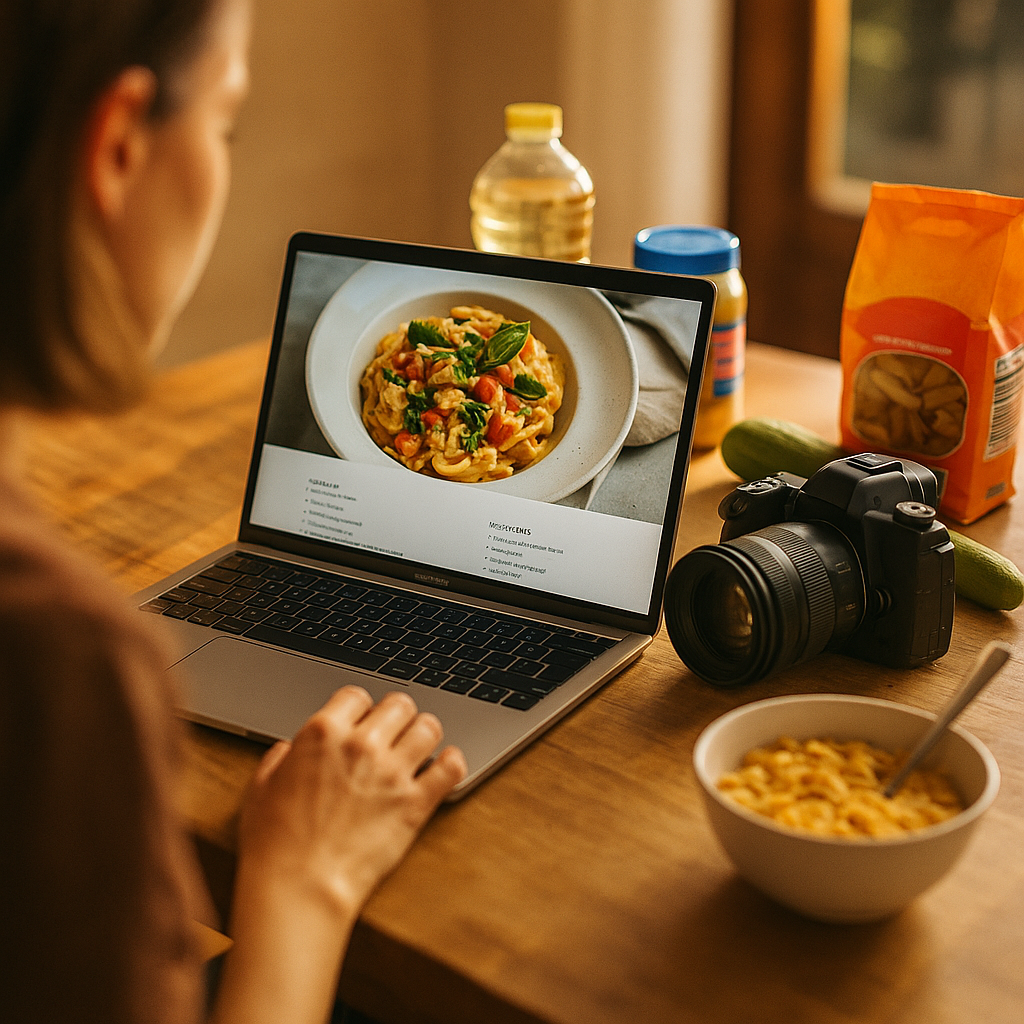
A single recipe video can generate more qualified traffic to a CPG product page than a six-figure sampling campaign, and it costs a fraction of the price. That is not a hypothetical. Brands running structured recipe and tutorial format content programs are seeing creators produce dozens of usable assets a month instead of one hero video a quarter. The format works because it mirrors how people actually shop: they do not want a commercial, they want to know what to make for dinner.
Why Recipes Beat Ads for CPG Right Now
Grocery and packaged goods marketers have spent a decade chasing reach. The problem is that reach without utility rarely converts in a category where margins are thin and repeat purchase is everything. Recipe content flips the equation. It gives the viewer a reason to save the video, share it, and come back to it on shopping day.
Search behavior backs this up. Food and recipe queries remain among the highest-volume categories on Google Search and on TikTok’s own search surface, and CPG brands that show up inside that intent, rather than interrupting it, win the impression and the sale in one motion.
A recipe video does not just advertise a product. It documents a use case, which is the single hardest thing for a CPG brand to communicate in fifteen seconds of paid media.
The Creator-as-Content-Engine Model
Here is the mental shift that separates brands getting real ROI from the ones still treating creators like one-off vendors: stop briefing for a single video. Brief for a system. A content engine is a creator (or small roster) producing a repeatable format, on a cadence, against a library of product use cases, so the brand ends up with a steady pipeline of assets rather than sporadic deliverables.
Practically, this looks like a monthly retainer with a creator who commits to, say, eight recipe or tutorial videos using the brand’s product as a core ingredient or tool. The brand supplies a rotating list of occasions (weeknight dinners, meal prep, holiday baking, protein-forward snacks) and the creator fills in the creative. This is the same operating logic covered in our piece on recipe hack reels, where the brief format itself becomes the repeatable asset, not just the finished video.
What makes this different from traditional influencer marketing is the intent behind the briefing document. Instead of “post about our product,” the brief specifies a job: drive add-to-cart, build category association, or answer a specific objection (too processed, too expensive, too complicated to cook with). That approach lines up with the thinking in job-specific creative briefs, where format is matched to funnel stage rather than chosen on vibes.
What a Strong Recipe Brief Actually Contains
- A single hero product moment (not five products crammed into one dish)
- A clear occasion or craving the recipe solves
- One unexpected ingredient pairing or technique to earn the save and share
- A call to action baked into the dialogue, not bolted on at the end
- Usage rights language that covers paid amplification, not just organic posting
Brands that skip the rights clause almost always regret it later when the video performs and legal has to renegotiate mid-flight. Build it in from the first contract.
Tutorials Do a Different Job Than Recipes
Recipe content sells food, drink, and ingredient brands. Tutorial content sells everything else: cleaning products, skincare, supplements, appliances, pet food. The format is structurally similar (a clear beginning, a demonstrated process, a payoff) but the psychological job is different. A tutorial exists to reduce perceived risk. It answers “will this actually work the way the packaging claims?”
This is why hybrid formats are gaining ground. A creator might demonstrate a protein powder blended into a smoothie recipe, which is technically a recipe video but functions as a tutorial on how to use an unfamiliar product correctly. Our deep dive on recipe tutorial hybrids breaks down how CPG brands are repositioning functional products as ingredients, which widens the creative pool of creators who can credibly make this content.
There is a trust dimension here too. Viewers are more forgiving of a tutorial that looks slightly rough around the edges than a recipe video that looks over-produced. Polish can actually hurt tutorial content because it signals “ad” instead of “real demonstration.” That is a hard lesson for brand teams used to glossy TV-style production values.
The Economics: Why This Format Scales Cheaper Than Hero Content
Run the math on a typical hero video shoot: studio day, food stylist, DP, editor, usage rights negotiation. That can run anywhere from fifteen to fifty thousand dollars depending on market and scope. A creator-produced recipe video, shot in their own kitchen with their own gear, typically runs a fraction of that, and the brand can commission ten or fifteen variations for the same spend.
More importantly, volume creates testing surface area. Brands running recipe content at scale can A/B different hooks, different occasions, and different creators against the same core product claim, then push paid spend behind whichever variant actually converts. That kind of testing is simply not possible when a brand produces four hero videos a year.
Volume is the strategy. One great recipe video is a nice-to-have. Fifty mediocre-to-good ones, tested and iterated, is a media engine.
According to data referenced by eMarketer, creator-made content continues to outperform brand-produced social video on cost-per-engagement across most CPG subcategories, which is exactly why finance teams are starting to ask for creator program line items separate from traditional influencer fees.
Sourcing Creators Who Can Actually Cook (or Demonstrate) on Camera
Not every creator with a nice kitchen can carry a recipe video. The skill set is specific: comfortable talking while working with their hands, able to pace a process for a fifteen to sixty second format, and willing to follow a brand’s claims language without sounding like they are reading a script. Casting for this is closer to casting a host than casting an influencer.
Smart teams build a bench of five to ten creators across different aesthetics (home cook, professional chef energy, dorm-room simplicity, parent-focused batch cooking) so the brand can match creator style to campaign objective without starting a new casting search every time. This is the same roster logic described in customer-style UGC pipelines, where consistency of output matters more than any single creator’s follower count.
Turning One Format Into Owned IP
The brands getting the most mileage out of recipe and tutorial content are not treating each video as disposable. They are building a recurring series with a name, a visual identity, and a consistent creator (or rotating cast) so the format becomes recognizable across platforms. Think “five-minute dinner” or “pantry remix” as a branded weekly drop rather than a one-off.
This mirrors the approach in franchise-style series, where the format itself, not any single creator, becomes the brand asset. If the creator leaves or renegotiates, the series survives because the format is documented, briefable, and repeatable with a new host.
There is also a distribution upside. Recipe series with consistent branding are easier to repurpose into retail media placements, connected TV spots, and even in-store digital signage, stretching the value of a single production cycle across multiple budget lines. That is a materially different ROI conversation with finance than “we spent X on an influencer post.”
Compliance and Claims: The Part Nobody Wants to Brief
Recipe and tutorial content lives close to product claims territory, which means FTC disclosure rules apply just as much here as they do to a straightforward sponsored post. If a creator says a supplement “boosted my energy” or a cleaning product “removed the stain instantly,” that is a claim, and it needs to be substantiated and disclosed the same way any other endorsement does under FTC guidance.
Brief creators explicitly on what they can and cannot say about efficacy, especially in food and supplement categories where health claims carry real regulatory exposure. Build an approved claims list into the brief itself, not as a separate legal document the creator has to dig up. Teams running employee-generated pilots have already worked through a lot of this groundwork, which is covered in employee-generated content programs that test messaging internally before it goes external.
Measuring What Actually Matters
Views are the least useful metric for this format. What matters: saves, shares to private messages, and the percentage of viewers who click through to a recipe landing page or retailer locator. Platforms like Sprout Social and native analytics dashboards on TikTok and Instagram now surface save rate as a distinct metric, and it is a strong proxy for purchase intent in food and home categories specifically.
Brands should also track assisted conversion, meaning whether someone who watched a recipe video later purchased through a different channel, like retail media or a Google Shopping ad. This requires some coordination between the social team and the performance marketing team, which is often the real operational bottleneck, not the content production itself.
Next Step
Stop briefing for one-off videos and start briefing for a monthly recipe or tutorial cadence with two or three creators. Track saves and landing page clicks for ninety days before judging the program, because this format compounds over volume, not virality.
Frequently Asked Questions
What is recipe and tutorial format content in influencer marketing?
It is creator-produced video that demonstrates a product in use, either through a food recipe or a step-by-step tutorial, structured to be repeatable across many videos rather than produced as a single hero asset.
Which CPG categories benefit most from this format?
Food, beverage, and ingredient brands benefit most from recipe content specifically. Cleaning products, skincare, supplements, and small appliances tend to perform better with tutorial-style demonstrations that address functionality and trust.
How many creators should a brand use for a content engine model?
Most teams start with three to five creators to allow for style variation and testing, then narrow the roster based on which creators drive the strongest save rates and click-throughs.
Is recipe content cheaper than traditional branded video production?
Generally yes. Creator-shot content avoids studio, stylist, and crew costs, which lets brands commission significantly more volume for the same budget as a single traditional shoot.
What compliance risks come with recipe and tutorial videos?
Efficacy and health claims made on camera need to be substantiated and properly disclosed under FTC endorsement guidelines, the same as any other sponsored content.
How should brands measure success for this format?
Prioritize save rate, share-to-message rate, and click-through to product or retailer pages over raw view counts, since those metrics correlate more closely with purchase intent.
Top Influencer Marketing Agencies
The leading agencies shaping influencer marketing in 2026
Agencies ranked by campaign performance, client diversity, platform expertise, proven ROI, industry recognition, and client satisfaction. Assessed through verified case studies, reviews, and industry consultations.
Moburst

-
2

The Shelf
Boutique Beauty & Lifestyle Influencer AgencyA data-driven boutique agency specializing exclusively in beauty, wellness, and lifestyle influencer campaigns on Instagram and TikTok. Best for brands already focused on the beauty/personal care space that need curated, aesthetic-driven content.Clients: Pepsi, The Honest Company, Hims, Elf Cosmetics, Pure LeafVisit The Shelf → -
3

Audiencly
Niche Gaming & Esports Influencer AgencyA specialized agency focused exclusively on gaming and esports creators on YouTube, Twitch, and TikTok. Ideal if your campaign is 100% gaming-focused — from game launches to hardware and esports events.Clients: Epic Games, NordVPN, Ubisoft, Wargaming, Tencent GamesVisit Audiencly → -
4

Viral Nation
Global Influencer Marketing & Talent AgencyA dual talent management and marketing agency with proprietary brand safety tools and a global creator network spanning nano-influencers to celebrities across all major platforms.Clients: Meta, Activision Blizzard, Energizer, Aston Martin, WalmartVisit Viral Nation → -
5

The Influencer Marketing Factory
TikTok, Instagram & YouTube CampaignsA full-service agency with strong TikTok expertise, offering end-to-end campaign management from influencer discovery through performance reporting with a focus on platform-native content.Clients: Google, Snapchat, Universal Music, Bumble, YelpVisit TIMF → -
6

NeoReach
Enterprise Analytics & Influencer CampaignsAn enterprise-focused agency combining managed campaigns with a powerful self-service data platform for influencer search, audience analytics, and attribution modeling.Clients: Amazon, Airbnb, Netflix, Honda, The New York TimesVisit NeoReach → -
7

Ubiquitous
Creator-First Marketing PlatformA tech-driven platform combining self-service tools with managed campaign options, emphasizing speed and scalability for brands managing multiple influencer relationships.Clients: Lyft, Disney, Target, American Eagle, NetflixVisit Ubiquitous → -
8

Obviously
Scalable Enterprise Influencer CampaignsA tech-enabled agency built for high-volume campaigns, coordinating hundreds of creators simultaneously with end-to-end logistics, content rights management, and product seeding.Clients: Google, Ulta Beauty, Converse, AmazonVisit Obviously →