


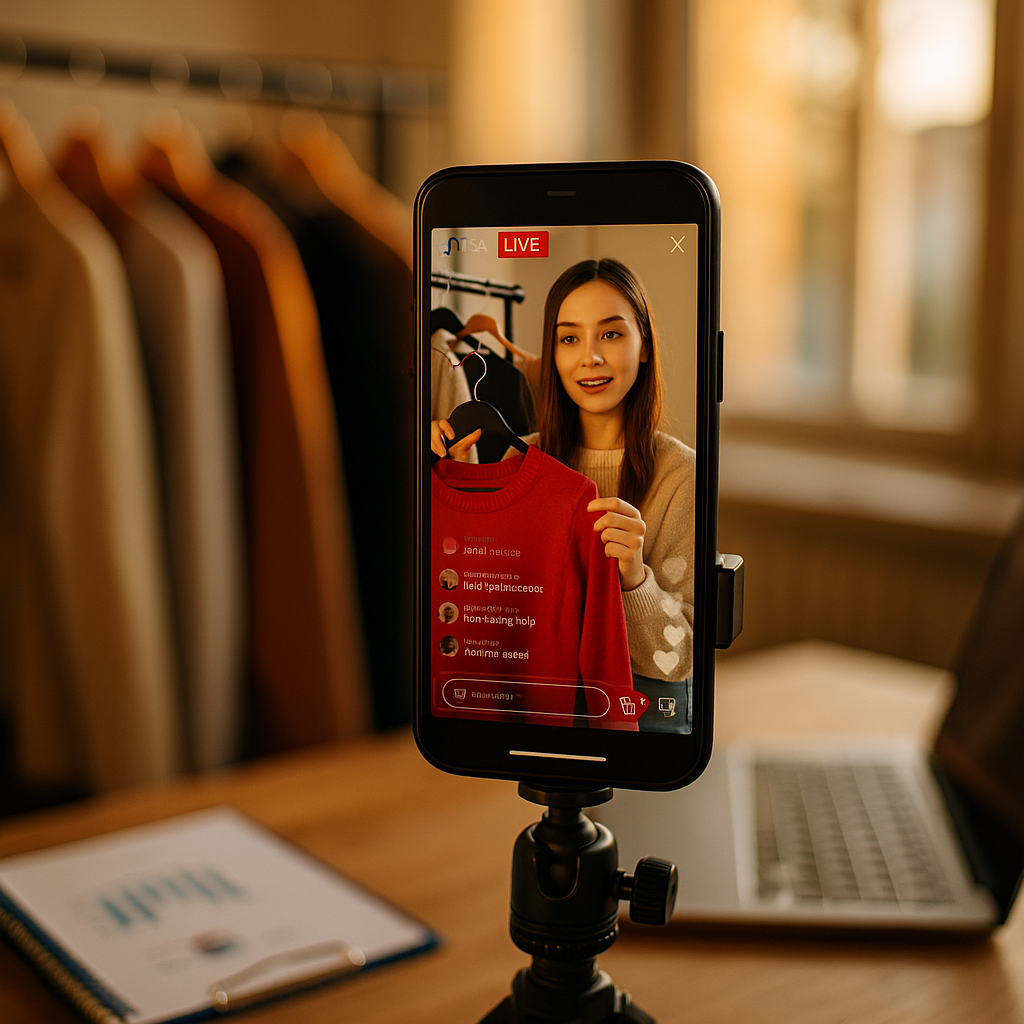
TikTok’s live shopping algorithm doesn’t care how good your product looks on camera. It cares about watch time, repeat viewership, and consistency, and most brands get the timing and frequency math wrong before they ever hit “go live.” The TikTok Live Shopping algorithm rewards predictability almost as much as production value, which means your scheduling decisions matter as much as your script.
What the TikTok Live Algorithm Actually Rewards
TikTok’s recommendation system for LIVE Shopping isn’t a black box in the way people assume. It optimizes for a handful of measurable signals: average watch duration, viewer retention curves, comment velocity, and purchase conversion rate within the stream itself. Streams that hold viewers past the two-minute mark get pushed into more “For You” slots. Streams that bleed viewers in the first thirty seconds get throttled, often mid-broadcast.
Here’s the part brands miss: the algorithm also weighs session consistency. If your account streams at wildly different times each week, TikTok’s discovery engine has less historical data to match your content with warm audiences. Consistency builds a recognizable pattern that the system can reliably surface to the same follower pool, plus new viewers who share similar behavioral profiles.
A brand that streams at the exact same three windows every week for six weeks will almost always outperform one that streams five times but at random hours, even with identical production quality.
This is why timing and frequency deserve the same strategic rigor as influencer selection or product mix. For a deeper breakdown of how the platform ranks streams for distribution, our prime time scheduling guide covers the GMV side of this equation in more detail.
The Thirty Minute Floor: Why Short Streams Get Buried
Most brand teams still treat LIVE shopping like a quick Instagram Story. Wrong instinct. TikTok’s internal benchmarks, echoed in seller education materials on TikTok’s advertiser resources, consistently point to a minimum viable stream length of thirty to forty-five minutes before the algorithm has enough behavioral data to confidently recommend you to new viewers.
Shorter streams simply don’t generate enough watch-time signal. A fifteen-minute stream might get a respectable live concurrent count, but it closes before the recommendation engine has cycled through enough viewer batches to validate broader distribution. Think of it like a cold start problem: the algorithm needs iterations to learn who should see you next.
- Streams under 20 minutes: limited discovery, mostly existing followers
- Streams of 30 to 60 minutes: moderate discovery expansion, decent retention data
- Streams of 90 minutes or longer: strongest discovery curve, but requires host stamina and inventory depth
That last point matters operationally. Longer streams demand staffing plans that most brands haven’t built yet. If you’re scaling past occasional streams into a real program, the staffing model outlined in our livestream staffing blueprint is worth reviewing before you commit to a ninety-minute cadence you can’t sustain.
Finding Your Brand’s Prime Time Windows
There is no universal “best time” for TikTok Live Shopping, despite what every listicle on the internet claims. The real answer is audience-specific and category-specific. A beauty brand targeting Gen Z shoppers sees very different peak engagement than a home goods brand targeting suburban millennials.
That said, patterns do exist. TikTok Shop data consistently shows elevated shopping intent during three windows:
- Lunch break scroll (11am to 1pm local time): shorter attention spans, better for quick-hit product drops
- Evening commute to dinner (5pm to 7pm): strong for lifestyle and food categories
- Late night wind-down (9pm to 11pm): the highest-converting window for impulse categories like beauty, fashion, and gadgets
The late-night window deserves special attention because it’s when shoppers have both time and low cognitive resistance to purchasing. It’s also when competition is fiercest, so differentiation in hosting style matters more than ever during that slot.
Don’t guess. Pull your TikTok Shop analytics and look at your own historical viewer concurrency by hour, not industry benchmarks. eMarketer’s research on social commerce consistently finds that brand-specific audience behavior diverges sharply from category averages, especially once you factor in regional time zones and follower demographics.
Frequency: How Often Should You Actually Go Live?
Here’s where ambition outpaces reality for most marketing teams. Going live once a week feels manageable but generates almost no algorithmic momentum. Going live daily sounds aggressive but burns out hosts and tanks content quality within three weeks.
The sweet spot for most mid-sized brands sits at three to five sessions per week, anchored to the same time slots. This frequency gives the algorithm enough repeated data points to build a confident recommendation pattern without exhausting your creator or staffing bandwidth.
Brands that stream four times weekly at fixed hours see roughly double the average viewer retention of brands streaming seven times weekly at inconsistent hours, according to patterns documented across TikTok Shop seller case studies.
Frequency also interacts with your affiliate and creator network strategy. If you’re running gifting programs alongside owned streams, coordinate the cadence so creator-led streams don’t cannibalize your brand channel’s prime slots. Our creator network gifting guide walks through how to budget for both without creating internal competition for the same viewer pool.
Building a Weekly Cadence That Compounds
Think of your live schedule like a content calendar with compounding returns, not a series of isolated events. Week one establishes a baseline. Week two and three reinforce the pattern. By week four, if you’ve held your windows steady, you should start seeing organic discovery traffic outpace your follower-driven traffic.
A workable weekly template for a growing brand looks like this:
- Monday evening (5pm to 7pm): restock or new arrival announcements
- Wednesday late night (9pm to 10:30pm): flagship product deep dive with live Q&A
- Friday lunch (11am to 12:30pm): flash promo tied to payday or weekend prep
- Saturday late night (9pm to 11pm): highest-volume selling window, longest stream of the week
Four sessions. Same anchor times every week. That’s enough for the algorithm to recognize you as a reliable live source while keeping your production team sane. Scale up to five or six sessions only once you’ve confirmed your affiliate and nano creator pipeline, detailed in our nano creator seeding playbook, can support the additional inventory and comment moderation load.
One operational note: GMV velocity, meaning how fast you sell units once a stream goes live, factors into how TikTok Shop ranks your affiliate visibility too. If timing and frequency are working, you should see a measurable lift in the velocity metrics covered in our GMV velocity formula guide.
Common Timing Mistakes That Tank Your Reach
A few recurring errors show up across brand live shopping programs, regardless of category:
- Switching time slots to “test what works”: this resets the algorithm’s pattern recognition and usually tanks reach for two to three weeks before any new baseline forms.
- Ending streams the moment sales slow: premature exits kill watch-time averages even if the first forty minutes performed well.
- Ignoring time zone splits for national audiences: a single 7pm Eastern stream misses the entire West Coast prime window.
- Overlapping with your own creator-led streams: internal competition splits your viewer base and dilutes both streams’ performance data.
Time zone fragmentation deserves extra attention if you sell nationally. Running a single evening stream might feel efficient, but it structurally caps your reach to one coast’s prime hours. Some brands solve this by alternating which region gets the “flagship” late-night slot each week, which keeps total frequency manageable while rotating discovery opportunity across geographies.
Platforms like Sprout Social and HubSpot both publish general social scheduling benchmarks that, while not TikTok Shop specific, reinforce the same core principle: consistency beats volume almost every time an algorithm is involved.
FAQs
Frequently Asked Questions
How long should a TikTok Live Shopping stream run for best algorithm performance?
Aim for a minimum of thirty minutes, with sixty to ninety minutes delivering the strongest discovery results for most brand categories. Shorter streams don’t generate enough watch-time data for the algorithm to confidently recommend you to new viewers.
How many times per week should a brand go live on TikTok Shop?
Three to five sessions per week at fixed, repeated time slots tends to outperform both infrequent weekly streams and daily streams run at inconsistent hours. Consistency in timing matters more than raw frequency.
Does changing stream times hurt TikTok Live Shopping reach?
Yes. Frequent changes to your streaming schedule disrupt the algorithm’s ability to recognize a reliable pattern, which typically causes a temporary drop in discovery traffic lasting two to three weeks after the change.
What is the best time of day for TikTok Live Shopping?
Late evening windows between 9pm and 11pm local time generally convert best for impulse categories like beauty and fashion, though lunch and early evening windows also perform well depending on your audience and product category.
Can going live too often hurt performance?
Yes. Excessive frequency without adequate staffing or fresh content often leads to declining production quality and host fatigue, both of which show up as lower retention and conversion metrics even if raw stream count is high.
Start by locking in four fixed weekly time slots based on your own historical viewer data, not industry averages, and hold that schedule for a full month before changing anything. The algorithm rewards patience and pattern recognition far more than it rewards experimentation.
Top Influencer Marketing Agencies
The leading agencies shaping influencer marketing in 2026
Agencies ranked by campaign performance, client diversity, platform expertise, proven ROI, industry recognition, and client satisfaction. Assessed through verified case studies, reviews, and industry consultations.
Moburst

-
2

The Shelf
Boutique Beauty & Lifestyle Influencer AgencyA data-driven boutique agency specializing exclusively in beauty, wellness, and lifestyle influencer campaigns on Instagram and TikTok. Best for brands already focused on the beauty/personal care space that need curated, aesthetic-driven content.Clients: Pepsi, The Honest Company, Hims, Elf Cosmetics, Pure LeafVisit The Shelf → -
3

Audiencly
Niche Gaming & Esports Influencer AgencyA specialized agency focused exclusively on gaming and esports creators on YouTube, Twitch, and TikTok. Ideal if your campaign is 100% gaming-focused — from game launches to hardware and esports events.Clients: Epic Games, NordVPN, Ubisoft, Wargaming, Tencent GamesVisit Audiencly → -
4

Viral Nation
Global Influencer Marketing & Talent AgencyA dual talent management and marketing agency with proprietary brand safety tools and a global creator network spanning nano-influencers to celebrities across all major platforms.Clients: Meta, Activision Blizzard, Energizer, Aston Martin, WalmartVisit Viral Nation → -
5

The Influencer Marketing Factory
TikTok, Instagram & YouTube CampaignsA full-service agency with strong TikTok expertise, offering end-to-end campaign management from influencer discovery through performance reporting with a focus on platform-native content.Clients: Google, Snapchat, Universal Music, Bumble, YelpVisit TIMF → -
6

NeoReach
Enterprise Analytics & Influencer CampaignsAn enterprise-focused agency combining managed campaigns with a powerful self-service data platform for influencer search, audience analytics, and attribution modeling.Clients: Amazon, Airbnb, Netflix, Honda, The New York TimesVisit NeoReach → -
7

Ubiquitous
Creator-First Marketing PlatformA tech-driven platform combining self-service tools with managed campaign options, emphasizing speed and scalability for brands managing multiple influencer relationships.Clients: Lyft, Disney, Target, American Eagle, NetflixVisit Ubiquitous → -
8

Obviously
Scalable Enterprise Influencer CampaignsA tech-enabled agency built for high-volume campaigns, coordinating hundreds of creators simultaneously with end-to-end logistics, content rights management, and product seeding.Clients: Google, Ulta Beauty, Converse, AmazonVisit Obviously →