


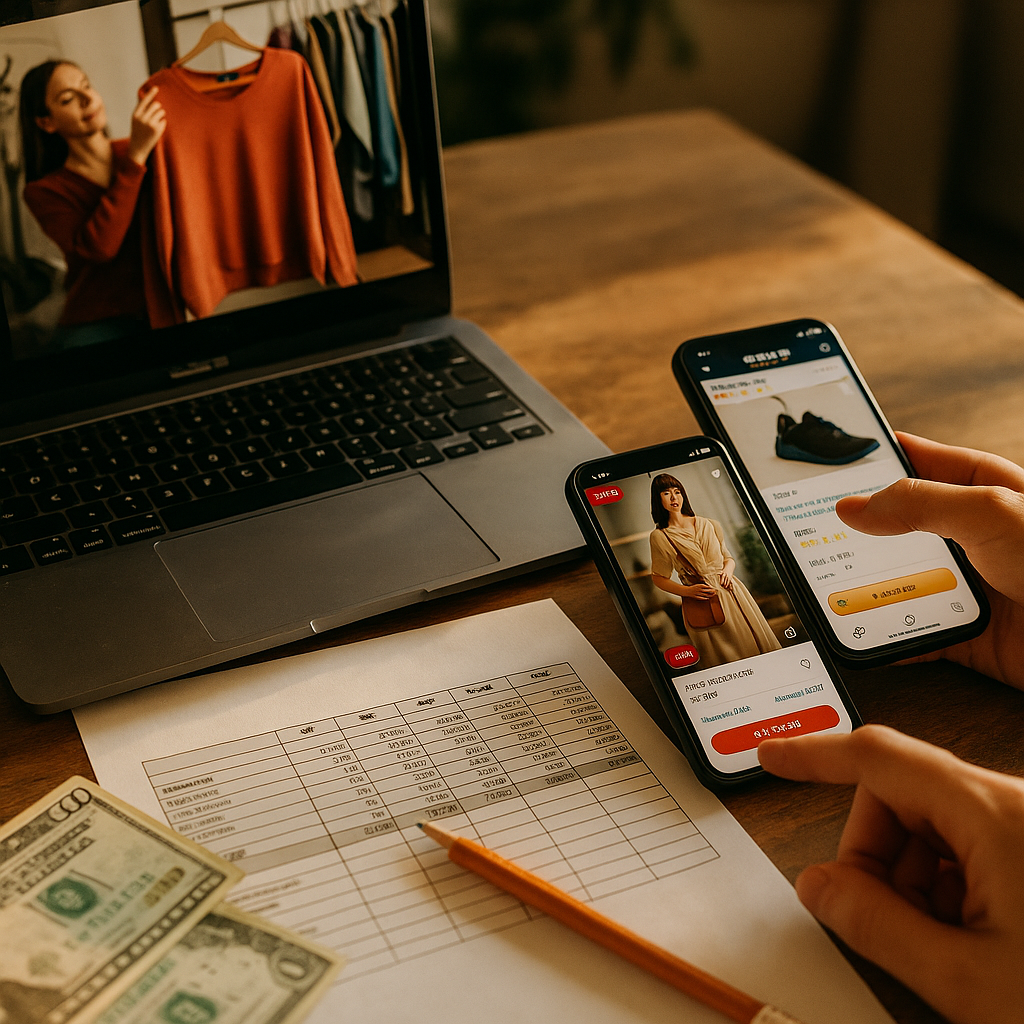
Live commerce sales in the US are projected to top $68 billion by the end of this year, according to eMarketer, yet most brands still allocate creator budgets for live commerce the same way they fund static sponsored posts. That mismatch is costing marketers real money. Platforms reward different behaviors, charge different fees, and convert at wildly different rates, so a single flat budget line makes no sense anymore.
Why One Budget Line Doesn’t Work Anymore
Live commerce isn’t a channel. It’s five or six channels wearing the same trench coat. TikTok Shop live events behave nothing like an Amazon Live stream. Instagram Live shopping has different discovery mechanics than YouTube Shopping. Treating them as interchangeable line items in a spreadsheet is how budgets get wasted on the wrong format for the wrong audience.
Most finance teams want a single “creator budget” number to approve. Fair enough. But the allocation underneath that number needs to flex by platform, by creator tier, and by where in the funnel the stream is supposed to perform. A creator who crushes it on a TikTok Shop flash sale might flop hosting a slower, browse-heavy Amazon Live session. Different mechanics demand different investment logic.
Brands that split live commerce budgets by platform-specific conversion behavior, rather than by follower count alone, report meaningfully tighter cost-per-acquisition numbers across quarterly cycles.
The Cross-Platform Allocation Model: Start With Funnel Role, Not Platform Loyalty
Before assigning dollars, decide what job each platform is doing for you. This single step prevents most of the budget waste we see in live commerce programs.
- TikTok Shop: impulse-driven, discovery-heavy. Allocate for volume and frequency over polish. Smaller, more frequent streams with mid-tier creators often outperform one expensive mega-event.
- Instagram Live Shopping: warm-audience conversion. Best funded with creators who already have purchase intent built into their follower base, think beauty and wellness micro-influencers with engaged DMs.
- Amazon Live: bottom-funnel, search-adjacent. Shoppers are already in buying mode. Budget here should favor creators with strong catalog fit and retail media crossover rather than raw reach.
- YouTube Shopping: consideration and education. Longer-form, higher production value. This is where a larger single-creator investment can pay off because the content has a longer shelf life.
A rough starting split for a mid-market DTC brand running quarterly live commerce might look like 40 percent TikTok Shop, 25 percent Amazon Live, 20 percent Instagram, 15 percent YouTube. Adjust based on where your actual sales data points, not where your social team personally prefers to post.
Tiering Creators Within Each Platform Slice
Once platform allocation is set, you still need to decide how much of each slice goes to macro, mid-tier, and micro creators. This is where a lot of brands default to gut feel instead of a model. Borrowing the logic from a tiered creator volume model applied specifically to live streaming works well: fewer macro streams for reach and brand halo, a larger volume of mid-tier streams for conversion efficiency, and nano or micro creators for always-on, lower-cost catalog streams that fill the calendar between major events.
The temptation is to overspend on one big-name creator for a flagship stream. Resist it. A single $50,000 macro-influencer live event can underperform three $15,000 mid-tier streams spread across a month, simply because frequency drives algorithmic favor on platforms like TikTok Shop. If you’re building this out formally, the same thinking behind annual creator budget splits by tier maps directly onto live commerce planning, just compressed into a monthly or quarterly rhythm instead of an annual one.
What About Attribution? Live Commerce Makes This Harder, Not Easier
Here’s the uncomfortable part. Checkout flows for live commerce are fragmented across native platform checkout, affiliate links, and promo codes, which makes clean attribution nearly impossible without a disciplined signal stack. If you’re budgeting blind, you’re not budgeting, you’re guessing with extra steps.
Build attribution assumptions into the allocation model before you spend a dollar, not after the campaign wraps. This is the same discipline outlined in approaches to budgeting without clean attribution, where proxy signals like unique promo code redemption, platform-reported GMV, and post-stream search lift stand in for perfect tracking. Live commerce platforms each report performance differently, so your model needs a normalized scoring method that lets you compare a TikTok Shop stream’s GMV against an Amazon Live session’s attributed sales without pretending the numbers mean the same thing.
Teams that set attribution proxies before launch, instead of reverse-engineering them from whatever data the platform happens to surface, cut post-campaign reporting disputes dramatically.
Build a Crisis and Contingency Line Into Every Live Budget
Live, unscripted content carries risk that pre-recorded sponsored posts don’t. A creator misspeaks on a live stream, a product demo fails in real time, or a pricing error flashes on screen for ninety seconds before anyone catches it. None of that is hypothetical, it happens weekly across live commerce events. Set aside 5 to 8 percent of total live commerce spend as a reserve, modeled after the thinking in creator crisis reserve budgeting, specifically for rapid response content, PR support, or emergency re-shoots when a live event goes sideways.
This isn’t pessimism, it’s operational maturity. Brands that skip this line item end up pulling funds from next quarter’s allocation every time something goes wrong, which quietly erodes the whole model’s credibility with finance stakeholders.
Don’t Forget the Channels Around the Stream
A live commerce event doesn’t live in isolation. Pre-stream hype on email and SMS, and post-stream retargeting through search, materially lift conversion on the day of the event. Yet most live commerce budgets fund the stream itself and nothing else, which leaves money on the table. Borrowing from omnichannel creator budget planning, carve out 10 to 15 percent of the live commerce line specifically for amplification across owned channels. A stream with zero pre-promotion and a stream with a 48-hour countdown campaign behind it do not perform the same, full stop.
Putting the Model Into Practice
Here’s a simplified version of how a quarterly cross-platform allocation might break down for a $200,000 live commerce budget:
- TikTok Shop: $80,000 across 10 to 12 mid-tier and micro streams
- Amazon Live: $50,000 across 4 to 6 bottom-funnel streams
- Instagram Live: $40,000 across 6 to 8 warm-audience streams
- YouTube Shopping: $30,000 across 2 to 3 longer-form events
- Contingency reserve: taken as 6 percent off the top before platform splits
Review this split monthly against actual GMV and engagement data, not quarterly. Live commerce moves fast, and platform algorithms shift creator discovery mechanics often enough that a split locked in January can look outdated by March. Tools from Sprout Social and platform-native dashboards from TikTok Ads Manager and Meta Business Suite can help normalize this reporting across channels, though you’ll still need a manual layer to reconcile GMV definitions between platforms.
If your organization is still debating how creator spend fits into a broader zero-based approach, the groundwork in zero-based creator budgeting pairs well here, forcing every live commerce dollar to justify itself against the platform-specific model rather than riding on last year’s assumptions.
FAQs
How should brands split creator budgets for live commerce across platforms?
Start by assigning each platform a funnel role (discovery, warm conversion, bottom-funnel, or consideration) and allocate based on where your sales data shows the strongest return, rather than splitting evenly or by personal platform preference.
What percentage of a live commerce budget should go to contingency or crisis reserves?
Most mature programs set aside 5 to 8 percent of total live commerce spend for rapid response content, re-shoots, or PR support in case a live, unscripted event goes wrong.
Is it better to invest in one macro creator or several mid-tier creators for live commerce?
Several mid-tier or micro creators running more frequent streams often outperform a single expensive macro event, since platforms like TikTok Shop reward frequency and consistency in their discovery algorithms.
How do you measure ROI across platforms with different checkout systems?
Use normalized proxy signals, such as unique promo code redemption, platform-reported GMV, and post-stream search lift, applied consistently across platforms so performance can be compared even without unified attribution.
Should pre-stream promotion be budgeted separately from the live event itself?
Yes. Carving out 10 to 15 percent of the live commerce budget for email, SMS, and search amplification around the stream typically improves conversion on the day of the event significantly.
Build the model once, review it monthly, and let platform-level GMV data pull your allocation in the direction that’s actually converting, not the direction your last successful campaign happened to favor.
FAQs
How should brands split creator budgets for live commerce across platforms?
Start by assigning each platform a funnel role (discovery, warm conversion, bottom-funnel, or consideration) and allocate based on where your sales data shows the strongest return, rather than splitting evenly or by personal platform preference.
What percentage of a live commerce budget should go to contingency or crisis reserves?
Most mature programs set aside 5 to 8 percent of total live commerce spend for rapid response content, re-shoots, or PR support in case a live, unscripted event goes wrong.
Is it better to invest in one macro creator or several mid-tier creators for live commerce?
Several mid-tier or micro creators running more frequent streams often outperform a single expensive macro event, since platforms like TikTok Shop reward frequency and consistency in their discovery algorithms.
How do you measure ROI across platforms with different checkout systems?
Use normalized proxy signals, such as unique promo code redemption, platform-reported GMV, and post-stream search lift, applied consistently across platforms so performance can be compared even without unified attribution.
Should pre-stream promotion be budgeted separately from the live event itself?
Yes. Carving out 10 to 15 percent of the live commerce budget for email, SMS, and search amplification around the stream typically improves conversion on the day of the event significantly.
Top Influencer Marketing Agencies
The leading agencies shaping influencer marketing in 2026
Agencies ranked by campaign performance, client diversity, platform expertise, proven ROI, industry recognition, and client satisfaction. Assessed through verified case studies, reviews, and industry consultations.
Moburst

-
2

The Shelf
Boutique Beauty & Lifestyle Influencer AgencyA data-driven boutique agency specializing exclusively in beauty, wellness, and lifestyle influencer campaigns on Instagram and TikTok. Best for brands already focused on the beauty/personal care space that need curated, aesthetic-driven content.Clients: Pepsi, The Honest Company, Hims, Elf Cosmetics, Pure LeafVisit The Shelf → -
3

Audiencly
Niche Gaming & Esports Influencer AgencyA specialized agency focused exclusively on gaming and esports creators on YouTube, Twitch, and TikTok. Ideal if your campaign is 100% gaming-focused — from game launches to hardware and esports events.Clients: Epic Games, NordVPN, Ubisoft, Wargaming, Tencent GamesVisit Audiencly → -
4

Viral Nation
Global Influencer Marketing & Talent AgencyA dual talent management and marketing agency with proprietary brand safety tools and a global creator network spanning nano-influencers to celebrities across all major platforms.Clients: Meta, Activision Blizzard, Energizer, Aston Martin, WalmartVisit Viral Nation → -
5

The Influencer Marketing Factory
TikTok, Instagram & YouTube CampaignsA full-service agency with strong TikTok expertise, offering end-to-end campaign management from influencer discovery through performance reporting with a focus on platform-native content.Clients: Google, Snapchat, Universal Music, Bumble, YelpVisit TIMF → -
6

NeoReach
Enterprise Analytics & Influencer CampaignsAn enterprise-focused agency combining managed campaigns with a powerful self-service data platform for influencer search, audience analytics, and attribution modeling.Clients: Amazon, Airbnb, Netflix, Honda, The New York TimesVisit NeoReach → -
7

Ubiquitous
Creator-First Marketing PlatformA tech-driven platform combining self-service tools with managed campaign options, emphasizing speed and scalability for brands managing multiple influencer relationships.Clients: Lyft, Disney, Target, American Eagle, NetflixVisit Ubiquitous → -
8

Obviously
Scalable Enterprise Influencer CampaignsA tech-enabled agency built for high-volume campaigns, coordinating hundreds of creators simultaneously with end-to-end logistics, content rights management, and product seeding.Clients: Google, Ulta Beauty, Converse, AmazonVisit Obviously →