


One creator hits 4,000 people. Two creators, briefed to co-produce, can hit 11,000 — and cost less than boosting a single post. The collaboration-first creator format is quietly becoming the most efficient discovery lever in influencer marketing, and most brands still haven’t figured out how to brief it correctly.
Instead of running parallel one-off deals with individual nano and micro-creators, brands are now pairing them deliberately: two creators, one piece of content, two separate audiences that rarely overlap. The math works because discovery algorithms reward collaborative posts differently than solo ones. But the format only pays off if the brief is built for it.
Why Two Small Audiences Beat One Medium One
Here’s the uncomfortable truth about mid-tier influencer spend: a single creator with 80,000 followers often delivers worse cost-per-engagement than two creators with 15,000 followers each, working together. Nano and micro-creators (generally under 50,000 followers) post to tight, high-trust communities. Their audiences overlap less with each other than you’d assume, especially across niches, geographies, or content styles.
When two creators co-produce a single piece of content — a duet, a joint video, a shared Reel with both handles tagged — platforms like Instagram and TikTok distribute it to both follower graphs simultaneously. Then the collaboration mechanic kicks in: each platform’s discovery engine treats a tagged collab as a stronger relevance signal than a solo post, because two independent audiences are engaging with the same asset in real time.
A well-executed nano-micro collab can produce reach equivalent to a single creator with 3-4x the following, at a fraction of the fee, because the content is engineered to be discovered twice.
This isn’t a theory. TikTok’s own creator tools documentation confirms that collaborative posts (via its Collab feature) surface in both creators’ follower feeds and are weighted in the For You algorithm based on combined engagement velocity. TikTok’s advertising resources increasingly point brands toward creator pairing as a reach-efficiency tactic, not just a content-variety play.
What Makes This Different From a Standard Multi-Creator Campaign
Brands already run multi-creator campaigns constantly — five creators, five separate posts, one hashtag. That’s parallel execution. It’s fine for coverage, weak for discovery efficiency. Each creator’s post lives in isolation, competing for attention inside their own feed silo.
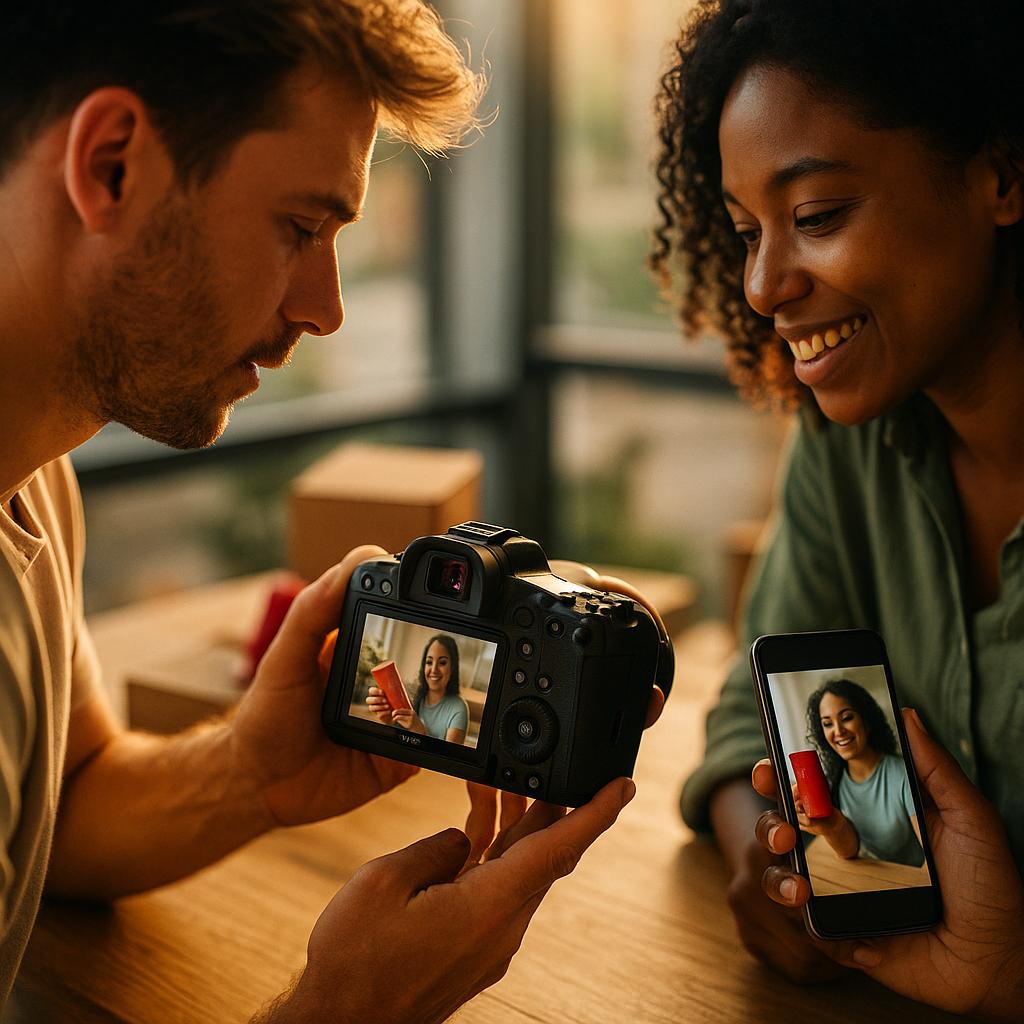
The collaboration-first format is different because the creators aren’t posting separately about the same product. They’re co-producing one asset together, on camera, in the same content. Think: two skincare micro-creators doing a side-by-side “same product, different skin type” test, or two home-cooking nanos doing a recipe hand-off video where one starts the dish and the other finishes it.
The distinction matters for three reasons:
- Algorithmic tagging. Native collab features (TikTok Collab, Instagram’s Collab post type) explicitly notify both audiences and count engagement toward both accounts’ distribution scores.
- Production cost splitting. One shoot, two deliverables, two audiences — your cost-per-thousand drops because you’re not paying for two entirely separate production cycles.
- Social proof compounding. Audiences see their trusted creator vouching for another creator, not just for a brand. That’s a trust transfer most single-influencer briefs can’t replicate.
This approach pairs well with existing formats brands already run. If you’ve experimented with multi-creator testing waves, the collab format is a natural next phase: instead of testing which solo creator performs best, you test which creator pairings generate the strongest combined discovery lift before committing paid budget.
Briefing the Format: What Actually Goes on Paper
Most collab briefs fail because brands treat it like two separate influencer contracts stapled together. That defeats the purpose. The brief needs to direct a single collaborative narrative with clear handoff points, not two people talking at a product independently.
A working collab brief typically includes:
- A shared narrative arc. Define what each creator contributes to the story — one might introduce the problem, the other demonstrates the solution. Avoid duplicate content; the whole point is complementary perspectives.
- Platform-native collab tagging instructions. Specify exactly how the post should be published: joint Collab post, duet, stitch, or split-screen. Ambiguity here kills the discovery multiplier.
- Audience complementarity notes. Brief creators on why they’re paired — different demographics, different use cases, different content styles — so the collaboration feels intentional, not random.
- Usage rights covering both creators’ likenesses. This gets legally messier than solo influencer deals. You need explicit rights clearance from both parties if the content will be repurposed as paid media.
- A single point of creative control. Someone — usually the brand’s creative lead — needs final sign-off authority when two creators have different creative instincts.
This format borrows structurally from blended UGC-plus-influencer briefs, where authenticity and structure coexist. The difference is the audience-splitting mechanic is now the primary objective, not a side benefit.
The Pairing Logic Nobody Talks About
Not every creator pair works. Pairing two creators with near-identical audiences (same niche, same demo, same geography) just cannibalizes reach — you’re serving the same content to overlapping people twice, which platforms may even suppress as redundant.
The strongest pairs share a category interest but diverge on at least one axis: age bracket, geography, content format preference, or use-case angle. A fitness nano-creator focused on home workouts paired with one focused on outdoor running, for instance, gives you complementary but distinct audiences under one umbrella interest.
Brands running this at scale are starting to build pairing matrices — essentially audience-overlap scorecards using platform analytics (Instagram’s audience insights, TikTok Creator Marketplace demographic breakdowns) to identify creators whose followings intersect by less than 15-20%. That threshold tends to maximize the “two audiences” effect without fragmenting the narrative so much that neither audience feels the content was made for them.
Talent discovery platforms and marketplaces are adapting too. Expect more matchmaking tools that surface complementary creator pairs based on audience data, not just follower count or engagement rate. This is where a lot of the manual guesswork in influencer sourcing is heading next.
Compliance: Two Creators, Two Disclosure Obligations
This is where a lot of brands get sloppy. Collaborative content doesn’t reduce disclosure requirements — it doubles them. Both creators are making a material connection with the brand (assuming both are compensated or receiving product), and both are legally required to disclose that connection under FTC guidance, independent of what the other creator posts.
Practical compliance checklist for collab content:
- Both creators disclose individually, even on a shared post. A single #ad in the caption from one creator doesn’t cover the other’s obligation if they’re separately compensated.
- Platform-native paid partnership tags should be applied by both accounts where the feature supports it.
- If the content is later used in paid media (whitelisting or spark ads), confirm usage rights and disclosure obligations transfer correctly, since paid distribution can trigger additional advertising disclosure rules in some jurisdictions.
The FTC’s endorsement guidance doesn’t have a specific carve-out for collaborative content, which means brands should default to treating each creator’s disclosure obligation as fully independent. If you’ve already built compliance workflows around FTC-safe challenge content, extending that same rigor to dual-disclosure collab posts is a straightforward add, not a rebuild.
Where This Fits in the Broader Funnel
Collaboration-first content is a discovery play, not a conversion play. It’s built for top-of-funnel reach efficiency — getting your product or story in front of two cold audiences at once, cheaply. It’s not the format for driving direct response or hard conversion metrics.
That means measurement needs to shift accordingly. Track reach and impression lift across both creators’ audiences (most platforms report this natively for tagged collabs), new-follower attribution to the brand account, and post-campaign search lift for branded terms. Save conversion-focused metrics for retargeting content that follows, ideally content built around funnel-stage placement decisions once the discovery phase has done its job.
Brands running always-on influencer programs are finding that collab-first content works best as a recurring monthly or quarterly discovery injection, layered underneath ongoing solo-creator conversion content. It’s a reach amplifier sitting on top of a program that already has strong bottom-funnel creators in place, not a replacement for either. Data from platforms tracked by eMarketer continues to show influencer discovery spend growing faster than direct-response influencer spend, which suggests brands are already reallocating budget toward exactly this kind of reach-efficient tactic.
Frequently Asked Questions
FAQs
What is the collaboration-first creator format?
It’s a briefing approach where a brand directs two nano or micro-creators to co-produce a single piece of content — rather than posting separately — so the content distributes across both of their follower audiences at once, maximizing discovery reach per dollar spent.
How is this different from running two separate influencer deals?
Separate deals produce isolated posts competing for attention in each creator’s own feed. Collaboration-first content is one shared asset, tagged as a native collab, which platforms distribute to both audiences and weight more favorably in discovery algorithms due to combined engagement signals.
Do both creators need to disclose the partnership separately?
Yes. FTC guidance treats each creator’s material connection to the brand as an independent disclosure obligation. A disclosure from one creator does not cover the other, even on a shared collaborative post.
How do brands choose which creators to pair together?
The strongest pairings share a category interest but differ on at least one audience dimension, such as age, geography, or content style. Brands typically check audience-overlap data through platform insights tools to confirm the two followings intersect minimally before pairing.
Is this format better for reach or for conversions?
It’s primarily a reach and discovery tactic, best used at the top of the funnel. Conversion-focused work should follow with separate, funnel-stage-specific creator content once the collaboration has expanded brand awareness across both audiences.
What size creators work best for this format?
Nano-creators (typically under 10,000 followers) and micro-creators (roughly 10,000 to 50,000) tend to work best because their audiences are tightly engaged and less likely to overlap with another small creator’s following, which is what makes the dual-audience discovery effect possible.
Next step: before your next influencer wave, pull audience-overlap data on your current nano and micro roster, identify pairs with under 20% follower overlap, and test one collaboration-first brief against your standard solo-creator brief on identical budget. Compare cost-per-reach, not just engagement rate, and let that number decide whether this becomes a standing line item in your program.
FAQs
What is the collaboration-first creator format?
It’s a briefing approach where a brand directs two nano or micro-creators to co-produce a single piece of content — rather than posting separately — so the content distributes across both of their follower audiences at once, maximizing discovery reach per dollar spent.
How is this different from running two separate influencer deals?
Separate deals produce isolated posts competing for attention in each creator’s own feed. Collaboration-first content is one shared asset, tagged as a native collab, which platforms distribute to both audiences and weight more favorably in discovery algorithms due to combined engagement signals.
Do both creators need to disclose the partnership separately?
Yes. FTC guidance treats each creator’s material connection to the brand as an independent disclosure obligation. A disclosure from one creator does not cover the other, even on a shared collaborative post.
How do brands choose which creators to pair together?
The strongest pairings share a category interest but differ on at least one audience dimension, such as age, geography, or content style. Brands typically check audience-overlap data through platform insights tools to confirm the two followings intersect minimally before pairing.
Is this format better for reach or for conversions?
It’s primarily a reach and discovery tactic, best used at the top of the funnel. Conversion-focused work should follow with separate, funnel-stage-specific creator content once the collaboration has expanded brand awareness across both audiences.
What size creators work best for this format?
Nano-creators (typically under 10,000 followers) and micro-creators (roughly 10,000 to 50,000) tend to work best because their audiences are tightly engaged and less likely to overlap with another small creator’s following, which is what makes the dual-audience discovery effect possible.
Top Influencer Marketing Agencies
The leading agencies shaping influencer marketing in 2026
Agencies ranked by campaign performance, client diversity, platform expertise, proven ROI, industry recognition, and client satisfaction. Assessed through verified case studies, reviews, and industry consultations.
Moburst

-
2

The Shelf
Boutique Beauty & Lifestyle Influencer AgencyA data-driven boutique agency specializing exclusively in beauty, wellness, and lifestyle influencer campaigns on Instagram and TikTok. Best for brands already focused on the beauty/personal care space that need curated, aesthetic-driven content.Clients: Pepsi, The Honest Company, Hims, Elf Cosmetics, Pure LeafVisit The Shelf → -
3

Audiencly
Niche Gaming & Esports Influencer AgencyA specialized agency focused exclusively on gaming and esports creators on YouTube, Twitch, and TikTok. Ideal if your campaign is 100% gaming-focused — from game launches to hardware and esports events.Clients: Epic Games, NordVPN, Ubisoft, Wargaming, Tencent GamesVisit Audiencly → -
4

Viral Nation
Global Influencer Marketing & Talent AgencyA dual talent management and marketing agency with proprietary brand safety tools and a global creator network spanning nano-influencers to celebrities across all major platforms.Clients: Meta, Activision Blizzard, Energizer, Aston Martin, WalmartVisit Viral Nation → -
5

The Influencer Marketing Factory
TikTok, Instagram & YouTube CampaignsA full-service agency with strong TikTok expertise, offering end-to-end campaign management from influencer discovery through performance reporting with a focus on platform-native content.Clients: Google, Snapchat, Universal Music, Bumble, YelpVisit TIMF → -
6

NeoReach
Enterprise Analytics & Influencer CampaignsAn enterprise-focused agency combining managed campaigns with a powerful self-service data platform for influencer search, audience analytics, and attribution modeling.Clients: Amazon, Airbnb, Netflix, Honda, The New York TimesVisit NeoReach → -
7

Ubiquitous
Creator-First Marketing PlatformA tech-driven platform combining self-service tools with managed campaign options, emphasizing speed and scalability for brands managing multiple influencer relationships.Clients: Lyft, Disney, Target, American Eagle, NetflixVisit Ubiquitous → -
8

Obviously
Scalable Enterprise Influencer CampaignsA tech-enabled agency built for high-volume campaigns, coordinating hundreds of creators simultaneously with end-to-end logistics, content rights management, and product seeding.Clients: Google, Ulta Beauty, Converse, AmazonVisit Obviously →