


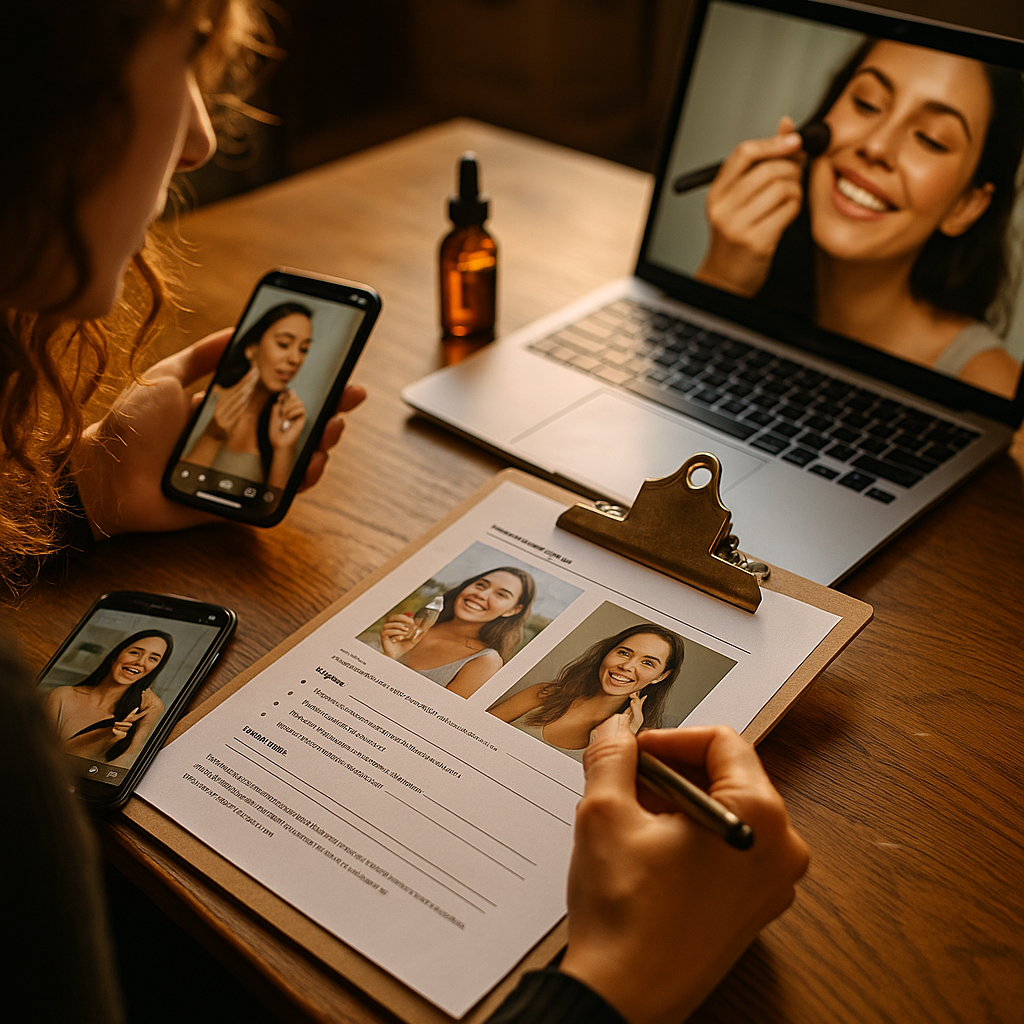
Brands running influencer content and UGC campaigns as separate line items are leaving performance on the table. A UGC-plus-influencer storytelling brief merges both into one asset pipeline, and early adopters are seeing higher click-through rates because the content feels personal without sacrificing production polish. Here’s how to build one.
Ask any performance marketer which format wins right now, and you’ll get a shrug. UGC converts because it looks unpolished and real. Influencer content converts because it comes with reach, credibility, and a practiced hook. Why choose? The smartest brief writers in 2026 aren’t choosing. They’re blending both into a single creative framework that produces assets doing double duty: authentic enough to run as an ad, structured enough to hit a marketing funnel with intent.
Why Separate Briefs Are Costing You Money
Most brands still run two disconnected workflows. A UGC team sources raw testimonials and unboxings through a marketplace. A separate influencer team negotiates deliverables with creators who have followings. The two rarely talk. The result is a content library full of redundancy — five different “morning routine” videos that say the same thing, none of them built with a shared narrative arc or a shared distribution plan.
That’s expensive. Not just in production spend, but in opportunity cost. According to eMarketer, brands now allocate a growing share of social budgets to creator content specifically because it outperforms traditional brand-produced video on engagement. But that lift disappears when the content is generic. A blended brief forces both content types to work from the same customer insight, the same emotional beat, and the same usage rights structure — which means less waste and more reusable output per dollar spent.
Treating UGC and influencer content as separate budgets is like buying two ad campaigns that never talk to each other. The blended brief exists to fix that.
What a Blended Brief Actually Looks Like
Forget the old two-page creator brief with a bullet list of “do’s and don’ts.” A blended UGC-plus-influencer brief is structured more like a mini creative campaign plan, with three distinct layers.
- The narrative spine. One core story — a problem, a discovery, a resolution — that every creator, whether a nano-creator posting from their bedroom or a mid-tier influencer with 400K followers, adapts to their own voice.
- The authenticity layer. Instructions that preserve rawness: film on your phone, don’t over-light, keep the first reaction unscripted. This is where UGC sourcing logic gets folded into the influencer’s deliverable, not treated as a separate product.
- The craft layer. Hook structure, pacing notes, and a call-to-action that influencer talent brings from experience. This is where the brief borrows from proven hook-structure briefs that already work in paid social.
The magic isn’t in picking one layer over another. It’s in sequencing them so a single shoot day can produce a UGC-style raw cut and a polished influencer-style edit from the same footage.
The Personalization Problem UGC Alone Can’t Solve
Here’s an uncomfortable truth: pure UGC is often too generic to personalize at scale. A customer testimonial about a skincare serum says nothing about whether the viewer has combination skin or sensitive skin. Influencer content, on the other hand, can be segmented — you brief a creator with a known audience demographic and let them speak directly to that niche.
Blend the two, and you get something more useful: a modular content system where the authentic emotional core (the UGC layer) stays constant, but the framing, language, and specific pain point (the influencer layer) shifts per audience segment. This is the same logic behind micro-community storytelling briefs, just applied across a broader creator mix instead of a single niche community.
Practically, this means your brief needs an audience-mapping section most standard influencer briefs skip entirely. Who is this specific creator’s audience? What’s their specific objection to your product? Which UGC testimonial theme maps to that objection? Answer those three questions before a single deliverable gets requested.
Building the Brief: A Section-by-Section Breakdown
A blended brief needs more scaffolding than a standard one-off influencer ask. Here’s the structure that’s working for teams running this at scale.
- Campaign objective and funnel stage. Is this content built for cold-audience prospecting, retargeting, or post-purchase reinforcement? The answer changes everything downstream — a point covered well in funnel-stage placement guidance.
- The shared narrative spine. One sentence describing the emotional arc every piece of content must hit. Not a script — a spine.
- Authenticity guardrails. Filming style, lighting, pacing cues that keep the UGC feel intact even when a professional creator shoots it.
- Craft requirements. Hook timing (first 2 seconds), CTA placement, caption structure — the influencer expertise layer.
- Disclosure and compliance notes. Non-negotiable, and detailed below.
- Usage rights and repurposing plan. Specify upfront whether footage gets reused as paid ads, on-site content, or retail media creative.
- Personalization matrix. A simple table mapping creator segment to audience pain point to UGC testimonial theme.
Notice what’s missing: a rigid script. Overscripting is the fastest way to kill the authenticity that makes UGC-style content work in the first place. The brief should constrain structure, not language.
Where Compliance Gets Complicated
Blending formats introduces a wrinkle regulators haven’t fully caught up to. When a paid influencer’s content is edited to look like organic UGC, disclosure risk goes up, not down. The FTC has been explicit that material connections must be disclosed regardless of how “authentic” the content appears, and stripping the polish doesn’t strip the legal obligation.
Brands that get this wrong tend to make one of two mistakes: they either forget disclosure entirely because the content “doesn’t look like an ad,” or they bury the disclosure so deep in a caption that it fails FTC’s clear-and-conspicuous standard. Neither holds up under scrutiny.
Making sponsored content look like organic UGC doesn’t reduce your disclosure obligation — it increases the risk of getting it wrong.
Build disclosure language into the brief itself, not as an afterthought during legal review. Teams that have already solved this well in adjacent formats, like FTC-safe challenge briefs and urgency-driven content built without scarcity risk, treat compliance as a creative constraint rather than a legal appendix. That mindset shift matters more than any specific disclosure wording.
Sourcing the Right Mix of Creators
Not every creator can execute a blended brief well. Some influencers are too polished to ever look like UGC, no matter how loose the instructions. Some UGC creators lack the pacing instincts that make influencer content convert. The sourcing strategy needs a deliberate mix.
A workable ratio for most consumer brands: 60% nano and micro creators (1K to 50K followers) who naturally produce UGC-adjacent content, and 40% mid-tier influencers (50K to 500K) who bring narrative craft and built-in reach. This mirrors the logic in multi-creator testing wave structures, where diversity of creator size is treated as a testing variable, not just a budget line.
Run a small batch first. Five to eight creators, one brief, one narrative spine, different execution styles. Measure which specific pairing of creator tier and content angle drives the best cost-per-result before scaling spend. HubSpot’s research on content marketing consistently shows that testing at small scale before full rollout reduces wasted ad spend significantly, and the same logic applies directly to creator content testing.
Repurposing: The Real ROI Driver
Here’s where the blended brief pays for itself twice over. Because you’ve built both an authenticity layer and a craft layer into the same shoot, you walk away with assets suited for wildly different placements: raw cuts for organic social, polished versions for paid ads, and mid-ground edits for email or landing pages.
This is the same principle behind shoot-once, reuse-everywhere production models and cross-platform amplification briefs, but the blended UGC-plus-influencer approach pushes it further. You’re not just reformatting one video for multiple platforms. You’re generating genuinely different emotional registers — raw and polished — from a single production budget.
Track this in your reporting. Most attribution tools won’t distinguish between a UGC-style cut and an influencer-style cut of the same underlying shoot, so build a simple tagging system in your DAM or campaign tracker. It’s the only way to know which layer of the brief is actually driving results.
Measuring What Actually Matters
Engagement rate alone won’t tell you if the blend is working. Track these instead:
Watch-through rate on the raw UGC-style cuts versus the polished influencer cuts. Cost-per-click and cost-per-acquisition segmented by creator tier. And critically, sentiment in comments — blended content that’s working well tends to generate comments asking “is this real?” in a good way, engagement that signals curiosity rather than skepticism.
Sprout Social’s ongoing research into social engagement patterns backs this up: content perceived as authentic consistently drives higher comment-to-like ratios than polished brand content, even when reach is comparable.
The next step isn’t complicated: pick one upcoming campaign, write a single blended brief instead of two separate ones, and test it against your last influencer-only or UGC-only push. Let the cost-per-result decide whether the blend earns a permanent place in your playbook.
Frequently Asked Questions
What is a blended UGC-plus-influencer brief?
It’s a single creative brief that directs both UGC-style creators and influencer talent using one shared narrative, allowing brands to produce raw, authentic content and polished, high-craft content from the same campaign without running duplicate workflows.
How is this different from a standard influencer brief?
A standard influencer brief typically focuses on deliverables, timelines, and brand messaging for one creator type. A blended brief adds an authenticity layer borrowed from UGC sourcing, plus a personalization matrix that maps creator segments to specific audience pain points.
Does blending formats increase FTC disclosure risk?
Yes, if not handled carefully. Content designed to look organic still requires clear disclosure when a material connection exists, per FTC guidance. Build disclosure requirements directly into the brief rather than treating them as a post-production add-on.
What creator mix works best for a blended brief?
Many brands find success with roughly 60% nano and micro creators for authenticity and 40% mid-tier influencers for narrative craft and reach, though the right ratio depends on category, budget, and funnel stage.
How do you measure success for blended content?
Track watch-through rate separately for raw versus polished cuts, segment cost-per-acquisition by creator tier, and monitor comment sentiment for signs of genuine curiosity rather than skepticism.
Frequently Asked Questions
What is a blended UGC-plus-influencer brief?
It’s a single creative brief that directs both UGC-style creators and influencer talent using one shared narrative, allowing brands to produce raw, authentic content and polished, high-craft content from the same campaign without running duplicate workflows.
How is this different from a standard influencer brief?
A standard influencer brief typically focuses on deliverables, timelines, and brand messaging for one creator type. A blended brief adds an authenticity layer borrowed from UGC sourcing, plus a personalization matrix that maps creator segments to specific audience pain points.
Does blending formats increase FTC disclosure risk?
Yes, if not handled carefully. Content designed to look organic still requires clear disclosure when a material connection exists, per FTC guidance. Build disclosure requirements directly into the brief rather than treating them as a post-production add-on.
What creator mix works best for a blended brief?
Many brands find success with roughly 60% nano and micro creators for authenticity and 40% mid-tier influencers for narrative craft and reach, though the right ratio depends on category, budget, and funnel stage.
How do you measure success for blended content?
Track watch-through rate separately for raw versus polished cuts, segment cost-per-acquisition by creator tier, and monitor comment sentiment for signs of genuine curiosity rather than skepticism.
Top Influencer Marketing Agencies
The leading agencies shaping influencer marketing in 2026
Agencies ranked by campaign performance, client diversity, platform expertise, proven ROI, industry recognition, and client satisfaction. Assessed through verified case studies, reviews, and industry consultations.
Moburst

-
2

The Shelf
Boutique Beauty & Lifestyle Influencer AgencyA data-driven boutique agency specializing exclusively in beauty, wellness, and lifestyle influencer campaigns on Instagram and TikTok. Best for brands already focused on the beauty/personal care space that need curated, aesthetic-driven content.Clients: Pepsi, The Honest Company, Hims, Elf Cosmetics, Pure LeafVisit The Shelf → -
3

Audiencly
Niche Gaming & Esports Influencer AgencyA specialized agency focused exclusively on gaming and esports creators on YouTube, Twitch, and TikTok. Ideal if your campaign is 100% gaming-focused — from game launches to hardware and esports events.Clients: Epic Games, NordVPN, Ubisoft, Wargaming, Tencent GamesVisit Audiencly → -
4

Viral Nation
Global Influencer Marketing & Talent AgencyA dual talent management and marketing agency with proprietary brand safety tools and a global creator network spanning nano-influencers to celebrities across all major platforms.Clients: Meta, Activision Blizzard, Energizer, Aston Martin, WalmartVisit Viral Nation → -
5

The Influencer Marketing Factory
TikTok, Instagram & YouTube CampaignsA full-service agency with strong TikTok expertise, offering end-to-end campaign management from influencer discovery through performance reporting with a focus on platform-native content.Clients: Google, Snapchat, Universal Music, Bumble, YelpVisit TIMF → -
6

NeoReach
Enterprise Analytics & Influencer CampaignsAn enterprise-focused agency combining managed campaigns with a powerful self-service data platform for influencer search, audience analytics, and attribution modeling.Clients: Amazon, Airbnb, Netflix, Honda, The New York TimesVisit NeoReach → -
7

Ubiquitous
Creator-First Marketing PlatformA tech-driven platform combining self-service tools with managed campaign options, emphasizing speed and scalability for brands managing multiple influencer relationships.Clients: Lyft, Disney, Target, American Eagle, NetflixVisit Ubiquitous → -
8

Obviously
Scalable Enterprise Influencer CampaignsA tech-enabled agency built for high-volume campaigns, coordinating hundreds of creators simultaneously with end-to-end logistics, content rights management, and product seeding.Clients: Google, Ulta Beauty, Converse, AmazonVisit Obviously →