


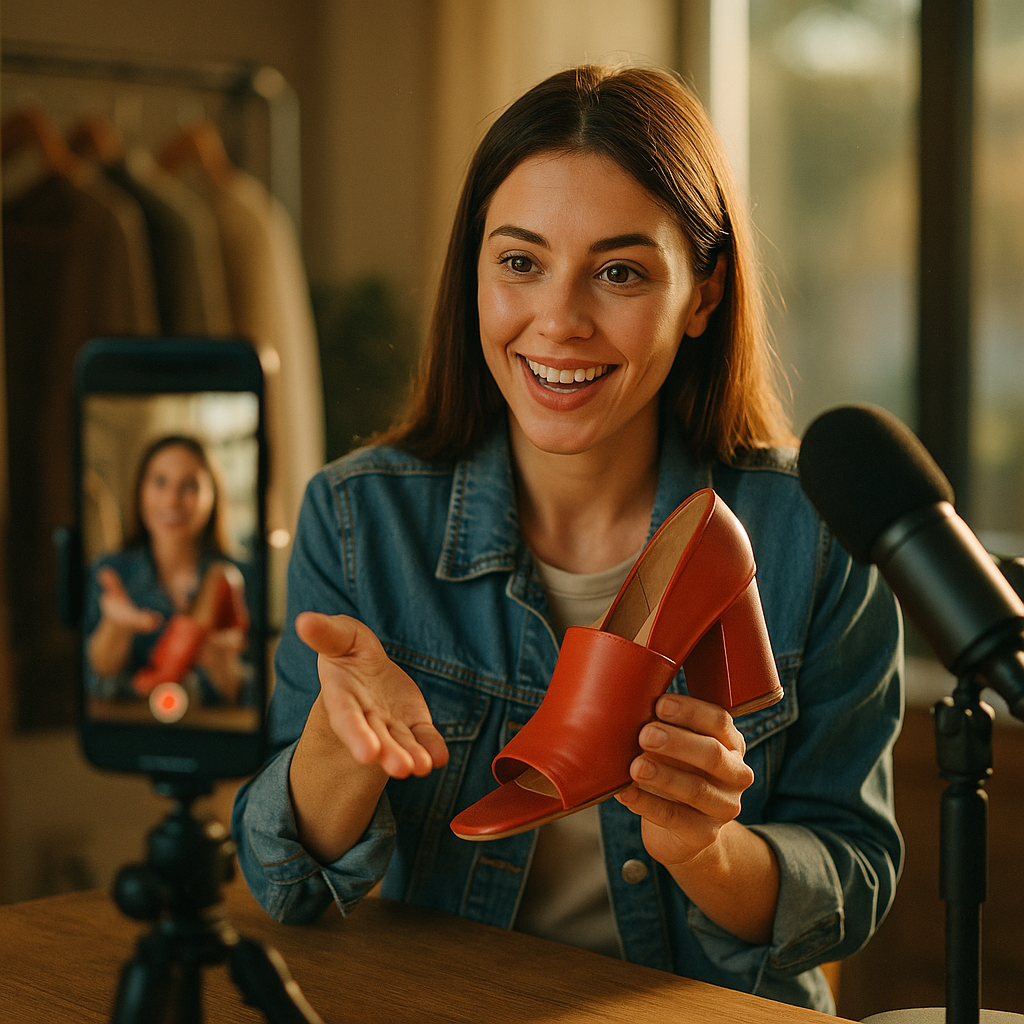
U.S. live-commerce sales are projected to top $100 billion before the decade closes, yet most brand-run livestreams still convert like a bad infomercial. Why? Because the live-commerce format most brands brief looks nothing like how creators actually sell. Fix the brief, fix the funnel.
Live shopping isn’t new — it’s been a retail staple in China for years and a growing line item on TikTok Shop and Amazon Live budgets everywhere else. What’s still broken is the briefing process. Brands either hand creators a rigid script that kills the spontaneity buyers trust, or they hand over zero structure and hope for the best. Neither works. The format that actually converts sits in the middle: loose enough to feel like UGC, tight enough to hit revenue checkpoints.
The Core Tension: Authenticity vs. Sales Choreography
Every live-commerce brief has to resolve one conflict. Viewers tune in because a stream feels unscripted — a real person reacting to a real product. But brands need predictable outcomes: specific claims stated correctly, specific CTAs delivered at specific moments, specific SKUs featured before the stream loses momentum.
Try to script every line and you get a shopping-channel host reading cue cards. Comments dry up. Conversion tanks. Give a creator zero structure and you get a rambling stream that never mentions the discount code until minute 40, after half the audience has left.
The best live-commerce briefs don’t script dialogue — they script moments. Tell creators what has to happen and when, not what to say.
This is the same design problem brands have solved in other formats. The shoppable livestream script playbook that’s driven results in India works because it treats the opening minute as a structural checkpoint, not a monologue. Apply that logic across the entire stream and you’ve got a repeatable format.
What “Structured Selling” Actually Means
Structured doesn’t mean scripted. It means the stream has non-negotiable beats — a rundown of moments that must occur regardless of how the conversation flows. Think of it like a wedding timeline: nobody scripts the toasts, but everybody knows when the toasts happen.
A well-built live-commerce beat sheet typically includes:
- An opening hook within the first 30-60 seconds that states what’s being sold and why viewers should stay
- A product walkthrough that hits mandatory claims (ingredients, sizing, compliance disclosures) without sounding like a legal disclaimer
- A recurring CTA cadence — restated every 8-10 minutes, not just once
- A comment-response window where the creator answers live questions (this is where trust actually gets built)
- A close that reinforces urgency without triggering deceptive-scarcity concerns
That last point matters more than brands think. If you’re building any kind of countdown or limited-stock messaging into the stream, read live inventory countdown overlays before you brief it. The FTC has been increasingly active on manufactured urgency claims, and a fabricated “only 3 left” overlay during a livestream is exactly the kind of thing that draws scrutiny.
Brief the Beats, Not the Words
Here’s the practical difference. A bad brief says: “Say ‘this serum changed my skin in two weeks’ at the 12-minute mark.” A good brief says: “Somewhere between minutes 10-15, share a personal result or transformation moment tied to the hero ingredient. Must include the actual timeframe you experienced results, not a generic claim.”
The second version gives the creator room to be honest — which, not coincidentally, is also what keeps you compliant. Overstated or scripted claims are a bigger legal exposure than under-scripted ones. This mirrors the approach in founder-led product demo briefs, where specificity of experience beats polish every time.
One brand that gets this right: a mid-size skincare DTC brand running weekly Amazon Live sessions structures every brief around five checkpoints and lets creators fill the gaps with their own voice, reactions, and tangents. Their average watch time runs nearly double the category benchmark, according to internal data shared at a recent industry roundtable — because the stream never feels like a script being read aloud.
Build a Beat Sheet, Not a Script
Practically, this means your brief should look less like a document and more like a runsheet. Structure it in blocks:
- Pre-show (0-2 min): Creator states who they are, what’s being sold, and why they agreed to feature it. Skip this and you lose cold viewers immediately.
- Hook block (2-5 min): One clear reason to keep watching — a demo, a before/after, a problem statement.
- Deep-dive block (5-20 min): Product walkthrough with mandatory claims flagged clearly as “must include” vs. “creator’s choice.”
- Engagement block (ongoing): Live Q&A woven throughout, not saved for the end.
- Conversion block (recurring): CTA restated every 8-10 minutes with a slightly different framing each time so it doesn’t feel repetitive.
- Close (final 5 min): Recap, final CTA, next-stream teaser if applicable.
Notice what’s missing: word-for-word dialogue. That’s intentional. The creator’s job is to hit each block’s function in their own language. Your job is to define the function clearly enough that nothing critical gets skipped.
Disclosure and Compliance Inside a Live Format
Live commerce complicates disclosure in ways pre-recorded content doesn’t. There’s no edit pass. Whatever the creator says at minute 34 is what shipped. That means your brief needs explicit disclosure language built into the beat sheet, not bolted on as an afterthought.
Require the paid partnership disclosure at stream start, restate it after any break or re-entry (viewers joining mid-stream haven’t seen the opener), and make sure platform-native disclosure tools — TikTok Shop’s paid partnership label, Amazon Live’s sponsored tag — are enabled before the stream goes live, not toggled mid-broadcast.
This is the same discipline brands apply to time-boxed challenge briefs: define the compliance requirement as a structural element, not a suggestion. If your legal or compliance team hasn’t reviewed your live-commerce brief template, that’s a gap worth closing before your next scheduled stream, not after an incident.
Live commerce has no edit pass. Whatever the compliance gap is, it ships live — which means the brief has to do the legal work a script normally would.
Casting Matters More Than the Brief Itself
You can write the tightest beat sheet in the world and it won’t matter if you cast the wrong creator. Live commerce rewards people who are comfortable improvising under pressure while tracking a mental checklist — a rarer skill than it sounds.
Look for creators who already run some version of a live format organically, even if it’s not shoppable yet. Someone who does regular Q&A streams or unboxing sessions has already built the muscle of holding audience attention while managing structure. That’s a much safer bet than a creator whose only experience is polished, single-take video.
Run a rehearsal stream, unlisted, before the real one. Not to memorize lines — to test whether the creator can hit the beats naturally under real-time pressure with live comments flowing in. If the rehearsal feels stiff, the live version will feel stiffer.
Multi-Creator Streams Need Even Tighter Beats
Running a co-hosted stream, or rotating creators across a multi-hour event? The beat sheet needs handoff points explicitly defined — who introduces what SKU, who owns which CTA window, how the transition between hosts happens without dead air. This is structurally similar to the handoff logic in customer takeover briefs, where clarity at the transition point determines whether the whole format holds together.
For multi-creator testing before a big live-commerce push, it’s worth running smaller-scale content first to see which creators’ styles actually drive add-to-cart behavior. The multi-creator testing wave model applies directly here: test format fit on smaller streams before betting a flagship event on an unproven host.
Measuring What Actually Matters
Views and peak concurrent viewers are vanity metrics in live commerce. The numbers that matter: add-to-cart rate during the stream, average watch duration per viewer, comment-to-conversion ratio, and post-stream replay performance if the platform supports VOD conversion (TikTok Shop and Amazon Live both do).
Track these against your beat sheet timestamps. If add-to-cart spikes happen consistently at your CTA blocks, the structure is working. If they don’t, the problem usually isn’t the offer — it’s that the CTA delivery felt scripted enough to trigger skepticism, or buried deep enough that viewers missed it entirely.
According to HubSpot’s research on video engagement, drop-off is steepest in the first 15 seconds and again around the midpoint of any long-form video — live streams are no exception. Build your hook and your mid-stream re-engagement beat with that curve in mind.
For teams building reusable creative assets from these streams afterward, treat the recording as raw material. A usage-rights-ready video brief approach lets you clip the stream’s best moments into short-form ads without renegotiating rights after the fact — plan that into your contract before the stream, not after you’ve found the perfect ten-second clip.
Next Step
Stop briefing live commerce like a script and start briefing it like an event runsheet: define the beats, protect the compliance moments, cast for improvisational skill, and measure conversion against timestamps, not vanity metrics. Do that once, well, and the format becomes repeatable rather than a one-off gamble.
FAQs
What’s the difference between a live-commerce brief and a standard content brief?
A standard content brief usually specifies key messages and a rough script. A live-commerce brief specifies timed structural beats — moments that must occur during the stream — while leaving the actual language to the creator, since there’s no edit pass to fix mistakes after broadcast.
How much should a brand script versus leave open in a livestream?
Script the function of each moment (state the claim, deliver the CTA, disclose the partnership) but leave the wording to the creator. Fully scripted streams read as inauthentic and tend to underperform on conversion compared to structured-but-improvised formats.
How do you keep live-commerce disclosures FTC-compliant in real time?
Require the disclosure at stream open, restate it after breaks or re-entries, and enable platform-native disclosure tags before going live. Build the disclosure requirement into the beat sheet itself so it’s not left to the creator’s memory mid-broadcast.
What metrics actually indicate a successful live-commerce event?
Add-to-cart rate at each CTA checkpoint, average watch duration, comment-to-conversion ratio, and post-stream replay conversion matter far more than peak concurrent viewers or total views.
Should brands rehearse a livestream before going live?
Yes — an unlisted rehearsal stream tests whether the creator can hit structural beats naturally while managing live comments, which is a very different skill than reading a script or filming a single-take video.
FAQs
Top Influencer Marketing Agencies
The leading agencies shaping influencer marketing in 2026
Agencies ranked by campaign performance, client diversity, platform expertise, proven ROI, industry recognition, and client satisfaction. Assessed through verified case studies, reviews, and industry consultations.
Moburst

-
2

The Shelf
Boutique Beauty & Lifestyle Influencer AgencyA data-driven boutique agency specializing exclusively in beauty, wellness, and lifestyle influencer campaigns on Instagram and TikTok. Best for brands already focused on the beauty/personal care space that need curated, aesthetic-driven content.Clients: Pepsi, The Honest Company, Hims, Elf Cosmetics, Pure LeafVisit The Shelf → -
3

Audiencly
Niche Gaming & Esports Influencer AgencyA specialized agency focused exclusively on gaming and esports creators on YouTube, Twitch, and TikTok. Ideal if your campaign is 100% gaming-focused — from game launches to hardware and esports events.Clients: Epic Games, NordVPN, Ubisoft, Wargaming, Tencent GamesVisit Audiencly → -
4

Viral Nation
Global Influencer Marketing & Talent AgencyA dual talent management and marketing agency with proprietary brand safety tools and a global creator network spanning nano-influencers to celebrities across all major platforms.Clients: Meta, Activision Blizzard, Energizer, Aston Martin, WalmartVisit Viral Nation → -
5

The Influencer Marketing Factory
TikTok, Instagram & YouTube CampaignsA full-service agency with strong TikTok expertise, offering end-to-end campaign management from influencer discovery through performance reporting with a focus on platform-native content.Clients: Google, Snapchat, Universal Music, Bumble, YelpVisit TIMF → -
6

NeoReach
Enterprise Analytics & Influencer CampaignsAn enterprise-focused agency combining managed campaigns with a powerful self-service data platform for influencer search, audience analytics, and attribution modeling.Clients: Amazon, Airbnb, Netflix, Honda, The New York TimesVisit NeoReach → -
7

Ubiquitous
Creator-First Marketing PlatformA tech-driven platform combining self-service tools with managed campaign options, emphasizing speed and scalability for brands managing multiple influencer relationships.Clients: Lyft, Disney, Target, American Eagle, NetflixVisit Ubiquitous → -
8

Obviously
Scalable Enterprise Influencer CampaignsA tech-enabled agency built for high-volume campaigns, coordinating hundreds of creators simultaneously with end-to-end logistics, content rights management, and product seeding.Clients: Google, Ulta Beauty, Converse, AmazonVisit Obviously →