


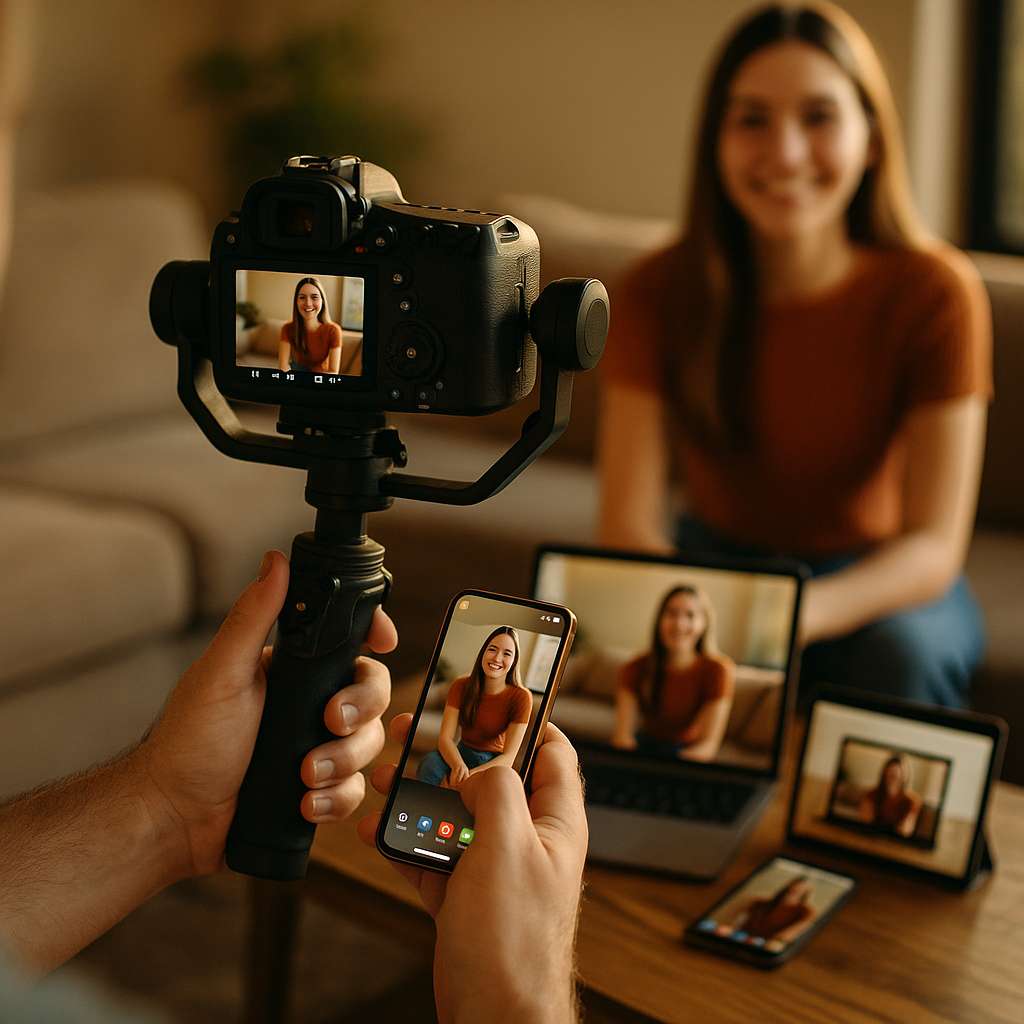
Brands are still briefing three separate shoots for one campaign. Meanwhile, the smartest creator teams are shooting a single YouTube anchor video and slicing it into a dozen native assets. A cross-platform amplification brief is the difference between paying for redundant production and paying once for a content system that actually compounds reach.
Every platform still wants something different. But the brief that treats YouTube as the source of truth — and everything else as intelligent repurposing — is quietly becoming the most efficient model in the influencer stack.
Why YouTube-First Briefing Actually Works
YouTube isn’t just another platform slot in the media plan anymore. It’s the archive, the SEO engine, and increasingly the trust anchor for creator content. A 12-minute video holds context that a 30-second clip never can — the demo, the objection handling, the founder story, the receipts. When you brief a creator to build that long-form piece first, you’re not just buying a video. You’re buying raw material.
Think of it like a documentary shoot that gets edited into trailers. The anchor video carries the narrative arc and the proof points. The cutdowns carry the hook. Brands that skip the anchor and go straight to shorts often end up with content that feels thin — all hook, no substance — because there was never a deeper story to pull from.
A single well-briefed YouTube anchor video can generate 8-12 platform-native assets without a second production day — turning one creator fee into a full-funnel content system.
This isn’t a new idea in production circles. It’s the same logic behind cross-format asset briefs that shoot once for YouTube and TikTok simultaneously. The amplification brief just extends that logic to a third and fourth platform, with explicit instructions for what gets pulled where.
What Goes Into the Brief Document Itself
A cross-platform amplification brief isn’t a creative brief with extra bullet points. It’s a production map. Here’s what it needs to specify, section by section:
- Anchor format and runtime: Typically 8-15 minutes for YouTube, structured with clear chapter breaks so editors can identify standalone moments later.
- Modular segment markers: Instruct the creator to say discrete, self-contained statements — a hot take, a stat, a punchline — that work without the surrounding context. These become your Shorts and Reels.
- Platform-specific hooks: The first three seconds for TikTok need a different hook than the YouTube intro. Brief the creator to film 2-3 alternate cold opens during the same session.
- Caption and text-overlay direction: X and Instagram both reward native text treatment. Specify whether repurposed clips need burned-in captions, and in what tone.
- Aspect ratio capture notes: Ask for a wide shot that can be reframed 9:16 without losing the subject, rather than assuming crop-and-pray in post.
- Repurposing rights and timeline: Spell out exactly how many derivative assets the brand can cut, over what window, and whether the creator or the brand’s team handles editing.
Skip any one of these and you’re back to manual triage in the edit bay, guessing which ten seconds might work vertically. That’s expensive guesswork when you’re paying an editor by the hour.
The Segment-Marking Trick Nobody Talks About
Here’s a tactic worth stealing: brief creators to literally pause and restate their key point in a self-contained way, on camera, during the anchor shoot. Something like, “If you remember one thing from this video, it’s this—” followed by a 10-second, fully contained statement. Editors call these “quotable moments,” and they’re gold for Shorts, Reels, and X video embeds because they don’t require context from the rest of the video to make sense.
This single instruction, added to a brief, can cut post-production guesswork by half. It’s a small ask of the creator and a massive unlock for the repurposing team downstream.
Platform Repurposing Isn’t One-Size-Fits-All
Treating Instagram, TikTok, and X as interchangeable dumping grounds for the same 15-second clip is the fastest way to underperform on all three. Each platform has its own grammar.
Instagram Reels still favors polish and aesthetic consistency with the brand’s existing feed. Repurposed clips should get light color grading and on-brand caption styling to avoid looking like an orphaned asset. Reels also benefits from carousel companions — a static post pulling a quote or stat from the anchor video to reinforce the message for users who scroll past video.
TikTok wants rawness. Over-polished YouTube footage, dropped straight onto TikTok, often reads as an ad rather than content — and the algorithm seems to notice too, per multiple Sprout Social platform performance breakdowns. If you’re cutting from a YouTube anchor for TikTok, keep the imperfections. Don’t smooth them out.
X is underrated for creator repurposing right now. Native video view counts on X have been climbing, and a well-captioned 45-second clip with a strong opinion performs better there than a pure product demo. Treat X clips as conversation starters, not conversion assets — pair them with a thread or a reply-bait question to drive engagement the algorithm still rewards.
This is the same repurposing discipline covered in podcast-to-shorts repurposing arrangements, where one recorded conversation becomes three platform-distinct products instead of three copies of the same clip.
The Budget Argument Brands Actually Care About
Let’s talk numbers, because that’s what gets this approved past the CMO. Commissioning four separate platform-native shoots with the same creator can run 2.5x to 4x the cost of a single anchor shoot with a structured repurposing plan, once you account for creator time, additional editing rounds, and rights negotiation for each format. According to eMarketer spend tracking, brands are increasingly consolidating influencer budgets into fewer, higher-output engagements — a direct response to rising CPMs across short-form platforms.
The amplification brief model turns one creator fee into a content system with a longer shelf life. The YouTube anchor keeps generating organic search traffic for months. The cutdowns keep feeding paid social. Nobody has to go back into production mode every two weeks.
This mirrors the logic in one brief, three formats planning that’s become standard for upfront-style creator deals. Efficiency isn’t a nice-to-have anymore — it’s the whole pitch to finance.
Where Brands Get This Wrong
The most common failure isn’t creative. It’s operational. Brands write a beautiful anchor-video brief, then hand off repurposing to whoever’s free that week, with no format guidance at all. The result: clips that are technically correct but strategically dead — right aspect ratio, wrong energy.
The second failure is legal, not creative. Brands assume repurposing rights are implied in the original creator contract. They rarely are. If your agreement doesn’t explicitly name Instagram, TikTok, and X as approved repurposing destinations, with a defined usage window, you’re exposed. This ties directly into disclosure obligations too — every repurposed cutdown needs its own compliant disclosure, not just the anchor video. The FTC’s endorsement guidance applies per-post, not per-campaign, which surprises brands more often than it should.
Third: briefs that ignore platform-specific labeling requirements. AI-assisted editing tools are now common in repurposing workflows, and several platforms have started flagging AI-modified content differently in feeds. If your repurposing pipeline uses AI upscaling, reframing, or voice cleanup, brief your team on disclosure the same way you’d brief for AI labeling requirements that are already reshaping ad click performance elsewhere.
A Quick Gut Check Before You Greenlight
Before approving an amplification brief, ask three questions: Does the anchor video contain at least six standalone quotable moments? Does the contract name every platform the clips will run on? Does someone own the repurposing timeline with a hard deadline, not a “get to it eventually” note in Slack?
If any answer is no, you’re not ready to shoot. Fix the brief first. Reshoots cost more than a second draft ever will.
Measuring What the Repurposing Actually Bought You
Attribution gets messy fast when one anchor spawns eight children across three platforms. Set up tracking before the shoot, not after. Use unique UTM parameters per platform cutdown, even if the creative is similar, and track YouTube’s view-count data with the same scrutiny you’d apply anywhere else — especially given the platform’s own updated view-count methodology that’s changed how “a view” gets counted.
Watch engagement rate by platform, not just raw views. A TikTok cutdown with 200,000 views and low completion rate is doing less for your brand than a YouTube anchor with 40,000 views and an 80% average view duration. Repurposing success isn’t about spreading the same number everywhere. It’s about each platform doing its specific job in the funnel — awareness on TikTok, consideration on Instagram, conversation on X, and depth on YouTube.
Report on all four together, in one dashboard, tied back to the single creator fee. That’s the story finance actually wants to see: one investment, four distribution channels, measurable lift across each.
If you want a template for structuring that reporting layer, the frameworks in cross-format storytelling briefs for video, podcast, and gaming translate well here — same principle, different platform mix.
Next step: Audit your last three creator campaigns. If each platform got a separate shoot instead of one anchor video repurposed with intent, you’re overpaying for redundancy — rewrite your next brief around a single YouTube anchor before you book the next production day.
FAQs
What is a cross-platform amplification brief?
It’s a production and distribution plan that directs a creator to film one long-form YouTube anchor video specifically designed to be cut into native, platform-appropriate assets for Instagram, TikTok, and X, rather than commissioning separate shoots for each platform.
Why use YouTube as the anchor instead of TikTok or Instagram?
YouTube’s longer runtime allows for narrative depth, proof points, and multiple standalone “quotable” moments that shorter formats can’t capture on their own. Those moments become the raw material for every other platform’s cutdowns.
Do repurposed clips need separate FTC disclosures?
Yes. Disclosure obligations apply per post, not per campaign. Every cutdown on Instagram, TikTok, or X needs its own compliant disclosure, even if it originates from a single disclosed anchor video.
How many assets can one anchor video realistically produce?
A well-briefed anchor video with clear segment markers can typically yield eight to twelve platform-native assets, including Shorts, Reels, X clips, and static carousel content, without requiring additional filming.
What’s the biggest mistake brands make with this model?
Treating all repurposed clips identically instead of adapting tone, polish, and pacing per platform, and failing to secure explicit repurposing rights covering each destination platform in the creator contract.
FAQs
What is a cross-platform amplification brief?
It’s a production and distribution plan that directs a creator to film one long-form YouTube anchor video specifically designed to be cut into native, platform-appropriate assets for Instagram, TikTok, and X, rather than commissioning separate shoots for each platform.
Why use YouTube as the anchor instead of TikTok or Instagram?
YouTube’s longer runtime allows for narrative depth, proof points, and multiple standalone “quotable” moments that shorter formats can’t capture on their own. Those moments become the raw material for every other platform’s cutdowns.
Do repurposed clips need separate FTC disclosures?
Yes. Disclosure obligations apply per post, not per campaign. Every cutdown on Instagram, TikTok, or X needs its own compliant disclosure, even if it originates from a single disclosed anchor video.
How many assets can one anchor video realistically produce?
A well-briefed anchor video with clear segment markers can typically yield eight to twelve platform-native assets, including Shorts, Reels, X clips, and static carousel content, without requiring additional filming.
What’s the biggest mistake brands make with this model?
Treating all repurposed clips identically instead of adapting tone, polish, and pacing per platform, and failing to secure explicit repurposing rights covering each destination platform in the creator contract.
Top Influencer Marketing Agencies
The leading agencies shaping influencer marketing in 2026
Agencies ranked by campaign performance, client diversity, platform expertise, proven ROI, industry recognition, and client satisfaction. Assessed through verified case studies, reviews, and industry consultations.
Moburst

-
2

The Shelf
Boutique Beauty & Lifestyle Influencer AgencyA data-driven boutique agency specializing exclusively in beauty, wellness, and lifestyle influencer campaigns on Instagram and TikTok. Best for brands already focused on the beauty/personal care space that need curated, aesthetic-driven content.Clients: Pepsi, The Honest Company, Hims, Elf Cosmetics, Pure LeafVisit The Shelf → -
3

Audiencly
Niche Gaming & Esports Influencer AgencyA specialized agency focused exclusively on gaming and esports creators on YouTube, Twitch, and TikTok. Ideal if your campaign is 100% gaming-focused — from game launches to hardware and esports events.Clients: Epic Games, NordVPN, Ubisoft, Wargaming, Tencent GamesVisit Audiencly → -
4

Viral Nation
Global Influencer Marketing & Talent AgencyA dual talent management and marketing agency with proprietary brand safety tools and a global creator network spanning nano-influencers to celebrities across all major platforms.Clients: Meta, Activision Blizzard, Energizer, Aston Martin, WalmartVisit Viral Nation → -
5

The Influencer Marketing Factory
TikTok, Instagram & YouTube CampaignsA full-service agency with strong TikTok expertise, offering end-to-end campaign management from influencer discovery through performance reporting with a focus on platform-native content.Clients: Google, Snapchat, Universal Music, Bumble, YelpVisit TIMF → -
6

NeoReach
Enterprise Analytics & Influencer CampaignsAn enterprise-focused agency combining managed campaigns with a powerful self-service data platform for influencer search, audience analytics, and attribution modeling.Clients: Amazon, Airbnb, Netflix, Honda, The New York TimesVisit NeoReach → -
7

Ubiquitous
Creator-First Marketing PlatformA tech-driven platform combining self-service tools with managed campaign options, emphasizing speed and scalability for brands managing multiple influencer relationships.Clients: Lyft, Disney, Target, American Eagle, NetflixVisit Ubiquitous → -
8

Obviously
Scalable Enterprise Influencer CampaignsA tech-enabled agency built for high-volume campaigns, coordinating hundreds of creators simultaneously with end-to-end logistics, content rights management, and product seeding.Clients: Google, Ulta Beauty, Converse, AmazonVisit Obviously →