


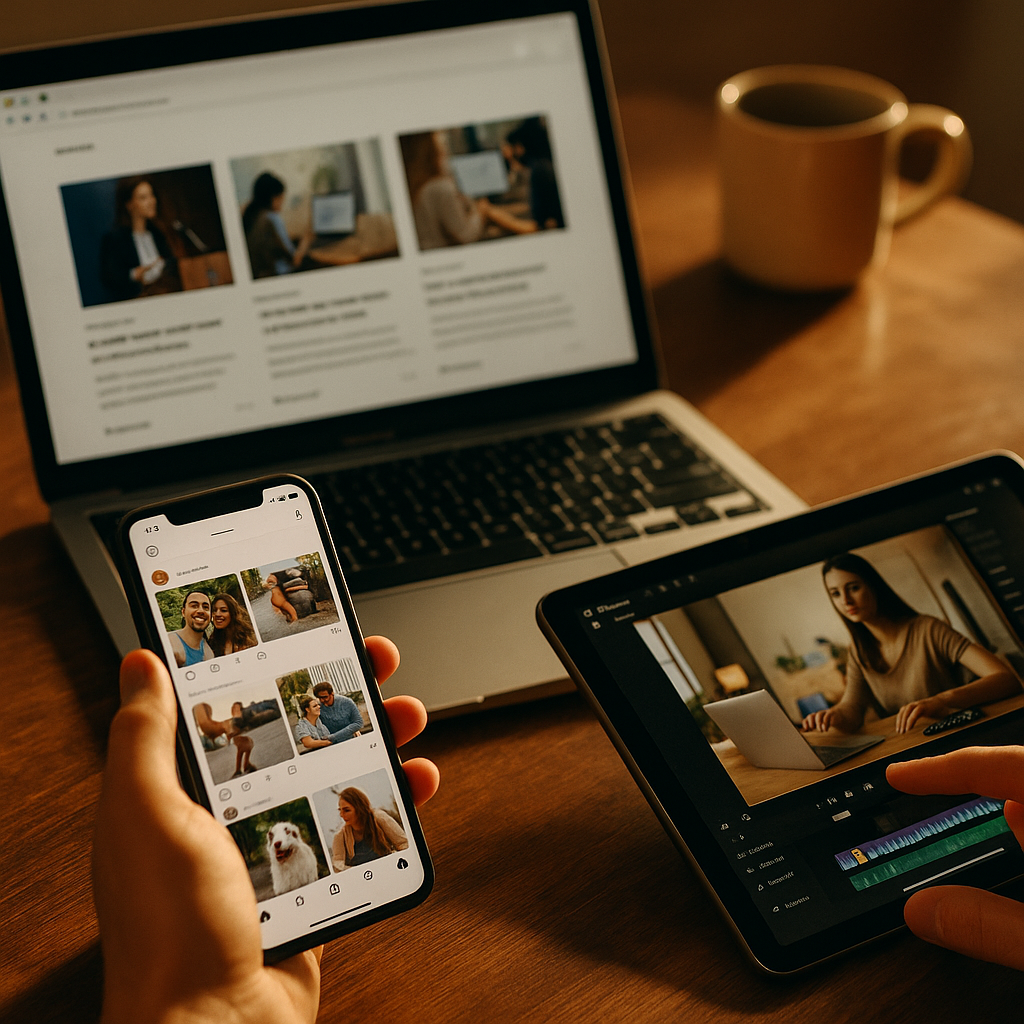
Eighty percent of consumers say user-generated content directly influences their purchase decisions, according to research from Stackla (now part of Nosto). That’s not a rounding error. That’s a mandate. So why do so many brand content calendars still look like a polished ad reel with a token testimonial bolted on? If you’re still treating UGC as a nice-to-have rather than the backbone of your content mix strategy, you’re leaving trust — and conversion — on the table.
Trust Is the Currency, Not the Content Format
Consumers aren’t rejecting brand content because it’s poorly made. They’re rejecting it because it’s predictable. Every brand claims to be “trusted by thousands” and “loved by customers.” The words have lost meaning through overuse. UGC works because it hasn’t been laundered through a brand’s messaging pipeline — it still has fingerprints on it.
Think about the last time you bought something after watching a stranger’s unboxing video versus a brand’s product demo. The stranger’s video had bad lighting, an unedited stumble over words, maybe a kid yelling in the background. It felt real. That imperfection is doing marketing work that no amount of studio production budget can replicate.
UGC doesn’t just supplement brand trust — for a growing share of consumers, it’s the primary evidence that a brand’s claims hold up in the real world.
This is why the smartest brand teams aren’t asking “should we use UGC?” anymore. They’re asking how to architect a mix where owned, earned, and creator content each do a specific job, rather than competing for the same feed real estate.
Three Content Types, Three Different Jobs
Before building a mix strategy, get clear on what each content type actually does for you. Conflating them is where most content calendars go wrong.
- Owned content is your brand’s controlled narrative — product pages, brand campaigns, email, your own social channels. It’s polished, on-brand, and fully compliant. It’s also the least trusted format on its own.
- Earned content is unpaid organic mentions, reviews, press coverage, and customer-generated posts. It’s the hardest to control and the most credible, precisely because you didn’t pay for it.
- Creator content sits in between — paid or gifted partnerships with influencers whose audience already trusts them. It carries some of UGC’s authenticity while giving brands more say over messaging and timing.
None of these formats wins alone. Owned content without social proof reads as self-serving. Earned content without owned infrastructure has no home to convert traffic. Creator content without a UGC layer underneath it can feel like just another ad, especially to audiences who’ve grown wary of #sponsored tags.
Why the Blend Beats Any Single Channel
Data from eMarketer has repeatedly shown that peer recommendations and organic content outperform branded ads on trust metrics, even as brands pour more budget into paid creator deals. But here’s the nuance that gets lost in the “UGC beats ads” headlines: the highest-performing brands aren’t choosing UGC over owned content. They’re sequencing them.
A typical high-converting customer journey today looks like this: someone discovers a product through a creator’s video, checks the brand’s Instagram to confirm it’s legitimate, reads reviews or scrolls a UGC gallery on the product page, then converts. Remove any one layer and the funnel leaks. Kill the owned presence and the creator content has nowhere credible to point back to. Kill the UGC layer and the owned content feels hollow.
This is also why repurposing matters so much operationally. Brands that are winning right now are turning creator and earned content into owned assets — embedding UGC in product pages, using creator clips in paid ads, pulling reviews into email flows. If you haven’t looked at how UGC rights deals turn content into owned assets, that’s the operational unlock most teams are missing. Rights management isn’t legal overhead — it’s the mechanism that lets one piece of content work across five channels instead of one.
The Compliance Layer Nobody Wants to Talk About
Here’s where marketing teams get burned. Blending owned, earned, and creator content sounds simple until legal asks who owns the footage, whether disclosure requirements were met, and what happens when a creator deletes their account six months after the campaign ran.
The FTC’s endorsement guidelines require clear disclosure any time there’s a material connection between a brand and the person posting — paid, gifted, or otherwise. Ignore this and you’re not just risking a fine; you’re risking the exact trust you’re trying to build. Nothing torches credibility faster than a consumer discovering a “genuine” review was a paid placement that wasn’t disclosed.
This is why UGC and creator content strategy can’t sit entirely inside a social team’s Slack channel. It needs contracts, usage rights clauses, and a clear payout structure baked in from the start. Brands standardizing this at scale are already documenting it — see how a UGC content factory standardizes fees and usage rights so legal, finance, and marketing aren’t renegotiating terms every single campaign.
Building the Mix: A Practical Framework
So how do you actually architect this without it becoming an unmanageable content sprawl? A few operating principles that hold up across brand sizes:
Map content to funnel stage, not channel. Owned content dominates consideration and post-purchase (product pages, retention emails). Creator content drives top-of-funnel discovery. Earned content and authentic UGC do the heaviest lifting at the decision point, right before checkout. Build your calendar around this logic instead of just filling channel quotas.
Treat creator content as a pipeline, not a campaign. One-off influencer posts create spikes, not trust. Brands moving toward always-on micro-influencer programs are seeing more consistent authenticity signals because the content volume mimics organic activity. If you’re scaling this, the mechanics around automated product seeding at scale are worth studying — it’s how brands keep a steady drip of authentic content without a bloated ops team.
Shift budget gradually, not all at once. Moving from a handful of macro influencers to a distributed network of micro-creators changes your trust profile and your risk exposure. Teams doing this well are following a phased approach, not a single quarter’s reallocation — the kind of thinking laid out in a roadmap to shift budget from macro to micro-creators.
Build the repurposing pipeline before you need it. Decide upfront which creator and UGC assets get rights cleared for paid amplification, website embedding, or email use. Retrofitting usage rights after a piece of content goes viral is a legal headache and a missed opportunity.
The brands winning on trust aren’t the ones producing the most content — they’re the ones with the tightest system for turning earned and creator content into reusable, compliant, owned assets.
What About Measurement?
This is the part that stalls most content mix strategies at the planning stage. Owned content has clean attribution. Creator and earned content are messier — engagement rates don’t always map cleanly to revenue, and multi-touch journeys make single-channel credit assignment misleading.
Don’t let measurement perfectionism block the strategy. Directional signals matter more than perfect attribution here: track conversion rate lift on product pages with UGC galleries versus without, monitor sentiment shifts after creator campaigns, and watch repeat purchase rates tied to earned mentions. Tools from platforms like Sprout Social and HubSpot can help stitch together engagement and pipeline data even when full attribution isn’t achievable.
If your finance team is pushing back on creator and UGC spend because ROI feels fuzzy, it’s worth framing the conversation around payback windows rather than pure attribution. A finance-legal payback window model gives CFOs a timeline they can actually underwrite, instead of asking them to take trust metrics on faith.
Where This Is Headed
As AI-generated content floods every feed, the premium on verifiably human, unscripted content is only going to rise. Consumers are getting sharper at spotting synthetic polish — even when they can’t articulate why something feels off. That’s going to push the 80% trust figure higher, not lower, over the next few years.
Brands that treat UGC as a checkbox tactic will keep losing ground to competitors who’ve built it into infrastructure: rights-cleared, measurable, and woven through owned and creator channels rather than sitting off to the side as “the reviews section.” The mix isn’t a nice-to-have layer anymore. It’s the whole strategy.
Next step: Audit your last three campaigns and count how many touchpoints combined owned, earned, and creator content in the same customer journey. If the number is close to zero, that’s your starting point — not a full rebuild, just one integrated campaign to prove the model before you scale it.
FAQs
What’s the difference between UGC and creator content?
UGC is unpaid content created organically by customers or fans, while creator content typically involves a paid or gifted partnership with an influencer. UGC tends to carry more trust because there’s no financial relationship, but creator content offers more control over messaging and timing.
How much of a content calendar should be UGC versus owned content?
There’s no universal ratio, but many performance-focused brands aim for UGC and creator content to represent 40-60% of social and product-page content, with owned content handling brand positioning, education, and retention messaging.
Do we need explicit permission to repost UGC?
Yes. Even if content is publicly posted, using it in ads, emails, or product pages typically requires explicit usage rights. Building a standardized rights process upfront avoids legal exposure later.
How do we measure UGC’s impact on trust and conversion?
Track conversion rate differences on pages with and without UGC, monitor sentiment before and after creator campaigns, and watch repeat purchase behavior tied to earned mentions. Full last-touch attribution is rarely realistic for this content type.
Is creator content subject to the same disclosure rules as traditional ads?
Yes. The FTC requires clear disclosure of any material connection between a brand and a content creator, whether the relationship involves payment, free product, or other compensation.
Top Influencer Marketing Agencies
The leading agencies shaping influencer marketing in 2026
Agencies ranked by campaign performance, client diversity, platform expertise, proven ROI, industry recognition, and client satisfaction. Assessed through verified case studies, reviews, and industry consultations.
Moburst

-
2

The Shelf
Boutique Beauty & Lifestyle Influencer AgencyA data-driven boutique agency specializing exclusively in beauty, wellness, and lifestyle influencer campaigns on Instagram and TikTok. Best for brands already focused on the beauty/personal care space that need curated, aesthetic-driven content.Clients: Pepsi, The Honest Company, Hims, Elf Cosmetics, Pure LeafVisit The Shelf → -
3

Audiencly
Niche Gaming & Esports Influencer AgencyA specialized agency focused exclusively on gaming and esports creators on YouTube, Twitch, and TikTok. Ideal if your campaign is 100% gaming-focused — from game launches to hardware and esports events.Clients: Epic Games, NordVPN, Ubisoft, Wargaming, Tencent GamesVisit Audiencly → -
4

Viral Nation
Global Influencer Marketing & Talent AgencyA dual talent management and marketing agency with proprietary brand safety tools and a global creator network spanning nano-influencers to celebrities across all major platforms.Clients: Meta, Activision Blizzard, Energizer, Aston Martin, WalmartVisit Viral Nation → -
5

The Influencer Marketing Factory
TikTok, Instagram & YouTube CampaignsA full-service agency with strong TikTok expertise, offering end-to-end campaign management from influencer discovery through performance reporting with a focus on platform-native content.Clients: Google, Snapchat, Universal Music, Bumble, YelpVisit TIMF → -
6

NeoReach
Enterprise Analytics & Influencer CampaignsAn enterprise-focused agency combining managed campaigns with a powerful self-service data platform for influencer search, audience analytics, and attribution modeling.Clients: Amazon, Airbnb, Netflix, Honda, The New York TimesVisit NeoReach → -
7

Ubiquitous
Creator-First Marketing PlatformA tech-driven platform combining self-service tools with managed campaign options, emphasizing speed and scalability for brands managing multiple influencer relationships.Clients: Lyft, Disney, Target, American Eagle, NetflixVisit Ubiquitous → -
8

Obviously
Scalable Enterprise Influencer CampaignsA tech-enabled agency built for high-volume campaigns, coordinating hundreds of creators simultaneously with end-to-end logistics, content rights management, and product seeding.Clients: Google, Ulta Beauty, Converse, AmazonVisit Obviously →