


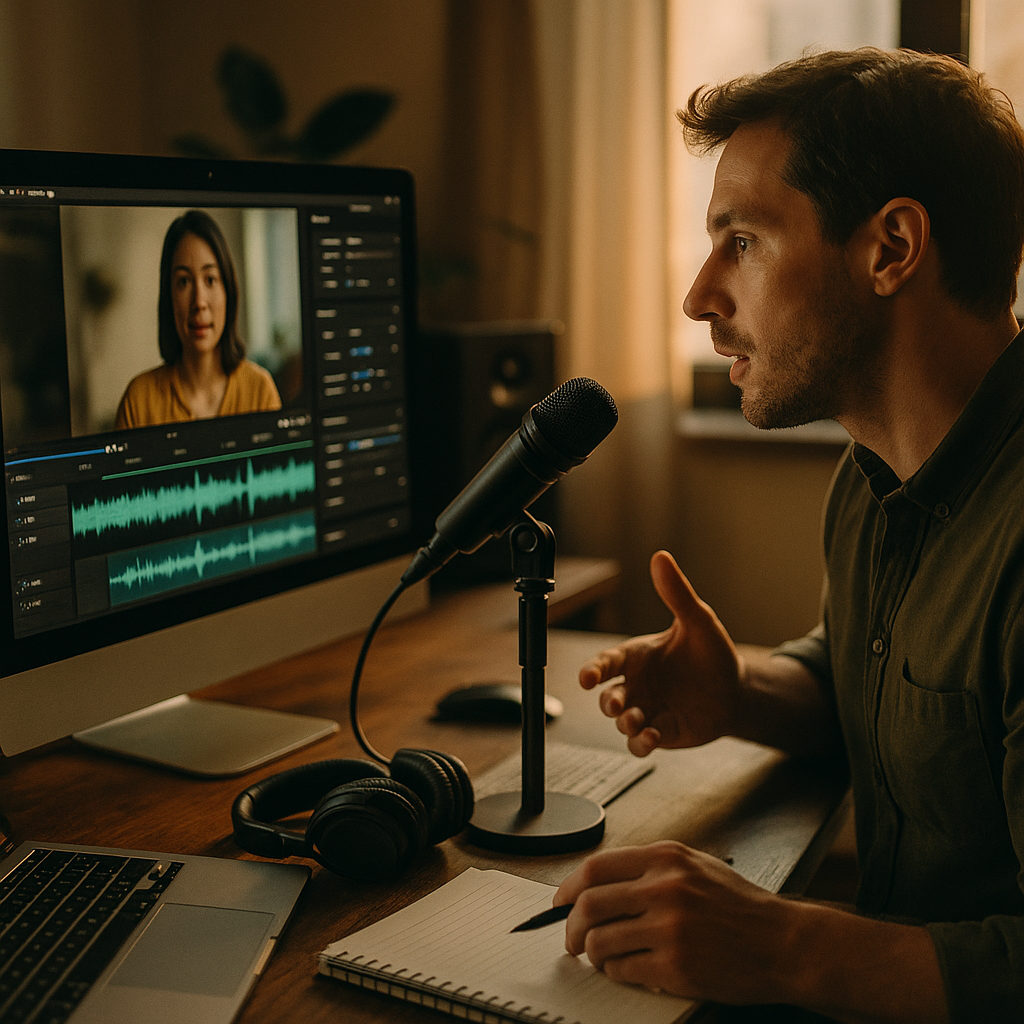
Seventy percent of ad recall lives in the audio, not the visual. So why do most AI-generated ad briefs still treat music and dialogue as an afterthought, bolted on after the visuals are locked? If you’re scaling AI-generated ads across audiences without adapting the soundtrack and script tone to match, you’re leaving performance on the table.
Dynamic music and dialogue variants aren’t a gimmick. They’re becoming the difference between an ad that gets skipped and one that gets watched to completion. But briefing for emotional adaptability requires a different muscle than briefing for visual variants alone.
Why Audio Got Left Behind in the AI Creative Rush
Most brands jumped into AI video generation chasing visual scale: more product angles, more backgrounds, more aspect ratios. Tools like the ones covered in our piece on multi-angle shot generation made it trivial to spin up dozens of visual permutations from a single shoot.
Audio didn’t keep pace. Teams would generate twenty visual variants, then slap the same generic royalty-free track and voiceover across all of them. That’s a missed opportunity, and it’s increasingly a competitive gap. Emotionally flat audio undercuts even the sharpest visual work.
Here’s the uncomfortable truth: a viewer’s emotional read on an ad happens in milliseconds, and audio is doing most of that heavy lifting. A tense synth line reads as urgency. A warm acoustic guitar reads as trust. Deadpan delivery reads as comedy; breathless delivery reads as excitement. If your visual variants are built for different funnel stages or different audience segments, but the music and dialogue stay static, you’re sending mixed signals.
An ad optimized visually for a cold-audience scroll-stopper but scored with the same music as your retargeting closer is fighting itself before it even reaches the algorithm.
What “Emotionally Adaptive” Actually Means in Practice
Emotionally adaptive video variants pair the emotional register of music and dialogue to the specific job that ad variant is doing. It’s not about having more assets. It’s about having the right emotional tone matched to funnel position, platform norms, and audience psychographics.
Think of it in three layers:
- Tonal register: Urgent, playful, aspirational, reassuring, nostalgic — pick a lane per variant, not per campaign.
- Pacing and rhythm: Music tempo and dialogue cadence should match platform attention spans. A TikTok cold-open needs faster payoff than a YouTube pre-roll.
- Delivery style: Same script, different read. AI voice generation now allows brands to test conversational, authoritative, or peer-to-peer delivery on identical copy.
This layered approach echoes what we’ve written about in modular storyboard design: build once, then remix systematically rather than starting from scratch for every placement. Audio deserves the same modular treatment as visuals.
The Brief Has to Change First
Traditional creative briefs treat music as a line item: “upbeat, licensed track, TBD.” That worked when you produced one hero cut and a few cutdowns. It fails when you’re generating fifteen variants for fifteen audience segments across five platforms.
A brief built for dynamic audio needs to specify emotional targets per variant, not just per campaign. That means your brief template needs new fields entirely. Instead of one “tone” line, you need a tone-per-variant matrix that maps directly to audience segment and funnel stage.
Practically, this looks like a table in your brief: variant ID, target segment, funnel stage, desired emotional register, music tempo range (BPM), dialogue pacing (words per minute), and delivery style. It’s more upfront work. It saves enormous rework downstream, and it gives your AI generation tools actual parameters to work with instead of vague adjectives.
Briefing Dialogue: Same Script, Different Emotional Read
One underused tactic: write a single core script, then brief three to five delivery variants using AI voice synthesis. Tools from ElevenLabs and similar platforms let you generate the same lines with dramatically different emotional colorings without re-recording a human voice actor five times.
This is where briefs often fall short. Creative teams write “friendly tone” or “confident tone” without defining what that means acoustically. Give your AI tools and your human reviewers actual anchors:
- Reference clips of the exact emotional read you want (timestamp specific moments, don’t just say “like this ad”)
- Target speech rate (a 20% pacing difference changes perceived urgency dramatically)
- Pitch variation notes — flat delivery reads as calm authority, more pitch movement reads as enthusiasm
- Pause placement — where should the voice breathe for emphasis versus where should it rush
This level of specificity feels excessive until you’ve sat through a review cycle where five stakeholders each interpret “confident” differently. Precision in the brief prevents that entire argument from happening in the first place.
It also pairs naturally with hook-structure thinking. Our guide on AI hook-structure briefs covers how the first three seconds carry disproportionate weight; the emotional tone of the opening line, delivered right, does as much scroll-stopping work as the visual hook.
Music Selection Is Now a Data Problem, Not a Vibe Check
Music supervisors used to pick tracks by feel. That instinct still matters, but at scale you need data structure underneath it. AI music generation tools (Mubert, Soundraw, and increasingly built-in options inside ad platforms) let you generate variants tagged by mood, tempo, and instrumentation, then A/B test them against performance data.
The brief should specify a mood taxonomy your team actually uses consistently, not one invented fresh for each campaign. Something like: urgent/energetic, warm/trustworthy, playful/light, premium/restrained, nostalgic/sentimental. Map each ad variant to one of these categories, and let performance data tell you which mood wins for which segment over time.
Brands running systematic music-mood testing are finding completion rates shift by double digits between an “urgent” cut and a “warm” cut of the identical visual sequence, according to internal creative testing shared by several performance marketing teams in 2026.
That’s a meaningful lever, and it’s one most teams aren’t pulling yet because their briefs never asked for it.
Operationalizing This Without Blowing Up Your Timeline
None of this works if it triples production time. The point of AI-generated ad variants is speed and scale, not more manual review cycles. A few operational fixes:
Build a reusable emotional-tone library. Don’t reinvent tone definitions per campaign. Create a shared reference doc with example clips, BPM ranges, and delivery notes for each of your five or six core emotional registers. New briefs pull from this library instead of starting blank.
Batch by emotional register, not by visual asset. If you’re generating twenty variants, group your work by “which five need the urgent register” rather than going asset-by-asset. It’s more efficient for both human reviewers and AI generation queues.
Set approval thresholds by risk, not by volume. Not every dialogue variant needs full legal and brand review. Establish which changes (claims, comparative language, pricing mentions) require sign-off and which (pacing, music swap) can ship on creative director approval alone. This is similar in spirit to the tiered review models discussed in our piece on fixing creative briefs for AI labeling — speed comes from clear tiers, not from skipping review altogether.
Test in waves, not all at once. Borrowing from the structure in multi-creator testing waves, run your emotional variants through a small-budget testing wave before committing full media spend. Three tonal variants tested cheaply beat fifteen variants launched blind.
Compliance Angle: Emotional Manipulation Has Limits
Dynamic emotional targeting raises a fair question: where’s the line between smart creative and manipulative advertising? Regulators are paying attention to AI-driven personalization broadly, and the FTC has signaled ongoing scrutiny of deceptive or manipulative AI-generated content, particularly synthetic voice and likeness use.
Build guardrails into the brief itself: no synthetic voice impersonating a real, identifiable person without consent and disclosure; no urgency cues (music tempo, dialogue pacing) paired with false scarcity claims. If you’re running countdown or urgency-driven creative, cross-reference the guidance in restock countdown content without FTC risk before your music and pacing choices amplify a claim your legal team hasn’t cleared.
What This Means for Team Structure
Emotionally adaptive briefing changes who needs a seat at the table. Sound design and voice direction can’t be an afterthought handled by whoever’s free that week. Brands doing this well are either training creative strategists in basic audio literacy or bringing in a dedicated audio producer role for AI campaign work, even part-time.
Agencies report this shift too. Clients increasingly ask for tone-matched audio variants as a standard deliverable, not an upsell. According to industry benchmarking from eMarketer, video ad spend continues shifting toward short-form, high-variant formats, which makes audio versioning a scale problem every performance team will eventually face, not a nice-to-have.
If your current briefing template doesn’t have a field for emotional register per variant, that’s the gap to close first. Everything else, tools, testing cadence, review tiers, builds on top of that foundation.
Next Step
Audit your last five AI-generated video campaigns: if the music and dialogue tone was identical across every audience variant, you’ve been running one emotional strategy dressed up as several. Fix the brief template before you fix the tool stack.
Frequently Asked Questions
What’s the difference between a standard AI video brief and an emotionally adaptive one?
A standard brief specifies visuals and a single tone note for the whole campaign. An emotionally adaptive brief maps a specific emotional register, music tempo, and dialogue delivery style to each individual variant, tied to audience segment and funnel stage.
Do I need different AI tools for adaptive music and dialogue, or can existing platforms handle it?
Many existing AI video and voice platforms already support mood-tagged music generation and multiple delivery reads of the same script. The gap usually isn’t the tooling, it’s the brief not specifying clear enough parameters for the tool to act on.
How many emotional variants should a typical campaign test?
Start with three to five core emotional registers (for example: urgent, warm, playful, premium, nostalgic) rather than dozens of micro-variations. Test in a small wave before scaling media spend behind the winners.
Are there compliance risks specific to AI-generated dialogue and music?
Yes. Synthetic voice work raises consent and disclosure questions, and urgency-coded music or pacing paired with unsubstantiated scarcity claims can create FTC exposure. Build review checkpoints for both into your brief before production.
How do we measure whether emotional adaptation is actually working?
Track completion rate, click-through rate, and cost per acquisition segmented by emotional register, not just by visual creative ID. Patterns often emerge that a single “best performing ad” metric hides.
Frequently Asked Questions
What’s the difference between a standard AI video brief and an emotionally adaptive one?
A standard brief specifies visuals and a single tone note for the whole campaign. An emotionally adaptive brief maps a specific emotional register, music tempo, and dialogue delivery style to each individual variant, tied to audience segment and funnel stage.
Do I need different AI tools for adaptive music and dialogue, or can existing platforms handle it?
Many existing AI video and voice platforms already support mood-tagged music generation and multiple delivery reads of the same script. The gap usually isn’t the tooling, it’s the brief not specifying clear enough parameters for the tool to act on.
How many emotional variants should a typical campaign test?
Start with three to five core emotional registers (for example: urgent, warm, playful, premium, nostalgic) rather than dozens of micro-variations. Test in a small wave before scaling media spend behind the winners.
Are there compliance risks specific to AI-generated dialogue and music?
Yes. Synthetic voice work raises consent and disclosure questions, and urgency-coded music or pacing paired with unsubstantiated scarcity claims can create FTC exposure. Build review checkpoints for both into your brief before production.
How do we measure whether emotional adaptation is actually working?
Track completion rate, click-through rate, and cost per acquisition segmented by emotional register, not just by visual creative ID. Patterns often emerge that a single “best performing ad” metric hides.
Top Influencer Marketing Agencies
The leading agencies shaping influencer marketing in 2026
Agencies ranked by campaign performance, client diversity, platform expertise, proven ROI, industry recognition, and client satisfaction. Assessed through verified case studies, reviews, and industry consultations.
Moburst

-
2

The Shelf
Boutique Beauty & Lifestyle Influencer AgencyA data-driven boutique agency specializing exclusively in beauty, wellness, and lifestyle influencer campaigns on Instagram and TikTok. Best for brands already focused on the beauty/personal care space that need curated, aesthetic-driven content.Clients: Pepsi, The Honest Company, Hims, Elf Cosmetics, Pure LeafVisit The Shelf → -
3

Audiencly
Niche Gaming & Esports Influencer AgencyA specialized agency focused exclusively on gaming and esports creators on YouTube, Twitch, and TikTok. Ideal if your campaign is 100% gaming-focused — from game launches to hardware and esports events.Clients: Epic Games, NordVPN, Ubisoft, Wargaming, Tencent GamesVisit Audiencly → -
4

Viral Nation
Global Influencer Marketing & Talent AgencyA dual talent management and marketing agency with proprietary brand safety tools and a global creator network spanning nano-influencers to celebrities across all major platforms.Clients: Meta, Activision Blizzard, Energizer, Aston Martin, WalmartVisit Viral Nation → -
5

The Influencer Marketing Factory
TikTok, Instagram & YouTube CampaignsA full-service agency with strong TikTok expertise, offering end-to-end campaign management from influencer discovery through performance reporting with a focus on platform-native content.Clients: Google, Snapchat, Universal Music, Bumble, YelpVisit TIMF → -
6

NeoReach
Enterprise Analytics & Influencer CampaignsAn enterprise-focused agency combining managed campaigns with a powerful self-service data platform for influencer search, audience analytics, and attribution modeling.Clients: Amazon, Airbnb, Netflix, Honda, The New York TimesVisit NeoReach → -
7

Ubiquitous
Creator-First Marketing PlatformA tech-driven platform combining self-service tools with managed campaign options, emphasizing speed and scalability for brands managing multiple influencer relationships.Clients: Lyft, Disney, Target, American Eagle, NetflixVisit Ubiquitous → -
8

Obviously
Scalable Enterprise Influencer CampaignsA tech-enabled agency built for high-volume campaigns, coordinating hundreds of creators simultaneously with end-to-end logistics, content rights management, and product seeding.Clients: Google, Ulta Beauty, Converse, AmazonVisit Obviously →