


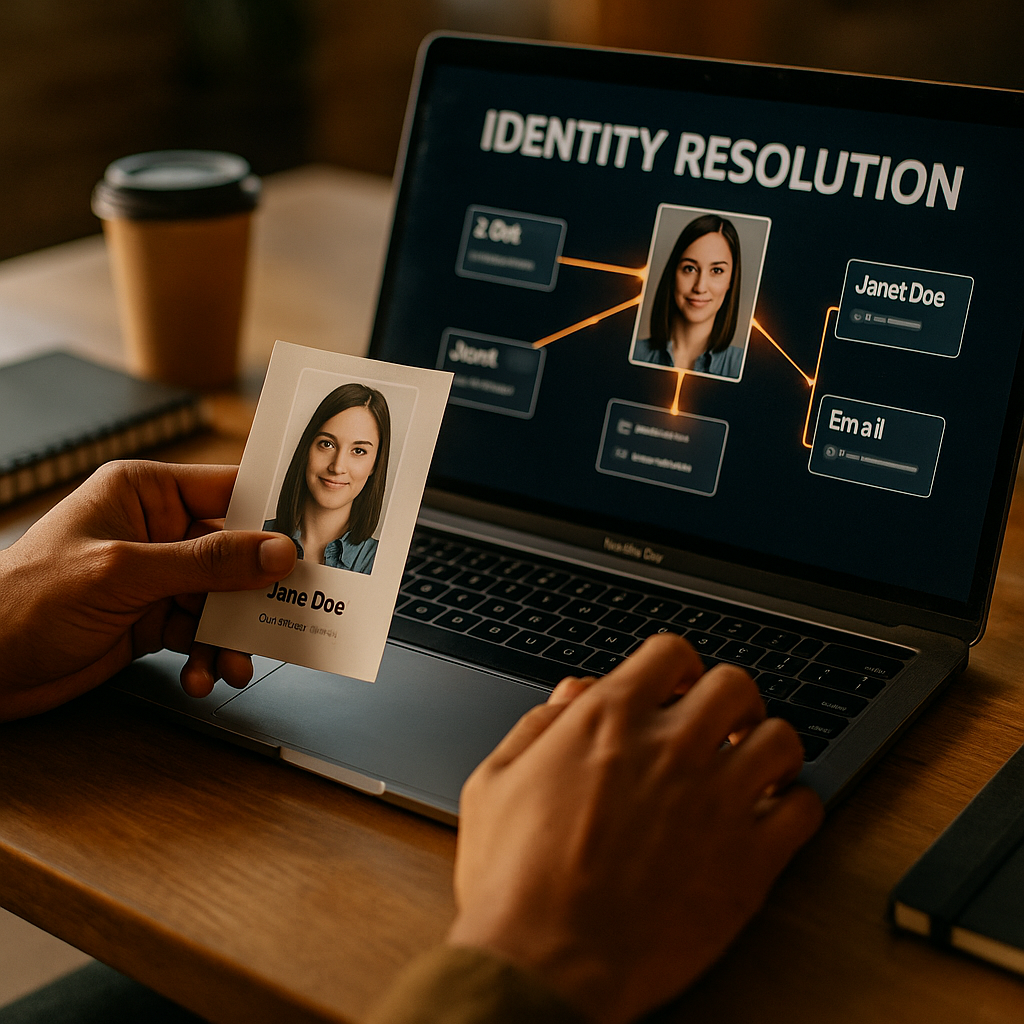
Somewhere between 70% and 98% of your website traffic right now is anonymous. No email, no cookie match, no CRM record. That’s the gap Wunderkind’s identity-resolution engine inside Cordial’s platform claims to close, turning unknown sessions into addressable profiles fast enough to trigger a message before the visitor leaves the page. But “fast enough” and “accurate enough” are doing a lot of heavy lifting in that sentence, and technical buyers deserve more than a vendor deck to evaluate the claim.
Why Anonymous Traffic Is Marketing’s Biggest Blind Spot
Every marketer has stared at a Google Analytics dashboard and wondered who, exactly, is behind that spike in sessions. Most of them never find out. Third-party cookie decay, browser privacy defaults, and ad blockers have made the anonymous visitor problem structural, not incidental. That’s why anonymous visitor identification has become its own product category rather than a feature bolted onto a CDP.
Wunderkind built its reputation resolving this exact problem for retail and travel brands long before the Cordial merger. The pitch now is simple: fold that identity graph directly into Cordial’s messaging orchestration layer, so resolution and activation happen in the same platform instead of bouncing through a middleware handoff. Fewer systems, fewer latency hops, fewer places for a match to go stale.
Inside the Match: Deterministic First, Probabilistic as Backstop
Identity resolution vendors love to blur the line between deterministic and probabilistic matching because deterministic sounds more trustworthy. Here’s the honest breakdown of how it works in practice.
- Deterministic signals: hashed emails, logged-in session tokens, loyalty IDs, and first-party cookie matches tied to a known customer record. High confidence, lower volume.
- Probabilistic signals: device fingerprinting, IP correlation, browsing pattern similarity, and behavioral clustering. Higher volume, but confidence scores vary widely by traffic source and device mix.
- Blended output: Wunderkind’s engine reportedly weights deterministic matches heavily and only falls back to probabilistic signals when no first-party identifier exists, which is the more defensible architecture compared to vendors that blend both indiscriminately.
The technical detail buyers should demand in a proof of concept: ask for the match rate broken out by signal type, not just a blended headline number. A 42% match rate sounds impressive until you learn 30 points of it came from probabilistic guesses on mobile traffic with high churn risk.
A blended match rate without a deterministic-versus-probabilistic breakdown is a vanity metric, not a technical spec. Insist on the split before you sign anything.
The Numbers Buyers Actually Care About
Independent testing on this exact question found meaningful gaps between marketed and observed match rates once real traffic mix entered the equation. Our own comparison of match rate claims against standalone CDPs showed the combined platform outperforming generic identity tools on retail traffic specifically, but the advantage narrowed considerably on B2B and long-consideration-cycle sites where repeat visits are sparse.
For context, the broader identity resolution market has settled around a rough industry baseline of 5% to 15% match rates for cold traffic, a figure we stress-tested in our match rate baseline analysis. Anything a vendor claims well above that range on unauthenticated, first-touch traffic deserves a skeptical follow-up question: what’s the sample size, and how was “match” defined?
Analysts at eMarketer have tracked the broader identity resolution market’s growth as brands shift budget away from third-party cookie dependent tactics, and Statista data on browser market share helps explain why match rates vary so much by audience: Safari and Firefox users behave very differently from Chrome users when it comes to fingerprinting resistance.
Real-Time Messaging Only Works If Identity Resolves in Milliseconds
Here’s the part buyers underestimate. Identity resolution accuracy matters less than latency if your use case is real-time, on-site messaging. A visitor who abandons a cart doesn’t wait around for a batch job to catch up. The window for triggering a relevant message, an exit-intent offer, a personalized product recommendation, a browse-abandonment email, closes in seconds.
Cordial’s architecture routes the resolved identity directly into its messaging decisioning engine, which is the operational upside of the merger. Instead of exporting matched IDs to a separate ESP or messaging tool, the match and the send live in one pipeline. We covered the practical effect of this on campaign timing in our send-time personalization review, six months after the initial rollout, and the results were more mixed than the launch marketing suggested. Send-time accuracy improved for known customers, but net-new anonymous-to-known conversions lagged behind projections for a full quarter before stabilizing.
Ask your vendor rep this directly: what’s the median time from anonymous session detection to a resolved, addressable profile ready for triggered messaging? If they can’t give you a number in milliseconds or low single-digit seconds, that’s a gap worth pressure-testing in a pilot before committing budget.
Consent and Compliance: Where the Real Risk Hides
Identity resolution and privacy compliance are in constant tension, and that tension doesn’t disappear because the vendor has a nice trust page. Every deterministic match tied to a hashed email still requires a lawful basis for processing under most privacy frameworks, and probabilistic matching using device fingerprints sits in genuinely murky territory in several jurisdictions.
Before you greenlight this stack, get answers on:
- How consent state is captured and propagated across the identity graph in real time, not just at the point of collection.
- Whether fingerprinting-based probabilistic matches are disclosed in your privacy policy in language your legal team actually reviewed.
- How opt-outs and deletion requests cascade through Wunderkind’s resolved profiles and Cordial’s messaging queues simultaneously.
Regulators aren’t waiting for the martech industry to sort this out on its own. The FTC has signaled increased scrutiny of tracking technologies that operate without clear consumer disclosure, and the UK’s ICO has published specific guidance on cookies and similar technologies that applies directly to fingerprinting-based identity resolution. If your legal team hasn’t reviewed the specific matching methodology, not just the vendor’s general privacy statement, you’re carrying risk you can’t quantify.
Buyer’s Checklist Before You Sign
Skip the demo theater. These are the questions that actually separate a durable identity resolution investment from an expensive experiment.
- Request a signal-type breakdown of match rates, not a blended number, tested against your own traffic in a pilot period.
- Confirm the deterministic-to-probabilistic ratio and how it shifts across mobile, desktop, and app traffic.
- Get median resolution latency in writing, and test it under real traffic load, not a sandbox environment.
- Audit how consent and deletion requests propagate through both the identity engine and the messaging layer.
- Compare total cost against a standalone CDP plus separate identity resolution tool, factoring in integration overhead. Our standalone CDP comparison is a useful starting benchmark.
It’s also worth reading the skeptical coverage, not just the launch announcements. Our reporting on the identity decisioning claims under scrutiny after the merger closed found several gaps between what was marketed at launch and what independent testing later confirmed. That’s not a reason to dismiss the platform outright, but it is a reason to run your own pilot before scaling spend.
FAQs
What is identity resolution in the context of Wunderkind and Cordial specifically?
It’s the process of matching anonymous website visitors to known customer profiles using a mix of deterministic signals like hashed emails and probabilistic signals like device fingerprinting, then feeding that resolved identity directly into Cordial’s real-time messaging engine for immediate activation.
How accurate are Wunderkind’s match rates compared to industry benchmarks?
Independent testing shows performance above the common 5% to 15% industry baseline on retail traffic specifically, but gains narrow considerably on B2B or low-frequency traffic. Buyers should always request a pilot using their own traffic before trusting a blended headline figure.
Does real-time identity resolution create additional privacy compliance risk?
Yes, particularly around probabilistic matching using device fingerprints, which sits in unclear regulatory territory in several jurisdictions. Legal teams should review the specific matching methodology, not just a general vendor privacy statement, before approving deployment.
How fast does the match need to happen for real-time messaging to work?
For use cases like exit-intent offers or cart-abandonment triggers, resolution needs to happen in milliseconds to low single-digit seconds. Anything slower and the messaging opportunity has typically already passed.
Is combining identity resolution and messaging in one platform better than using separate tools?
It reduces integration overhead and latency between match and send, which is the core operational advantage of the Wunderkind-Cordial merger. But buyers should still benchmark total cost and match quality against best-of-breed alternatives before assuming consolidation automatically wins.
Next step: before signing a contract, run a 30-day pilot on your own traffic and demand the signal-type match rate breakdown alongside median resolution latency. If the vendor can’t produce both numbers in writing, you’re not evaluating a technical solution, you’re evaluating a sales pitch.
FAQs
What is identity resolution in the context of Wunderkind and Cordial specifically?
It’s the process of matching anonymous website visitors to known customer profiles using a mix of deterministic signals like hashed emails and probabilistic signals like device fingerprinting, then feeding that resolved identity directly into Cordial’s real-time messaging engine for immediate activation.
How accurate are Wunderkind’s match rates compared to industry benchmarks?
Independent testing shows performance above the common 5% to 15% industry baseline on retail traffic specifically, but gains narrow considerably on B2B or low-frequency traffic. Buyers should always request a pilot using their own traffic before trusting a blended headline figure.
Does real-time identity resolution create additional privacy compliance risk?
Yes, particularly around probabilistic matching using device fingerprints, which sits in unclear regulatory territory in several jurisdictions. Legal teams should review the specific matching methodology, not just a general vendor privacy statement, before approving deployment.
How fast does the match need to happen for real-time messaging to work?
For use cases like exit-intent offers or cart-abandonment triggers, resolution needs to happen in milliseconds to low single-digit seconds. Anything slower and the messaging opportunity has typically already passed.
Is combining identity resolution and messaging in one platform better than using separate tools?
It reduces integration overhead and latency between match and send, which is the core operational advantage of the Wunderkind-Cordial merger. But buyers should still benchmark total cost and match quality against best-of-breed alternatives before assuming consolidation automatically wins.
Top Influencer Marketing Agencies
The leading agencies shaping influencer marketing in 2026
Agencies ranked by campaign performance, client diversity, platform expertise, proven ROI, industry recognition, and client satisfaction. Assessed through verified case studies, reviews, and industry consultations.
Moburst

-
2

The Shelf
Boutique Beauty & Lifestyle Influencer AgencyA data-driven boutique agency specializing exclusively in beauty, wellness, and lifestyle influencer campaigns on Instagram and TikTok. Best for brands already focused on the beauty/personal care space that need curated, aesthetic-driven content.Clients: Pepsi, The Honest Company, Hims, Elf Cosmetics, Pure LeafVisit The Shelf → -
3

Audiencly
Niche Gaming & Esports Influencer AgencyA specialized agency focused exclusively on gaming and esports creators on YouTube, Twitch, and TikTok. Ideal if your campaign is 100% gaming-focused — from game launches to hardware and esports events.Clients: Epic Games, NordVPN, Ubisoft, Wargaming, Tencent GamesVisit Audiencly → -
4

Viral Nation
Global Influencer Marketing & Talent AgencyA dual talent management and marketing agency with proprietary brand safety tools and a global creator network spanning nano-influencers to celebrities across all major platforms.Clients: Meta, Activision Blizzard, Energizer, Aston Martin, WalmartVisit Viral Nation → -
5

The Influencer Marketing Factory
TikTok, Instagram & YouTube CampaignsA full-service agency with strong TikTok expertise, offering end-to-end campaign management from influencer discovery through performance reporting with a focus on platform-native content.Clients: Google, Snapchat, Universal Music, Bumble, YelpVisit TIMF → -
6

NeoReach
Enterprise Analytics & Influencer CampaignsAn enterprise-focused agency combining managed campaigns with a powerful self-service data platform for influencer search, audience analytics, and attribution modeling.Clients: Amazon, Airbnb, Netflix, Honda, The New York TimesVisit NeoReach → -
7

Ubiquitous
Creator-First Marketing PlatformA tech-driven platform combining self-service tools with managed campaign options, emphasizing speed and scalability for brands managing multiple influencer relationships.Clients: Lyft, Disney, Target, American Eagle, NetflixVisit Ubiquitous → -
8

Obviously
Scalable Enterprise Influencer CampaignsA tech-enabled agency built for high-volume campaigns, coordinating hundreds of creators simultaneously with end-to-end logistics, content rights management, and product seeding.Clients: Google, Ulta Beauty, Converse, AmazonVisit Obviously →