


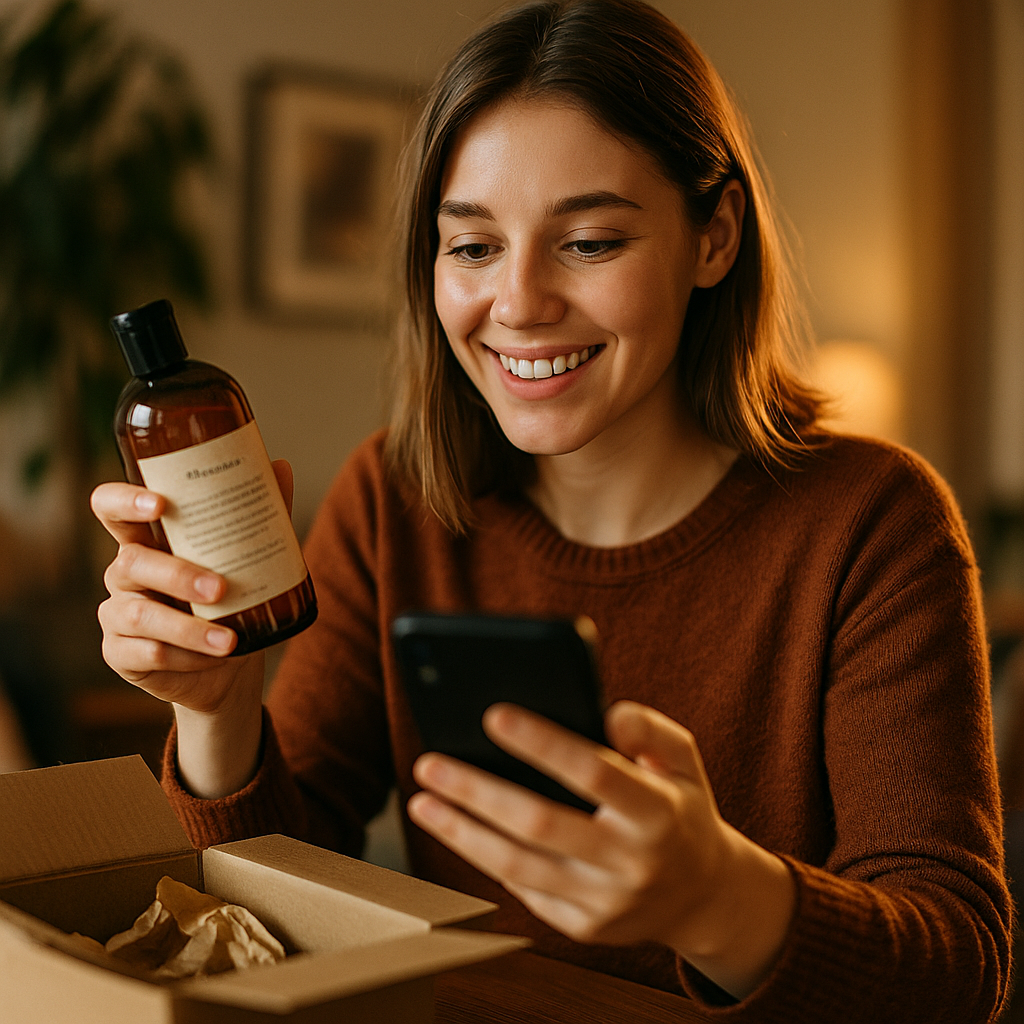
Ninety-two percent of consumers say they trust recommendations from people over brands, but almost nobody talks about how fast that trust decays when the recommendation comes from a single unboxing clip. The nano-influencer repeat-purchase format flips the script: instead of paying for first impressions, brands direct micro-creators to document product use over weeks or months. It’s slower. It’s harder to scale. It also converts better.
The Problem With First-Impression Content
Unboxing videos and “first try” reactions dominate influencer briefs because they’re fast to produce and easy to schedule. A creator gets the product, films within 48 hours, posts, and the brand moves on. The economics make sense on paper: quick turnaround, predictable cost, clean content calendar.
But viewers have caught on. A first-impression video answers one question only: does this look good on day one? It says nothing about whether the moisturizer still works after a month, whether the blender blade dulls, or whether the supplement actually does what the label promises. Audiences scrolling TikTok and Instagram have sat through thousands of enthusiastic unboxings that were never followed up. Skepticism is now the default response, not the exception.
A product that looks great in a 15-second unboxing and disappears from a creator’s feed afterward sends its own signal, and it’s not a good one.
This is where nano-creators, typically defined as accounts with 1,000 to 10,000 followers, have an advantage larger influencers structurally cannot replicate. Their audiences are small enough that every post feels personal, and their content history is easy to check. If a nano-creator posted about a skincare product in March and never mentioned it again, that gap is visible and it matters.
What Repeat-Purchase Documentation Actually Looks Like
The format isn’t complicated to describe, even if it’s harder to execute than a standard gifting campaign. Brands identify nano-creators willing to commit to a documented usage arc, typically three to six touchpoints spread over eight to twelve weeks. The creator posts an initial reaction, then a genuine two-week check-in, a one-month update, and ideally a “would I repurchase” video once the product runs out.
That last beat is the entire point. A creator who buys the product again, on camera, with their own money, is producing the single most persuasive piece of content a brand can get. It’s the opposite of a paid placement. It’s proof of retention, dramatized.
- Initial use video (days 1-3): honest first reaction, no scripted enthusiasm required
- Mid-point check-in (week 2-4): does it still work, any surprises, any friction
- Depletion or milestone video (week 8-12): results, routine changes, repurchase decision
- Optional: unprompted repurchase clip, filmed whenever the creator actually runs out
Brands running this format well borrow structure from founder-led product demo briefs, where the emphasis is on functional proof rather than polish. The difference here is time. You’re not asking a creator to demonstrate a feature once. You’re asking them to live with the product long enough to have an honest opinion.
Why Nano-Creators Are the Right Format for This, Not Macro Influencers
Macro and mid-tier influencers are paid to produce content on a schedule, and their audiences know it. A repeat-purchase arc requires the audience to believe the creator isn’t performing loyalty, they’re reporting it. That believability only holds at smaller scale, where the relationship between creator and follower still resembles a peer connection rather than a media buy.
There’s also a cost argument that CFOs will actually like. Nano-creators typically charge a fraction of macro-influencer rates, sometimes accepting product plus a modest fee instead of a full campaign rate. Running a three-to-four-touchpoint arc with twenty nano-creators can cost less than a single macro-influencer unboxing post, while generating four times the content volume and, more importantly, longitudinal proof.
This isn’t a replacement for every influencer tier. Awareness campaigns still benefit from reach-driven placements, and creator collabs that double reach remain useful for top-of-funnel goals. But for consideration and retention-stage marketing, nano repeat-purchase documentation does something reach can’t: it answers the “does this actually work” question that drives purchase decisions for considered goods like skincare, supplements, kitchen appliances, and subscription products.
Briefing for Honesty Without Losing Brand Control
The hardest part of this format isn’t finding creators willing to commit to a multi-week arc. It’s writing a brief that protects the brand without scripting the outcome. If the second or third video reads as scripted, the entire format collapses, because the value proposition was believability in the first place.
Effective briefs for this format focus on prompts, not lines. Instead of telling a creator what to say at the one-month mark, brands should specify what questions the video needs to answer: has your routine changed, would you buy it again, what would you tell a friend who asked. Let the creator answer in their own words, even if the answer includes minor criticism. A nano-creator who mentions a small downside at the two-week mark and still shows up at week eight to repurchase is more convincing than ten flawless five-star reviews.
This is also where legal and compliance teams need a seat at the table early, not after content is filmed. The FTC’s endorsement guidelines require clear disclosure across every touchpoint in the arc, not just the first post. A creator who discloses “gifted” on day one but forgets to disclose on the week-eight repurchase video creates a compliance gap that can expose the brand to enforcement risk. Brands building repeat-purchase campaigns should borrow the disclosure cadence used in real experience video briefs that build FTC-safe trust, where every video in a series carries its own disclosure rather than relying on a single upfront mention.
For teams that need briefs to move through legal review without friction, the structure used in short-form sales briefs that pass legal review fast translates well here: define the disclosure requirement once, apply it as a template across every stage of the arc, and eliminate the back-and-forth that slows down multi-touchpoint campaigns.
Tracking ROI When the Payoff Takes Months
Marketing teams accustomed to measuring influencer ROI within a two-week attribution window will need to adjust expectations. A repeat-purchase arc doesn’t produce a spike. It produces a slow accumulation of trust signals that show up in branded search, direct traffic, and repeat-purchase rate among customers who saw the content.
Track engagement rate on each touchpoint separately rather than averaging across the arc. It’s common to see the highest engagement on the depletion or repurchase video, not the initial unboxing, because that’s the video answering the question viewers actually care about. If your second and third touchpoints are underperforming the first, that’s a signal the initial content overpromised.
Use unique promo codes or trackable links per creator per stage where possible, and compare conversion rates between viewers who saw only the first video versus those who saw the full arc. eMarketer’s research on influencer attribution consistently shows that multi-touch exposure outperforms single-exposure campaigns on purchase intent, which lines up with what this format is designed to produce.
If a creator’s repurchase video outperforms their unboxing video, that’s the format working exactly as intended, not a fluke to explain away in a reporting deck.
For brands that want to extract more value from this content beyond the original post, the usage-rights structure outlined in usage-rights-ready video briefs is worth building into the initial nano-creator agreement. A strong repurchase video, filmed unscripted at week ten, often outperforms produced ad creative when repurposed into paid social, precisely because it doesn’t look like an ad.
Where This Format Breaks Down
It’s not free of risk. Creators drop off. Life happens, products get lost, people simply stop caring about a $14 lip balm three weeks in. Brands need to budget for a 20 to 30 percent attrition rate across the arc and recruit more nano-creators than the campaign technically requires.
There’s also a category limit. Repeat-purchase documentation works best for products with a genuine usage cycle, skincare, supplements, cleaning products, subscription boxes, fitness gear. It works poorly for one-time purchase items or products with no meaningful “does it still work” question to answer. Don’t force this format onto a category where it doesn’t fit just because it performed well for a competitor.
Next Step
Start small: recruit ten nano-creators for a single product, commit to a three-touchpoint arc over eight weeks, and compare the engagement and conversion data against your last unboxing-only campaign. The gap will tell you whether this format deserves a permanent line item in next quarter’s influencer budget.
Frequently Asked Questions
What counts as a nano-influencer?
Most brands and platforms define nano-influencers as creators with roughly 1,000 to 10,000 followers. Their audiences are small but typically highly engaged, and their content feels closer to a peer recommendation than a media placement.
How long should a repeat-purchase content arc run?
Eight to twelve weeks is the common range, with three to four touchpoints: an initial reaction, a mid-point check-in, and a final update at the depletion or repurchase stage. Longer arcs work for products with slower results, like skincare or supplements.
Is this format more expensive than standard influencer gifting?
Per creator, yes, because you’re compensating for multiple pieces of content over time rather than one post. Per campaign, it’s often cheaper than macro-influencer placements while producing more usable content and stronger conversion signals.
How do you keep creators honest instead of scripted?
Brief for questions, not lines. Ask the creator to answer specific prompts (has your routine changed, would you repurchase) in their own words rather than reading brand copy. Minor criticism in early videos actually strengthens credibility later in the arc.
What disclosure rules apply across a multi-video series?
Every video in the arc needs its own clear disclosure under FTC guidelines, not just the first post. Build the disclosure requirement into the brief template so it’s automatic at every stage, not something creators have to remember on their own.
Top Influencer Marketing Agencies
The leading agencies shaping influencer marketing in 2026
Agencies ranked by campaign performance, client diversity, platform expertise, proven ROI, industry recognition, and client satisfaction. Assessed through verified case studies, reviews, and industry consultations.
Moburst

-
2

The Shelf
Boutique Beauty & Lifestyle Influencer AgencyA data-driven boutique agency specializing exclusively in beauty, wellness, and lifestyle influencer campaigns on Instagram and TikTok. Best for brands already focused on the beauty/personal care space that need curated, aesthetic-driven content.Clients: Pepsi, The Honest Company, Hims, Elf Cosmetics, Pure LeafVisit The Shelf → -
3

Audiencly
Niche Gaming & Esports Influencer AgencyA specialized agency focused exclusively on gaming and esports creators on YouTube, Twitch, and TikTok. Ideal if your campaign is 100% gaming-focused — from game launches to hardware and esports events.Clients: Epic Games, NordVPN, Ubisoft, Wargaming, Tencent GamesVisit Audiencly → -
4

Viral Nation
Global Influencer Marketing & Talent AgencyA dual talent management and marketing agency with proprietary brand safety tools and a global creator network spanning nano-influencers to celebrities across all major platforms.Clients: Meta, Activision Blizzard, Energizer, Aston Martin, WalmartVisit Viral Nation → -
5

The Influencer Marketing Factory
TikTok, Instagram & YouTube CampaignsA full-service agency with strong TikTok expertise, offering end-to-end campaign management from influencer discovery through performance reporting with a focus on platform-native content.Clients: Google, Snapchat, Universal Music, Bumble, YelpVisit TIMF → -
6

NeoReach
Enterprise Analytics & Influencer CampaignsAn enterprise-focused agency combining managed campaigns with a powerful self-service data platform for influencer search, audience analytics, and attribution modeling.Clients: Amazon, Airbnb, Netflix, Honda, The New York TimesVisit NeoReach → -
7

Ubiquitous
Creator-First Marketing PlatformA tech-driven platform combining self-service tools with managed campaign options, emphasizing speed and scalability for brands managing multiple influencer relationships.Clients: Lyft, Disney, Target, American Eagle, NetflixVisit Ubiquitous → -
8

Obviously
Scalable Enterprise Influencer CampaignsA tech-enabled agency built for high-volume campaigns, coordinating hundreds of creators simultaneously with end-to-end logistics, content rights management, and product seeding.Clients: Google, Ulta Beauty, Converse, AmazonVisit Obviously →