


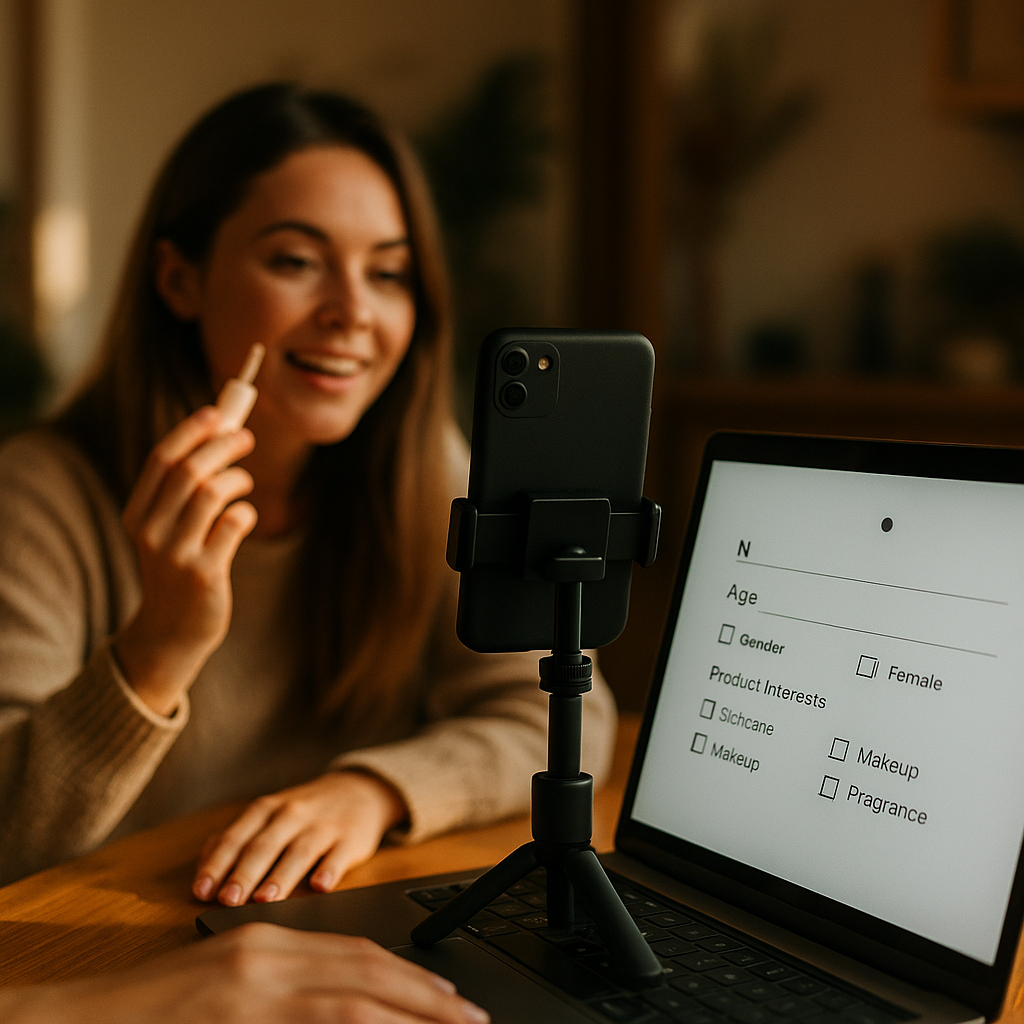
Chrome finished phasing out third-party cookies, and most brand marketing teams still don’t have a working zero-party data capture format in their creator programs. That’s not a tooling problem. It’s a strategy gap, and creators are sitting on the exact trust and attention brands need to close it. If your influencer briefs still treat content as a top-funnel awareness play only, you’re leaving a data asset on the table.
Third-Party Cookies Are Gone. Now What?
Let’s be honest about where things stand. Safari and Firefox blocked third-party cookies years ago. Chrome, which controlled roughly two-thirds of global browser share, finally followed through. Retargeting pools shrank. Lookalike audiences got noisier. And the marketers who spent a decade building attribution models on cookie data are now scrambling for a replacement that doesn’t require rebuilding the entire martech stack.
Zero-party data is the answer most CMOs have landed on, and for good reason. Unlike third-party data (bought) or even first-party data (observed from behavior), zero-party data is information a customer deliberately and proactively shares. Preferences, purchase intent, sizing, taste profiles. It’s declared, not inferred.
Zero-party data isn’t inferred, it’s declared. That distinction is the whole ballgame for consent, accuracy, and how confidently you can personalize without triggering a privacy complaint.
According to eMarketer, first-party and zero-party data strategies now rank among the top budget priorities for brand marketers navigating the post-cookie landscape. The problem is execution. Most brands still rely on the same tired capture mechanism: a static pop-up form asking for an email in exchange for 10% off. Conversion rates on those forms are dismal, and consumers have learned to ignore them entirely.
Why Creators Are the Best Zero-Party Data Channel You’re Not Using
Here’s the uncomfortable truth. Your brand-owned channels have a trust deficit. A creator’s audience doesn’t. When a creator asks a question, runs a poll, or gates a reveal behind a quick preference quiz, the response rate is exponentially higher than anything a brand’s own landing page can pull off. That’s not opinion, it’s the same mechanism that makes nano-influencer repeat-purchase content outperform polished brand ads on trust metrics.
Interactive formats are also native to how creators already operate. TikTok polls, Instagram “this or that” stickers, quiz-style Reels, gated filter unlocks. None of this requires teaching a creator a new skill. It requires briefing them to point that native behavior toward a data capture outcome instead of pure engagement.
Think about a founder-led demo where the creator asks viewers to answer a two-question quiz to unlock a discount code tailored to their skin type, dietary preference, or use case. That’s not a gimmick. It’s a founder-led product demo doing double duty as a data collection instrument, and it works because the value exchange is immediate and obvious to the viewer.
The Mechanics: Quizzes, Polls, and Gated Reveals
A workable zero-party data capture format built through creators generally falls into one of four buckets:
- Preference quizzes: Embedded via tools like Jebbit, Typeform, or Involve.me, linked from a creator’s bio or pinned comment, asking three to five questions before revealing a personalized recommendation.
- Native platform interactivity: TikTok and Instagram poll stickers, “vote for the next flavor” formats, or quiz stickers that feed into a brand’s CRM via API rather than staying trapped in platform analytics.
- Gated content unlocks: A creator teases a reveal (a discount, a recipe, an early-access drop) that requires a short preference form to access. This mirrors the tension-and-payoff structure used in rejected concept reveal content, just redirected toward a data outcome.
- Live-commerce Q&A capture: During live shopping events, viewers submit preferences or sizing questions in real time, which doubles as a structured data feed if you’re capturing it properly. This is the same operational discipline covered in live-commerce brief structures.
None of these require the creator to send traffic to a clunky brand landing page. The interaction happens where the audience already is, and the data flows back to you through an API integration, not a cookie.
Operational Setup: From Creator Brief to CDP
This is where most brands stall. It’s easy to say “run a quiz.” It’s harder to build the pipeline that gets that quiz response into a usable customer profile. Here’s the operational sequence that actually works:
- Brief the creator with an explicit CTA and a clear value exchange (what does the viewer get for answering?). This needs the same legal precision as any short-form sales brief that passes legal review.
- Build the interactive asset on a tool that supports webhook or Zapier integration (Typeform, Jebbit, and Involve.me all do this natively).
- Route responses directly into your CDP (Segment, mParticle) or ESP (Klaviyo) with explicit consent language attached at the point of capture, not buried in a separate privacy policy click-through.
- Tag the source as creator-attributed zero-party data so your analytics team can separate it from behavioral or transactional data later.
Consent matters more here than in almost any other creator format, because you’re explicitly asking for personal information rather than passively observing behavior. Review the FTC’s disclosure guidance and, if you operate in the UK or EU, the ICO’s guidance on lawful data collection before launching anything gated. A missing consent checkbox turns a smart data strategy into a compliance headache overnight. Time-boxed formats help here too, since urgency without deceptive scarcity claims is a solved problem in time-boxed challenge briefs.
Does This Actually Move ROI?
Skeptical marketers should be. Interactive content takes more production coordination than a standard unboxing video. So does it pay off?
The clearest signal is email list growth quality, not just volume. Zero-party data captured through a creator-led quiz comes pre-segmented. A skincare brand running a “find your routine” quiz through a creator doesn’t just get an email address, it gets skin type, budget range, and product priority in one motion. That segmentation lets email and SMS teams personalize the very first send, which is exactly the kind of lift HubSpot’s research on personalized nurture flows consistently shows drives higher open and conversion rates than generic welcome series.
A creator-sourced lead that arrives pre-segmented converts faster in the first nurture send than a generic email capture, because the brand already knows what to say to them.
There’s also a cost-per-acquisition angle worth tracking. Brands running structured multi-creator campaigns already see the reach and efficiency gains documented in creator collaborations that cut cost per acquisition. Layer a zero-party data capture step into that same campaign, and you’re not just buying reach, you’re building a retargeting asset that survives the next cookie deprecation cycle intact. Compare that against the shrinking match rates on paid social platforms tracked by Statista, and the math starts to favor owned data over rented reach.
Run this in structured waves rather than a single campaign. The staged testing approach used in multi-creator testing waves applies just as well to data capture formats: test the quiz mechanic with a handful of creators, measure completion rate and data quality, then scale the format across the roster once you know what converts.
What Breaks This
Two things kill a creator-led data capture program fast. First, asking for too much. A five-question quiz has decent completion rates; an eleven-field form does not. Second, treating the captured data as a one-time asset instead of feeding it into ongoing personalization. If the customer answers a quiz and then gets a generic newsletter anyway, you’ve burned trust for nothing. Match the effort you asked for with the personalization you deliver back.
Next step: pick one active creator campaign, add a single interactive capture moment (a poll-to-quiz handoff or a gated reveal), route the responses into your CDP with explicit consent, and measure completion rate against your current email capture forms before scaling further.
Frequently Asked Questions
What is zero-party data, and how is it different from first-party data?
Zero-party data is information a customer intentionally and proactively shares, like stated preferences, taste profiles, or purchase intent. First-party data is collected passively from behavior, such as browsing history or purchase records. Zero-party data tends to be more accurate because it comes directly from the customer’s own statement rather than an inferred pattern.
Why use creators instead of brand-owned forms for data capture?
Creator audiences already trust the creator, which lowers the friction of asking for personal information. Interactive formats like polls and quizzes also feel native to how audiences already engage with creator content, rather than feeling like an interruption the way a pop-up form does on a brand website.
Do I need consent language for creator-led interactive content?
Yes. Any format that collects personal information, even something as simple as an email tied to a quiz result, requires explicit consent language at the point of capture. Review FTC disclosure requirements and, for UK or EU audiences, ICO guidance before launching a gated content or quiz format.
What tools connect creator content to a CDP or email platform?
Typeform, Jebbit, and Involve.me all support webhook or Zapier integrations that route quiz and form responses directly into customer data platforms like Segment or mParticle, or email platforms like Klaviyo, without needing a developer to build a custom pipeline.
How do I measure success for a zero-party data capture campaign?
Track completion rate on the interactive asset, segmentation quality of the data collected, and conversion rate on the first personalized message sent afterward. Comparing cost per acquisition against your existing paid retargeting campaigns will show whether the captured data is actually reducing dependence on rented audiences.
Top Influencer Marketing Agencies
The leading agencies shaping influencer marketing in 2026
Agencies ranked by campaign performance, client diversity, platform expertise, proven ROI, industry recognition, and client satisfaction. Assessed through verified case studies, reviews, and industry consultations.
Moburst

-
2

The Shelf
Boutique Beauty & Lifestyle Influencer AgencyA data-driven boutique agency specializing exclusively in beauty, wellness, and lifestyle influencer campaigns on Instagram and TikTok. Best for brands already focused on the beauty/personal care space that need curated, aesthetic-driven content.Clients: Pepsi, The Honest Company, Hims, Elf Cosmetics, Pure LeafVisit The Shelf → -
3

Audiencly
Niche Gaming & Esports Influencer AgencyA specialized agency focused exclusively on gaming and esports creators on YouTube, Twitch, and TikTok. Ideal if your campaign is 100% gaming-focused — from game launches to hardware and esports events.Clients: Epic Games, NordVPN, Ubisoft, Wargaming, Tencent GamesVisit Audiencly → -
4

Viral Nation
Global Influencer Marketing & Talent AgencyA dual talent management and marketing agency with proprietary brand safety tools and a global creator network spanning nano-influencers to celebrities across all major platforms.Clients: Meta, Activision Blizzard, Energizer, Aston Martin, WalmartVisit Viral Nation → -
5

The Influencer Marketing Factory
TikTok, Instagram & YouTube CampaignsA full-service agency with strong TikTok expertise, offering end-to-end campaign management from influencer discovery through performance reporting with a focus on platform-native content.Clients: Google, Snapchat, Universal Music, Bumble, YelpVisit TIMF → -
6

NeoReach
Enterprise Analytics & Influencer CampaignsAn enterprise-focused agency combining managed campaigns with a powerful self-service data platform for influencer search, audience analytics, and attribution modeling.Clients: Amazon, Airbnb, Netflix, Honda, The New York TimesVisit NeoReach → -
7

Ubiquitous
Creator-First Marketing PlatformA tech-driven platform combining self-service tools with managed campaign options, emphasizing speed and scalability for brands managing multiple influencer relationships.Clients: Lyft, Disney, Target, American Eagle, NetflixVisit Ubiquitous → -
8

Obviously
Scalable Enterprise Influencer CampaignsA tech-enabled agency built for high-volume campaigns, coordinating hundreds of creators simultaneously with end-to-end logistics, content rights management, and product seeding.Clients: Google, Ulta Beauty, Converse, AmazonVisit Obviously →