


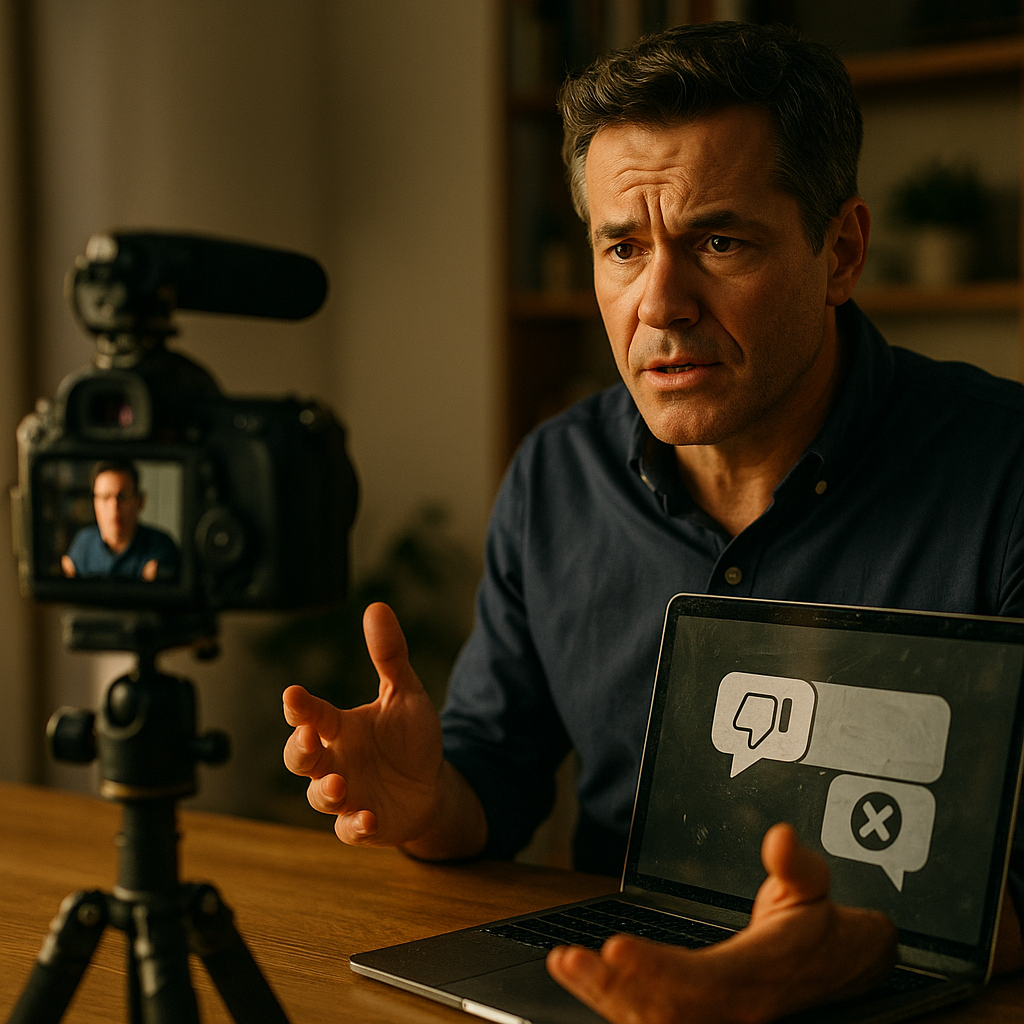
De-influencing videos now rack up billions of views, and roughly 1 in 3 consumers say a “don’t buy this” post has stopped them from purchasing a product. So when a creator targets your brand, do you stay silent or script a response? The smartest founders are choosing a third option: the founder rebuttal video, a format that turns backlash into one of the highest-converting trust assets in the funnel.
This isn’t about picking a fight with a creator who has three million followers and nothing to lose. It’s about building a calm, evidence-backed, camera-ready response that a founder can deliver in under 90 seconds, one that respects the FTC’s disclosure expectations while actually moving skeptics toward purchase.
Why De-Influencing Backlash Demands a Scripted Response, Not a PR Dodge
De-influencing started as a counterweight to overconsumption content, and plenty of it is genuinely useful consumer advocacy. But a meaningful share of it is competitor-seeded, algorithm-chasing, or just wrong about how a product works. Either way, silence reads as guilt. A brand that says nothing while a 40-second video claims their serum “doesn’t do anything” is ceding the narrative entirely.
The founder rebuttal video works because it does something a brand account post cannot: it puts a real, accountable human face in front of the claim. Viewers trust people, not logos. Sprout Social’s research on brand trust consistently shows that audiences respond better to transparency from a named individual than to polished corporate statements. A founder on camera, unscripted-sounding but carefully structured underneath, hits that note.
A rebuttal video isn’t damage control. It’s a conversion asset disguised as a correction, and it should be scripted with the same rigor as a paid ad.
The Anatomy of a Rebuttal Script That Doesn’t Backfire
Founders who grab a phone and start venting almost always make things worse. The internet remembers tone, not intent. A rebuttal script needs structure, because structure is what keeps emotion out of the delivery even when the founder is furious off-camera.
Here’s the beat sheet we recommend for a 60 to 90 second rebuttal:
- Acknowledge, don’t dismiss (0 to 10 seconds): Name the video or the claim without naming the creator aggressively. “I saw a video going around saying our pan warps after a month. Let’s talk about that.”
- State the fact plainly (10 to 35 seconds): No hedging, no corporate softening. Cite the test, the material spec, or the third-party lab result. Numbers beat adjectives every time.
- Show, don’t just tell (35 to 55 seconds): Cut to b-roll of the claim being tested live, or a side-by-side. This is where the video earns its watch time.
- Concede what’s true, if anything is (55 to 70 seconds): If the creator had a partial point (bad batch, unclear instructions, a real edge case), say so. Concession builds more credibility than a clean denial.
- Close with an action, not a slogan (70 to 90 seconds): Link to a return policy, a lab report, or an invite to test it themselves. Never end on “we stand by our product.” Nobody believes that line anymore.
This structure borrows heavily from the same discipline used in dupe comparison videos, where every claim has to be defensible on camera because a mislabeled claim invites regulatory and reputational risk at once.
Why Tone Matters More Than the Facts
You can have an airtight rebuttal and still lose the comment section if the founder sounds defensive. Rehearse the delivery, not just memorize the words. The target tone is “patient expert,” not “wounded CEO.” Flat, slightly amused confidence reads as credible. Agitation reads as guilty, even when the founder is right.
A useful trick: script the first line as a question the audience is actually asking, not a defensive opener. “Does this product actually do X?” lands better than “I need to address some misinformation.” The second phrase instantly signals spin, and spin is the one thing de-influencing audiences are primed to detect.
Handling the Legal and Disclosure Layer
Founder rebuttals sit in a slightly different compliance lane than influencer content, since the founder is speaking as the brand, not as a sponsored creator. That said, a few rules still apply, and skipping them invites more backlash, not less.
- If the rebuttal includes any claim about lab testing, certifications, or comparative performance, that claim needs to be substantiated and ideally linkable to documentation. The FTC’s guidance on endorsements and substantiation applies to brand-direct claims too, not just paid creator posts.
- If the original de-influencing creator is named or shown, use fair use principles carefully: critique the claim, not the person. Legal teams should review any clip that shows a competitor’s or critic’s face without consent.
- Avoid implying the original creator was paid by a competitor unless you have actual evidence. That accusation alone can trigger a defamation conversation nobody wants.
This is the same substantiation discipline covered in ingredient breakdown scripting, where every claim on screen needs a paper trail behind it before it ever reaches a camera.
Where to Publish It First
Don’t drop the rebuttal cold on the brand’s main feed. Sequence matters. Post it first as a reply or duet to the original video if the platform allows it (TikTok and Instagram both support this natively), because that format puts the rebuttal directly in front of the audience that saw the original claim. Only after that initial push should it go into the main grid or get boosted as an ad.
This mirrors the logic in split screen duet response scripting, where reacting in the native format of the original post dramatically outperforms a standalone repost.
Scripting for Multiple Founders or a Non-Charismatic CEO
Not every founder is a natural on camera, and forcing an awkward CEO into a rebuttal video can do more harm than the original backlash. If the founder genuinely can’t deliver with confidence, consider these alternatives before scrapping the format entirely:
- Pair them with a product lead or scientist who handles the technical defense while the founder handles the human, values-based close.
- Use a tighter script with on-screen text reinforcement so even a slightly stiff delivery is backed by captions that carry the data points. This is the same safety net used in silent-first video editing, where captions do the heavy lifting if the performance isn’t perfect.
- Record five or six short takes instead of one long monologue, and let editing choose the three tightest cuts. Founders rarely nail 90 seconds straight through, and that’s fine.
The goal isn’t a flawless performance. It’s a believable one. Audiences forgive a stumble. They don’t forgive a script that sounds like it was written by legal and read by a hostage.
Measuring Whether the Rebuttal Actually Worked
A rebuttal video’s job isn’t just to go viral, it’s to move specific metrics that tie back to the original damage. Track these in the two weeks following publication:
- Sentiment shift in comments on both the rebuttal and the original de-influencing post, if comments are still open.
- Branded search volume and whether negative autocomplete terms (brand name plus “scam” or “doesn’t work”) start to decline.
- Return rate and refund requests for the specific product named in the backlash, which is often the clearest proxy for actual consumer doubt.
- Watch-through rate on the rebuttal itself. If viewers drop off before the evidence section, the hook or the acknowledgment beat needs rework.
Platforms like Meta Business Suite and TikTok’s native analytics both surface comment sentiment and completion rate data that make this tracking straightforward without extra tooling. Pair that with a branded search tracker from a tool like eMarketer’s consumer trend reporting for broader category context, especially if the backlash is part of a wider trend hitting your whole category rather than just your brand.
When Not to Respond at All
Scripting a rebuttal isn’t always the right call, and knowing when to skip it is as valuable as knowing how to write one. Skip the rebuttal if the original video has under a few thousand views and is fading on its own. Engaging can actually resurrect a dying claim through the algorithm’s own momentum. Also skip it if the claim is purely subjective (“I just didn’t like the smell”) rather than factual, since there’s no fact to correct and a rebuttal just looks thin-skinned.
Reserve the format for claims that are factually wrong, spreading fast, or directly threatening a core purchase decision. That’s where a well-built founder-led video earns back more trust than it costs in attention.
FAQs
What is a founder rebuttal video?
A founder rebuttal video is a short, scripted response filmed by a company’s founder or CEO that directly addresses a specific claim made in a de-influencing or negative product video, using evidence and a calm tone to rebuild trust with affected customers.
How long should a founder rebuttal video be?
Most effective rebuttals run between 60 and 90 seconds. Long enough to present evidence, short enough to hold attention on platforms where the original de-influencing content lives, typically TikTok and Instagram Reels.
Do founder rebuttal videos need FTC disclosure?
Since the founder is speaking as the brand rather than as a paid endorser, traditional influencer disclosure rules don’t apply the same way. However, any factual or comparative claim made in the video still needs to be substantiated under FTC guidance on advertising claims.
Should the rebuttal name the original creator?
Generally no. It’s safer to reference the claim itself rather than the creator, which reduces legal exposure and keeps the focus on facts rather than appearing to target an individual.
What if the de-influencing claim is partially true?
Concede the accurate part of the claim before presenting the correction. Partial concession almost always increases credibility compared to a flat denial, especially with audiences already primed to distrust brand messaging.
Where should the rebuttal video be published first?
Publish it as a direct reply, stitch, or duet to the original video wherever the platform supports that format. This puts the correction in front of the exact audience that saw the original claim before it goes to the brand’s main feed.
Build the rebuttal script before the backlash hits: draft the beat sheet, pre-clear the claims with legal, and rehearse the founder’s delivery now, so the response can go live within hours, not days, when the next de-influencing video drops.
FAQs
What is a founder rebuttal video?
A founder rebuttal video is a short, scripted response filmed by a company’s founder or CEO that directly addresses a specific claim made in a de-influencing or negative product video, using evidence and a calm tone to rebuild trust with affected customers.
How long should a founder rebuttal video be?
Most effective rebuttals run between 60 and 90 seconds. Long enough to present evidence, short enough to hold attention on platforms where the original de-influencing content lives, typically TikTok and Instagram Reels.
Do founder rebuttal videos need FTC disclosure?
Since the founder is speaking as the brand rather than as a paid endorser, traditional influencer disclosure rules don’t apply the same way. However, any factual or comparative claim made in the video still needs to be substantiated under FTC guidance on advertising claims.
Should the rebuttal name the original creator?
Generally no. It’s safer to reference the claim itself rather than the creator, which reduces legal exposure and keeps the focus on facts rather than appearing to target an individual.
What if the de-influencing claim is partially true?
Concede the accurate part of the claim before presenting the correction. Partial concession almost always increases credibility compared to a flat denial, especially with audiences already primed to distrust brand messaging.
Where should the rebuttal video be published first?
Publish it as a direct reply, stitch, or duet to the original video wherever the platform supports that format. This puts the correction in front of the exact audience that saw the original claim before it goes to the brand’s main feed.
Top Influencer Marketing Agencies
The leading agencies shaping influencer marketing in 2026
Agencies ranked by campaign performance, client diversity, platform expertise, proven ROI, industry recognition, and client satisfaction. Assessed through verified case studies, reviews, and industry consultations.
Moburst

-
2

The Shelf
Boutique Beauty & Lifestyle Influencer AgencyA data-driven boutique agency specializing exclusively in beauty, wellness, and lifestyle influencer campaigns on Instagram and TikTok. Best for brands already focused on the beauty/personal care space that need curated, aesthetic-driven content.Clients: Pepsi, The Honest Company, Hims, Elf Cosmetics, Pure LeafVisit The Shelf → -
3

Audiencly
Niche Gaming & Esports Influencer AgencyA specialized agency focused exclusively on gaming and esports creators on YouTube, Twitch, and TikTok. Ideal if your campaign is 100% gaming-focused — from game launches to hardware and esports events.Clients: Epic Games, NordVPN, Ubisoft, Wargaming, Tencent GamesVisit Audiencly → -
4

Viral Nation
Global Influencer Marketing & Talent AgencyA dual talent management and marketing agency with proprietary brand safety tools and a global creator network spanning nano-influencers to celebrities across all major platforms.Clients: Meta, Activision Blizzard, Energizer, Aston Martin, WalmartVisit Viral Nation → -
5

The Influencer Marketing Factory
TikTok, Instagram & YouTube CampaignsA full-service agency with strong TikTok expertise, offering end-to-end campaign management from influencer discovery through performance reporting with a focus on platform-native content.Clients: Google, Snapchat, Universal Music, Bumble, YelpVisit TIMF → -
6

NeoReach
Enterprise Analytics & Influencer CampaignsAn enterprise-focused agency combining managed campaigns with a powerful self-service data platform for influencer search, audience analytics, and attribution modeling.Clients: Amazon, Airbnb, Netflix, Honda, The New York TimesVisit NeoReach → -
7

Ubiquitous
Creator-First Marketing PlatformA tech-driven platform combining self-service tools with managed campaign options, emphasizing speed and scalability for brands managing multiple influencer relationships.Clients: Lyft, Disney, Target, American Eagle, NetflixVisit Ubiquitous → -
8

Obviously
Scalable Enterprise Influencer CampaignsA tech-enabled agency built for high-volume campaigns, coordinating hundreds of creators simultaneously with end-to-end logistics, content rights management, and product seeding.Clients: Google, Ulta Beauty, Converse, AmazonVisit Obviously →