


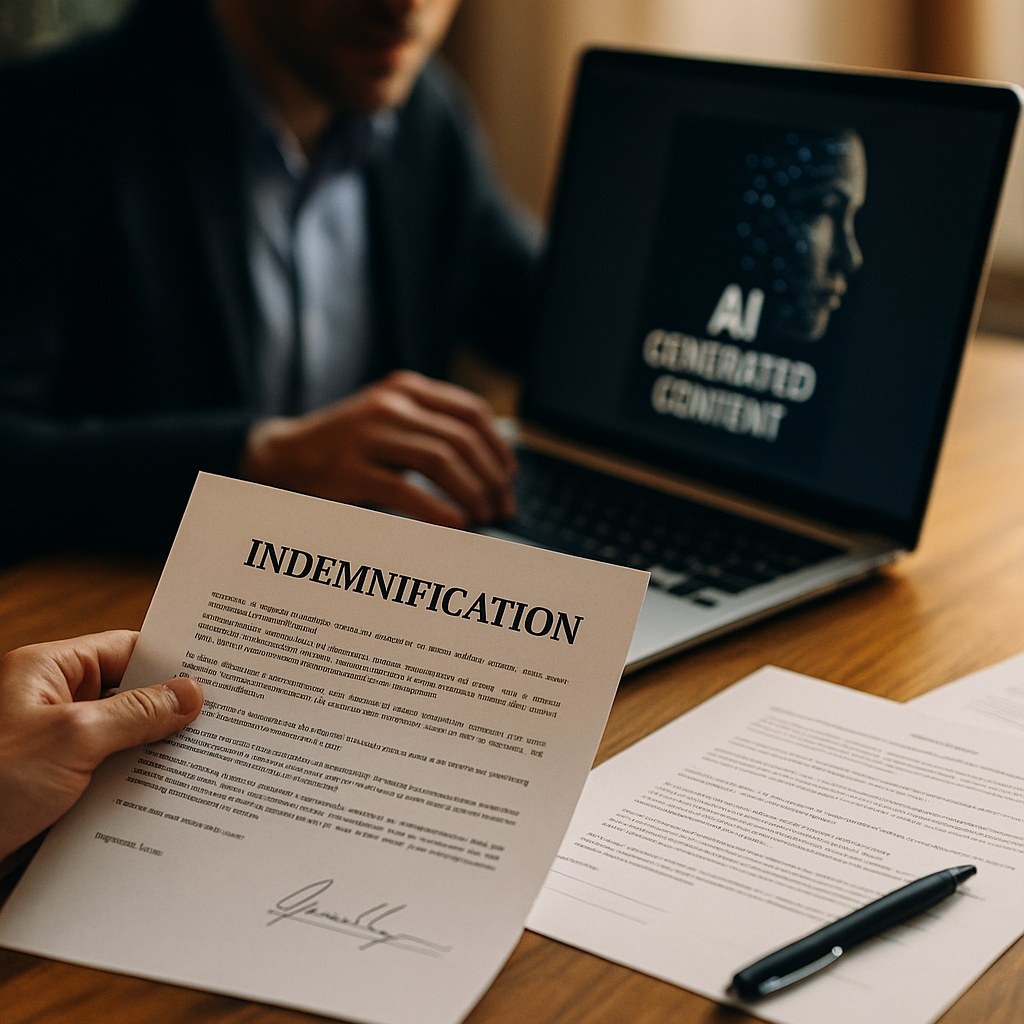
An AI creator-matching platform can now source, vet, and sign a creator to your campaign in under four minutes, with zero human review. That speed is the sales pitch. It’s also the liability trap. When something goes wrong (an unlicensed minor, a fraud-flagged account, a creator with three FTC violations already on record), whose contract language actually protects the brand? If your indemnification clauses were written for human-negotiated deals, they probably don’t cover autonomous contracting at all.
This is the uncomfortable gap opening up across influencer marketing right now. Platforms like Later Influence, Grin, and a wave of newer AI-native matchmakers are moving from “recommend a creator” to “execute the agreement.” The legal architecture underneath most brand-agency contracts hasn’t caught up.
Why Autonomous Contracting Breaks the Old Indemnification Model
Traditional indemnification language assumes a human somewhere made a judgment call. A brand manager reviewed the creator’s audience data. Legal signed off on the contract terms. Someone, at some point, could be pointed to and asked, “why did you approve this?”
AI creator-matching tools remove that checkpoint. The platform’s algorithm scores a creator on engagement, audience fit, and brand safety signals, then auto-generates and executes a contract, sometimes with no brand employee ever seeing the creator’s profile before content goes live. That’s the efficiency pitch. It’s also exactly why standard indemnification clauses fall apart: they were drafted assuming a person could be shown to have exercised due diligence.
If your indemnification clause still reads like it assumes a human approved every creator, it was written for a contracting model your platform no longer uses.
Courts and regulators tend to ask a simple question when a campaign goes sideways: did the brand exercise reasonable care in selecting who represents it? “The algorithm did it” is not a defense. It’s an admission that nobody checked.
What “Unvetted Talent” Actually Means in an AI Matching Context
Unvetted doesn’t just mean the creator has no track record. In the context of AI matching platforms, it typically means one or more of the following slipped through automated screening:
- Age or identity verification wasn’t confirmed before contract execution, a real exposure point given age assurance requirements now landing across major platforms.
- The creator has a history of undisclosed paid partnerships, creating FTC exposure the brand inherits by association.
- Audience authenticity wasn’t validated, meaning follower counts or engagement metrics may be inflated by bot activity.
- The creator operates in a jurisdiction with performer or synthetic media laws the platform’s matching logic didn’t account for.
- There’s no confirmed record of the creator’s prior brand relationships, raising conflict-of-interest or exclusivity risk.
Any one of these can turn into a brand safety incident, a regulatory inquiry, or a straightforward breach of contract dispute. And when the contracting itself was automated, the brand’s ability to say “we conducted reasonable diligence” gets a lot harder to prove.
The Core Indemnification Gap: Who Owns the Vetting Failure?
Here’s the practical problem. Most master service agreements between brands and creator-matching platforms include a generic mutual indemnification clause: each party indemnifies the other for its own negligence or breach. That sounds balanced. It isn’t, once you dig into what “negligence” means when a machine made the hiring decision.
Platforms will argue their algorithm performed within its designed parameters, so there’s no negligence on their end. Brands will argue they never had the opportunity to review the creator, so the failure sits entirely with the platform’s vetting process. Both sides can be technically correct and still leave the brand holding regulatory and reputational fallout with no clear path to recovery.
This is the same structural tension showing up in AI affinity scoring agreements and identity resolution deals: automated decision-making diffuses accountability unless the contract explicitly reassigns it.
Drafting Language That Actually Assigns Risk
Generic indemnification won’t cut it. Brands need clauses that speak directly to autonomous contracting mechanics. A few provisions worth pushing for in every AI matching platform agreement:
- Algorithmic vetting warranty. Require the platform to explicitly warrant that every auto-contracted creator passed defined minimum screening thresholds (age verification, fraud scoring, disclosure history) before execution, not after.
- Indemnification trigger tied to screening failure, not just negligence. Standard “negligence” language lets platforms hide behind “the system worked as designed.” Tie indemnification to any failure to meet the specific, itemized screening criteria in the contract, regardless of intent or negligence standard.
- Audit trail obligation. The platform must retain and produce, on request, the specific data points and scoring logic that led to a creator’s approval. Without this, you can’t even prove which party’s system failed.
- Carve-out for regulatory penalties. Explicitly state that fines, settlements, or FTC enforcement costs stemming from undisclosed material connections or unlicensed talent are covered under indemnification, not treated as a separate “consequential damages” bucket that gets capped or excluded elsewhere in the contract.
- Real-time override rights. Brands should retain a contractual right to pause or reject an auto-generated contract within a defined window (24 to 48 hours is common) before it becomes binding, with the platform’s indemnification obligations narrowing only after that review window has been offered and waived.
That last point matters more than it might seem. If a brand is never given a meaningful chance to intervene, it strengthens the brand’s position that liability sits upstream with the platform. If the brand had a review window and skipped it, the calculus shifts. Draft accordingly, and make sure your operations team actually uses the window you negotiated.
Liability Caps Are Where Brands Lose the Fight
Even well-drafted indemnification triggers mean little if the liability cap underneath them is set at contract value, which for a mid-tier influencer platform subscription might be a few hundred thousand dollars. A single FTC enforcement action or a viral brand safety incident involving a minor can produce reputational and financial damage far beyond that number.
Push for indemnification carve-outs that exclude specific categories (regulatory fines, third-party litigation costs, minor safety violations) from the general liability cap entirely. Platforms will resist this. Negotiate anyway. It’s the single highest-leverage clause in the entire agreement, and it’s the one most often glossed over during procurement because everyone’s focused on pricing and feature sets instead of worst-case exposure.
A liability cap set at contract value is meaningless when a single unvetted creator can trigger regulatory penalties worth ten times that amount.
Practical Steps Before You Sign the Next Platform Agreement
Legal review alone won’t close this gap. It needs to be paired with operational controls that make the contract language enforceable in practice.
- Map every AI matching platform currently in use against a checklist of what it vets automatically versus what it skips entirely. Most procurement teams have never done this exercise.
- Require platforms to disclose their screening criteria in writing, not just in a sales deck. If they won’t put it in the contract, treat that as a red flag.
- Build a parallel internal review step for any creator above a defined spend threshold, even if the platform auto-approved them. Speed is the selling point, but a five-minute manual spot check on high-spend deals costs almost nothing relative to the downside.
- Cross-reference indemnification language with existing disclosure compliance obligations, similar to how brands are now auditing AI-generated creator scripts for undisclosed material connections.
- Revisit indemnification terms annually. Platform capabilities and the regulatory landscape are both shifting fast, and a clause negotiated a year ago may already be outdated relative to what the platform’s AI now does autonomously.
According to eMarketer research on influencer platform adoption, spend flowing through automated matching tools has climbed steadily, which means the exposure window is widening at the same rate. Meanwhile, guidance from the FTC on endorsement disclosures hasn’t carved out an exception for algorithmically sourced talent, and it’s unlikely to. The compliance burden still lands on the brand, automated contracting or not.
None of this is theoretical. Brands are already dealing with fallout from AI avatar disclosure rules and synthetic performer regulations that platforms weren’t built to screen for. Add autonomous contracting on top, and the gap between “the platform handled it” and “we’re legally covered” only gets wider.
Frequently Asked Questions
FAQs
What is indemnification language in the context of AI creator-matching platforms?
It’s the contractual provision defining which party (the brand or the platform) bears financial responsibility when an autonomously contracted creator causes legal, regulatory, or reputational harm. Standard versions assume human oversight occurred, which often doesn’t hold up when a platform’s algorithm executes contracts without brand review.
Can a brand be held liable for a creator an AI platform contracted without human approval?
Yes. Regulators generally hold the brand responsible for ensuring endorsers comply with disclosure and safety standards, regardless of whether a human or an algorithm selected the talent. Automated contracting doesn’t shift that underlying compliance obligation.
What screening criteria should brands require AI matching platforms to disclose?
At minimum, age and identity verification methods, audience authenticity scoring, prior disclosure violation history, and any jurisdictional compliance checks tied to synthetic media or performer laws. If a platform won’t specify these in writing within the contract, that’s a strong signal the vetting process is thinner than the marketing suggests.
Should liability caps be different for AI-matched creator contracts versus traditional deals?
Generally yes. Standard caps tied to contract or subscription value rarely account for regulatory fines or litigation costs stemming from an unvetted creator. Brands should negotiate carve-outs so these categories fall outside the general liability cap.
How often should brands review indemnification terms with matching platforms?
At least annually, and sooner if the platform rolls out new autonomous features or expands into new markets with different regulatory requirements. Platform capabilities evolve faster than most legal review cycles account for.
Next step: Pull your current AI matching platform contract and check one thing today: does the indemnification clause name a specific screening failure trigger, or does it just say “negligence”? If it’s the latter, that clause needs a rewrite before your next campaign cycle, not after an incident forces the conversation.
FAQs
What is indemnification language in the context of AI creator-matching platforms?
It’s the contractual provision defining which party (the brand or the platform) bears financial responsibility when an autonomously contracted creator causes legal, regulatory, or reputational harm. Standard versions assume human oversight occurred, which often doesn’t hold up when a platform’s algorithm executes contracts without brand review.
Can a brand be held liable for a creator an AI platform contracted without human approval?
Yes. Regulators generally hold the brand responsible for ensuring endorsers comply with disclosure and safety standards, regardless of whether a human or an algorithm selected the talent. Automated contracting doesn’t shift that underlying compliance obligation.
What screening criteria should brands require AI matching platforms to disclose?
At minimum, age and identity verification methods, audience authenticity scoring, prior disclosure violation history, and any jurisdictional compliance checks tied to synthetic media or performer laws. If a platform won’t specify these in writing within the contract, that’s a strong signal the vetting process is thinner than the marketing suggests.
Should liability caps be different for AI-matched creator contracts versus traditional deals?
Generally yes. Standard caps tied to contract or subscription value rarely account for regulatory fines or litigation costs stemming from an unvetted creator. Brands should negotiate carve-outs so these categories fall outside the general liability cap.
How often should brands review indemnification terms with matching platforms?
At least annually, and sooner if the platform rolls out new autonomous features or expands into new markets with different regulatory requirements. Platform capabilities evolve faster than most legal review cycles account for.
Top Influencer Marketing Agencies
The leading agencies shaping influencer marketing in 2026
Agencies ranked by campaign performance, client diversity, platform expertise, proven ROI, industry recognition, and client satisfaction. Assessed through verified case studies, reviews, and industry consultations.
Moburst

-
2

The Shelf
Boutique Beauty & Lifestyle Influencer AgencyA data-driven boutique agency specializing exclusively in beauty, wellness, and lifestyle influencer campaigns on Instagram and TikTok. Best for brands already focused on the beauty/personal care space that need curated, aesthetic-driven content.Clients: Pepsi, The Honest Company, Hims, Elf Cosmetics, Pure LeafVisit The Shelf → -
3

Audiencly
Niche Gaming & Esports Influencer AgencyA specialized agency focused exclusively on gaming and esports creators on YouTube, Twitch, and TikTok. Ideal if your campaign is 100% gaming-focused — from game launches to hardware and esports events.Clients: Epic Games, NordVPN, Ubisoft, Wargaming, Tencent GamesVisit Audiencly → -
4

Viral Nation
Global Influencer Marketing & Talent AgencyA dual talent management and marketing agency with proprietary brand safety tools and a global creator network spanning nano-influencers to celebrities across all major platforms.Clients: Meta, Activision Blizzard, Energizer, Aston Martin, WalmartVisit Viral Nation → -
5

The Influencer Marketing Factory
TikTok, Instagram & YouTube CampaignsA full-service agency with strong TikTok expertise, offering end-to-end campaign management from influencer discovery through performance reporting with a focus on platform-native content.Clients: Google, Snapchat, Universal Music, Bumble, YelpVisit TIMF → -
6

NeoReach
Enterprise Analytics & Influencer CampaignsAn enterprise-focused agency combining managed campaigns with a powerful self-service data platform for influencer search, audience analytics, and attribution modeling.Clients: Amazon, Airbnb, Netflix, Honda, The New York TimesVisit NeoReach → -
7

Ubiquitous
Creator-First Marketing PlatformA tech-driven platform combining self-service tools with managed campaign options, emphasizing speed and scalability for brands managing multiple influencer relationships.Clients: Lyft, Disney, Target, American Eagle, NetflixVisit Ubiquitous → -
8

Obviously
Scalable Enterprise Influencer CampaignsA tech-enabled agency built for high-volume campaigns, coordinating hundreds of creators simultaneously with end-to-end logistics, content rights management, and product seeding.Clients: Google, Ulta Beauty, Converse, AmazonVisit Obviously →