


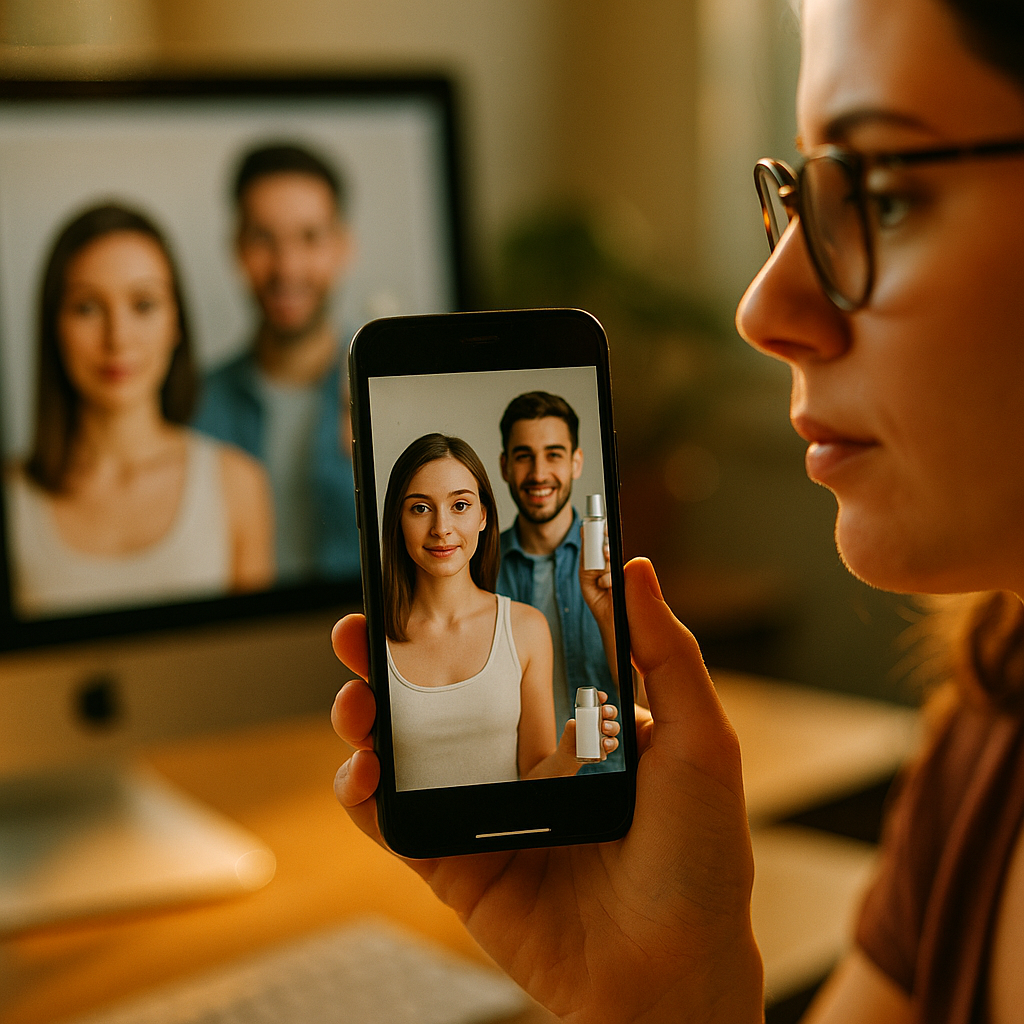
Zero. That’s how many AI avatars the FTC has explicitly exempted from endorsement disclosure rules. Yet brands keep shipping creator-produced ads featuring synthetic spokespeople and “composite” customer testimonials as if the FTC endorsement guide only applies to humans holding a ring light. It doesn’t, and the agency has been signaling for months that enforcement is coming for exactly this gap.
The Guide Was Never Just About Human Influencers
The FTC’s Endorsement Guides have always rested on a simple idea: if an audience would find a connection between an endorser and a marketer material to their purchase decision, disclose it. Nothing in that principle requires the endorser to be a carbon-based lifeform. The Guides talk about “endorsements,” not “endorsers who breathe.”
What’s changed is the sophistication of the workaround. Brands and agencies have gotten creative with AI avatars that deliver product pitches, and with “composite” testimonials that stitch together fragments of real customer feedback into a single, polished quote attributed to a fictional “Sarah from Austin.” Neither practice is new in concept. Composite testimonials existed in print advertising decades ago. What’s new is the scale, the realism, and the fact that generative tools let a solo creator or small agency produce dozens of these assets a week without a legal review in sight.
If a synthetic avatar or a blended testimonial could lead a reasonable consumer to believe they’re seeing a real person’s genuine experience, the FTC treats it as a representation that must be truthful and substantiated, avatar or not.
Where AI Avatars Cross the Line
An AI avatar reading brand copy in a straightforward ad isn’t inherently deceptive. Nobody’s confused when a clearly labeled virtual spokesperson pitches a SaaS tool in a polished corporate video. The trouble starts when the avatar is designed, deliberately or carelessly, to look and sound like a genuine user sharing an authentic opinion.
That’s the pattern the FTC has flagged repeatedly: synthetic personas dressed up as real testimonials. Think of a hyperrealistic avatar filming a “day in my life” style video where it raves about a skincare product as if it actually used it. There’s no product experience to substantiate because there’s no product user. That’s not an endorsement, it’s fabricated evidence dressed as one, and the FTC’s rule on AI-generated testimonials treats this as a straightforward deception issue rather than a gray area.
We’ve covered the mechanics of this in detail in our compliance checklist for AI-generated testimonials, but the short version is this: an avatar can present, but it can’t pretend to have experienced. The moment a synthetic performer implies firsthand use of a product, you need a disclosure and, more importantly, a real basis for the claim.
The Composite Testimonial Trap
Composite testimonials are trickier because they feel less obviously synthetic. A brand takes five genuine five-star reviews, blends the best lines into one quote, slaps a stock photo or an AI-generated face on it, and calls it “Jenna’s story.” Each individual line might be technically true. But the composite as a whole misrepresents the typical experience and invents a person who doesn’t exist to say it.
The FTC has been explicit on this for years in traditional advertising: composite testimonials require clear disclosure that the endorsement is a composite and doesn’t reflect any single individual’s experience. That guidance didn’t disappear when creators started producing these assets on TikTok and Instagram instead of in a studio. If anything, the risk is higher now because the format looks like organic user-generated content, which increases the odds a viewer assumes it’s real.
Marketers often ask whether a small disclaimer in a video description solves this. It doesn’t, at least not on its own. The FTC’s guidance on clear and conspicuous disclosure has consistently rejected buried disclaimers in favor of placement the average viewer will actually notice, which is the same logic behind TikTok’s first-line disclosure rule for sponsored content.
Why Creator-Produced Ads Are the Riskiest Format Right Now
Brand-produced ads go through legal review, usually. Creator-produced ads, especially the kind spun up quickly for TikTok Shop drops or affiliate campaigns, often don’t. That’s the operational reality driving most of the current risk.
A creator using an AI avatar tool to generate a “customer testimonial” video for a brand deal isn’t necessarily thinking about endorsement law. They’re thinking about hitting a content quota. Multiply that by a roster of 50 or 200 affiliate creators and you have a compliance surface area that most brand marketing teams aren’t staffed to monitor in real time.
This is where the FTC’s expanding view of liability actually matters most for brands. The agency has made clear in past enforcement actions that advertisers can be held responsible for deceptive endorsements made on their behalf, even when a creator or agency executed the actual content. “We didn’t know our creator used an AI avatar” is not a defense that has held up well historically, and it’s unlikely to hold up better here. Our piece on AI talking points creating the same liability as scripts covers why brand-supplied prompts and guidance count as control, which is the key trigger for shared liability.
The Overlap With Synthetic Performer Laws
Federal endorsement rules aren’t the only thing brands need to track here. A growing number of states have passed synthetic performer disclosure laws that operate independently of the FTC and, in some cases, impose stricter requirements. We’ve broken down the friction points in how NY and California synthetic performer rules outpace platform labels, and the short answer is that platform-level AI labels don’t automatically satisfy either the FTC or state law. Brands running national campaigns with AI avatars need a compliance approach that covers the strictest applicable standard, not the platform’s default toggle.
For a deeper audit framework specifically built around avatars used as endorsers, see digital human endorsers and synthetic performer law audits.
What Substantiation Looks Like When the Endorser Isn’t Real
Substantiation is where a lot of legal teams get stuck on this topic, understandably. The FTC requires that claims made in an endorsement be backed by evidence the advertiser actually possesses. That’s manageable when a real customer says “this serum cleared my skin in two weeks” and the brand has clinical data to back a similar claim.
It gets murkier when an AI avatar says it. There’s no user, so there’s no individual result to point to. What the brand actually needs is:
- Aggregate data showing the claim reflects a typical result among real users, not just a best-case outlier
- Clear disclosure that the presenter is a synthetic avatar, not a customer
- Disclosure of any material connection between the avatar’s “opinion” and compensation paid to produce the content
- Documentation trail showing who scripted, approved, and published the avatar content
This lines up closely with the substantiation standards emerging around AI-generated before-and-after claims, which we detail in FTC substantiation rules for AI before-and-after claims. The common thread: synthetic presentation doesn’t lower the evidentiary bar. If anything, regulators expect more documentation, not less, because there’s no genuine human experience to fall back on if the claim gets challenged.
Building an Actual Compliance Process
Most brands don’t need a total overhaul here. They need a checklist that gets applied before creator content ships, not after a complaint lands. A few non-negotiables:
- Label synthetic presenters clearly and early in the content, not buried in a caption or description field.
- Ban avatars from implying personal product use unless you have a genuine testing basis for the specific claim being made.
- Flag composite testimonials explicitly as composites, and avoid attaching them to a fictional named individual dressed up to look real.
- Require creators to disclose their tools in campaign briefs. If a creator plans to use an AI avatar or voice clone, that needs sign-off, not discovery after the fact.
- Audit existing creator content libraries the same way you’d run an influencer compliance audit for undisclosed gifting, because avatar-driven testimonials are just as easy to miss in a backlog of hundreds of assets.
Contractually, brands should also be building AI-disclosure obligations directly into creator agreements, alongside existing protections like the de-monetization risk clause many are already using. If a creator’s undisclosed avatar use gets a video pulled or triggers a platform penalty, that risk needs to sit somewhere specific in the contract, not float as an ambiguity.
Platform rules add another layer worth cross-referencing. Disclosure requirements differ across TikTok, Instagram, and YouTube, and none of them map perfectly onto FTC requirements, a gap covered thoroughly in our comparison of ad disclosure rules across platforms. Treat platform compliance as the floor, not the ceiling. The FTC guide and applicable state synthetic performer laws sit above it.
For teams managing avatar disclosure specifically, our standing reference on AI avatar disclosure rules under the FTC is worth bookmarking as a working document, since enforcement guidance in this space is still evolving.
The Enforcement Signal Brands Shouldn’t Ignore
The FTC doesn’t need new rulemaking to act here. Existing authority under Section 5 of the FTC Act, combined with the current Endorsement Guides, already covers deceptive AI avatars and composite testimonials. What’s changed is attention, not law. The agency has made synthetic media and AI-driven marketing claims a stated enforcement priority, and the creator economy’s rapid adoption of avatar tools makes it an obvious next target.
According to eMarketer research on creator economy growth, influencer marketing spend continues to climb into the tens of billions annually, which means the dollar exposure tied to non-compliant creator content is growing right alongside it. Brands running high-volume affiliate or UGC-style programs, the kind increasingly powered by HubSpot-style marketing automation and AI content pipelines, are the most exposed simply because of scale.
Legal teams reviewing this topic should go straight to the source rather than relying on secondhand summaries. The FTC’s official guidance remains the authoritative reference for endorsement and testimonial rules, and it’s updated more frequently than most brand compliance calendars account for.
Frequently Asked Questions
FAQs
Does the FTC Endorsement Guide apply to AI-generated avatars, not just human influencers?
Yes. The FTC’s endorsement framework applies to any presentation that could lead a reasonable consumer to believe they’re seeing a genuine opinion or experience, regardless of whether the presenter is human or synthetic. AI avatars that imply personal product use trigger the same disclosure and substantiation obligations as human endorsers.
What counts as a composite testimonial under FTC rules?
A composite testimonial blends elements from multiple real customer experiences into a single quote or story, often attributed to one named person. The FTC requires clear disclosure that the testimonial is a composite and doesn’t represent any single individual’s actual experience.
Can a brand be held liable for a creator’s undisclosed use of an AI avatar?
Yes, in many cases. If a brand supplied talking points, scripts, or creative direction that the creator then delivered through an AI avatar without disclosure, the brand can share liability alongside the creator under existing FTC enforcement precedent.
Is labeling content as “AI-generated” on a platform enough to satisfy FTC disclosure rules?
Not necessarily. Platform-level AI labels and FTC disclosure requirements are separate standards with different thresholds. A brand can be fully compliant with a platform’s labeling policy and still fall short of FTC clear-and-conspicuous disclosure requirements.
What documentation should brands keep for AI avatar endorsements?
Brands should retain records showing who scripted and approved the avatar’s claims, the underlying data supporting any performance or results claims, and confirmation that disclosure language met clear-and-conspicuous standards before publication.
Audit your active creator campaigns this week for any AI avatar or composite testimonial content, and route anything ambiguous through legal before the next posting cycle, not after.
FAQs
Does the FTC Endorsement Guide apply to AI-generated avatars, not just human influencers?
Yes. The FTC’s endorsement framework applies to any presentation that could lead a reasonable consumer to believe they’re seeing a genuine opinion or experience, regardless of whether the presenter is human or synthetic. AI avatars that imply personal product use trigger the same disclosure and substantiation obligations as human endorsers.
What counts as a composite testimonial under FTC rules?
A composite testimonial blends elements from multiple real customer experiences into a single quote or story, often attributed to one named person. The FTC requires clear disclosure that the testimonial is a composite and doesn’t represent any single individual’s actual experience.
Can a brand be held liable for a creator’s undisclosed use of an AI avatar?
Yes, in many cases. If a brand supplied talking points, scripts, or creative direction that the creator then delivered through an AI avatar without disclosure, the brand can share liability alongside the creator under existing FTC enforcement precedent.
Is labeling content as “AI-generated” on a platform enough to satisfy FTC disclosure rules?
Not necessarily. Platform-level AI labels and FTC disclosure requirements are separate standards with different thresholds. A brand can be fully compliant with a platform’s labeling policy and still fall short of FTC clear-and-conspicuous disclosure requirements.
What documentation should brands keep for AI avatar endorsements?
Brands should retain records showing who scripted and approved the avatar’s claims, the underlying data supporting any performance or results claims, and confirmation that disclosure language met clear-and-conspicuous standards before publication.
Top Influencer Marketing Agencies
The leading agencies shaping influencer marketing in 2026
Agencies ranked by campaign performance, client diversity, platform expertise, proven ROI, industry recognition, and client satisfaction. Assessed through verified case studies, reviews, and industry consultations.
Moburst

-
2

The Shelf
Boutique Beauty & Lifestyle Influencer AgencyA data-driven boutique agency specializing exclusively in beauty, wellness, and lifestyle influencer campaigns on Instagram and TikTok. Best for brands already focused on the beauty/personal care space that need curated, aesthetic-driven content.Clients: Pepsi, The Honest Company, Hims, Elf Cosmetics, Pure LeafVisit The Shelf → -
3

Audiencly
Niche Gaming & Esports Influencer AgencyA specialized agency focused exclusively on gaming and esports creators on YouTube, Twitch, and TikTok. Ideal if your campaign is 100% gaming-focused — from game launches to hardware and esports events.Clients: Epic Games, NordVPN, Ubisoft, Wargaming, Tencent GamesVisit Audiencly → -
4

Viral Nation
Global Influencer Marketing & Talent AgencyA dual talent management and marketing agency with proprietary brand safety tools and a global creator network spanning nano-influencers to celebrities across all major platforms.Clients: Meta, Activision Blizzard, Energizer, Aston Martin, WalmartVisit Viral Nation → -
5

The Influencer Marketing Factory
TikTok, Instagram & YouTube CampaignsA full-service agency with strong TikTok expertise, offering end-to-end campaign management from influencer discovery through performance reporting with a focus on platform-native content.Clients: Google, Snapchat, Universal Music, Bumble, YelpVisit TIMF → -
6

NeoReach
Enterprise Analytics & Influencer CampaignsAn enterprise-focused agency combining managed campaigns with a powerful self-service data platform for influencer search, audience analytics, and attribution modeling.Clients: Amazon, Airbnb, Netflix, Honda, The New York TimesVisit NeoReach → -
7

Ubiquitous
Creator-First Marketing PlatformA tech-driven platform combining self-service tools with managed campaign options, emphasizing speed and scalability for brands managing multiple influencer relationships.Clients: Lyft, Disney, Target, American Eagle, NetflixVisit Ubiquitous → -
8

Obviously
Scalable Enterprise Influencer CampaignsA tech-enabled agency built for high-volume campaigns, coordinating hundreds of creators simultaneously with end-to-end logistics, content rights management, and product seeding.Clients: Google, Ulta Beauty, Converse, AmazonVisit Obviously →