


Sixty-two percent of consumers say they’d feel deceived if they learned a testimonial in an ad was generated by AI rather than a real customer, according to recent consumer trust surveys. The FTC just gave that sentiment teeth. If your brand has touched a synthetic voice, a cloned creator endorsement, or an AI-generated review in the last quarter, the new FTC rule on AI-generated testimonials is not a future problem. It’s a right-now problem.
Here’s what changed, why it matters for every brand running creator ads with synthetic elements, and the exact checklist your compliance team needs before the next campaign goes live.
What the FTC Actually Changed
The FTC has long banned fake reviews and testimonials under its Endorsement Guides. What’s new is explicit language covering AI-generated and AI-enhanced content: synthetic voice clones, AI-composited “customer” testimonials, chatbot-generated reviews, and voice-cloned creator endorsements where the creator never said the words attributed to them.
The rule closes a loophole brands have quietly exploited for two years. Generate a “customer” testimonial with an LLM, pair it with a stock avatar or synthetic voice, and technically no human ever lied. The FTC’s position now: if it looks and sounds like a genuine endorsement, it has to be disclosed as synthetic, verified as accurate, or both. There’s no more hiding behind “the AI wrote it, not us.”
The core test hasn’t changed — would a reasonable consumer be misled about who is speaking and why? What’s new is that AI-generated content no longer gets a pass just because no human actor was directly deceptive.
This builds on enforcement patterns the FTC already established around AI-generated before-and-after claims and synthetic demand-gen content. The agency has made clear it views AI as an amplifier of existing deception rules, not a new category requiring separate leniency.
Why Brands Using Creator Voices Are Especially Exposed
Voice cloning tools like ElevenLabs and Resemble AI have made it trivially easy to take fifteen seconds of a creator’s voice and generate an entire ad script they never recorded. Agencies love this for scale. Legal teams should be losing sleep over it.
Three scenarios put brands at direct risk right now:
- Voice cloning without explicit script approval. A creator agrees to a partnership, records a sample, and the brand’s production team generates additional lines using AI voice synthesis. If the creator didn’t approve the exact final script, that’s a material connection and consent problem, not just an FTC labeling issue.
- AI-composited testimonials attributed to “real users.” Brands generating synthetic customer voices to represent aggregate review sentiment, then presenting them as individual endorsements.
- Dubbing and localization drift. Global campaigns using AI dubbing to adapt a creator’s English-language testimonial into other languages — without re-disclosing that the localized voice is synthetic, not the original creator.
Each of these has already triggered FTC inquiries in adjacent categories. The pattern from cases involving script editing and material connection risk tells you exactly where enforcement is headed: any alteration to what a creator actually said, even a “helpful” AI cleanup pass, can trigger disclosure obligations.
The Compliance Checklist
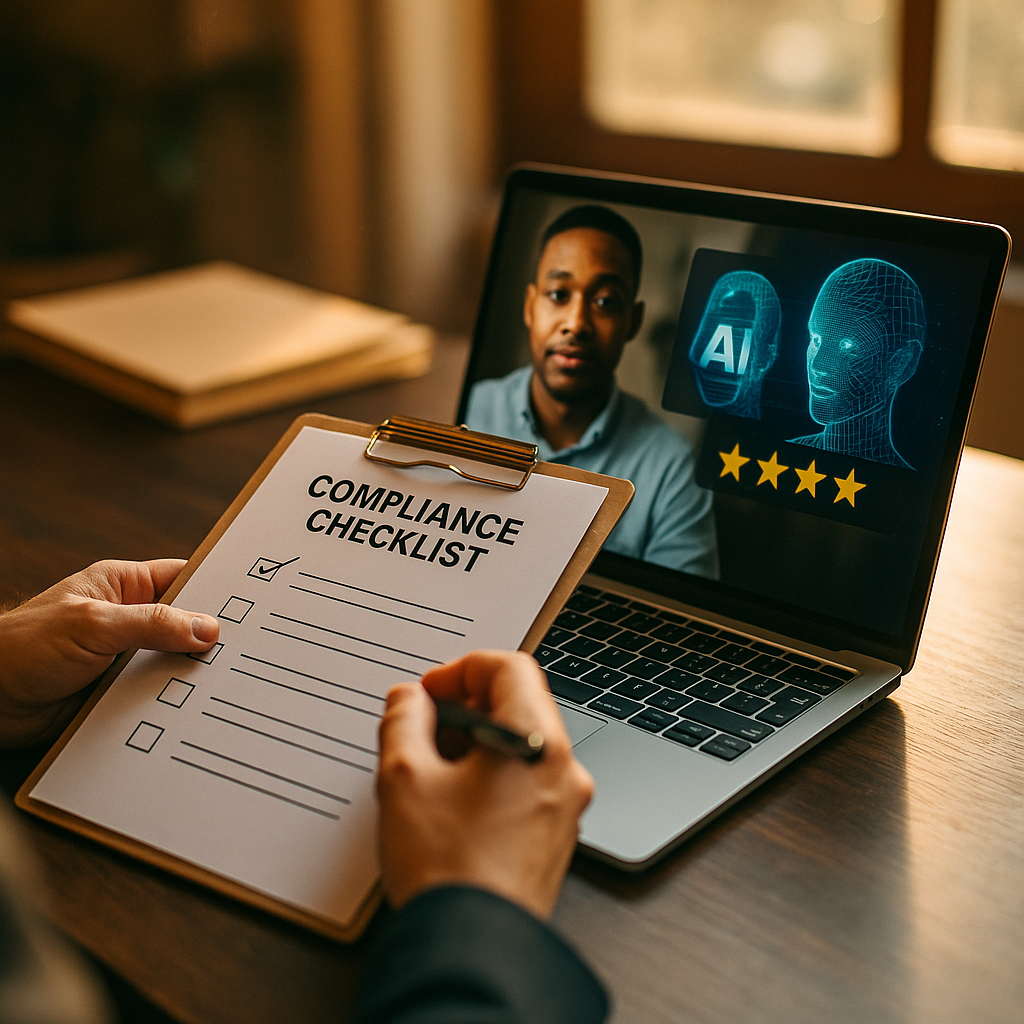
This is the part your legal and marketing teams actually need. Treat it as a pre-flight check before any creator ad with AI-touched audio or testimonial content goes live.
1. Audit every synthetic voice touchpoint
Map every ad in your current rotation that uses AI voice generation, voice cloning, or AI dubbing. Include organic creator content that gets repurposed into paid media — that’s often where synthetic elements sneak in unnoticed during post-production.
2. Get written, script-level consent from creators
A general partnership agreement is not enough anymore. Creators need to approve the exact final script if any portion of their voice was AI-generated or modified. Verbal approval on a call doesn’t hold up under FTC scrutiny — get it in writing, tied to the specific cut.
3. Disclose synthetic content clearly and near the claim
“AI-generated voice” or “synthetic voice used with permission” needs to appear close to the testimonial itself, not buried in a video description or a terms page. This mirrors disclosure principles the FTC has enforced for AI-generated demand gen video ads — proximity and clarity matter more than technical compliance.
4. Verify testimonial authenticity before amplification
If a testimonial or review was assembled or paraphrased using AI from real customer feedback, you must be able to substantiate that the underlying sentiment is accurate and representative, not cherry-picked or fabricated. Keep the source data. The FTC will ask for it if there’s a complaint.
5. Build an AI-content tag into your DAM
Digital asset management systems should flag any creative asset that includes AI-generated voice, synthetic avatars, or AI-modified testimonial copy. This isn’t bureaucracy for its own sake — it’s how you respond fast when a platform or regulator asks for an audit trail.
6. Re-check international and multi-language versions
Localized versions of a campaign using AI dubbing need the same disclosure and consent chain as the original. Don’t assume compliance travels automatically across markets — especially with regulators outside the US, like the UK’s ICO, watching AI-generated marketing content closely too.
7. Train your influencer marketing team, not just legal
Most violations happen because a marketing manager didn’t realize AI voice cleanup counted as “generating” content. Compliance training needs to reach the people picking creators and approving cuts, not just the legal department reviewing final contracts.
How This Connects to Broader FTC Enforcement Trends
Brands treating this as an isolated rule are missing the bigger picture. The FTC has spent the past two years systematically closing AI-related disclosure gaps across every format: AI search-cited creator content, synthetic pricing claims, and now testimonials. If your compliance framework treats each new rule as a one-off patch, you’ll always be a step behind.
A more durable approach is building a single AI-content governance policy that covers voice, video, imagery, and text generation across every campaign touchpoint. Brands that already built escalation protocols for related risks — like the frameworks used for deceptive scarcity claims or personalized pricing disclosures — are adapting faster because the underlying documentation habits already exist. Compliance infrastructure, once built well, is reusable.
Brands that treat each new FTC AI rule as an isolated checkbox will always lag. The ones building a single, reusable AI-governance framework are the ones who’ll stay ahead of the next rule, too.
What “Reasonable Consumer” Means for Synthetic Voices
The FTC’s enforcement standard hinges on whether a “reasonable consumer” would be misled. For synthetic voice testimonials, that means asking: would the average viewer assume this is the creator’s genuine, unedited opinion? If AI generated even part of the script, and there’s no disclosure, the answer is almost always yes — they’d be misled.
This is a lower bar than many marketing teams assume. You don’t need proof of intent to deceive. You need proof that a reasonable person watching the ad would have understood what they were seeing. Ambiguity favors the regulator, not the brand.
Compare this to how the FTC has approached other AI disclosure areas — like consent language for AI-driven targeting. The common thread across every recent rule: transparency has to be immediate and unavoidable, not technically present somewhere in the fine print. According to eMarketer research on creator marketing spend, brands are pouring record budgets into influencer partnerships this year, which means the volume of potential exposure points is growing right alongside the enforcement risk.
Building the Internal Sign-Off Process
Most compliance failures aren’t malicious. They’re process failures — a video editor cleans up audio with an AI tool, nobody flags it as “synthetic,” and it ships. Fixing this requires a sign-off gate, not just a policy document.
Set up a required checkpoint before any creator ad goes to media buying: confirm whether AI touched the voice or testimonial content, confirm written creator consent for the final script, and confirm disclosure language is present and proximate to the claim. Three yes-or-no questions. If any answer is “no” or “unsure,” the asset doesn’t launch until legal reviews it.
This mirrors the operational rigor brands have had to adopt for other high-risk creator content categories, including the documentation standards now required under recent platform safety settlements. Regulators across the board are converging on the same expectation: show your work, or assume liability.
Next Step
Don’t wait for an FTC inquiry to find out where your synthetic voice content lives. Run the seven-point audit this week, tag every AI-touched asset in your DAM, and get creator script sign-offs in writing before your next campaign launches — the fix is far cheaper than the fine.
FAQs
Does the FTC rule apply to AI-generated captions or subtitles, not just voice?
The rule is primarily focused on testimonial and endorsement content — meaning it applies wherever AI is used to represent someone’s opinion or experience, including translated captions if they alter or misrepresent what was actually said. Straightforward accessibility captions that accurately transcribe real speech are generally not the target.
What counts as a “synthetic voice” under the new rule?
Any voice generated or substantially modified by AI tools, including full voice cloning, AI-assisted dubbing, and voice enhancement that changes tone or wording beyond basic audio cleanup. Minor noise reduction or volume leveling typically doesn’t trigger disclosure requirements.
Do we need creator consent even if we own the usage rights to their voice?
Usage rights for the original recording don’t automatically extend to AI-generated content built from that voice. You need explicit consent for the specific AI-generated script or output, ideally documented separately from your standard creator agreement.
How does this differ from existing FTC Endorsement Guide rules?
The Endorsement Guides already banned fake and misleading testimonials. This rule clarifies that AI-generated or AI-modified content falls under the same standard — closing the argument that synthetic content is somehow exempt because no human directly fabricated the claim.
What’s the penalty risk for non-compliance?
The FTC can pursue civil penalties per violation, and recent enforcement actions in adjacent AI advertising areas have resulted in settlements reaching into eight figures. Beyond fines, reputational damage from a public FTC complaint can be more costly than the penalty itself.
Should small and mid-size brands worry, or is this mainly for large advertisers?
Enforcement so far has focused on scale and pattern of behavior, but the rule itself applies regardless of company size. Smaller brands using freelance creators and AI tools without legal review are often at higher practical risk simply because they lack formal compliance processes.
FAQs
Does the FTC rule apply to AI-generated captions or subtitles, not just voice?
The rule is primarily focused on testimonial and endorsement content — meaning it applies wherever AI is used to represent someone’s opinion or experience, including translated captions if they alter or misrepresent what was actually said. Straightforward accessibility captions that accurately transcribe real speech are generally not the target.
What counts as a “synthetic voice” under the new rule?
Any voice generated or substantially modified by AI tools, including full voice cloning, AI-assisted dubbing, and voice enhancement that changes tone or wording beyond basic audio cleanup. Minor noise reduction or volume leveling typically doesn’t trigger disclosure requirements.
Do we need creator consent even if we own the usage rights to their voice?
Usage rights for the original recording don’t automatically extend to AI-generated content built from that voice. You need explicit consent for the specific AI-generated script or output, ideally documented separately from your standard creator agreement.
How does this differ from existing FTC Endorsement Guide rules?
The Endorsement Guides already banned fake and misleading testimonials. This rule clarifies that AI-generated or AI-modified content falls under the same standard — closing the argument that synthetic content is somehow exempt because no human directly fabricated the claim.
What’s the penalty risk for non-compliance?
The FTC can pursue civil penalties per violation, and recent enforcement actions in adjacent AI advertising areas have resulted in settlements reaching into eight figures. Beyond fines, reputational damage from a public FTC complaint can be more costly than the penalty itself.
Should small and mid-size brands worry, or is this mainly for large advertisers?
Enforcement so far has focused on scale and pattern of behavior, but the rule itself applies regardless of company size. Smaller brands using freelance creators and AI tools without legal review are often at higher practical risk simply because they lack formal compliance processes.
Top Influencer Marketing Agencies
The leading agencies shaping influencer marketing in 2026
Agencies ranked by campaign performance, client diversity, platform expertise, proven ROI, industry recognition, and client satisfaction. Assessed through verified case studies, reviews, and industry consultations.
Moburst

-
2

The Shelf
Boutique Beauty & Lifestyle Influencer AgencyA data-driven boutique agency specializing exclusively in beauty, wellness, and lifestyle influencer campaigns on Instagram and TikTok. Best for brands already focused on the beauty/personal care space that need curated, aesthetic-driven content.Clients: Pepsi, The Honest Company, Hims, Elf Cosmetics, Pure LeafVisit The Shelf → -
3

Audiencly
Niche Gaming & Esports Influencer AgencyA specialized agency focused exclusively on gaming and esports creators on YouTube, Twitch, and TikTok. Ideal if your campaign is 100% gaming-focused — from game launches to hardware and esports events.Clients: Epic Games, NordVPN, Ubisoft, Wargaming, Tencent GamesVisit Audiencly → -
4

Viral Nation
Global Influencer Marketing & Talent AgencyA dual talent management and marketing agency with proprietary brand safety tools and a global creator network spanning nano-influencers to celebrities across all major platforms.Clients: Meta, Activision Blizzard, Energizer, Aston Martin, WalmartVisit Viral Nation → -
5

The Influencer Marketing Factory
TikTok, Instagram & YouTube CampaignsA full-service agency with strong TikTok expertise, offering end-to-end campaign management from influencer discovery through performance reporting with a focus on platform-native content.Clients: Google, Snapchat, Universal Music, Bumble, YelpVisit TIMF → -
6

NeoReach
Enterprise Analytics & Influencer CampaignsAn enterprise-focused agency combining managed campaigns with a powerful self-service data platform for influencer search, audience analytics, and attribution modeling.Clients: Amazon, Airbnb, Netflix, Honda, The New York TimesVisit NeoReach → -
7

Ubiquitous
Creator-First Marketing PlatformA tech-driven platform combining self-service tools with managed campaign options, emphasizing speed and scalability for brands managing multiple influencer relationships.Clients: Lyft, Disney, Target, American Eagle, NetflixVisit Ubiquitous → -
8

Obviously
Scalable Enterprise Influencer CampaignsA tech-enabled agency built for high-volume campaigns, coordinating hundreds of creators simultaneously with end-to-end logistics, content rights management, and product seeding.Clients: Google, Ulta Beauty, Converse, AmazonVisit Obviously →