


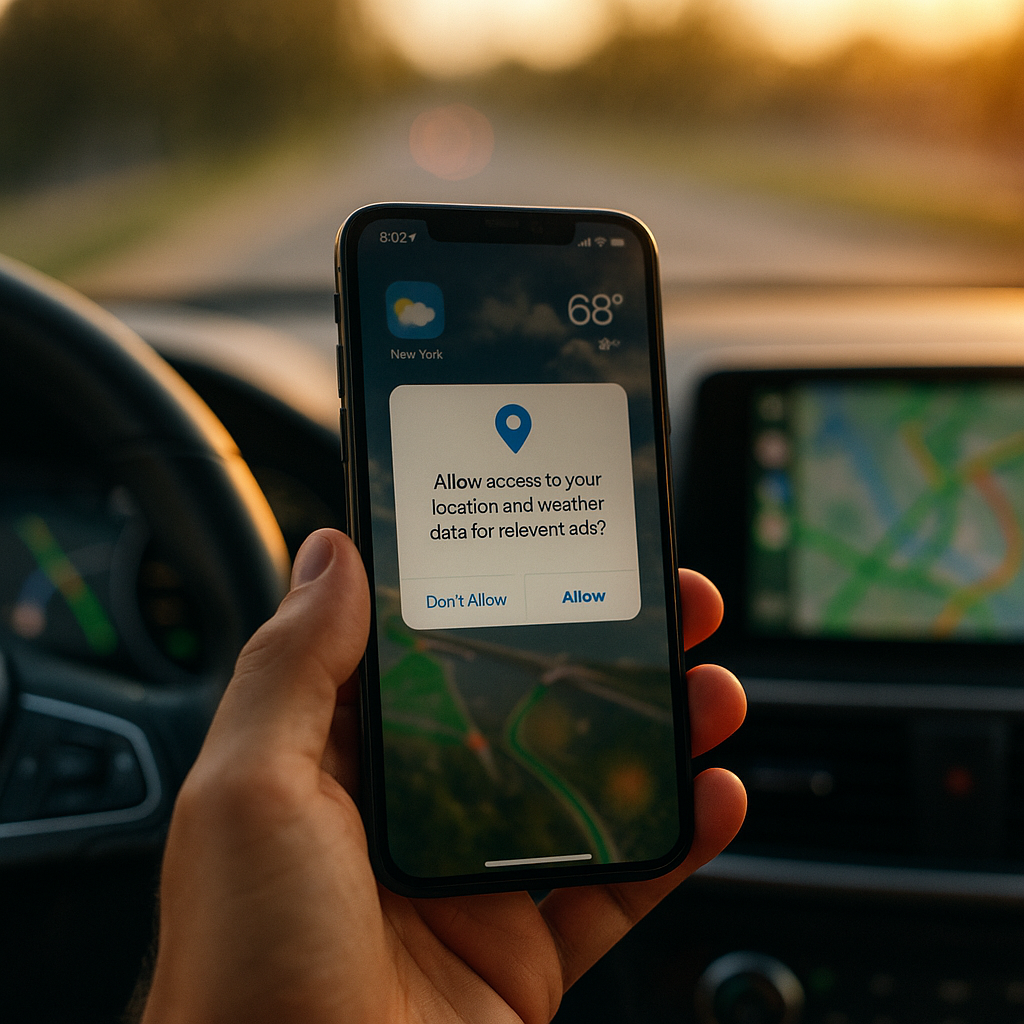
Thirty-one states now have some flavor of consumer privacy or unfair-practices statute that touches real-time targeting. Layer in weather and location triggers for AI-driven dynamic creative, and you’ve got a compliance surface most legal teams haven’t mapped yet. Consent language for AI weather-and-location-triggered dynamic creative isn’t a checkbox — it’s the difference between a clever media buy and a multistate enforcement action.
Here’s the uncomfortable truth: most brands running this kind of creative built the targeting logic before they built the consent framework. That order needs to flip.
Why This Category Is a Regulatory Magnet
Weather-and-location-triggered creative sounds harmless. Serve umbrella ads when it rains, iced coffee ads when it’s hot, promote the store two blocks from someone’s GPS pin. Programmatic vendors have sold this as “contextual, not creepy” for years. But regulators increasingly disagree with that framing, especially when AI systems are making inference-based decisions about a person’s real-time physical location and behavior.
The legal exposure comes from three overlapping angles. First, precise geolocation is classified as sensitive personal information under California’s CPRA, Colorado’s Privacy Act, and similar statutes in Connecticut, Virginia, and a growing list of others. Second, many of these laws require opt-in consent — not opt-out — before sensitive data can be processed for targeted advertising. Third, state UDAP (unfair or deceptive acts and practices) statutes give attorneys general a separate hook to go after brands even when the privacy statute itself has gaps or exemptions.
Precise geolocation triggers sensitive-data thresholds in most modern state privacy statutes — meaning opt-out consent, the default for years in ad tech, is no longer legally sufficient in a growing number of jurisdictions.
Add AI to the mix and you introduce a fourth layer: automated decision-making disclosure requirements. Colorado, and soon others following its AI Act framework, require notice when automated systems make or materially influence decisions that affect a consumer. Dynamic creative optimization arguably qualifies, particularly if it’s adjusting pricing, offers, or urgency messaging based on inferred conditions.
What “Precise Geolocation” Actually Means Under State Law
Definitions vary, and that variance is exactly where brands get tripped up. California defines precise geolocation as data that can locate a consumer within a radius of 1,850 feet. Colorado and Connecticut use similar radius-based thresholds. Virginia’s language is looser but has been interpreted the same way by practitioners.
Weather-triggered creative often relies on zip-code or metro-level data, which may fall outside these thresholds. Location-triggered creative tied to device GPS or geofencing almost never does. If your dynamic creative engine is pulling both signals to decide what to serve, you need separate consent logic for each — not one blanket toggle.
- Zip-code-level weather data: generally treated as non-precise, lower risk, but still subject to general notice requirements.
- Device GPS or geofenced beacon data: almost always precise geolocation, triggering opt-in consent obligations.
- IP-based location inference: a gray zone — treat as precise if resolution is block-level or finer.
Brands running AI shopping agents or personalized pricing engines alongside location triggers face compounding risk. If you haven’t audited that intersection, the AI shopping agent compliance checklist is a useful starting point before you touch consent language for location-based creative.
Structuring the Consent Language Itself
Generic cookie-banner language will not hold up here. State regulators — and plaintiffs’ attorneys, who’ve gotten aggressive under statutes like California’s private right of action for certain breaches — expect consent language that is specific to the processing activity, not a catch-all.
Effective consent structures for this use case share five characteristics:
- Purpose specificity. Say exactly what the location or weather data will trigger — “to show you offers relevant to current weather conditions in your area” — not “to personalize your experience.”
- Separation from general terms. Bundling location consent into a broader privacy policy checkbox is a documented enforcement target. Consent must be a discrete, affirmative action tied only to this processing.
- AI disclosure layer. If an AI or automated system is making the creative-selection decision, say so. “An automated system uses this data to select which ad version you see” satisfies emerging automated-decision transparency rules.
- Revocation mechanism. Consent isn’t valid if it can’t be withdrawn as easily as it was given. This means a real settings toggle, not a buried email address.
- Retention and sharing scope. State laws increasingly require you to disclose whether the location data is shared with third parties (ad networks, DSPs, weather API vendors) and for how long it’s retained.
A workable consent string looks something like: “With your permission, we use your precise location and local weather conditions, processed by an automated system, to show you personalized ads. This data may be shared with our advertising partners and is retained for [X] days. You can withdraw this permission anytime in your account settings.” It’s not exciting copy. It’s not supposed to be. It’s supposed to survive a deposition.
The Human Review Gap Nobody’s Talking About
Here’s where it gets messier. If the AI system is auto-approving which creative variant gets served based on live weather and location feeds, who’s accountable when it serves something deceptive — say, false urgency (“Only 3 left near you!”) triggered by a location signal with no actual inventory logic behind it?
This isn’t hypothetical. It mirrors the same liability gap covered in AI auto-approved creative liability discussions — except here, the trigger data itself (location, weather) adds a second layer of sensitive-data exposure on top of the deceptive-practices risk. Brands need a human-in-the-loop checkpoint specifically for creative variants triggered by sensitive contextual data, not just a general approval workflow for the campaign shell.
Scarcity and urgency messaging tied to location triggers deserves particular scrutiny. Regulators have already gone after dark-pattern countdown timers; a location-triggered “almost sold out near you” claim without backing data is arguably worse because it combines a false scarcity claim with automated sensitive-data processing. If your team runs anything resembling urgency messaging in dynamic creative, cross-reference the deceptive scarcity law risk guidance before greenlighting the campaign.
Vendor Contracts: Where Consent Language Actually Lives (or Dies)
Most brands don’t build weather-and-location targeting in-house. You’re pulling from a DSP, a weather API provider, possibly a third-party creative optimization platform stitching it all together. Consent language is only as good as the data pipeline enforcing it — and that means your vendor contracts need explicit consent-passback clauses.
Specifically, your data processing agreements should require:
- Vendors to honor consent signals passed from your consent management platform in real time, not on a batch delay.
- Clear sub-processor disclosure for any third party touching the location or weather signal, similar to the sub-processor naming issues that surfaced in the TikTok Shop Oracle sub-processor situation.
- Audit rights letting you verify that consent withdrawal actually stops data flow, not just suppresses the ad unit.
Multi-touch attribution vendors and MMM platforms often sit downstream of this data too. If your attribution stack is pulling location-triggered exposure data without a documented consent trail, you’re inheriting risk you didn’t create. The MTA and MMM data provenance framework is worth running against any weather-and-location creative program before scaling spend.
Building the Escalation Path
When something goes wrong — a state AG inquiry, a consumer complaint, a vendor data leak — you need a pre-built escalation protocol, not an improvised one. The same logic that applies to personalized pricing enforcement applies here: document the decision chain before regulators ask you to reconstruct it after the fact.
Brands that have already built escalation protocols for adjacent issues, like the one outlined in the FTC personalized pricing escalation protocol, should extend that same framework to weather-and-location creative. The core structure — who gets notified, what data gets frozen, how fast legal reviews the creative logic — transfers directly.
A few operational questions worth running through your legal and marketing ops teams jointly:
- Can you produce, within 48 hours, every consent string a specific consumer saw before their location data was processed?
- Does your consent management platform log withdrawal timestamps in a format admissible for state AG inquiries?
- Have you mapped which states require opt-in versus opt-out for precise geolocation, and does your creative platform actually differentiate by state?
If you answered no to any of those, that’s your Q1 priority, not a someday project. According to eMarketer, spend on real-time contextual and location-based programmatic creative continues climbing year over year, which means the exposure window is widening, not shrinking.
State-by-State Isn’t Optional Anymore
The temptation is to write one consent disclosure and apply it nationally. Resist it. California, Colorado, Connecticut, and now a handful of newer entrants like Delaware and Oregon each have slightly different opt-in thresholds, cure periods, and enforcement postures. A single national consent string either over-discloses in low-regulation states (creating friction that hurts conversion) or under-discloses in high-regulation states (creating actual legal exposure).
Practical approach: build a tiered consent framework keyed to IP-inferred state of residence, with the strictest opt-in language as your default and lighter disclosure in states without sensitive-data classifications for geolocation. Yes, this is more engineering work. It’s less work than a multistate AG settlement.
For general guidance on how the FTC treats novel automated marketing practices, the FTC’s official guidance portal remains the most reliable primary source, and it’s worth checking quarterly since enforcement priorities shift.
The Bottom Line for Marketing Ops
Consent language isn’t a legal team deliverable you bolt on after the campaign is built. For AI weather-and-location-triggered dynamic creative, it has to be architected into the targeting logic from day one, state by state, vendor by vendor, with a human checkpoint on any creative variant touching sensitive location data. Start with an audit of what your current DSP and creative optimization vendor actually disclose to consumers today — most brands are surprised by the gap.
FAQs
Does weather-triggered creative always count as sensitive data processing?
Not always. Zip-code or metro-level weather data typically doesn’t meet the precise geolocation threshold under most state statutes. Risk increases significantly when weather triggers are combined with device-level GPS or geofencing data.
What consent standard applies — opt-in or opt-out?
It depends on the state and the sensitivity classification of the data. California, Colorado, and Connecticut generally require opt-in consent for precise geolocation used in targeted advertising, while less restrictive states may permit an opt-out model.
Do we need to disclose that AI is selecting the creative variant?
Increasingly, yes. States adopting automated decision-making transparency rules, following Colorado’s lead, expect disclosure when an automated system materially influences what a consumer sees or the terms offered to them.
Who is liable if a vendor’s data pipeline ignores a consent withdrawal?
The brand typically retains primary liability under state consumer protection statutes, even when a vendor’s system fails to honor withdrawal. This is why data processing agreements need explicit real-time consent-passback and audit rights.
Can one national consent disclosure cover all states?
Generally not effectively. A single disclosure either over-discloses in lightly regulated states or under-discloses in states with strict opt-in requirements. A tiered, state-aware consent framework is the safer structure.
FAQs
Does weather-triggered creative always count as sensitive data processing?
Not always. Zip-code or metro-level weather data typically doesn’t meet the precise geolocation threshold under most state statutes. Risk increases significantly when weather triggers are combined with device-level GPS or geofencing data.
What consent standard applies — opt-in or opt-out?
It depends on the state and the sensitivity classification of the data. California, Colorado, and Connecticut generally require opt-in consent for precise geolocation used in targeted advertising, while less restrictive states may permit an opt-out model.
Do we need to disclose that AI is selecting the creative variant?
Increasingly, yes. States adopting automated decision-making transparency rules, following Colorado’s lead, expect disclosure when an automated system materially influences what a consumer sees or the terms offered to them.
Who is liable if a vendor’s data pipeline ignores a consent withdrawal?
The brand typically retains primary liability under state consumer protection statutes, even when a vendor’s system fails to honor withdrawal. This is why data processing agreements need explicit real-time consent-passback and audit rights.
Can one national consent disclosure cover all states?
Generally not effectively. A single disclosure either over-discloses in lightly regulated states or under-discloses in states with strict opt-in requirements. A tiered, state-aware consent framework is the safer structure.
Top Influencer Marketing Agencies
The leading agencies shaping influencer marketing in 2026
Agencies ranked by campaign performance, client diversity, platform expertise, proven ROI, industry recognition, and client satisfaction. Assessed through verified case studies, reviews, and industry consultations.
Moburst

-
2

The Shelf
Boutique Beauty & Lifestyle Influencer AgencyA data-driven boutique agency specializing exclusively in beauty, wellness, and lifestyle influencer campaigns on Instagram and TikTok. Best for brands already focused on the beauty/personal care space that need curated, aesthetic-driven content.Clients: Pepsi, The Honest Company, Hims, Elf Cosmetics, Pure LeafVisit The Shelf → -
3

Audiencly
Niche Gaming & Esports Influencer AgencyA specialized agency focused exclusively on gaming and esports creators on YouTube, Twitch, and TikTok. Ideal if your campaign is 100% gaming-focused — from game launches to hardware and esports events.Clients: Epic Games, NordVPN, Ubisoft, Wargaming, Tencent GamesVisit Audiencly → -
4

Viral Nation
Global Influencer Marketing & Talent AgencyA dual talent management and marketing agency with proprietary brand safety tools and a global creator network spanning nano-influencers to celebrities across all major platforms.Clients: Meta, Activision Blizzard, Energizer, Aston Martin, WalmartVisit Viral Nation → -
5

The Influencer Marketing Factory
TikTok, Instagram & YouTube CampaignsA full-service agency with strong TikTok expertise, offering end-to-end campaign management from influencer discovery through performance reporting with a focus on platform-native content.Clients: Google, Snapchat, Universal Music, Bumble, YelpVisit TIMF → -
6

NeoReach
Enterprise Analytics & Influencer CampaignsAn enterprise-focused agency combining managed campaigns with a powerful self-service data platform for influencer search, audience analytics, and attribution modeling.Clients: Amazon, Airbnb, Netflix, Honda, The New York TimesVisit NeoReach → -
7

Ubiquitous
Creator-First Marketing PlatformA tech-driven platform combining self-service tools with managed campaign options, emphasizing speed and scalability for brands managing multiple influencer relationships.Clients: Lyft, Disney, Target, American Eagle, NetflixVisit Ubiquitous → -
8

Obviously
Scalable Enterprise Influencer CampaignsA tech-enabled agency built for high-volume campaigns, coordinating hundreds of creators simultaneously with end-to-end logistics, content rights management, and product seeding.Clients: Google, Ulta Beauty, Converse, AmazonVisit Obviously →